
Romblonella opaca
- Sci. Name
- Romblonella opaca
- Tribe
- Crematogastrini
- Subfamily
- Myrmicinae
- Author
- Smith, 1861
- Distribution
- Found in 1 countries
Introduction
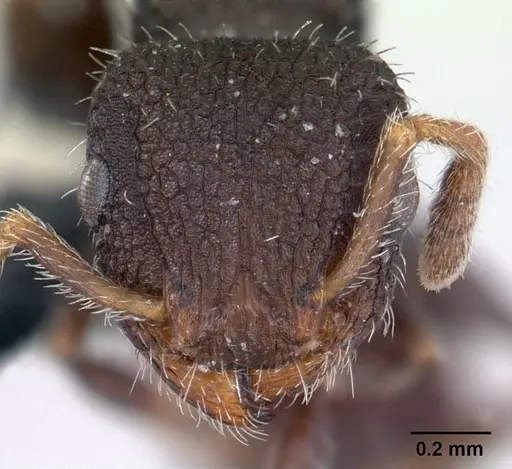
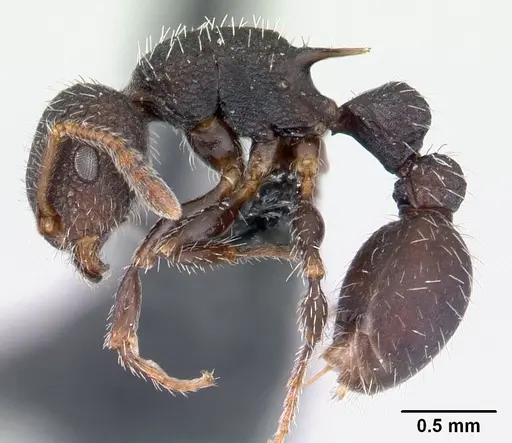
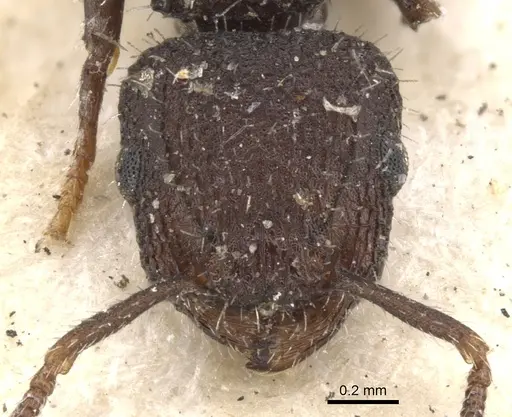
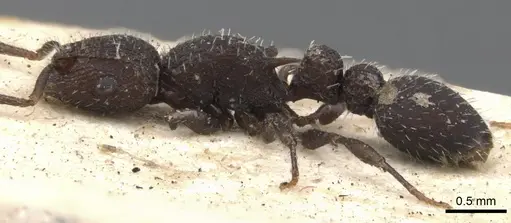
Romblonella opaca is a dark brown, medium-sized ant from the Myrmicinae subfamily, tribe Crematogastrini. Workers measure about 5.13 mm in total length, with a distinctive subquadrate head (slightly wider than long), long stout propodeal spines, and a massive petiole that is larger than the postpetiole . The first gastral tergite has a finely pitted (punctulate) surface, not the ridged pattern seen in the related Philippine species Romblonella coryae . This species is known only from scattered collections across the Philippines (Negros, Albay, Palawan, Romblon islands) and the type locality on Sulawesi, Indonesia . Absolutely nothing is known about its biology, colony founding, diet, or nesting behavior . All care advice is speculative and based on general Myrmicinae patterns and tropical origin.
Quick Summary
- Difficulty: Unknown
- Origin & Habitat: Philippines (Negros, Albay, Palawan, Romblon islands) and Sulawesi, Indonesia [1][2]. Habitat undocumented, likely forest-dwelling, but this is an inference.
- Colony Type: Unknown, colony structure has never been documented. The small collection sizes (1-5 workers per sample) suggest small to moderate colonies, but this is unconfirmed [1].
- Size & Growth:
- Queen: Not documented, no queen has been described in scientific literature.
- Worker: 5.13 mm total length (lectotype) [1].
- Colony: Unknown, only small collections of 1-5 workers have been recorded [1].
- Growth: Unknown
- Development: Unknown, no development data exists for this species. (As a tropical Myrmicinae, brood development might take 4-8 weeks at warm temperatures, but this is purely speculative.)
- Antkeeping:
- Temperature: Estimated 22-28°C based on tropical Philippine/Sulawesi origin. Start near 24°C and adjust based on colony activity.
- Humidity: Estimated moderate to high, keep substrate evenly moist but not waterlogged.
- Diapause: Unknown, tropical species likely do not require formal hibernation, but may slow during cooler seasons.
- Nesting: No data. Likely nests in rotting wood, under stones, or in soil. For captivity, a Y‑tong (AAC) or plaster nest with moisture retention is a reasonable starting point.
- Behavior: Completely unstudied, no behavioral observations exist. As a member of Myrmicinae (tribe Crematogastrini), it likely uses a smearing defense: a flattened stinger that wipes venom onto threats rather than piercing. Escape prevention should be adequate for a 5 mm ant.
- Common Issues: no biological data makes all care speculative, monitor closely and adjust conditions based on observed preferences., small collection sizes (1-5 workers) suggest the species may be stress‑sensitive, handle gently during setup., tropical origin means they likely need stable warm conditions, avoid sudden temperature drops., no documented diet, offer varied foods (sugar sources, small insects) and observe acceptance., limited collection data means wild colonies may be rare or patchy, do not over‑collect if found.
Appearance and Identification
Romblonella opaca workers are medium‑sized ants, about 5.13 mm in total length [1]. They have a dark brown body with noticeably lighter mandibles and antennae. The head is subquadrate (slightly broader than long) and, when viewed from the front, the rear margin is broadly concave. The antennae have 12 segments with a 3‑segmented club. A key feature is a pair of long, stout propodeal spines projecting from the rear of the mesosoma. The petiole is massive, larger and taller than the postpetiole. The first gastral (abdominal) tergite has a finely pitted (punctulate) surface, unlike the longitudinally ridged pattern seen in the only other Philippine Romblonella, R. coryae [1].
Distribution and Range
Romblonella opaca has a scattered distribution across the Philippines and Indonesia. The type locality is Sulawesi, Indonesia, where the original specimen was collected by Alfred Russell Wallace [1]. In the Philippines, records come from Negros Oriental (near Dumaguete), Albay (Rapu‑rapu Island), Palawan (Tara Island), and Romblon Island [1]. Most collections are small (1-5 workers), which may indicate small colony sizes, specialized foraging, or simply limited sampling [1][2].
What We Don't Know - Biology Unknown
Absolutely nothing is known about the biology of Romblonella opaca [3]. There are no published observations on colony founding, queens, nuptial flights, worker behavior, diet, nesting habits, or any aspect of its natural history. All care recommendations in this guide are educated guesses based on (1) its tropical origin, (2) its placement in the tribe Crematogastrini, and (3) general antkeeping principles. You will be pioneering captive husbandry for this species. Document your observations carefully, they could contribute to scientific knowledge.
Housing and Nesting
No specific nesting data exists for this species. Based on tropical origin and typical preferences of related Myrmicinae, Romblonella opaca likely prefers humid, shaded microhabitats. A Y‑tong (AAC) or plaster nest with good moisture retention is a reasonable starting point. Chamber size should be suitable for 5 mm ants. Provide a water reservoir or moist section to maintain humidity, but avoid waterlogging. A test tube setup can work for an incipient colony, but you may need to move them to a larger nest as the colony grows. Since colony size is unknown but appears small, don't expect huge nests.
Temperature and Care
As a tropical species from the Philippines and Sulawesi, Romblonella opaca likely needs warm, stable temperatures. Aim for 24-28°C as a starting point. Avoid temperatures below 20°C or sudden fluctuations. Use a heating cable or mat on one side of the nest to create a gradient, letting the ants choose their preferred spot. Since nothing is known about seasonal behavior, assume they don't need a formal hibernation period but may slow down during cooler months. High humidity (60-80%) is likely important, keep the nest substrate consistently moist but not drenched.
Feeding and Diet
No specific dietary data exists. As a member of Crematogastrini, Romblonella opaca probably has generalist feeding habits. Offer a varied diet: sugar sources (honey water, sugar water, diluted honey) and protein sources (small insects like fruit flies, mealworms, or crickets). Start with small amounts and remove uneaten food after 24-48 hours to prevent mold. Document which foods they accept, this information would be valuable for future keepers.
Frequently Asked Questions
How do I keep Romblonella opaca ants?
Since nothing is known about this species' biology, you'll be pioneering its captive care. Based on its tropical origin, use a warm, humid setup (around 24-28°C, high humidity). A Y‑tong or plaster nest works well. Offer varied foods and document what they accept. This is an expert‑level species due to the complete lack of biological data.
What do Romblonella opaca ants eat?
Diet is completely unconfirmed. Based on related genera in Crematogastrini, they likely accept sugar sources and small insects. Offer honey water, sugar water, small crickets, fruit flies, or mealworms. Start with small amounts and remove uneaten food after a day.
How big do Romblonella opaca colonies get?
Colony size is unknown. The limited collection data shows only 1-5 workers per sample, suggesting small to moderate colonies in the wild [1]. Don't expect massive supercolonies.
Do Romblonella opaca ants sting?
Stinging ability has not been documented for this species. As a Myrmicinae, it has a functional stinger, but the behavior and defensive responses are completely unknown. Based on its tribe (Crematogastrini), it likely uses a smearing defense, wiping venom onto threats rather than piercing.
What is the ideal temperature for Romblonella opaca?
Estimated 24-28°C based on tropical Philippine/Sulawesi origin. Start in this range and adjust based on observed colony activity. Avoid temperatures below 20°C.
How long does it take for Romblonella opaca to develop from egg to worker?
Development timeline is completely unknown, no one has ever documented this species' brood development. Based on typical Myrmicinae in tropical conditions, estimate 4-8 weeks, but this is purely speculative.
Is Romblonella opaca good for beginners?
No. This species is not recommended for beginners due to the complete lack of biological data. Every aspect of care is an educated guess. Only experienced antkeepers willing to experiment and document their results should attempt this species.
Where is Romblonella opaca found?
This species is found in the Philippines (Negros, Albay/Rapu‑rapu, Palawan/Tara, and Romblon islands) and Sulawesi, Indonesia [1]. It is part of the Indomalaya biogeographic region.
Can I keep multiple Romblonella opaca queens together?
Colony structure is completely unknown, we don't know if they are monogyne (single queen), polygyne (multiple queens), or something else. Combining unrelated queens is not recommended since this has never been documented and could result in aggression.
Does Romblonella opaca need hibernation?
Diapause requirements are unknown. As a tropical species from the Philippines/Sulawesi, they likely do not require a true hibernation period. They may show reduced activity during cooler seasons but probably don't need formal dormancy.
Report an Issue
The current care sheet is based fully on literature. See inconsistencies, or something that's incorrect? Please , it will be resolved after review from an admin. Contributing to the blogs tab also helps providing information, to make us be able to further improve the caresheets. Thank you for your support!
References

This caresheet is licensed under CC BY-SA 4.0 .
Community Blogs
CASENT0178525
View on AntWeb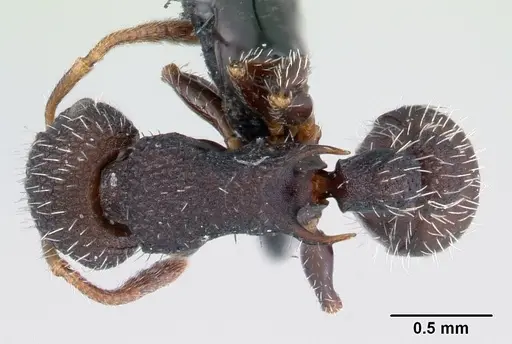
CASENT0901372
View on AntWeb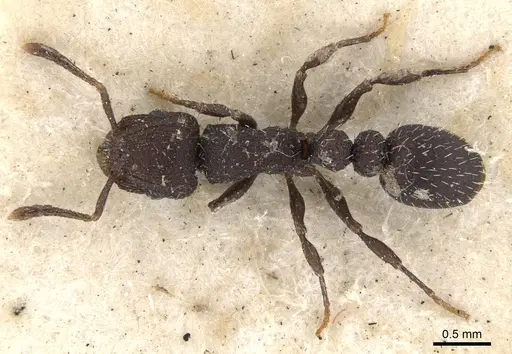
Literature
Loading distribution map...Loading products...