
Rogeria tribrocca
- Sci. Name
- Rogeria tribrocca
- Tribe
- Solenopsidini
- Subfamily
- Myrmicinae
- Author
- Kugler, 1994
- Distribution
- Found in 0 countries
Introduction
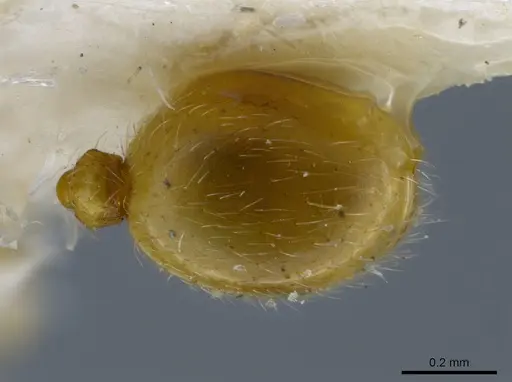
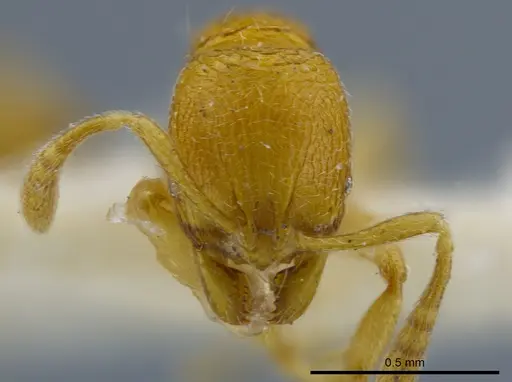
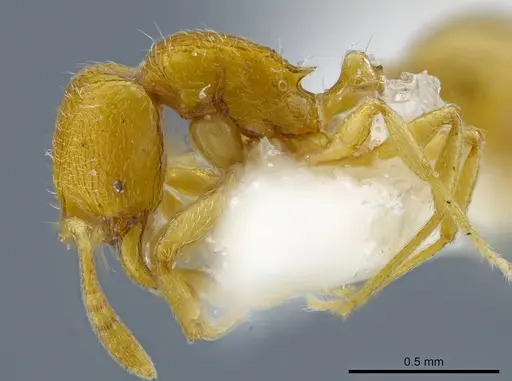
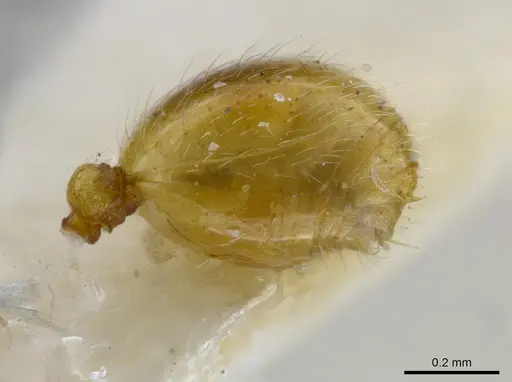
Rogeria tribrocca is a tiny ant measuring 2.3 mm total length, belonging to the Myrmicinae subfamily and Solenopsidini tribe . Workers are brownish-yellow with a distinctive three-toothed clypeal apron (the projection above the mouth) and a median spine on the third segment of the abdomen, features that separate them from similar species like Rogeria curvipubens and Rogeria alzatei . The name 'tribrocca' means 'three teeth' in Latin, referring to the clypeal teeth . This species is known from a single collection in Colombia: Quebrada Susumuco in Meta department, about 23 km northwest of Villavicencio, at 1000 m elevation in forest litter . Nothing is known about its biology, no queens, males, or colonies have ever been described, making it one of the most poorly documented ants in existence. Keepers considering this species must be prepared to experiment with husbandry from scratch.
Quick Summary
- Difficulty: Expert
- Origin & Habitat: Only known from Colombia: Meta department, Quebrada Susumuco,23 km NW Villavicencio,1000 m elevation, collected from forest floor litter [2][3][1].
- Colony Type: Unknown, only the worker caste has been described. No queens or males are known, so colony structure is entirely speculative.
- Size & Growth:
- Queen: Unknown, queen caste has never been described.
- Worker: 2.3 mm total length [1].
- Colony: Unknown, no colonies have ever been documented.
- Growth: Unknown
- Development: Unknown, development has never been studied. (No data exists on development. Related tiny Myrmicinae typically develop in 4-8 weeks at warm temperatures, but this is entirely speculative.)
- Antkeeping:
- Temperature: Unknown, no thermal studies exist. Based on the Colombian origin (tropical mid-elevation), a range of 22-26°C is a reasonable starting point [1]. Monitor colony activity and adjust as needed.
- Humidity: Unknown, no humidity data exists. Forest floor litter species typically prefer moderate humidity (60-80%). Start with a moist but not waterlogged test tube setup.
- Diapause: Unknown, no seasonal data exists. Colombia has mild year-round seasons, so diapause may not be required. Observe colony behavior for clues.
- Nesting: Unknown, no natural nesting observations exist. Given their tiny size and forest litter collection, they likely nest in small cavities within rotting wood, under bark, or in dense leaf litter. A small test tube setup or mini Y-tong nest would be appropriate.
- Behavior: Completely unknown. As a member of the Solenopsidini tribe, they possess a stinger and likely inject venom for defense, but no observations exist. Their tiny size and three-toothed clypeal structure might suggest specialized feeding on micro-arthropods, but this is speculative.
- Common Issues: no biological data exists, everything about their care is speculative., queen caste unknown, founding behavior completely unconfirmed., colony structure unknown, may be single-queen or multi-queen., diet unknown, may refuse standard ant foods., extreme rarity means no established husbandry protocols., tiny size (2.3 mm) creates significant escape risk, fine mesh barriers essential.
Species Overview and Identification
Rogeria tribrocca was described by Kugler in 1994 from a single worker specimen collected in Colombia [1]. Workers are tiny at 2.3 mm total length, with a three-toothed clypeal apron and a median spine on the third tergum of the gaster, features not shared by related species like Rogeria curvipubens and Rogeria alzatei [1]. The body is brownish-yellow, with the first abdominal segment slightly darker on top. The propodeum has weak transverse rugulae, and the mesosoma sides have sparse, indistinct longitudinal rugulae [1]. The holotype was collected from forest litter at 1000 m elevation in Meta department [1][2][3]. No other specimens have been recorded, making this one of the rarest ants in scientific collections.
Housing and Setup
Since nothing is known about their nesting preferences, start with a simple test tube setup. It allows easy humidity control, fits their tiny scale, and is easy to observe [1]. Because they were collected from forest floor litter at 1000 m elevation, they likely prefer humid conditions with some organic material. Use a test tube with a cotton water reservoir and keep the setup moist but not flooded. Their small size (2.3 mm) means escape prevention is critical, use fine mesh barriers and seal all connections. If they survive long enough, you can experiment with small naturalistic setups containing leaf litter and tiny crevices. Start simple and observe before investing in elaborate enclosures.
Feeding and Diet
The diet of Rogeria tribrocca is completely unknown, no feeding observations exist in the literature [1]. As a member of the Solenopsidini tribe (which includes fire ants and other small Myrmicinae), they may be omnivorous or predatory, but this is pure speculation. Given their tiny size, they would likely need very small prey items, micro-arthropods like springtails, tiny mites, or fruit fly parts might be appropriate. Start by offering tiny amounts of honey or sugar water, but do not be surprised if they ignore sweet liquids. Experiment cautiously with small live prey, removing any uneaten food promptly to prevent mold. The three-toothed clypeal structure might suggest specialized feeding, but without any observations, we simply do not know what they eat in captivity.
Temperature and Seasonal Care
No temperature preference data exists for this species [1]. Their origin in the Colombian foothills (approximately 1000 m elevation near Villavicencio) suggests a tropical to subtropical climate with moderate temperatures year-round. A range of 22-26°C is a reasonable starting guess, warm but not hot. Avoid temperature extremes. Since Colombia sits near the equator, seasonal temperature swings are minimal, and this species likely does not require a diapause or hibernation period. However, this is entirely unconfirmed. Monitor your colony closely, if they become less active in winter months, they may be indicating a rest period preference. Keep the setup away from direct sunlight, air conditioning vents, and drafts. Temperature stability is likely more important than hitting a specific number.
Challenges and Expert Considerations
Rogeria tribrocca is not a species for beginners. The complete lack of biological data means you are essentially pioneering their husbandry with no established protocols to follow [1]. Every aspect of their care, from diet to humidity to nesting, requires careful observation and experimentation. Document everything: what foods they accept, their activity patterns, how they respond to different humidity levels. This species may well have specific requirements that we cannot guess at. There is no backup plan if they refuse to adapt to captivity. Consider this an experimental project where success is measured by learning, not necessarily by colony growth. Only experienced antkeepers who understand the risks of keeping data-deficient species should attempt this species.
Frequently Asked Questions
How long do Rogeria tribrocca workers live?
This is completely unknown, no studies have examined their lifespan. Related tiny Myrmicinae typically live several months to a few years for workers, but this is just an estimate [1].
What do Rogeria tribrocca eat?
Unknown, their diet has never been observed [1]. As a tiny Solenopsidini, they may be predatory on micro-arthropods or omnivorous, but this is speculation. Offer tiny prey items and sugar sources cautiously.
Can I keep Rogeria tribrocca in a test tube?
A test tube is the most practical starting setup given their tiny size (2.3 mm) [1]. However, whether they will thrive in captivity is completely unknown since no one has successfully kept this species long-term.
Do Rogeria tribrocca queens exist?
Queens have never been described for this species [1]. Only worker castes are known to science. The colony structure and reproductive biology remain entirely undocumented.
How big do Rogeria tribrocca colonies get?
Unknown, no colonies have ever been documented [1]. Related Rogeria species typically have small colonies, but this is unconfirmed for Rogeria tribrocca.
What temperature should I keep Rogeria tribrocca at?
No specific data exists [1]. Based on their Colombian origin, start with 22-26°C and observe colony behavior. Temperature stability is likely more important than hitting a specific number.
Is Rogeria tribrocca good for beginners?
No. This species is for expert antkeepers only. There is absolutely no biological data to guide their care, and they may have requirements we cannot anticipate [1]. They are among the most poorly documented species in the antkeeping hobby.
Do Rogeria tribrocca need hibernation?
Unknown, no seasonal data exists [1]. Colombia has mild year-round temperatures, so diapause may not be required. Observe your colony for clues about seasonal activity changes.
Where is Rogeria tribrocca found in the wild?
Only known from a single collection in Colombia: Quebrada Susumuco in Meta department, about 23 km northwest of Villavicencio, at approximately 1000 m elevation in forest litter [2][3][1].
Why is Rogeria tribrocca so rare?
This species is known from only a single worker specimen collected in 1972 [1]. It may be genuinely rare in the wild, or simply overlooked due to its tiny size. No additional specimens have been collected since the original description.
How do I start a Rogeria tribrocca colony?
You cannot, no queens or founding colonies have ever been found or described [1]. This species is not available through typical antkeeping channels and may not exist in captivity anywhere in the world.
Report an Issue
The current care sheet is based fully on literature. See inconsistencies, or something that's incorrect? Please , it will be resolved after review from an admin. Contributing to the blogs tab also helps providing information, to make us be able to further improve the caresheets. Thank you for your support!
References

This caresheet is licensed under CC BY-SA 4.0 .
Community Blogs
MCZ-ENT00036282
View on AntWeb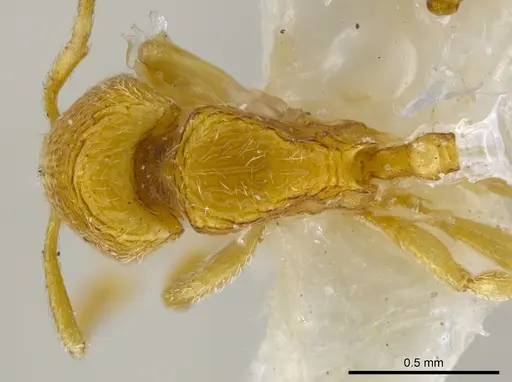
Literature
Loading distribution map...Loading products...