
Rogeria stigmatica
- Sci. Name
- Rogeria stigmatica
- Tribe
- Solenopsidini
- Subfamily
- Myrmicinae
- Author
- Emery, 1897
- Distribution
- Found in 9 countries
Introduction
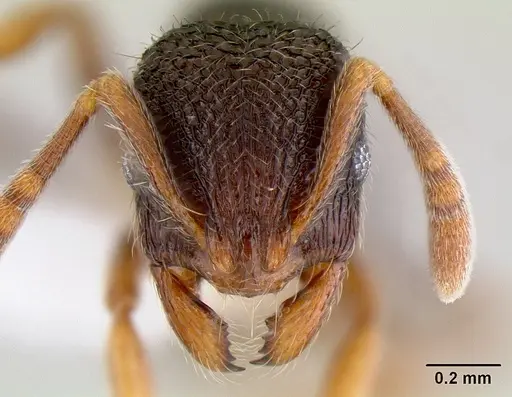
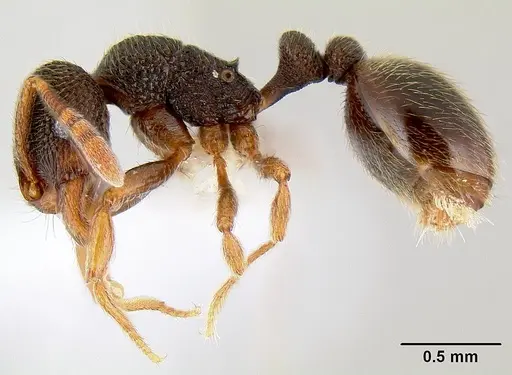
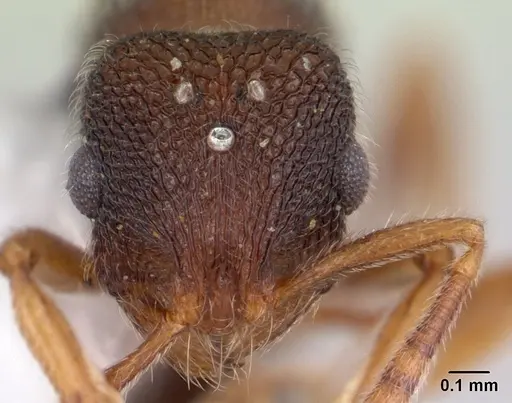
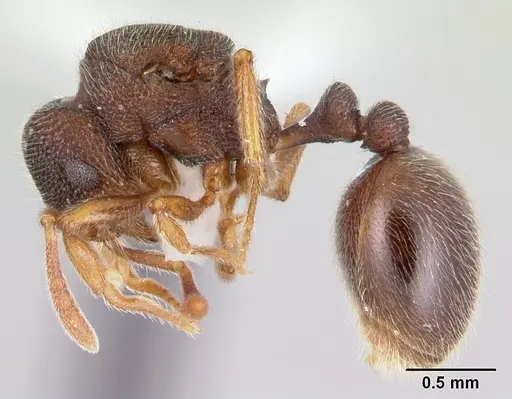
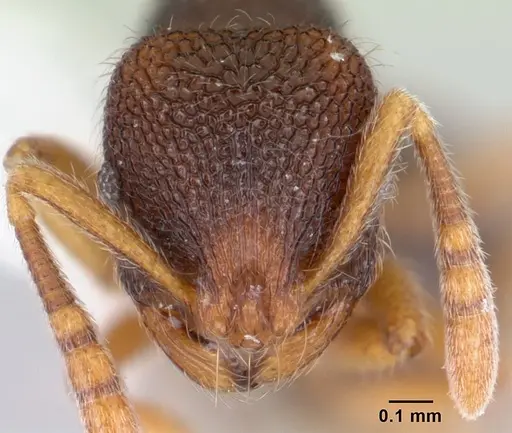
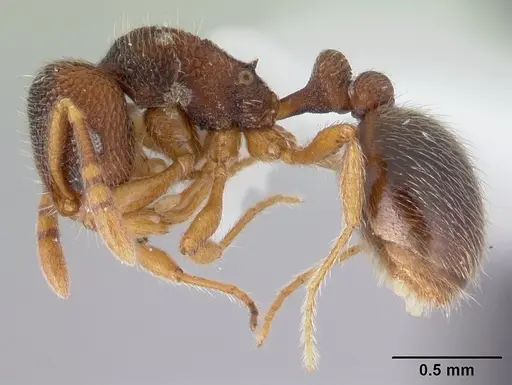
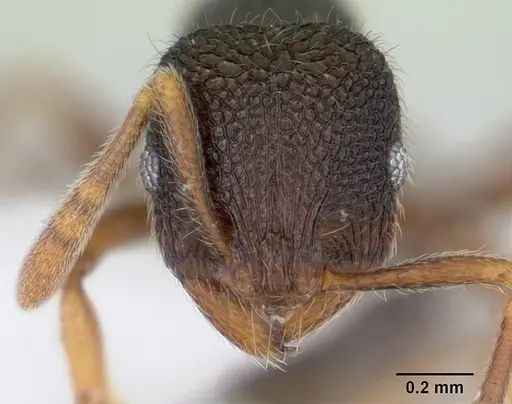
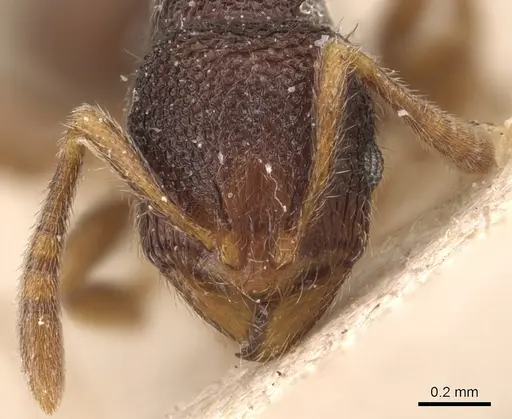
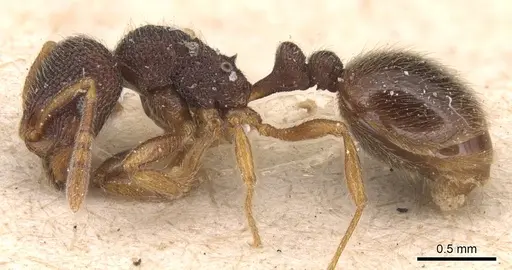
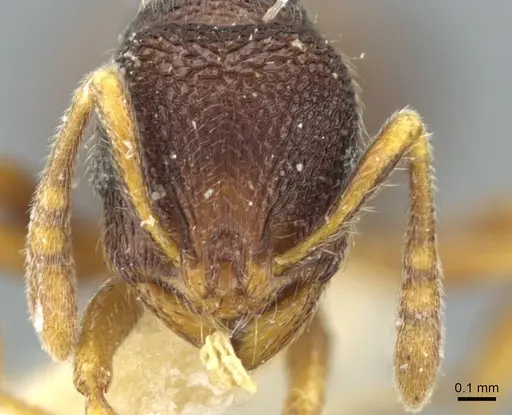
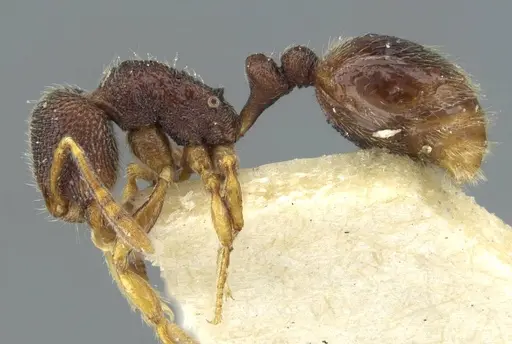
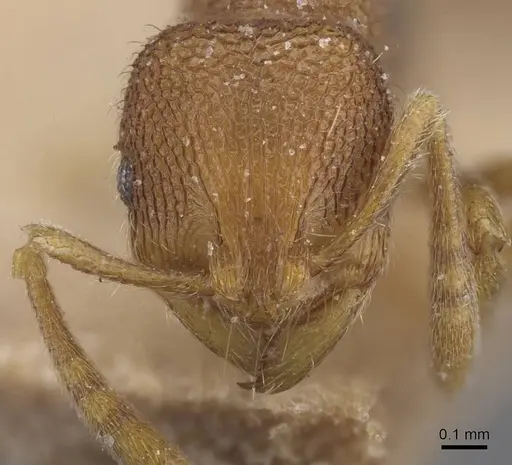
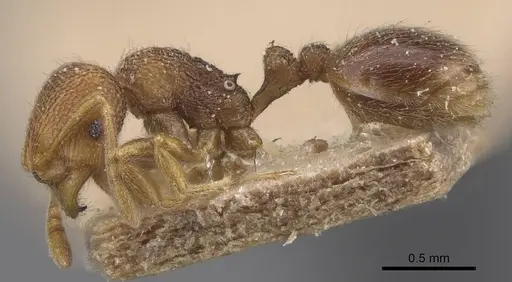
Rogeria stigmatica is a tiny Myrmicinae ant native to the Central and West Pacific, from Tahiti to New Guinea . Workers measure about 3.0-3.7 mm and queens about 3.6-4.5 mm, with a distinctive brown body, very short propodeal spines, and a relatively large petiolar node . These ants are best known for a unique defensive behavior: when disturbed, workers produce long, worm‑like chains of white bubbles from their anal glands that writhe realistically, often making the ants themselves invisible against soil . They nest in rotting wood, leaf litter, and soil in tropical rainforests across many Pacific island groups, including Fiji, Samoa, Tonga, and French Polynesia [16571.
Quick Summary
- Difficulty: Medium
- Origin & Habitat: Central and West Pacific islands from Tahiti to New Guinea (22°S-7°N). Inhabits tropical rainforest, typically found in rotting wood, leaf litter, soil, and moss at all elevations [2][5][7][6].
- Colony Type: Colony structure is not documented. Based on related species it is possibly monogyne, but this has not been confirmed.
- Size & Growth:
- Antkeeping:
- Temperature: No specific data, but being tropical they require warmth. Maintain 24-28 °C, avoid drops below 20 °C [2].
- Humidity: High humidity is essential. Keep the nest substrate consistently moist but not waterlogged, mimicking a damp rainforest floor [2][5].
- Diapause: No, a tropical species that remains active year‑round [2].
- Nesting: Prefers naturalistic setups with rotting wood, or Y‑tong/plaster nests with moisture‑retaining substrate. They naturally inhabit decaying wood and leaf litter [2][5].
- Behavior: Shy and non‑aggressive. Primary defense is a remarkable bubble‑secretion behavior that repels other ants [2][4]. Because they are under 4 mm, escape prevention must be excellent, they can squeeze through tiny gaps. Do not rely on stinging, their sting is negligible to humans.
- Common Issues: tiny size makes escapes likely without ultra‑fine mesh and tight seals, high humidity requirements can lead to mold if ventilation is inadequate, unknown founding behavior may make establishing a new colony difficult, wild‑caught colonies may carry parasites that can kill them in captivity, the bubble‑secretion behavior, while fascinating, can be messy in captive setups
Housing and Nest Setup
Because Rogeria stigmatica is so small, escape proofing is critical. Use test tubes for starting colonies, but be aware that workers can slip through gaps that would hold larger ants. For established colonies, a naturalistic setup with pieces of rotting wood works well, as they naturally nest in decaying wood [2]. Y‑tong (AAC) or plaster nests with moisture‑retaining substrate are also suitable. The key requirement is high humidity, these ants come from damp rainforest environments. Avoid completely dry setups, provide a water source via moist cotton or a hydration system that keeps the nest damp but not flooded. Good ventilation is necessary to prevent mold.
Feeding and Diet
The natural diet of Rogeria stigmatica is not documented, but given its small size it likely feeds on tiny arthropods and perhaps honeydew. In captivity, offer small live prey such as fruit flies, pinhead crickets, or other appropriately sized insects. They may occasionally accept sugar water or honey, but this is unconfirmed. Feed small amounts of protein 2-3 times per week and remove uneaten prey after 24 hours to prevent mold. Because they are so small, prey items must be tiny, anything larger than the workers will likely be ignored. [2]
Temperature and Care
As a tropical species, Rogeria stigmatica needs warmth. No precise temperature data exists, but maintain 24-28 °C and never let it drop below 20 °C [2]. Use a heating cable on one side of the nest to create a gentle gradient if your room is cooler. High humidity is equally important, the nest substrate should be kept consistently moist but not waterlogged. A small water reservoir connected to the nest via cotton works well to maintain moisture. No hibernation or diapause is needed, they remain active year‑round in their native habitat.
The Remarkable Bubble Defense
The most distinctive behavior of Rogeria stigmatica is its defensive bubble secretion. When disturbed, workers produce long, worm‑like chains of white bubbles from their anal glands that persist in the environment [2]. Mann (1921) first described this behavior, noting the twisting threads closely resemble small worms, so much so that he initially mistook them for actual worms. The ants themselves become motionless and virtually invisible against the soil, while the ‘worms’ appear to crawl [2]. More recent research shows this secretion can repel and even injure workers of other ant species [4]. In captivity you may observe this when cleaning the nest or disturbing the colony, it is normal and harmless to the ants, though it can create a messy setup.
Behavior and Temperament
Rogeria stigmatica is shy and non‑aggressive, preferring to avoid confrontation. Its tiny size makes it vulnerable, which is why it relies on the elaborate bubble defense mechanism. Workers are relatively slow‑moving compared to larger ants. They are often collected by sifting leaf litter in their native habitat [2]. Although they belong to the Solenopsidini tribe, which includes species with functional stingers, any sting would be negligible to humans, the bubble secretion is their primary defense. Minimize disturbances in captivity to allow the colony to establish. Because they are small, they can be out‑competed by faster or larger ant species if kept in a mixed setup.
Frequently Asked Questions
How long does it take for Rogeria stigmatica to develop from egg to worker?
The exact development time has not been documented. Based on patterns for small Myrmicinae in tropical conditions, it might take 6-10 weeks, but this is a rough estimate. Be patient and avoid disturbing the colony frequently.
What do Rogeria stigmatica eat?
The natural diet is not well studied. In captivity, offer tiny live prey such as fruit flies, pinhead crickets, or other small insects. They may also accept sugar water or honey, but this is not confirmed. Protein should be the main food source.
Are Rogeria stigmatica good for beginners?
This species is rated as medium difficulty. While fascinating, their tiny size requires excellent escape prevention, and they need specific humidity and warmth. Beginners should have some ant‑keeping experience before trying this species.
How big do Rogeria stigmatica colonies get?
Colony size is not documented. Based on similar Pacific island species, colonies are probably small, perhaps up to a few hundred workers. They are not large‑colony builders like some other Myrmicinae.
Do Rogeria stigmatica need hibernation?
No, they are tropical ants from Pacific islands with no cold winter. They remain active year‑round and do not require diapause.
Why do my Rogeria stigmatica produce bubbles?
This is their natural defensive behavior. When disturbed, workers secrete long chains of white bubbles from their anal glands to confuse predators and repel competing ants. It is completely normal and nothing to worry about.
Can I keep multiple queens together?
The colony structure is not well documented, so it is unknown if this species accepts multiple queens. Based on typical Rogeria patterns, they likely form single‑queen colonies. Combining unrelated queens is not recommended without further study.
What is the best nest type for Rogeria stigmatica?
Naturalistic setups with rotting wood pieces work well because they naturally nest in decaying wood. Y‑tong (AAC) or plaster nests with moisture‑retaining substrate are also suitable. The most important factor is high humidity, avoid completely dry setups.
Why are my Rogeria stigmatica dying?
Common causes include: temperatures below 20 °C (they need warmth), dry conditions (they need high humidity), escape through tiny gaps, or parasites from wild‑caught colonies. Check that your setup maintains proper warmth and humidity before considering other issues.
Report an Issue
The current care sheet is based fully on literature. See inconsistencies, or something that's incorrect? Please , it will be resolved after review from an admin. Contributing to the blogs tab also helps providing information, to make us be able to further improve the caresheets. Thank you for your support!
References

This caresheet is licensed under CC BY-SA 4.0 .
Community Blogs
CASENT0106171
View on AntWeb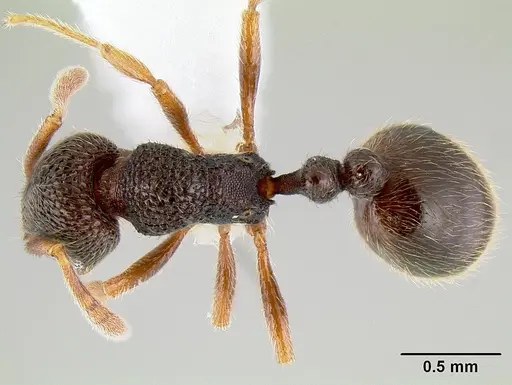
CASENT0171046
View on AntWeb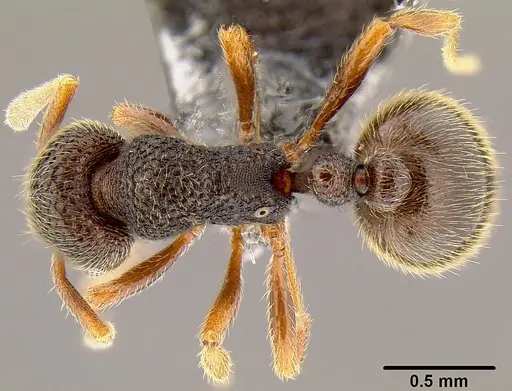
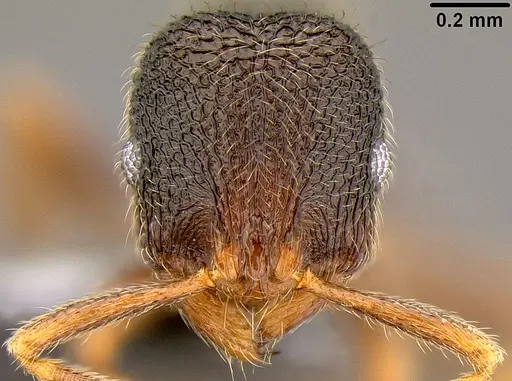
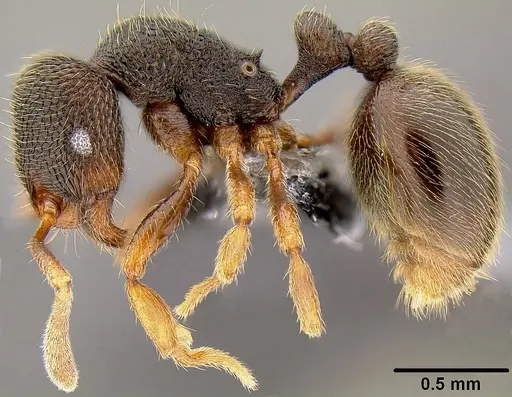
CASENT0171101
View on AntWeb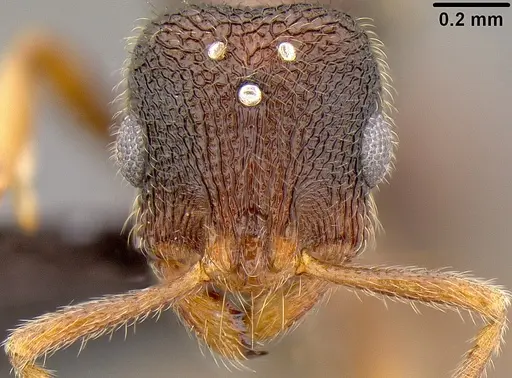
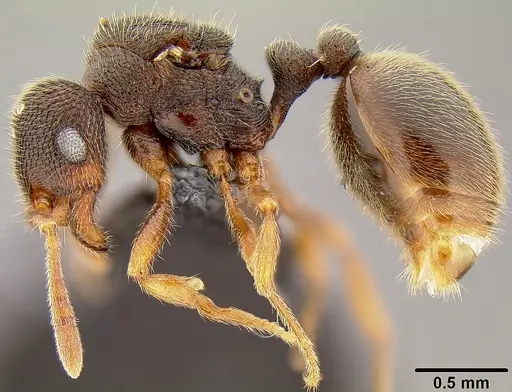
CASENT0178413
View on AntWeb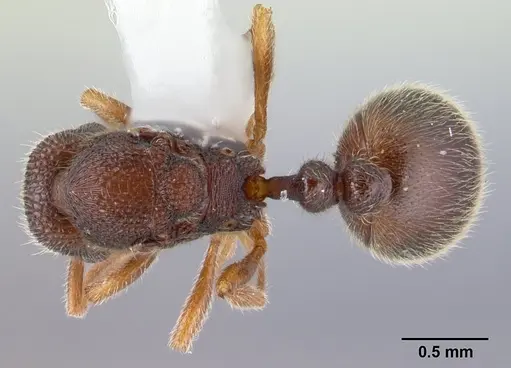
CASENT0178414
View on AntWeb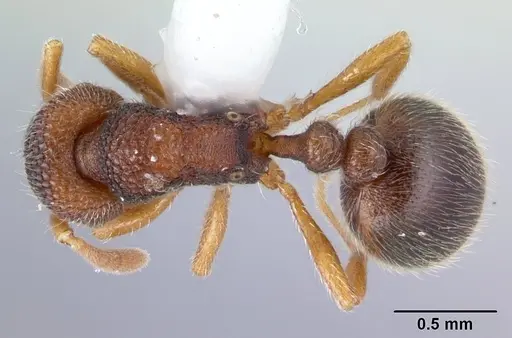
CASENT0178447
View on AntWeb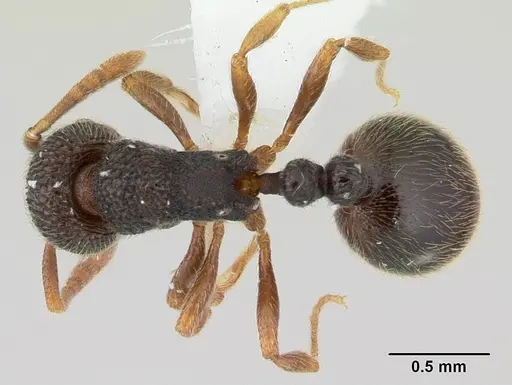
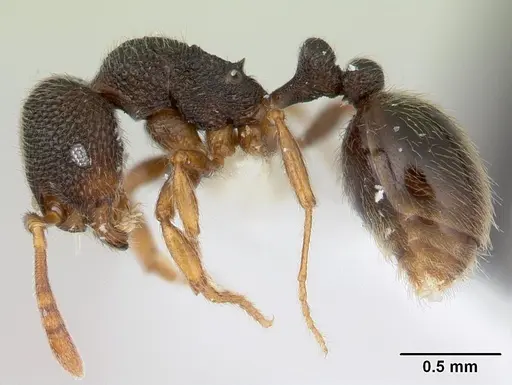
CASENT0904781
View on AntWeb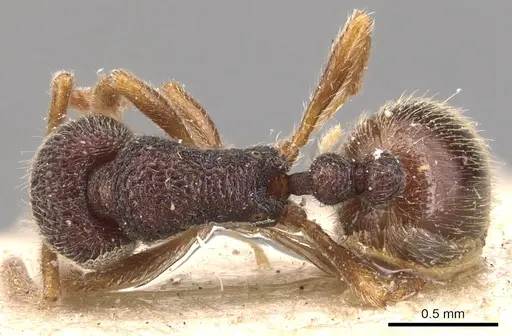
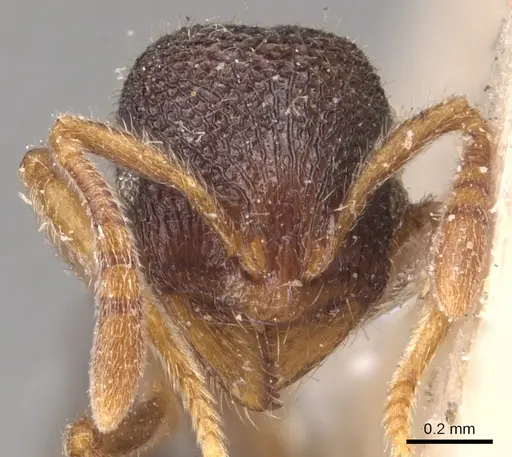
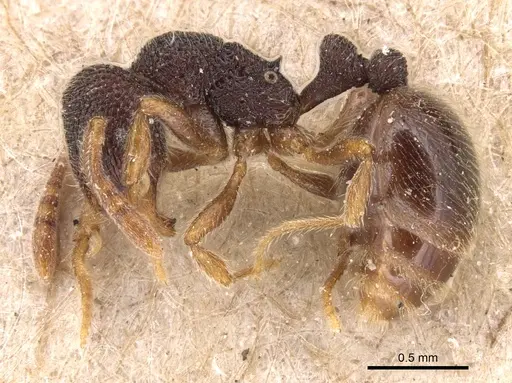
CASENT0904782
View on AntWeb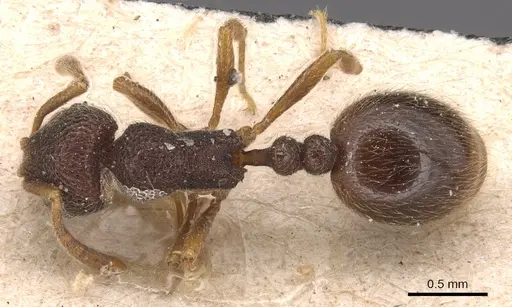
CASENT0911234
View on AntWeb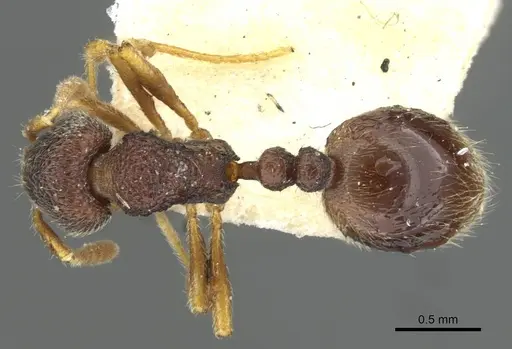
CASENT0913966
View on AntWeb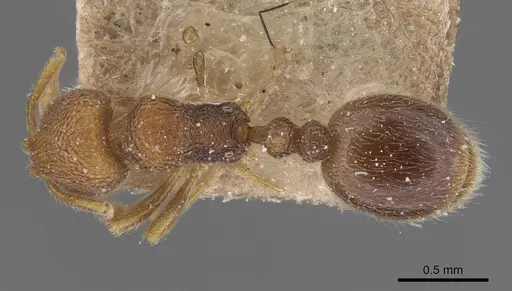
Literature
Loading distribution map...Loading products...