
Rogeria inermis
- Sci. Name
- Rogeria inermis
- Tribe
- Solenopsidini
- Subfamily
- Myrmicinae
- Author
- Mann, 1922
- Distribution
- Found in 6 countries
Introduction
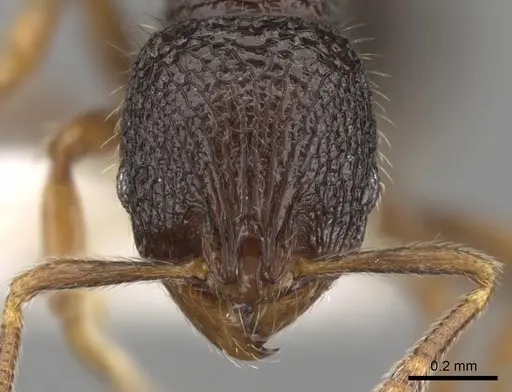
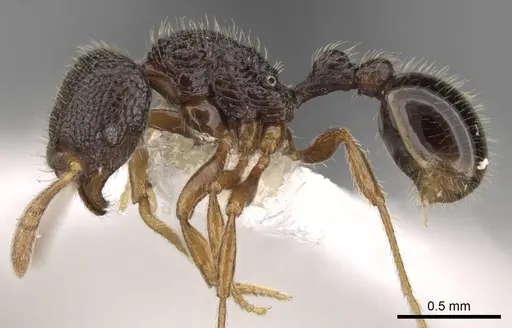
Rogeria inermis is a tiny, cryptic ant native to Central American wet forests . Workers measure 2.2–3.0 mm; queens range from 2.9–3.0 mm . They belong to the Solenopsidini tribe (the same group as fire ants) and are ground‑dwelling leaf‑litter specialists . The species occurs from Mexico to Panama, typically in lowland rain forests up to 500 m, but specimens have been collected as high as 1250 m . Colonies are cryptic and small, hiding among decaying leaves and organic matter. Queens have been collected but never fully described, and males have never been observed .
Quick Summary
- Difficulty: Medium
- Origin & Habitat: Wet forests of Central America (Mexico, Belize, Guatemala, Honduras, Nicaragua, Costa Rica, Panama) from sea level to 500 m, occasionally up to 1250 m [2]. Found in rain forest leaf litter and sometimes in fruit bat guano [2]. Cryptic ant reported from Honduras and Guatemala [1] and listed in Costa Rica inventories [3].
- Colony Type: Unconfirmed. Queens have been collected but not fully described, males have never been observed [2]. Colony structure and queen number are unknown.
- Size & Growth:
- Antkeeping:
- Temperature: Keep at 24–28 °C. As a tropical wet‑forest species [2], they need stable warmth and should not drop below 22 °C or exceed 30 °C for long periods.
- Humidity: High humidity required. Keep the nest substrate consistently moist but not waterlogged, mimicking damp forest floor conditions.
- Diapause: Unlikely required – tropical lowland species does not experience cold winters. Some reduction in activity may occur during dry seasons, but no true hibernation.
- Nesting: Naturalistic setup with moist soil or peat mixed with decaying leaf material works best. They are leaf‑litter specialists [2]. A test tube setup can work if kept very humid, but a small formicarium with substrate may be more suitable long term.
- Behavior: Likely defensive – Solenopsidini ants have functional stingers and will use them if threatened (general tribe knowledge). They are ground‑dwelling and probably forage singly through leaf litter rather than forming visible trails. Their tiny size (
- Common Issues: tiny size makes escape prevention critical – use fine mesh barriers and tight‑fitting lids, high humidity needed can lead to mold if ventilation is poor, no captive breeding data leaves development timeline uncertain, queens have never been fully described, so founding behavior is completely unknown, wild‑caught colonies may struggle to establish due to cryptic nature and unknown founding requirements
Housing and Nest Setup
Because of their tiny size (workers 2.2–3.0 mm [2]) and ground‑dwelling nature, Rogeria inermis needs careful housing. A small test tube with a water reservoir can work if humidity is kept high, but these ants likely do better in a naturalistic setup that mimics their leaf‑litter habitat [2]. Use a small formicarium with moist soil or peat mixed with some decaying leaf material. Chambers should be scaled appropriately – small passages work better than large open spaces. Escape prevention is essential: apply fluon to the top of any formicarium and use fine mesh on ventilation holes. In a test tube, pack the cotton tightly to prevent escape while still allowing moisture transfer.
Feeding and Diet
In the wild, Rogeria forages in leaf litter and likely feeds on small arthropods, honeydew, and organic matter. In captivity, offer tiny protein sources such as fruit flies, small crickets, springtails, or fruit fly pupae. They may also accept honey water or sugar water. Feed small amounts of protein 2–3 times per week and keep a sugar source available. Remove uneaten prey after 24–48 hours to prevent mold in the humid environment.
Temperature and Humidity
As a tropical wet‑forest species [2], Rogeria inermis requires warm and humid conditions. Maintain 24–28 °C, avoid prolonged temperatures below 22 °C or above 30 °C. Humidity should be high – keep the nest substrate consistently moist but never waterlogged. Achieve this with a water reservoir or regular misting. A small water tube in a test tube setup works well. Avoid placing the setup near air conditioning or heating vents.
Behavior and Handling
Rogeria inermis belongs to the Solenopsidini tribe, whose members have functional stingers. While not aggressive, they will sting if handled roughly. These are cryptic ants that spend most of their time hidden in the substrate. Workers likely forage individually through leaf litter. Colonies are probably small and slow‑growing. Avoid frequent disturbance – they prefer stability. When moving ants, use soft tools to avoid crushing them, as they are easily damaged due to their tiny size. (General knowledge based on subfamily/tribe.)
Acquiring This Species
Rogeria inermis is not commonly available in the ant‑keeping hobby due to its cryptic nature and restricted distribution in Central America [1][2]. You are most likely to encounter it through field collection in countries like Costa Rica, Guatemala, or Honduras. If you find a colony, carefully collect the queen and as many workers as possible. Note that collection permits may be required in some parts of its range. Wild‑caught colonies may carry parasites, so quarantine and close observation are recommended during the establishment period.
Frequently Asked Questions
How long does it take for Rogeria inermis to produce first workers?
The exact development timeline is unknown because this species has never been bred in captivity. Based on typical Myrmicinae development at 24–28 °C, you can estimate 6–8 weeks from egg to first worker, but this is only an educated guess.
Can I keep Rogeria inermis in a test tube?
A test tube setup can work if you maintain high humidity. Use a small water reservoir and keep the setup in a humid environment. Escape prevention is critical – use tight‑fitting cotton and consider fluon on the tube opening. A small naturalistic setup with moist substrate may be more successful for long‑term care.
How big do Rogeria inermis colonies get?
Colony size is unknown. Based on their tiny size (workers 2.2–3.0 mm) and cryptic leaf‑litter lifestyle, they likely remain small – possibly under 100 workers – but this is speculation. No colony size data exists in the literature.
What do Rogeria inermis eat?
They are expected to accept tiny protein sources like fruit flies, springtails, small crickets, and fruit fly pupae. They may also take honey water or sugar water. Feed protein 2–3 times per week and keep a sugar source available. Remove uneaten food promptly to prevent mold.
Do Rogeria inermis need hibernation?
No. This tropical species from low‑elevation Central American wet forests does not experience cold winters, so no true hibernation is required. They may reduce activity during dry seasons, but simply maintain stable warm temperatures year‑round.
Are Rogeria inermis good for beginners?
Not ideal. There is no captive breeding data, exact care requirements are uncertain, and the high humidity needed can be tricky to maintain. Their tiny size also makes escape prevention difficult. Beginners should start with more established species like basic Myrmica or Tetramorium.
Why can't I find this species for sale?
Rogeria inermis is rarely available in the ant‑keeping hobby. It has a limited distribution in Central America and is a cryptic leaf‑litter ant. Colonies remain small and are not commonly collected or sold. Your best chance is to find a specialized dealer or collect them yourself during fieldwork in countries like Costa Rica, Guatemala, or Honduras [1].
Report an Issue
The current care sheet is based fully on literature. See inconsistencies, or something that's incorrect? Please , it will be resolved after review from an admin. Contributing to the blogs tab also helps providing information, to make us be able to further improve the caresheets. Thank you for your support!
References

This caresheet is licensed under CC BY-SA 4.0 .
Community Blogs
CASENT0280813
View on AntWeb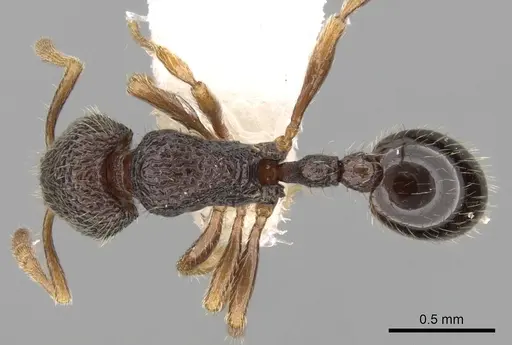
Literature
Loading distribution map...Loading products...