
Rogeria carinata
- Sci. Name
- Rogeria carinata
- Tribe
- Solenopsidini
- Subfamily
- Myrmicinae
- Author
- Kugler, 1994
- Distribution
- Found in 0 countries
Introduction
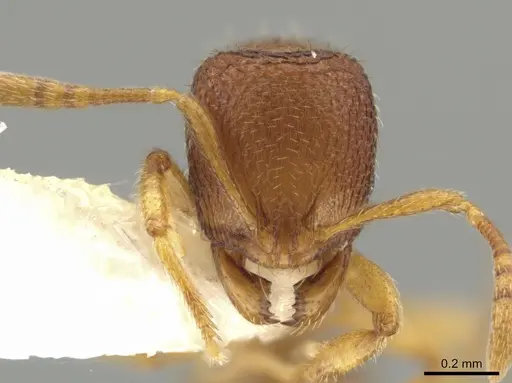
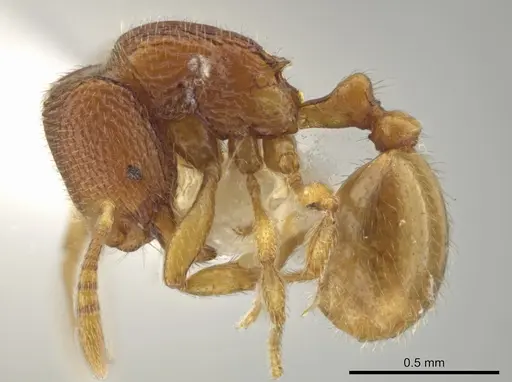
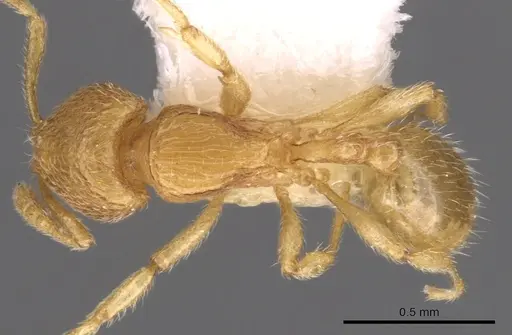
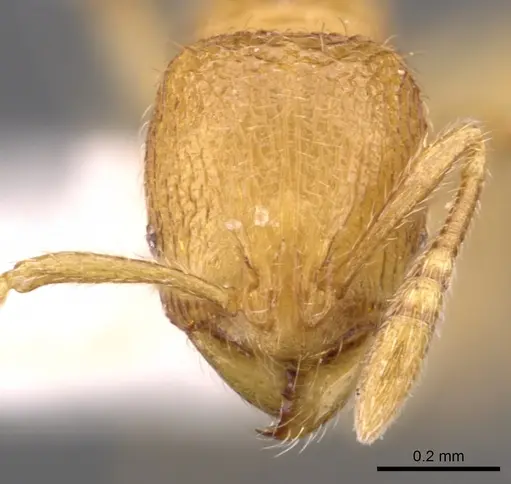
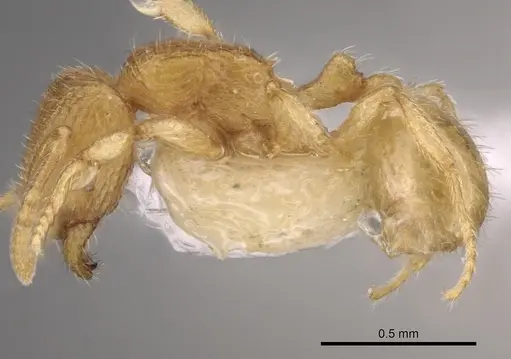
Rogeria carinata is a tiny ant species, with workers measuring 2.0-2.5 mm in total length. It belongs to the Myrmicinae subfamily and Solenopsidini tribe . Workers are brownish-yellow, with a darker head and mesosoma. A key identification feature is the ridged (carinate) sculpture on the upper body, with shiny spaces between the ridges . This species is known only from the Caribbean: the British Virgin Islands, Puerto Rico, and other Greater Antilles islands . It is rarely collected and has only been described from worker specimens, queens and males have never been found . Because no reproductives have ever been collected, almost everything about their colony life is unknown. They are a mystery for antkeepers, and any captive observations could add new knowledge to science. As a Solenopsidini, they likely have a functional stinger, but at their tiny size it poses no threat to humans [inferred from tribe].
Quick Summary
- Difficulty: Hard
- Origin & Habitat: Caribbean region, British Virgin Islands and Puerto Rico. Found in leaf litter and soil in tropical/subtropical environments [1].
- Colony Type: Unknown, only worker caste has been described. Colony structure is unconfirmed.
- Size & Growth:
- Queen: Unknown, queen caste not yet described
- Worker: 2.0-2.5 mm total length [1]
- Colony: Unknown, likely small colonies based on typical Rogeria patterns
- Growth: Unknown, inferred moderate from related species
- Development: Estimated 6-10 weeks based on similar small Myrmicinae from tropical regions (No direct data available. Timeline guessed from related Solenopsidini.)
- Antkeeping:
- Temperature: 24-28°C, based on Caribbean tropical habitat
- Humidity: Keep substrate consistently moist but not waterlogged. Mimics damp leaf litter
- Diapause: Unlikely, tropical species from Caribbean islands do not need hibernation, though activity may drop during cooler periods
- Nesting: In the wild they nest in soil and leaf litter. In captivity, a small test tube or Y‑tong nest with narrow chambers works well. Avoid large open spaces, these ants feel secure in tight spaces
- Behavior: Likely timid and secretive, typical of small litter-dwelling ants. Workers probably forage individually through the substrate. Because workers are under 2.5 mm, escape prevention is critical, they can slip through the tiniest gaps. Use fine mesh (0.5 mm or smaller) on ventilation holes and tight lids. They are not aggressive. As Solenopsidini they have a stinger, but it is negligible to humans.
- Common Issues: escape prevention is critical due to their tiny size, check all seals carefully., no queen or reproductive data makes establishing a captive colony uncertain., slow colony growth expected, may test your patience., wild-caught workers only, colonies must be built from scratch without a known queen., humidity control is tricky, too dry kills them, too wet causes mold.
Housing and Setup
Because workers are only 2.0-2.5 mm, housing must be tiny and escape‑proof. A small test tube with a water reservoir at one end works well for small groups. For larger setups, use a Y‑tong (AAC) nest with narrow chambers, avoid big open spaces, as these ants feel safer in tight spots. Escape prevention is absolutely critical: use fine mesh (0.5 mm or smaller) on all ventilation holes, and make sure all lids fit tightly. Even a tiny gap is an escape route. The outworld should be small, with a barrier of fluon or similar. Keep the nest area dark.
Temperature and Humidity
As a Caribbean species, keep the nest at 24-28°C. A slight temperature gradient helps, let the ants choose their preferred zone. Use a heating cable on one side or keep the setup in a warm room. Avoid direct heat that could dry out the nest. Humidity should be high: keep the substrate consistently moist but never waterlogged. A test tube water reservoir provides humidity. In formicariums, mist the nest area occasionally, but ensure good ventilation to prevent mold. Too dry = desiccation, too wet = mold.
Feeding and Diet
Like most Solenopsidini, Rogeria carinata is likely omnivorous. Offer small protein sources: fruit flies, tiny mealworms, springtails. Provide a constant sugar source like diluted honey or sugar water. Feed small amounts every 2-3 days, removing uneaten food quickly to prevent mold. Because workers are tiny, prey items should be very small, pieces they can manage. Observe what they accept, live prey may be preferred.
Behavior and Colony Dynamics
Workers are probably secretive and forage alone in the leaf litter and soil. They likely form small, localized colonies, not supercolonies. They are not aggressive and will avoid larger ants. Their tiny size makes them vulnerable, so they stick to cover. Since only workers have ever been found, we know nothing about reproduction, not even if they are monogyne or polygyne. Any captive colony could reveal new biology. Given their rarity, every observation adds to scientific knowledge.
Frequently Asked Questions
How long does it take for Rogeria carinata to develop from egg to worker?
The exact timeline is unknown, no research has documented it. Based on similar small Myrmicinae from tropical regions, estimate 6-10 weeks from egg to first worker at around 26°C. Expect variation.
What do Rogeria carinata ants eat?
They likely accept small protein sources like fruit flies, tiny mealworms, and springtails, plus sugar water or honey. Feed small amounts every 2-3 days, removing uneaten food promptly.
Can I keep Rogeria carinata in a test tube?
Yes, a test tube setup is ideal. Use a small tube with a water reservoir sealed with cotton. Ensure excellent escape prevention, these ants are extremely small.
Are Rogeria carinata good for beginners?
No, not recommended for beginners. They are extremely rare in the hobby, we have zero information on queens or colony structure, and their tiny size makes them challenging. Best for experienced keepers interested in rarely kept species.
What temperature do Rogeria carinata ants need?
Keep them at 24-28°C to mimic their Caribbean home. A slight gradient is beneficial. Avoid below 20°C or above 30°C.
How big do Rogeria carinata colonies get?
Colony size is unknown but likely remains small, probably under 500 workers based on typical Rogeria patterns. Not large.
Do Rogeria carinata need hibernation?
No, as a tropical Caribbean species, they do not require hibernation. Keep them warm year-round. Activity may slow slightly during cooler periods.
Why are my Rogeria carinata dying?
Common causes: low humidity (desiccation), temperatures outside 24-28°C, escape through tiny gaps, mold from overwatering, stress from too‑large enclosures. These tiny ants are sensitive.
Where is Rogeria carinata found in the wild?
This species is known only from the Caribbean: British Virgin Islands (Tortola) and Puerto Rico. It lives in leaf litter and soil in tropical areas [1][2].
Report an Issue
The current care sheet is based fully on literature. See inconsistencies, or something that's incorrect? Please , it will be resolved after review from an admin. Contributing to the blogs tab also helps providing information, to make us be able to further improve the caresheets. Thank you for your support!
References

This caresheet is licensed under CC BY-SA 4.0 .
Community Blogs
CASENT0649766
View on AntWeb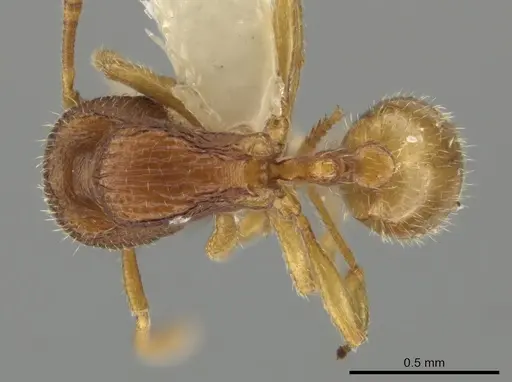
CASENT0900955
View on AntWeb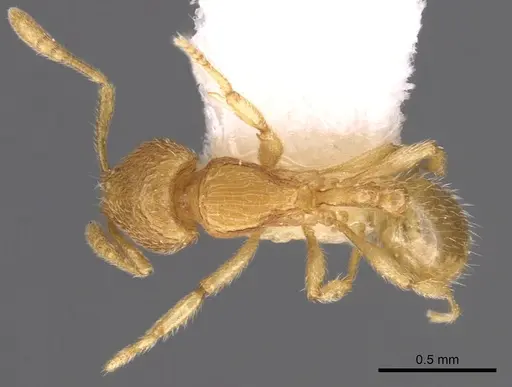
Literature
Loading distribution map...Loading products...