
Rogeria brunnea
- Sci. Name
- Rogeria brunnea
- Tribe
- Solenopsidini
- Subfamily
- Myrmicinae
- Author
- Santschi, 1930
- Distribution
- Found in 3 countries
Introduction
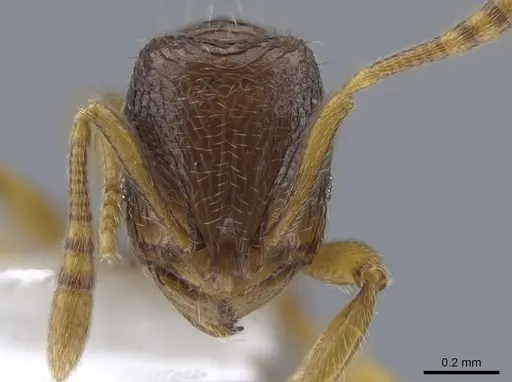
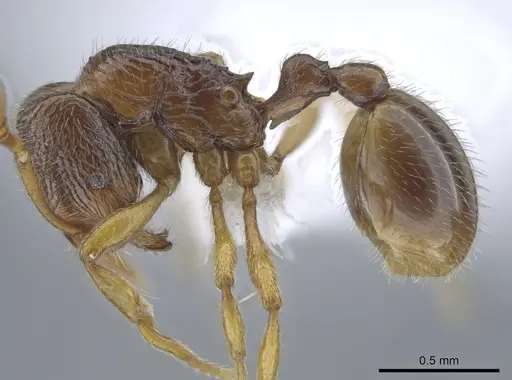
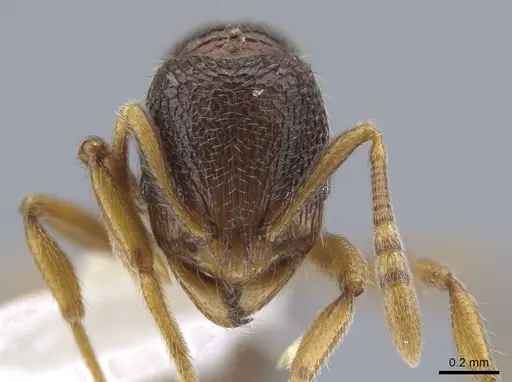
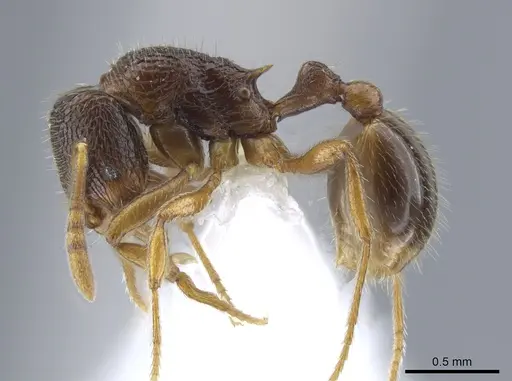
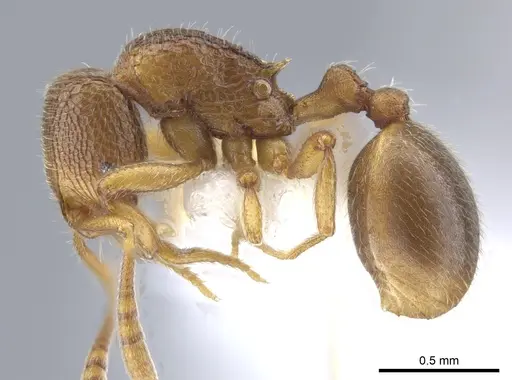
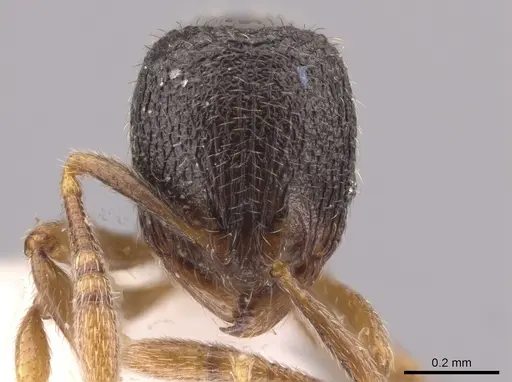
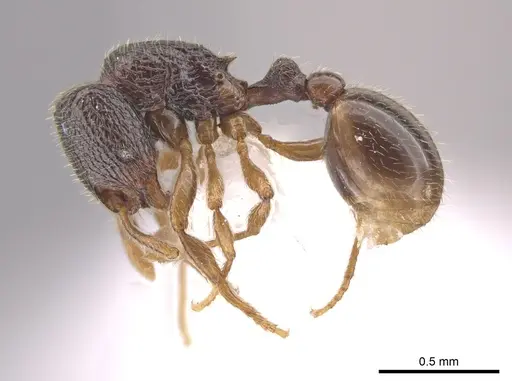
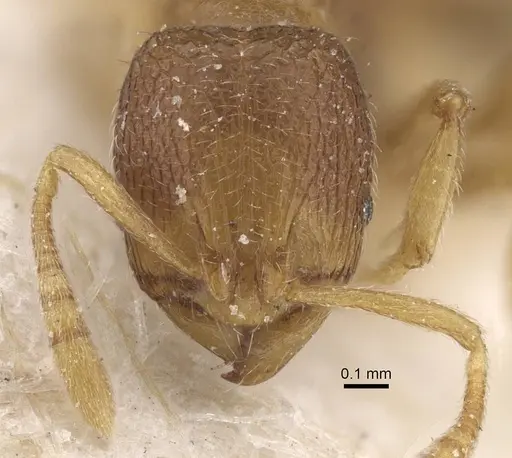
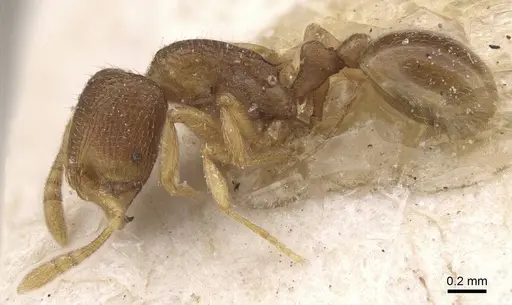
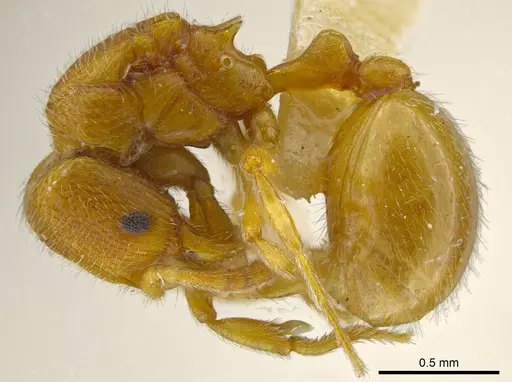
Rogeria brunnea is a tiny ant native to the Caribbean islands of Cuba, the Dominican Republic, and the Bahamas . Workers are 2.3-3.3mm in total length and brown to yellowish-brown with lighter yellowish legs and antennae . Queens are slightly larger at 2.8-3.4mm . This species shows two distinct worker sizes, but overall it remains one of the least studied ants - most of what we know comes from museum specimens, not living colonies . It belongs to the tribe Solenopsidini, meaning it has a functional stinger, though its sting is likely mild given its tiny size. Because so little is known about its biology, keeping this species in captivity is a challenge.
Quick Summary
- Difficulty: Very difficult, almost no captive care data exists
- Origin & Habitat: Caribbean islands: Cuba, Dominican Republic, and Bahamas [1]. Found in dry forest and semideciduous forest habitats [2][3].
- Colony Type: Unknown, colony structure has not been documented
- Size & Growth:
- Antkeeping:
- Temperature: Likely 22-28°C based on Caribbean dry forest habitat [2][3]. Provide a gentle gradient so ants can self-regulate.
- Humidity: Low to moderate, these ants come from seasonally dry forests. Keep the nest substrate lightly moist in one area and allow other parts to dry out completely.
- Diapause: Unknown, Caribbean species may have reduced activity during dry seasons rather than true hibernation
- Nesting: No specific nesting data exists. For captivity, use small test tubes or Y-tong/plaster nests with tight chambers scaled to their tiny size. Avoid acrylic nests. Fine mesh is essential for escape prevention.
- Behavior: No specific behavioral studies exist. As tiny Myrmicinae with a stinger, they likely forage individually on the ground and may defend the nest if threatened [1]. Their small size (2-3mm) makes escape risk high, use very fine mesh barriers.
- Common Issues: escape risk due to tiny size, they can slip through standard mesh barriers, no captive care data, expect high risk of colony failure and be prepared for trial and error, feeding is unknown, may refuse offered foods, start with small live prey (fruit flies, springtails) and sugar water, queen-worker association not confirmed, some queens were collected as strays, so colony structure may be unusual, males have never been collected, timing of nuptial flights is completely unknown [1]
Appearance and Identification
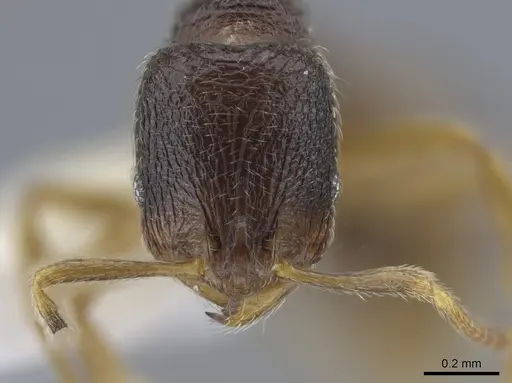
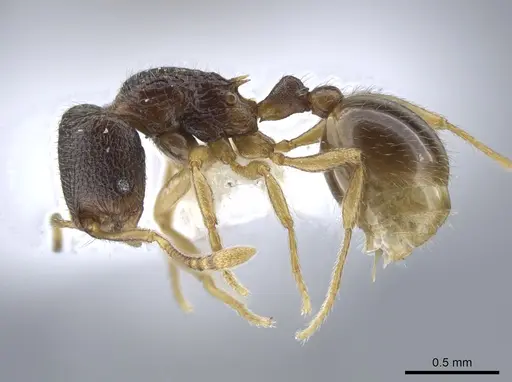
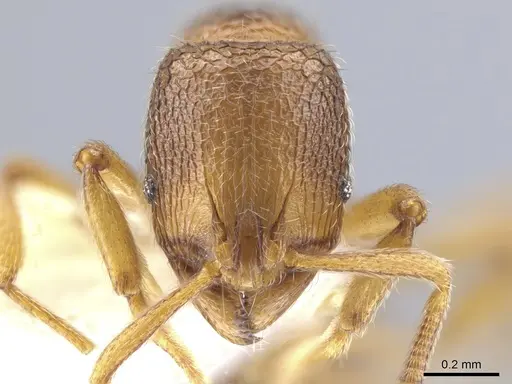
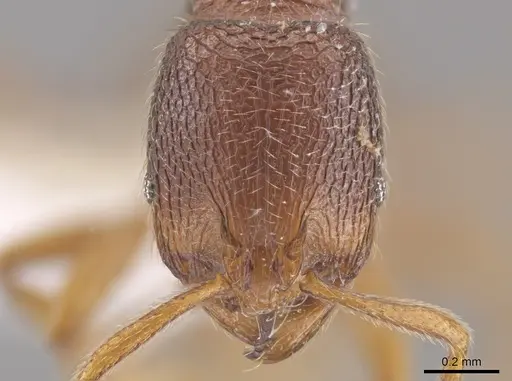
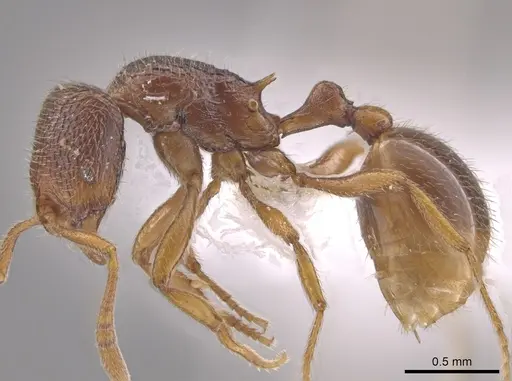
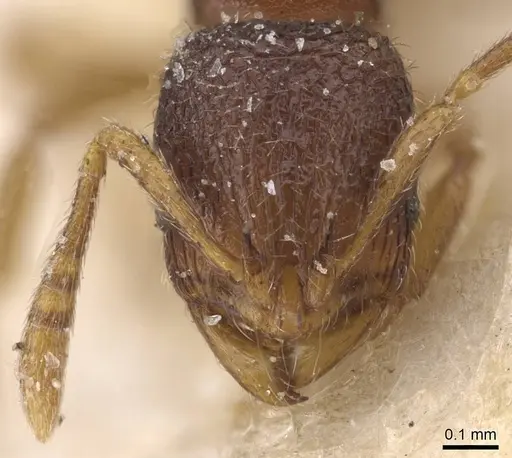
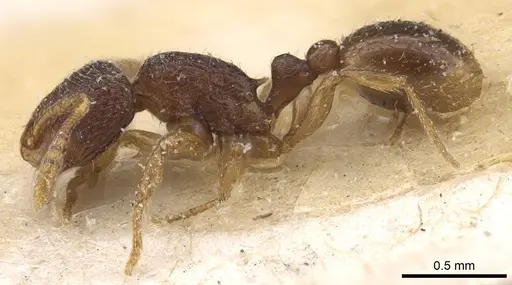
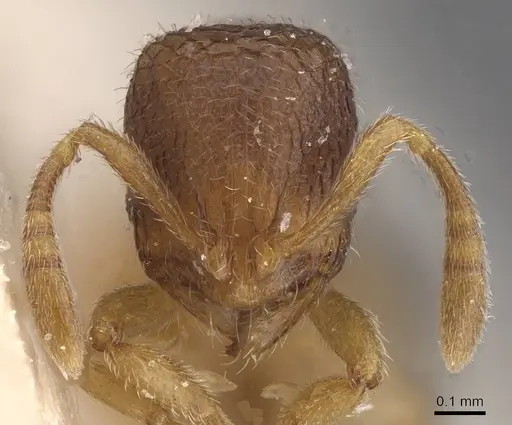
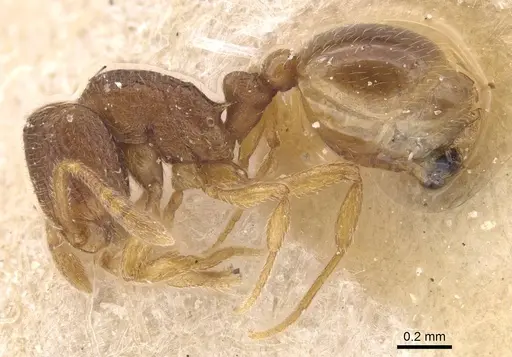
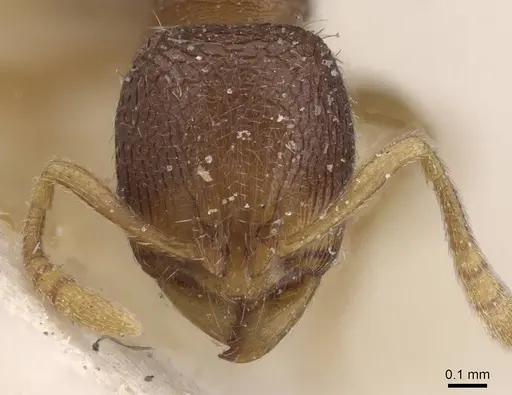
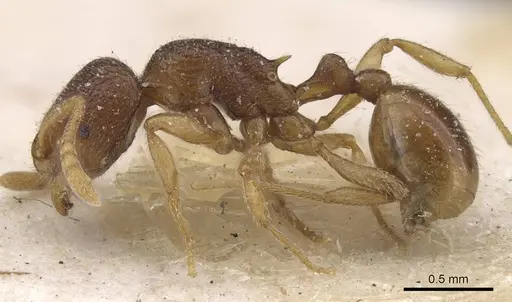
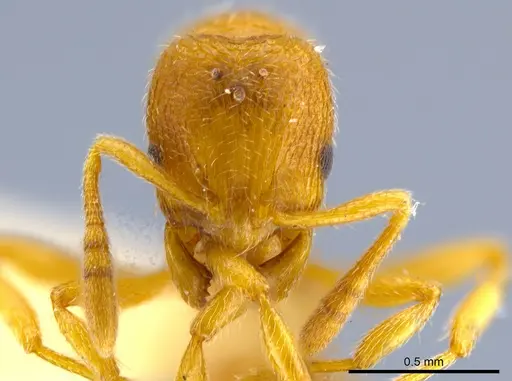
Workers are tiny,2.3-3.3mm in total length, and brown to yellowish-brown with noticeably lighter yellowish legs and antennae [1]. Queens are slightly larger at 2.8-3.4mm [1]. This species has two distinct worker size ranges, but the reason for this is unknown. The genus Rogeria can be identified by their five-toothed mandibles and the shape of the face plate above the mouth. As members of the tribe Solenopsidini, they have a functional stinger, though it is likely too small to be felt by humans.
Distribution and Habitat
This species is endemic to the Greater Antilles: known only from Cuba, the Dominican Republic, and the Bahamas [1][4]. In Cuba, specimens have been collected from various locations including Pinar del Río Province, Soledad, Havana Province, and Sierra Maestra [1]. In the Dominican Republic, they have been found in dry forest in Jaragua National Park and other areas [2][5]. Their habitat consists of dry forest and semideciduous forest [2][3]. Most records come from scattered museum specimens, systematic surveys are lacking.
Temperature and Care
Since this ant comes from the Caribbean dry forest, they likely prefer warmer temperatures. Aim for 22-28°C with a gentle gradient in the nest so workers can move to their preferred spot [2][3]. Humidity should be low to moderate, keep the nest substrate lightly moist in one corner but let other areas dry out completely. Overly wet conditions are likely to cause mold and stress. For nest type, use small test tubes or Y-tong/plaster nests with very tight chambers. Their tiny size means escape prevention is critical, use fine mesh (0.5mm or smaller) on all outworld openings.
Feeding and Diet
No specific dietary studies exist for this species. As a member of the Solenopsidini tribe, it may accept small live prey and sugar sources. For captive care, start with small fruit flies, springtails, or pinhead crickets, along with a drop of sugar water. Offer variety and remove uneaten food after 24 hours. Acceptance is uncertain, so be prepared to try different options.
Behavior and Temperament
No detailed observations have been documented. As tiny ants with a stinger, they may be defensive if the nest is disturbed, but their sting is unlikely to be painful. Workers probably forage individually. Their tiny size makes escape risk high, use very fine mesh and seal all gaps. Activity may be reduced during dry seasons, but this is speculation.
Colony Development
This is one of the least studied ant species in the hobby. Males have never been collected, which suggests that reproductive timing or behavior is unusual [1]. Queens have been collected as strays, so the association between a queen and her worker colony is not confirmed [1]. No data exists on founding type, egg-to-worker timeline, or colony growth rate. Captive attempts should be considered experimental.
Frequently Asked Questions
How long does it take for Rogeria brunnea to raise their first workers?
Unknown, no documented development timeline exists. Do not expect any colony growth until more research is done.
What do Rogeria brunnea ants eat?
No specific dietary studies exist. Based on their tribe (Solenopsidini), they likely accept small live prey and sugar water. Start with fruit flies, springtails, or pinhead crickets.
Are Rogeria brunnea good for beginners?
No, this species is not recommended for anyone due to the complete lack of captive care information. It should only be attempted by experienced keepers willing to experiment.
What temperature should I keep Rogeria brunnea at?
Based on their Caribbean dry forest habitat, aim for 22-28°C. Provide a gradient so ants can self-regulate. Room temperature (22-24°C) may be adequate, or use a gentle heat cable on one side.
How big do Rogeria brunnea colonies get?
Unknown, no colony size data exists. Expect small colonies based on the rarity of specimens.
Do Rogeria brunnea need hibernation?
Probably not, as a Caribbean species from tropical/subtropical islands, true diapause is unlikely. They may slow down during dry seasons, but standard room temperature year-round should be fine.
What size nest should I use for Rogeria brunnea?
Use very small nests with tight chambers, test tubes or Y-tong nests with narrow passages work best. Escape prevention is critical due to their tiny size, use fine mesh (0.5mm or smaller) on all openings. Avoid acrylic nests.
Report an Issue
The current care sheet is based fully on literature. See inconsistencies, or something that's incorrect? Please , it will be resolved after review from an admin. Contributing to the blogs tab also helps providing information, to make us be able to further improve the caresheets. Thank you for your support!
References

This caresheet is licensed under CC BY-SA 4.0 .
Community Blogs
CASENT0630100
View on AntWeb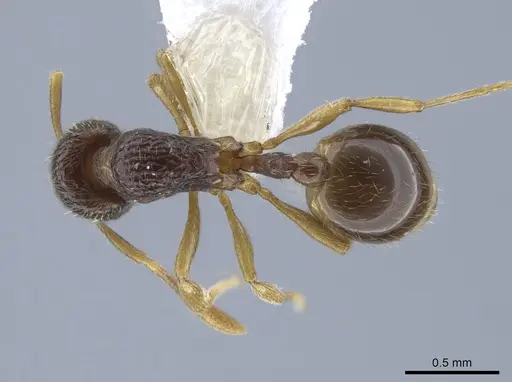
CASENT0630197
View on AntWeb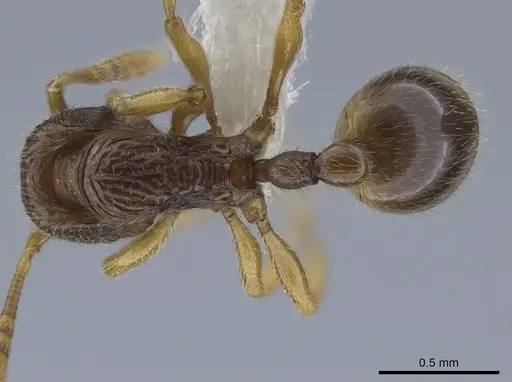
CASENT0630277
View on AntWeb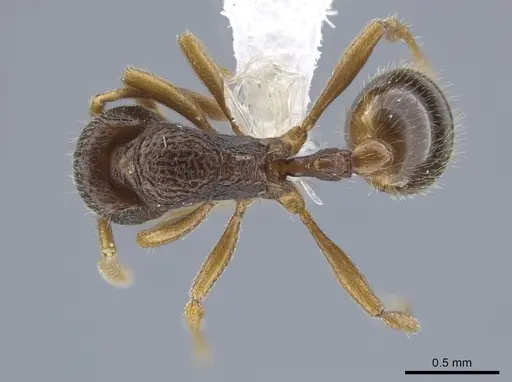
CASENT0633330
View on AntWeb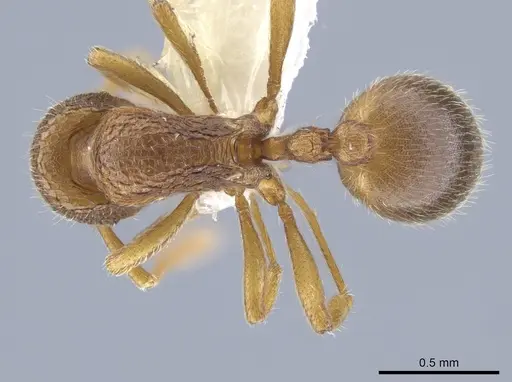
CASENT0652014
View on AntWeb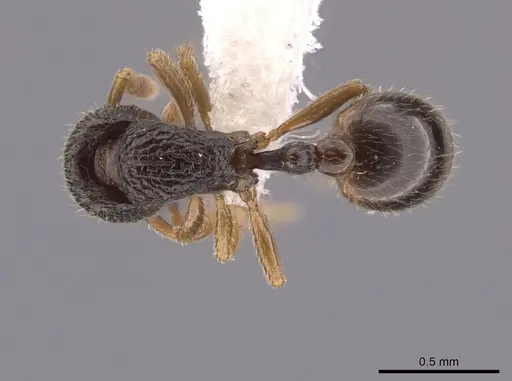
CASENT0656059
View on AntWeb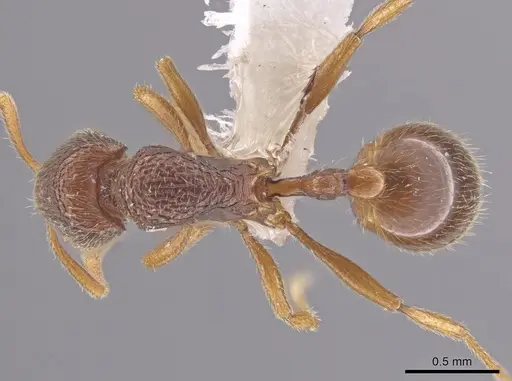
CASENT0913962
View on AntWeb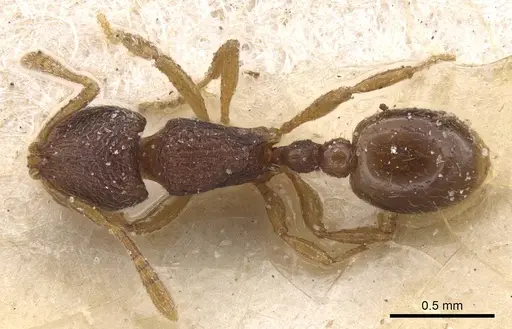
CASENT0913963
View on AntWeb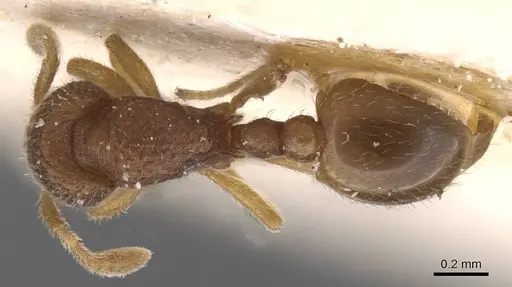
CASENT0913964
View on AntWeb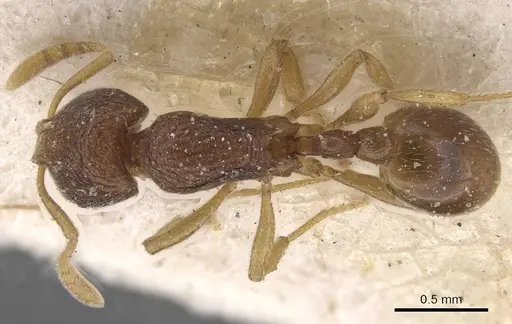
CASENT0913965
View on AntWeb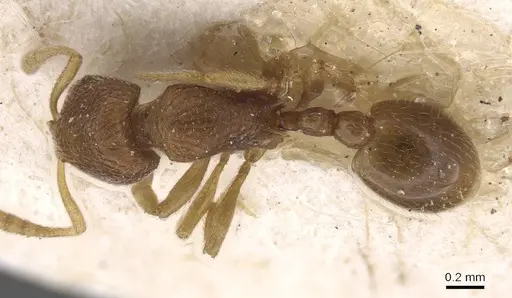
MCZ-ENT00757288
View on AntWeb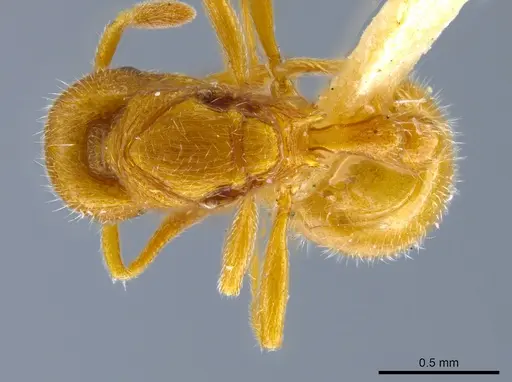
Literature
Loading distribution map...Loading products...