
Rogeria besucheti
- Sci. Name
- Rogeria besucheti
- Tribe
- Solenopsidini
- Subfamily
- Myrmicinae
- Author
- Kugler, 1994
- Distribution
- Found in 4 countries
Introduction
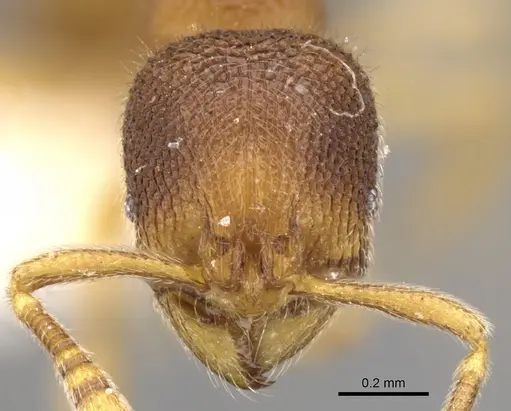
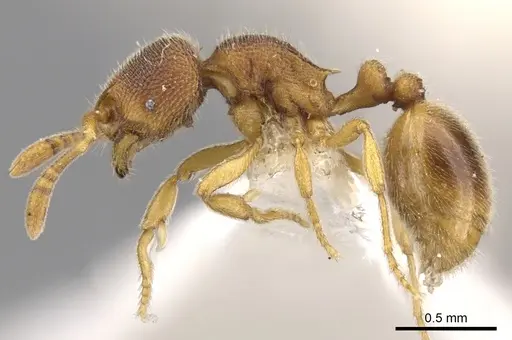
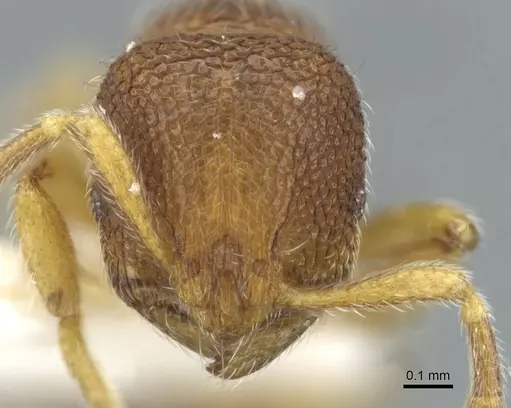
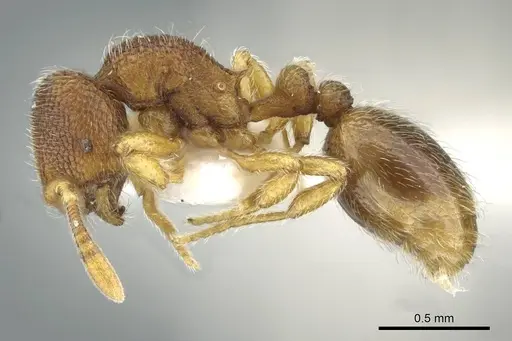
Rogeria besucheti is a tiny ant native to the Neotropical region, found in Paraguay, Peru, Argentina, Brazil, and French Guiana . Workers measure 2.7-3.1 mm total length, making them one of the smaller ants you'll come across . They belong to the subfamily Myrmicinae and tribe Solenopsidini, which includes fire ants and other small, mostly predatory species. Their body is brown with lighter brownish-yellow accents on the extremities and mandibles. The head, mesosoma, nodes, and gaster are covered in abundant flattened hairs and a few sparse erect ones. Their eyes are tiny, with only 8-10 facets . In the wild, R. besucheti lives in leaf litter and rotting wood inside humid forests. Paraguayan specimens come from gallery forest with bamboo, while Peruvian ones were collected from mixed broadleaf primary forest at 1000 m elevation . They are usually collected by sifting leaf litter (Berlese or Winkler methods), which shows how secretive they are. This species is almost never kept in captivity, so nearly everything about its biology is unknown.
Quick Summary
- Difficulty: Hard
- Origin & Habitat: Neotropical region, Paraguay, Peru, Argentina, Brazil, and French Guiana. Found in gallery forest with bamboo (Paraguay) and mixed broadleaf primary forest at 1000 m elevation (Peru). Lives in leaf litter and rotting wood in humid tropical forests [1][3][2].
- Colony Type: Unknown, only workers have been described, queens have never been documented in scientific literature [1]. Based on related Solenopsidini species, colonies may be small and possibly single-queened, but no data exists.
- Size & Growth:
- Queen: Not described, no queen specimens have been documented [1].
- Worker: 2.7-3.1 mm total length [1].
- Colony: Unknown, only a few workers have ever been collected in studies. Likely small, possibly under 500 workers based on typical litter-dwelling ant patterns, but this is an inference [4].
- Growth: Unknown, no development data exists.
- Development: Unknown, no direct measurements. Estimated based on related small Myrmicinae ants (roughly 4-8 weeks at tropical temperatures), but completely speculative. No published data [1]. (No development data available. Observers will be pioneering.)
- Antkeeping:
- Temperature: Based on its tropical origin, keep warm around 24-28°C. Provide a slight gradient so workers can choose their preferred spot [1].
- Humidity: Keep the nest substrate consistently moist but not waterlogged. These ants come from humid leaf litter, so high ambient moisture is essential. Provide a water source and use moist substrate [1].
- Diapause: Unknown, likely no true diapause given the tropical home. Keep temperatures stable year-round [1].
- Nesting: Tight, humid chambers are critical. Start with a test tube for founding colonies. For larger nests, use plaster, Y-tong (AAC), or 3D-printed nests with small chambers. Avoid open spaces. Ensure the nest holds moisture without becoming waterlogged [1].
- Behavior: These are shy, cryptic litter-dwellers. They avoid confrontation and prefer to stay hidden. As a member of Solenopsidini, they have a sting with piperidine alkaloids, but their tiny size means they pose no threat to humans. Extreme escape prevention is required, their 2.7 mm size lets them squeeze through tiny gaps. Use fine mesh and tight-fitting seals [1].
- Common Issues: tiny size means escapes are likely without fine mesh barriers, these ants are only 2.7 mm., high humidity needs can cause mold if ventilation is poor., no published care information, you are pioneering captive husbandry., slow or no colony growth if diet is wrong, their exact food is unknown., stress from handling or inappropriate nest conditions can quickly kill small colonies.
Housing and Setup
Since Rogeria besucheti is a tiny litter-dweller, your setup must match its natural microhabitat. These ants live in leaf litter and rotting wood in humid forests, so they need small, snug chambers with high humidity [1]. Start a colony in a test tube: fill the first 1-3 cm with water and let the rest stay dry for the ants to live in. For bigger colonies, use a small plaster, Y-tong, or 3D-printed nest with chambers scaled to their tiny size. The chambers should be narrow and cozy, these ants get stressed in large, open spaces. Escape prevention is critical: their 2.7 mm size means they can slip through gaps that larger ants cannot. Use fine mesh on all ventilation holes and make sure lids fit tightly. Connect the nest to a humid outworld where you can offer food. Use short, narrow tubing to link the areas [1].
Feeding and Diet
The exact diet of R. besucheti hasn't been studied, but based on its tribe (Solenopsidini), it likely eats small invertebrates and sugary liquids. Offer tiny live prey like fruit flies, pinhead crickets, and springtails. You can also provide a drop of sugar water or honey occasionally. Since they hunt in leaf litter, prey should be small and easy to subdue. Feed small amounts every few days and remove any leftovers to prevent mold. Watch what your ants accept and adjust accordingly.
Temperature and Humidity
Aim for warm, stable temperatures around 24-28°C. These ants come from tropical forests, so a gentle heat gradient helps them regulate. Use a low-wattage heating cable on one side of the nest if needed [1]. Humidity is vital: keep the nest substrate consistently moist but not waterlogged. A piece of damp sphagnum moss in the outworld can boost humidity. Avoid stagnant air (which causes mold) as well as strong airflow (which dries out the nest). Monitor conditions closely, these tiny ants are sensitive to sudden changes [1].
Colony Establishment
Only workers have been described for this species, no queens are known from the literature [1]. If you somehow obtain a queen (a remarkable find), founding behavior is completely unconfirmed. Provide a small, humid test tube setup at around 26°C and wait. Keep the tube in a dark place and avoid disturbing it. If you get a colony with workers only, focus on keeping humidity high and offering tiny live prey. Expect slow growth, these are small ants with likely small colony sizes. Document everything, because any successful captive breeding with this species would be valuable new information for the antkeeping community.
Frequently Asked Questions
How long does it take for Rogeria besucheti to go from egg to worker?
The egg-to-worker timeline is unknown, no scientific data exists. Based on related small Myrmicinae ants, it might take 4-8 weeks at 26-28°C, but this is a rough guess. Patience is key [1].
Can I keep multiple Rogeria besucheti queens together?
The colony structure is unknown. No queens have ever been documented, so we don't know if they tolerate multiple queens. Do not attempt to combine unrelated queens until more is known [1].
What do Rogeria besucheti ants eat?
Their exact diet is unstudied, but as members of Solenopsidini they likely eat small invertebrates and sugary liquids. Offer small live prey like fruit flies, tiny crickets, and springtails. Occasionally provide a drop of sugar water or honey. Start with live prey and adjust based on what they accept.
Are Rogeria besucheti ants dangerous?
No, they are tiny (2.7-3.1 mm), shy, and non-aggressive. As a Solenopsidini, they possess a sting, but it poses no risk to humans. They prefer fleeing over fighting [1].
Do Rogeria besucheti ants need hibernation?
No, they come from tropical forests where temperatures stay warm all year. They likely do not need a diapause period. Keep temperatures stable all year [1].
How big do Rogeria besucheti colonies get?
Colony size is unknown, no large colonies have been documented. Based on typical litter-dwelling litter patterns and the fact that only a few workers have been collected, colonies probably stay small (a few hundred workers at most) [1][4].
Why are my Rogeria besucheti dying?
Common causes include: humidity too low (kills quickly), temperature stress, escape through tiny gaps, mold from poor ventilation, and stress from wrong nest conditions. These sensitive litter-dwellers need tight, humid chambers. Review your setup and keep humidity high, temperatures stable (24-28°C), and ventilation balanced [1].
Can I keep Rogeria besucheti in a test tube?
Yes, a test tube is ideal for starting colonies. Use a small test tube with a water reservoir (fill only 1-3 cm) and a dry section for the ants. The tight space matches their tiny size and makes them feel secure. For larger colonies, connect multiple test tubes or move to a small plaster/Y-tong nest [1].
Are Rogeria besucheti good for beginners?
No, this species is not recommended for beginners. There are no established care protocols, specific humidity needs are tricky, and queens or colonies are nearly impossible to find. Start with an easier species like Lasius niger or Tetramorium caespitum before attempting Rogeria [1].
What is the best nest type for Rogeria besucheti?
Small, tight chambers are essential. A test tube works for founding. For established colonies, use a small plaster, Y-tong (AAC), or 3D-printed nest with narrow chambers scaled to their 2.7 mm size. Avoid large, open spaces. The nest must hold humidity without getting waterlogged. Sphagnum moss can help maintain moisture [1].
Report an Issue
The current care sheet is based fully on literature. See inconsistencies, or something that's incorrect? Please , it will be resolved after review from an admin. Contributing to the blogs tab also helps providing information, to make us be able to further improve the caresheets. Thank you for your support!
References

This caresheet is licensed under CC BY-SA 4.0 .
Community Blogs
CASENT0900956
View on AntWeb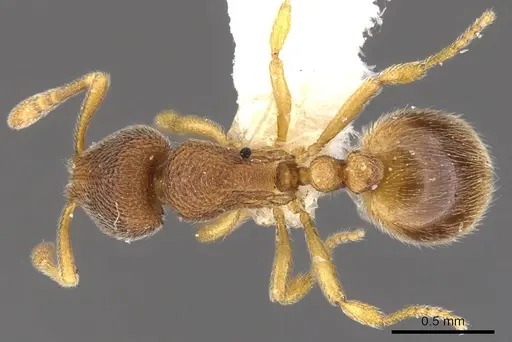
CASENT0911233
View on AntWeb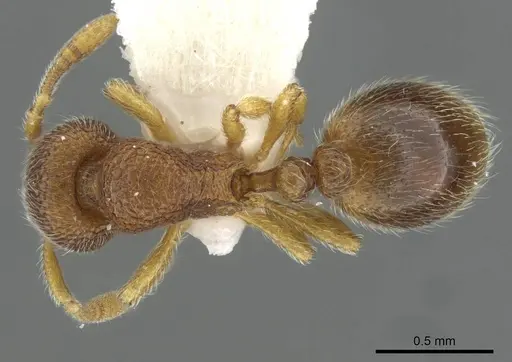
Literature
Loading distribution map...Loading products...