
Rogeria belti
- Sci. Name
- Rogeria belti
- Tribe
- Solenopsidini
- Subfamily
- Myrmicinae
- Author
- Mann, 1922
- Distribution
- Found in 9 countries
Introduction
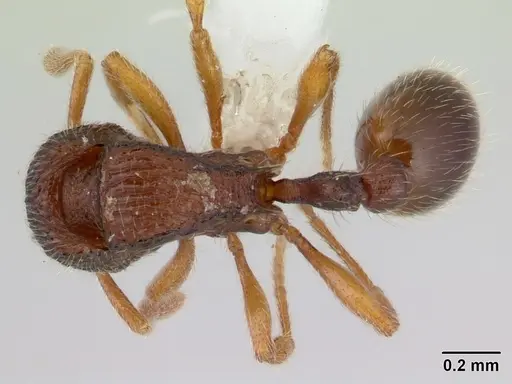
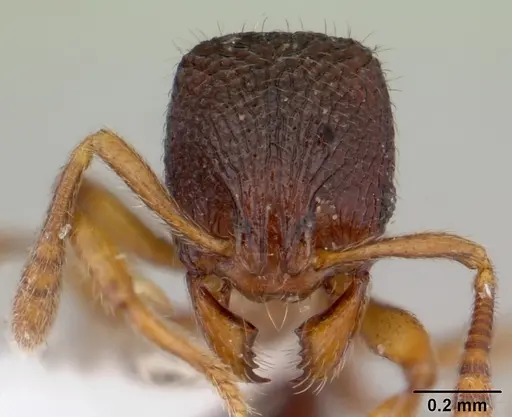
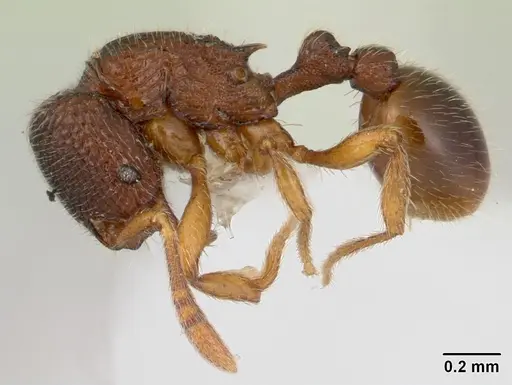
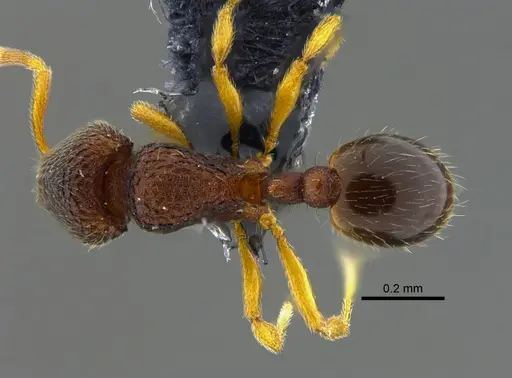
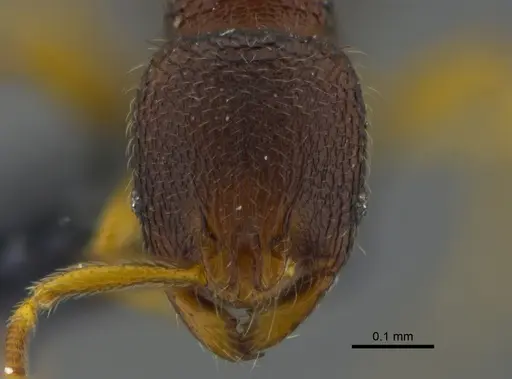
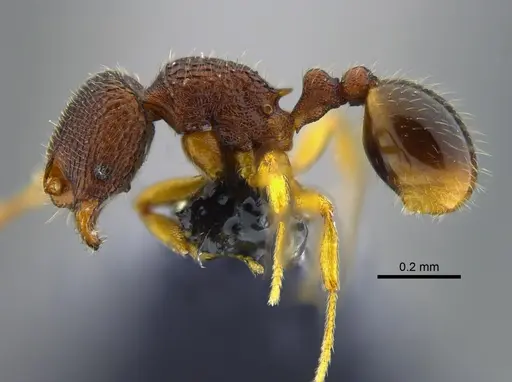
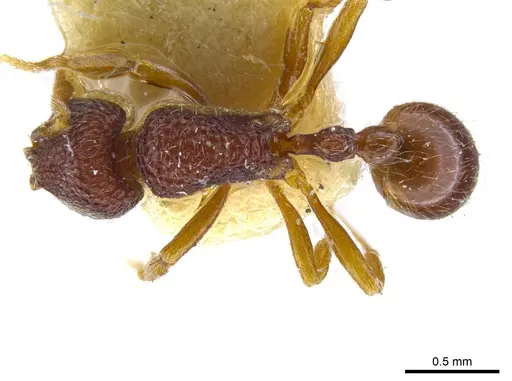
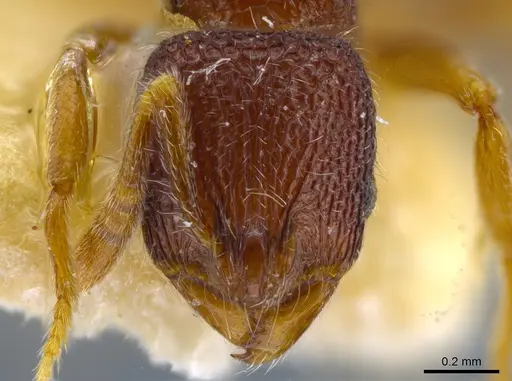
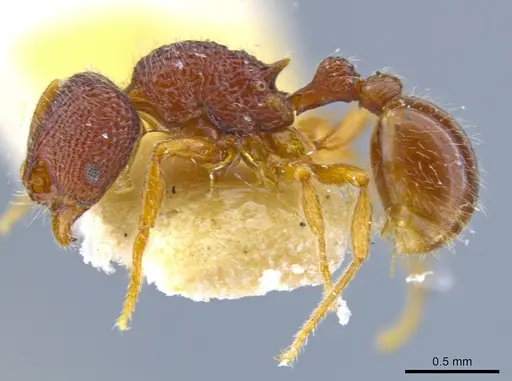
Rogeria belti is a tiny ant species from the Neotropics, ranging from Mexico down through Central America to Colombia and Venezuela . Workers are just 2.4-3.4mm long, making them one of the smaller ants you'll find . They are dark reddish-brown with yellowish-brown mandibles, antennae, and legs. Their large oval eyes, moderately long propodeal spines, and coarse areolate to rugose sculpture on the mesosoma help identify them . These ants live in wet tropical forests, nesting in decaying wood, under loose bark, and inside leaf litter . They are ground-dwelling omnivores that scavenge on dead insects, workers have been seen recruiting to freshly killed prey from under bark . This species might actually be a species complex, since populations vary in sculpture and eye size across its range .
Quick Summary
- Difficulty: Medium
- Origin & Habitat: Wet tropical forests from Mexico to Colombia and Venezuela, including Belize, Costa Rica, Guatemala, Honduras, Nicaragua, and Panama [1]. Found from sea level to about 1000m elevation in humid primary and secondary forests, as well as in cacao and coffee agroforestry systems [2].
- Colony Type: Colony structure is unconfirmed – no detailed studies exist for this species.
- Size & Growth:
- Queen: 3.0-3.4mm [1]
- Worker: 2.4-3.4mm [1]
- Colony: Unknown – no published colony size data for this species.
- Growth: Unknown
- Development: Unknown – no specific data available. (Development time is unstudied. Warmer temperatures within their preferred range may speed things up, but this is guesswork.)
- Antkeeping:
- Temperature: Aim for 22-26°C – these are tropical forest ants that need warm, stable conditions. A gentle temperature gradient lets them self-regulate [2].
- Humidity: High humidity is essential because they come from wet forests. Keep the nest substrate consistently moist but not waterlogged. Provide a water tube for drinking [2].
- Diapause: Unlikely – as a tropical species, they probably don't need a true diapause. They may be less active during cooler periods, but that's normal.
- Nesting: In the wild, they nest in decaying logs, under loose bark, inside leaf litter, in _Philodendron_ sheaths, epiphyte mats on fallen branches, rotten wood, and dead trees on the ground [1]. In captivity, use a naturalistic setup with moist soil mixed with fine gravel, plus pieces of decaying wood or bark. A Y-tong or plaster nest with good moisture retention also works, but make sure the chambers are scaled to their tiny size.
- Behavior: These are small, secretive ants that forage mainly in the leaf litter layer. Workers are omnivorous and readily recruit to insect carcasses – they were seen recruiting to a freshly killed tabanid [1]. They are not aggressive and prefer to flee. Because they are so tiny, escape prevention is critical: they can squeeze through remarkably small gaps.
- Common Issues: tiny size means escapes are likely without fine mesh barriers and tight-fitting lids, high humidity needs can lead to mold if ventilation is poor, colony growth is unstudied, so keepers must be patient and avoid overfeeding, tropical species may struggle if room temperature drops below 20°C for long periods
Housing and Nest Setup
Because Rogeria belti is so tiny, you need to be careful with their enclosure. In the wild, they nest in decaying wood, under loose bark, inside leaf litter, in Philodendron sheaths, epiphyte mats on fallen branches, rotten wood, and dead trees on the ground [1]. A naturalistic setup works best: use a container with moist substrate (a mix of soil and fine gravel) and add pieces of decaying wood, bark, or leaf litter. The substrate should stay damp but never waterlogged.
If you use a formicarium, pick one with chambers sized for tiny ants – a Y-tong or plaster nest with narrow tunnels works well, but you must maintain high humidity. Always include a water tube or moisture source. Escape prevention is critical: use fine mesh on all openings, since these ants can slip through gaps that seem impossible [1].
Feeding and Diet
Rogeria belti is an omnivorous ground-dwelling ant. In the wild, they scavenge on dead insects and probably tend aphids for honeydew. In captivity, offer a varied diet: small live insects like fruit flies, pinhead crickets, or aphids for protein. They also accept sugar water, honey, or diluted maple syrup.
Because they are so small, prey items should be appropriately sized – avoid large insects that could overwhelm them. Offer protein 2-3 times a week and keep a constant sugar source. Remove uneaten prey after 24-48 hours to prevent mold. Workers are enthusiastic foragers and will quickly recruit to food finds [1].
Temperature and Humidity
As a wet forest species from tropical Central America, Rogeria belti needs warm, humid conditions. Aim for 22-26°C – typical room temperature in many homes, but you may need a small heating mat during winter if your home cools down. Temperature affects activity: warmer within range speeds things up, cooler slows them down.
Humidity is more critical than temperature. Keep the nest substrate consistently moist – it should feel damp to the touch but not have standing water. Mist the enclosure regularly and consider a water tube that reaches into the nest area. Balance humidity with ventilation to prevent mold. A naturalistic setup with a hydration layer (gravel under the soil) slowly releases moisture while allowing airflow. [2][1]
Behavior and Colony Dynamics
Rogeria belti workers are small and secretive. They are not aggressive and usually retreat rather than defend the colony. They forage in the leaf litter layer, searching for small insects and other edible items. Their relatively large eyes suggest they may use visual cues more than some other ants.
Colony size is unknown – no studies have been done on this species. The queen is 3.0-3.4mm long, only slightly larger than workers, which is typical of many Myrmicinae. Founding colonies will grow slowly at first, with the first workers (nanitics) being smaller than normal workers. [1]
Frequently Asked Questions
How long does it take for _Rogeria belti_ to raise their first workers?
Exact timing is unknown for this species – no studies have tracked development. If you keep them warm (22-26°C), you'll just have to be patient and observe.
Can I keep _Rogeria belti_ in a test tube?
Test tubes can work for founding colonies, but you need to maintain high humidity and provide a water source. However, because they naturally nest in decaying wood and leaf litter, a naturalistic setup is often better long-term. If using test tubes, make sure there's no way for them to escape – these tiny ants can get out through surprisingly small gaps.
What do _Rogeria belti_ eat?
They are omnivorous. Offer small live insects (fruit flies, pinhead crickets, small mealworms) for protein, and provide a constant sugar source like sugar water, honey, or diluted maple syrup. They readily recruit to protein baits in the wild [1].
Are _Rogeria belti_ good for beginners?
They are rated as medium difficulty. Their small size and high humidity needs make them more challenging than larger, more tolerant species. Beginners should be sure they can maintain warm, humid conditions before trying this species.
How big do _Rogeria belti_ colonies get?
Colony size is not documented – no data is available for this species. It's probably modest, but that's just a guess.
Do _Rogeria belti_ need hibernation?
As a tropical species from Central America, they likely do not require a true diapause. They may be less active during cooler periods, but simply keeping them at room temperature (above 20°C) year-round should be fine.
Why are my _Rogeria belti_ escaping?
Their tiny size lets them squeeze through very small gaps. Make sure all enclosures have fine mesh over ventilation holes and use tight-fitting lids. Check for any cracks or seams – even a millimeter gap can be an escape route.
When should I move _Rogeria belti_ to a formicarium?
For founding colonies, keep them in a simple setup (test tube or small container with moist substrate) until the colony seems established – there's no specific worker count known. Once the colony is active and growing, you can move them to a larger naturalistic setup or formicarium, making sure the new place stays humid.
Can I keep multiple _Rogeria belti_ queens together?
This has not been documented. It's safest to assume they are single-queen colonies until evidence shows otherwise. Combining unrelated queens is not recommended.
Report an Issue
The current care sheet is based fully on literature. See inconsistencies, or something that's incorrect? Please , it will be resolved after review from an admin. Contributing to the blogs tab also helps providing information, to make us be able to further improve the caresheets. Thank you for your support!
References

This caresheet is licensed under CC BY-SA 4.0 .
Community Blogs
Literature
Loading distribution map...Loading products...