
Rhytidoponera rufithorax
- Sci. Name
- Rhytidoponera rufithorax
- Tribe
- Ectatommini
- Subfamily
- Ectatomminae
- Author
- Clark, 1941
- Distribution
- Found in 1 countries
Introduction
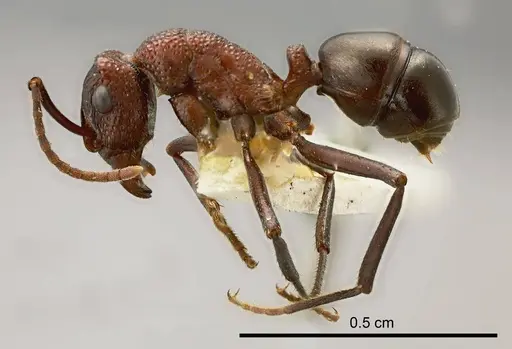
Rhytidoponera rufithorax is an Australian ant found in the semi-arid tropics of the Northern Territory . It has a distinctive two-tone look: a reddish-brown thorax contrasts sharply with a dark brown gaster . Its biology is poorly studied, so most care information is inferred from its genus and habitat. As an Ectatomminae ant, it has a functional stinger that can deliver a painful sting if the nest is disturbed. In the wild, it nests in soil or under stones .
Quick Summary
- Difficulty: Medium
- Origin & Habitat: Northern Australia (Northern Territory), semi-arid tropical regions. Nests in soil or under stones in arid to semi-arid habitats [1][2].
- Colony Type: Colony structure is unconfirmed. Many Rhytidoponera species have ergatoid queens and may be polygynous, but no specific data exists for this species.
- Size & Growth:
- Queen: size data unavailable, queens are often worker-like (ergatoid) in this genus
- Worker: size data unavailable
- Colony: Estimated up to several hundred workers based on genus patterns (no confirmed data)
- Growth: Moderate, inferred from similar Australian species
- Development: Unknown, no published data for this species. Estimate 6-10 weeks based on typical Ectatomminae, but unverified. (Development time is purely inferred. Timing will depend on temperature and food availability.)
- Antkeeping:
- Temperature: Keep warm (low-to-mid 20s°C) year-round. Provide a heat gradient so ants can self-regulate. Exact needs are unknown for this species.
- Humidity: Provide a moisture gradient: one area moist (not wet) and most of the nest dry. These ants come from semi-arid habitats, so avoid constant high humidity. Allow substrate to partially dry between waterings.
- Diapause: No true diapause needed. Reduce feeding slightly during winter months (May-August in southern hemisphere) but there is no evidence they require cold exposure.
- Nesting: Natural nesting occurs in soil and under stones [2]. In captivity, use a soil-based nest with flat stones or a Y-tong/plaster nest. Offer both dry and slightly moist chambers.
- Behavior: Workers are ground-foraging predators. They have a functional stinger and may sting if threatened. Based on genus patterns, they are moderately active and not highly aggressive away from the nest. Escape risk is moderate due to their medium size.
- Common Issues: excess moisture is the biggest risk, these ants are adapted to dry conditions and too much humidity promotes mold and colony stress, sting can be painful, handle with care and avoid disturbing the nest, very little is known about this species, so many care aspects are experimental, expect trial and error, wild-caught colonies may bring parasites or diseases that are hard to treat in captivity
Housing and Nest Setup
Since Rhytidoponera rufithorax nests in soil and under stones in the wild [2], replicate that setup: provide a substrate of sandy soil or clay with flat stones on top. A Y-tong (AAC) or plaster nest can work if you create a moisture gradient. The nest should be dark and have tight chambers. Avoid acrylic nests. Start the colony in a test tube setup until at least 20-30 workers are present, then connect to a larger formicarium.
Feeding and Diet
These are predatory ants. Offer small live insects such as fruit flies, small crickets, or mealworms. Provide protein 2-3 times per week. Sugar sources (diluted honey or sugar water) can also be given occasionally. Remove uneaten prey after 24 hours to prevent mold. Founding queens do not need food until the first workers emerge.
Temperature and Seasonal Care
Keep the nest at roughly 24-28°C during the active season, with a heat gradient (heated side and cool side). This species comes from semi-arid tropics, so it likely needs warmth year-round. There is no evidence it requires diapause. During the cooler months (May-August in southern hemisphere), you can let the temperature drop a few degrees and reduce feeding, but active heating is still recommended.
Behavior and Handling
Workers forage on the ground and are diurnal. They have a functional stinger. They may sting if the nest is disturbed, but are not aggressive away from it. Handle with care, use a test tube to move them rather than picking them up. Their sting is painful but not medically dangerous to healthy adults.
Colony Founding
Founding behavior is unconfirmed for this species. Many Rhytidoponera have ergatoid (worker-like) queens that are not claustral. However, if you have a dealate queen, typical ant founding methods (test tube setup) are recommended until more is known. Do not disturb the queen during founding. First workers (nanitics) will appear after approximately 6-10 weeks if conditions are favorable, but this is an estimate based on related species.
Frequently Asked Questions
How long does it take for Rhytidoponera rufithorax to produce first workers?
There is no published data for this species. Based on related Ectatomminae ants, it may take 6-10 weeks at warm temperatures. This is an estimate and actual timing could differ significantly [2].
Do Rhytidoponera rufithorax ants sting?
Yes, they have a functional stinger, as is typical for the subfamily Ectatomminae. The sting is painful but not medically dangerous to healthy adults. Handle the nest with care.
What do I feed Rhytidoponera rufithorax?
Offer small live insects (fruit flies, small crickets, mealworms) 2-3 times per week. A sugar source like diluted honey can be given occasionally. Remove leftovers after 24 hours to prevent mold.
Are Rhytidoponera rufithorax good for beginners?
They are intermediate difficulty because so little is known about their specific care. Beginners should stick to well-documented species first.
How big do Rhytidoponera rufithorax colonies get?
No confirmed colony size exists. Based on related Rhytidoponera species, colonies likely reach a few hundred workers at most.
Do Rhytidoponera rufithorax need hibernation?
No. As a tropical species from northern Australia, they do not require a winter diapause. Reduce feeding slightly during local winter but keep them warm year-round.
Can I keep multiple queens together?
Not recommended. There is no data on this species. Some Rhytidoponera can be polygynous, but it's safer to start with a single queen.
Why are my Rhytidoponera rufithorax dying?
The most likely causes are too much humidity (they are arid-adapted), mold from overfeeding or poor ventilation, or stress from excessive disturbance. Ensure the nest has dry zones and good airflow. If the colony was wild-caught, parasites are also a possibility.
When should I move my colony to a formicarium?
Wait until the colony has at least 20-30 workers and is actively foraging. Then connect the test tube to the new nest so they can move voluntarily.
What humidity level do Rhytidoponera rufithorax need?
Instead of a percentage, provide a moisture gradient: one area slightly moist and the rest dry. These ants come from semi-arid habitats and will die if kept constantly wet.
Where is Rhytidoponera rufithorax found in the wild?
It is found in the Northern Territory of Australia, in semi-arid tropical regions. It nests in soil or under stones [1][2].
Are Rhytidoponera rufithorax aggressive?
They are not aggressive away from the nest, but will vigorously defend their nest if disturbed. They have a painful sting. Avoid handling workers and be gentle when working with the nest.
Report an Issue
The current care sheet is based fully on literature. See inconsistencies, or something that's incorrect? Please , it will be resolved after review from an admin. Contributing to the blogs tab also helps providing information, to make us be able to further improve the caresheets. Thank you for your support!
References

This caresheet is licensed under CC BY-SA 4.0 .
Community Blogs
ANTWEB1008319
View on AntWeb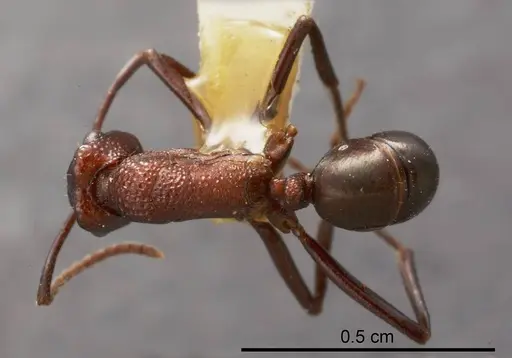
Literature
Loading distribution map...Loading products...