
Rhytidoponera punctata
- Sci. Name
- Rhytidoponera punctata
- Tribe
- Ectatommini
- Subfamily
- Ectatomminae
- Author
- Smith, 1858
- Distribution
- Found in 1 countries
Introduction
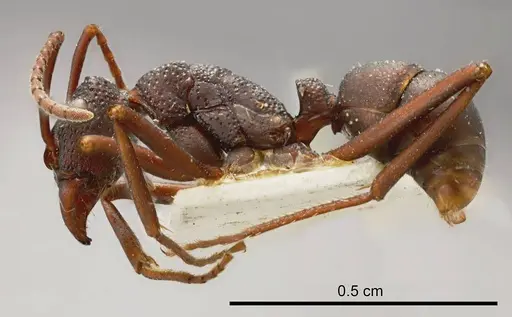
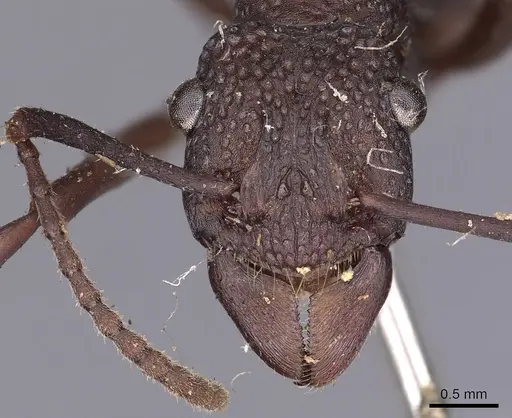
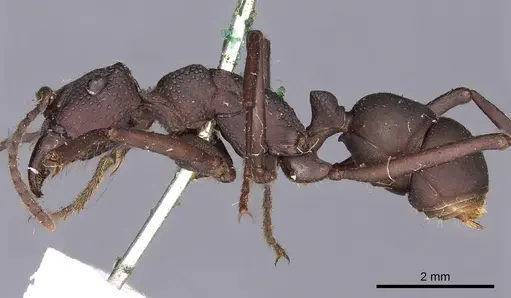
Rhytidoponera punctata is a medium-sized ant native to Australia, measuring around 8.5mm for workers . The species gets its name from its distinctive punctate integument - its body surface is covered in tiny pits or dots . These ants are found mainly in the wetter parts of southwestern Australia, including the Darling Range and Swan coastal plain in Western Australia . Originally described by Frederick Smith in 1858 from Port Lincoln in South Australia, this species was once known as Rhytidoponera rufonigra before being synonymized. As a member of the Ectatomminae subfamily, workers have functional stingers and can deliver a painful sting.
Quick Summary
- Difficulty: Medium
- Origin & Habitat: Native to Australia (South Australia and Western Australia). Found in wetter areas of the Darling Range and Swan coastal plain [3]. A temperate coastal and range habitat with moderate rainfall.
- Colony Type: Colony structure is unconfirmed, no data on whether this species is single-queen (monogyne) or multi-queen (polygyne).
- Size & Growth:
- Queen: Unknown, no queen measurements documented in available literature
- Worker: Approximately 8.5mm (4 lines) [1]
- Colony: Unknown, no colony size data available
- Growth: Unknown, no development data available for this species
- Development: Unknown, no direct measurements. Inferred from related Ectatomminae: possibly 2-4 months at optimal temperature. (Development timeline is unconfirmed for this species. Related Ectatomminae ants typically have moderate development speeds.)
- Antkeeping:
- Temperature: Based on their distribution in temperate southwestern Australia [3], aim for roughly 20-24°C. They likely prefer moderate temperatures without extreme heat.
- Humidity: Found in wetter areas of Western Australia [3], suggesting moderate to higher humidity. Keep the nest substrate consistently moist but not waterlogged.
- Diapause: Unknown, possibly requires a winter rest period based on temperate distribution. Details unconfirmed, observe colony and adjust.
- Nesting: No specific nesting data available. Based on other Rhytidoponera species, they likely nest in soil or under stones. A naturalistic setup with soil substrate or a plaster/Y-tong nest with moisture chambers works well.
- Behavior: Rhytidoponera ants are typically predatory and active hunters. As Ectatomminae, they have functional stingers and can deliver painful stings if threatened. They are likely moderate to aggressive in temperament. Workers are medium-sized at 8.5mm [1], so escape prevention is important but not as critical as for tiny species. Foraging behavior is unconfirmed, they may be diurnal.
- Common Issues: colony structure is unknown, beginners may struggle to establish colonies without knowing queen arrangement., no documented development timeline makes timing predictions difficult., winter diapause requirements are unknown, improper overwintering may harm the colony if guessed wrong., predatory diet may be challenging to provide consistently, need regular live prey.
Temperature and Care
Keep your colony at temperatures between 20-24°C. This range reflects their natural habitat in temperate southwestern Australia [3]. A heating cable on one side of the nest can create a gentle gradient, allowing ants to regulate their temperature. Avoid temperatures above 28°C as this may stress the colony. Room temperature within this range is acceptable if your home stays around 20-22°C. During winter, a cooler period may be beneficial, but details are unknown, see the overwintering section.
Humidity and Nesting
Since this species is found in wetter areas [3], they prefer moderate to higher humidity. Keep the nest substrate consistently moist but avoid waterlogging. Provide a water tube or moisture reservoir in the outworld so workers can drink. A naturalistic setup with a soil-based substrate works well, or you can use a plaster or Y-tong nest designed for moisture retention. Ensure some dry areas are available so ants can self-regulate humidity.
Feeding and Diet
No specific dietary data is available for this species. Based on the Ectatomminae subfamily, they are likely predatory. Offer small live invertebrates like fruit flies, small crickets, and mealworms. They may occasionally accept protein like small pieces of raw chicken or fish. Sugar sources like honey water can be offered but may be ignored. Feed every 2-3 days, adjusting based on colony activity. Remove uneaten prey after 24 hours to prevent mold.
Behavior and Temperament
As Ectatomminae, these ants possess functional stingers and can deliver a painful sting if threatened. They are active foragers and likely hunt during the day. Workers are medium-sized at 8.5mm [1], making them visible and engaging to watch. They are probably moderately aggressive and will defend their nest vigorously. Use caution when working with them and avoid provoking defensive responses. Standard escape prevention measures should still be used.
Overwintering and Seasonal Care
Diapause requirements are unknown for this species. Given their temperate Australian distribution [3], a cool winter rest may be beneficial, but the specifics are unconfirmed. If you choose to overwinter them, gradually lower temperatures to around 12-15°C for 2-3 months, and reduce feeding. Observe the colony closely, if they remain active, adjust accordingly. Without confirmed data, proceed with caution. Improper overwintering can harm the colony if the assumption is wrong.
Colony Establishment
Since founding behavior is unconfirmed for this species, provide a standard founding setup: a test tube with moist cotton or a small container with moist substrate. Keep the setup at 20-24°C and undisturbed. Do not offer food initially, if the queen is claustral, she will not need it. If she appears to need food after several days (e.g., she is active and searching), you may try offering a small piece of insect. Observe for eggs and first workers. Colony growth rate is unknown, so be patient.
Frequently Asked Questions
How long does it take for Rhytidoponera punctata to get first workers?
The exact egg-to-worker timeline is unknown. Based on related Ectatomminae ants, expect roughly 2-4 months from egg to first worker at optimal temperature (around 22°C). The first workers will be smaller than mature workers.
Do Rhytidoponera punctata ants sting?
Yes, they can sting. As members of the Ectatomminae subfamily, they possess functional stingers and will use them if threatened. The sting can be painful, so handle them with care.
What do Rhytidoponera punctata ants eat?
No specific dietary data is available. They are likely predatory, so offer small live invertebrates like fruit flies, small crickets, and mealworms. Sugar sources may be accepted but are not a primary food.
Can I keep multiple queens together?
The colony structure of this species is unconfirmed. No data exists on whether they are single-queen (monogyne) or multi-queen (polygyne). It is not recommended to combine unrelated queens as aggressive interactions are likely.
Do Rhytidoponera punctata need hibernation?
This is unknown. Based on their temperate Australian distribution, a winter rest may be beneficial, but there is no confirmed data. Monitor your colony and consider a cool period only if they naturally slow down in winter.
Are Rhytidoponera punctata good for beginners?
This species is rated as medium difficulty. While not the most challenging ant to keep, the lack of documented care information and unknown colony structure can make establishment difficult. Beginners may want to start with more commonly kept species.
How big do Rhytidoponera punctata colonies get?
The maximum colony size is unknown, no data exists. Based on related Rhytidoponera species, colonies likely reach several hundred workers at maturity.
What size are Rhytidoponera punctata workers?
Workers are approximately 8.5mm in length (4 lines) [1]. This makes them medium-sized ants that are clearly visible.
Where is Rhytidoponera punctata found?
This species is native to Australia, specifically South Australia (Port Lincoln) and Western Australia (Darling Range and Swan coastal plain). They prefer wetter areas in these regions [3] [1].
When should I move my colony to a formicarium?
Wait until the colony has established a solid population, typically when you see consistent brood production and at least 20-30+ workers. Moving too early can stress the colony. Ensure the formicarium has appropriate moisture retention and temperature control before transferring.
Report an Issue
The current care sheet is based fully on literature. See inconsistencies, or something that's incorrect? Please , it will be resolved after review from an admin. Contributing to the blogs tab also helps providing information, to make us be able to further improve the caresheets. Thank you for your support!
References

This caresheet is licensed under CC BY-SA 4.0 .
Community Blogs
ANTWEB1008320
View on AntWeb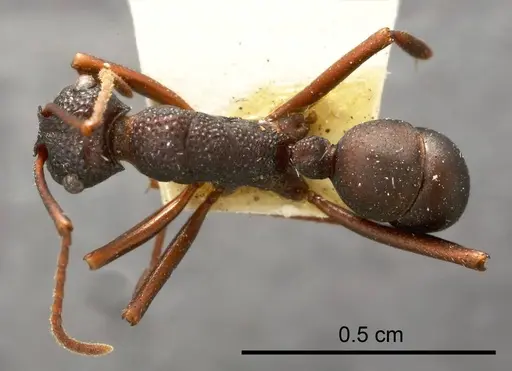
CASENT0900520
View on AntWeb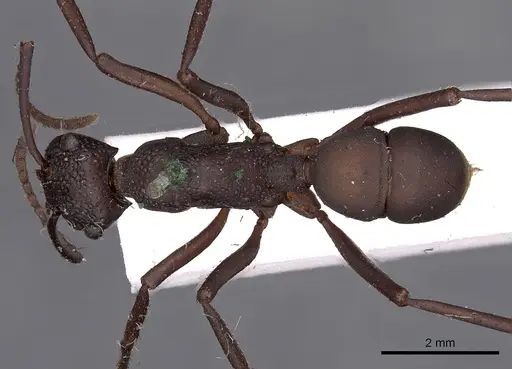
Literature
Loading distribution map...Loading products...