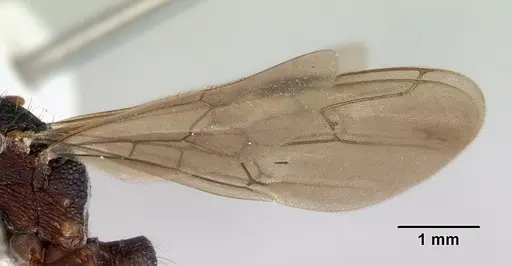
Rhytidoponera metallica exhibits a clear seasonal flight window. Peak flight activity is concentrated in August and September, with the overall period spanning August to October.
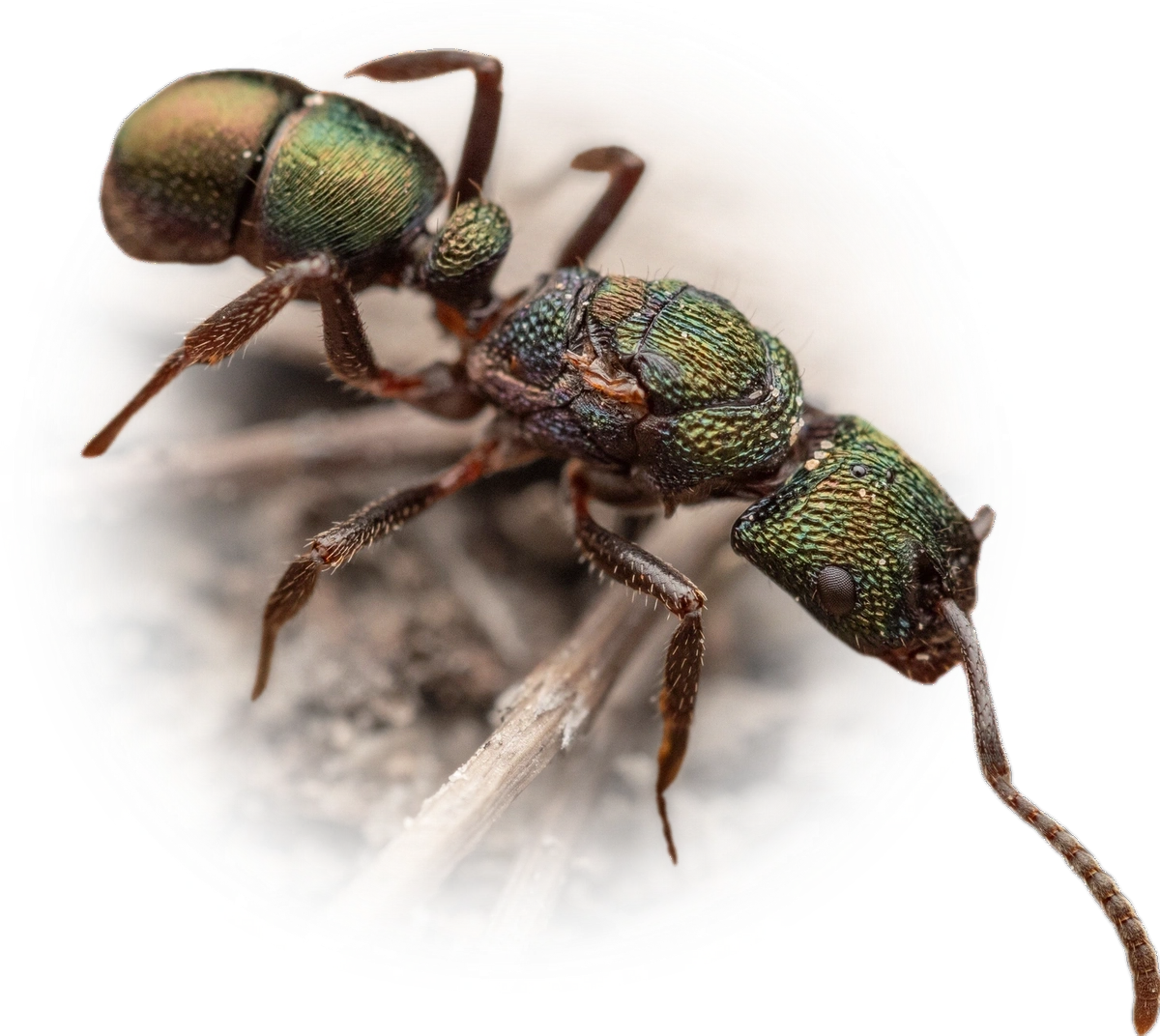
Green-head Ant
Rhytidoponera metallica
- Sci. Name
- Rhytidoponera metallica
- Tribe
- Ectatommini
- Subfamily
- Ectatomminae
- Author
- Smith, 1858
- Common Name
- Green-head Ant
- Distribution
- Found in 1 countries
- Nuptial Flight
- From August to October
- Peak flight Time
- 11:00
AI Identifiable
try →
Introduction
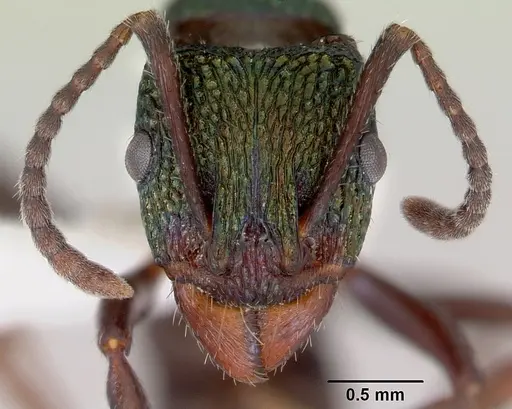
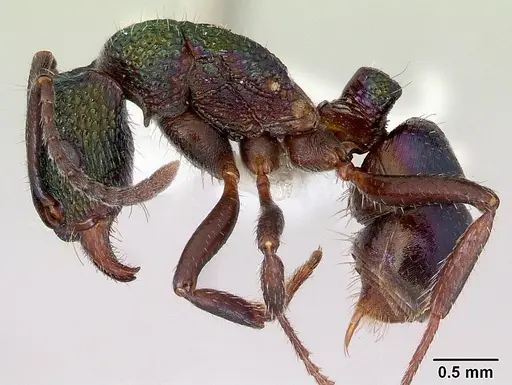
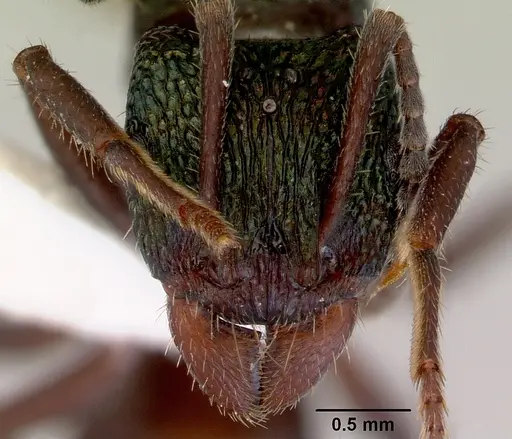
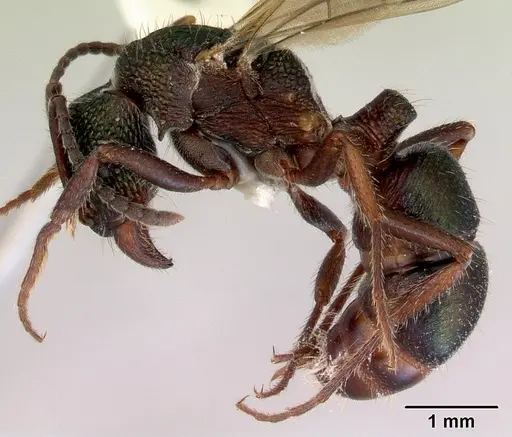
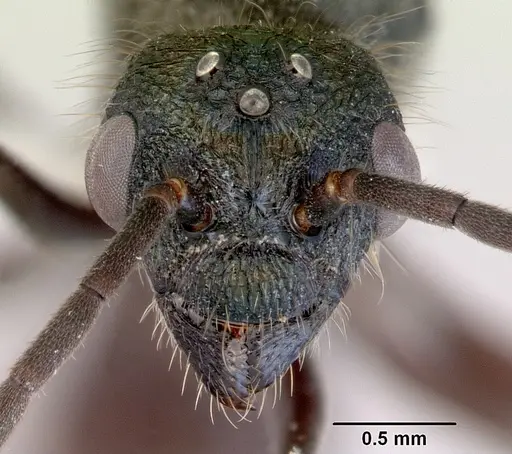
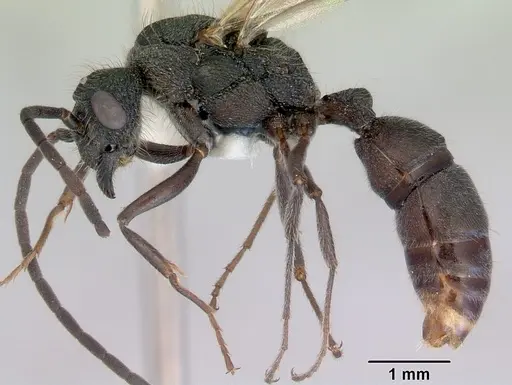
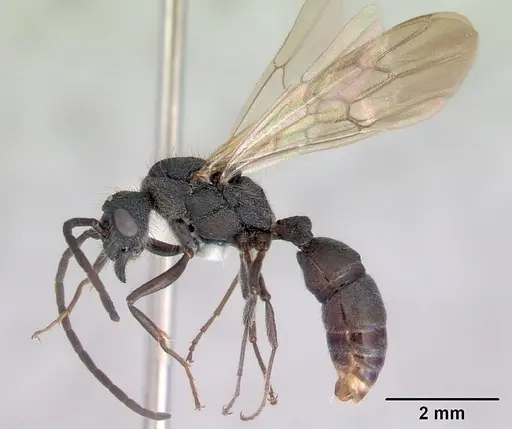
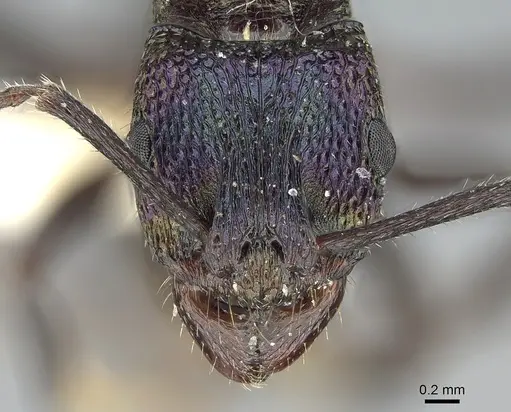
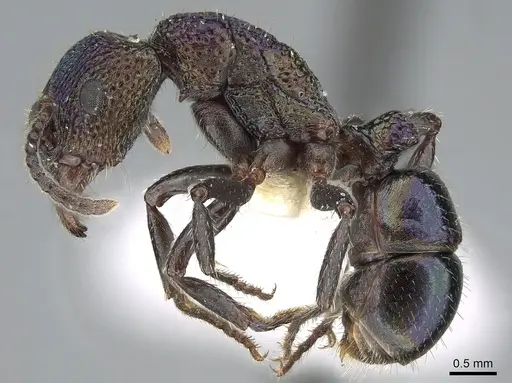
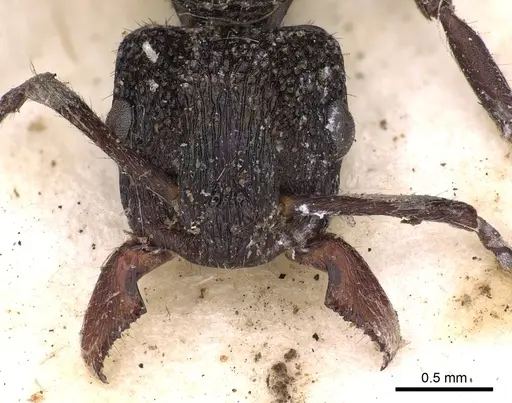
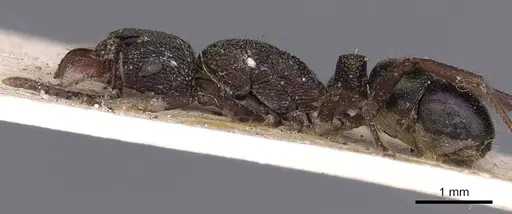
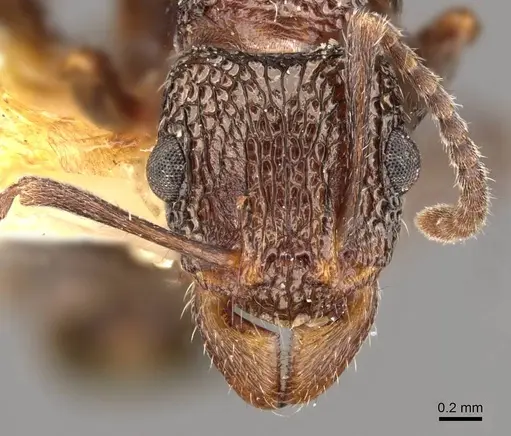
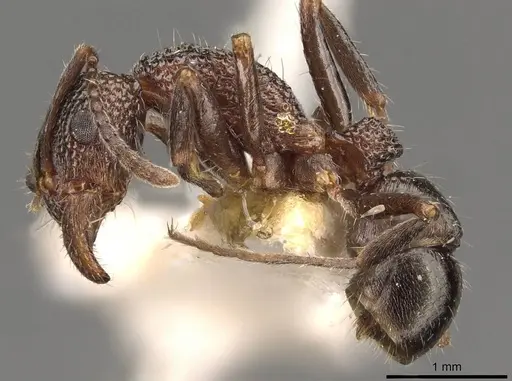
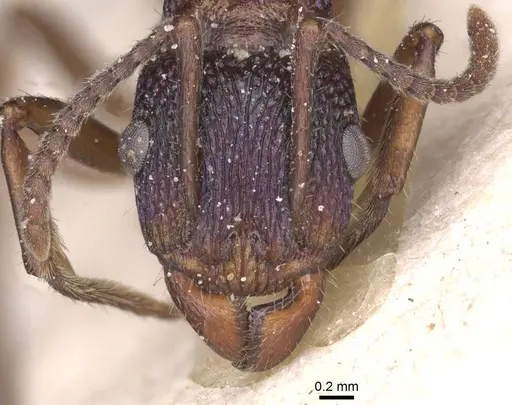
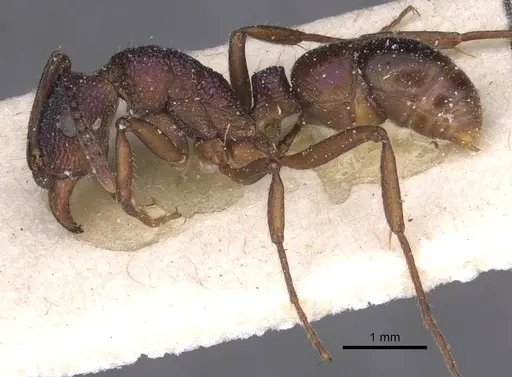
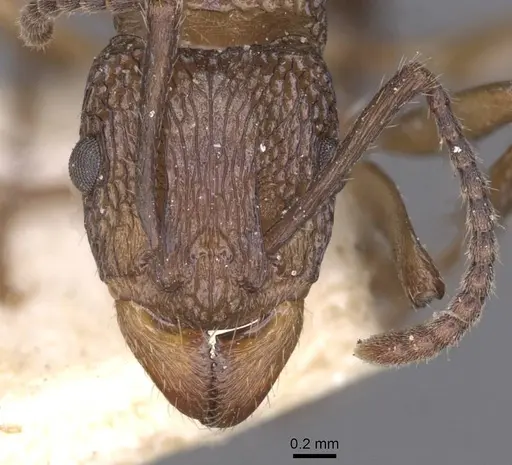
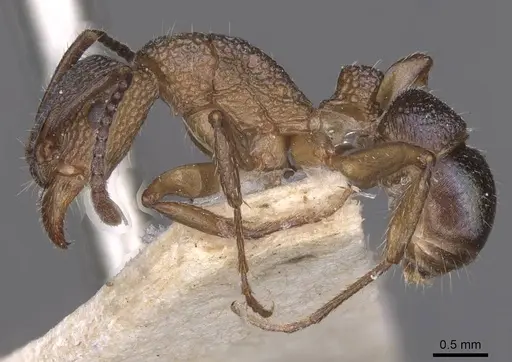
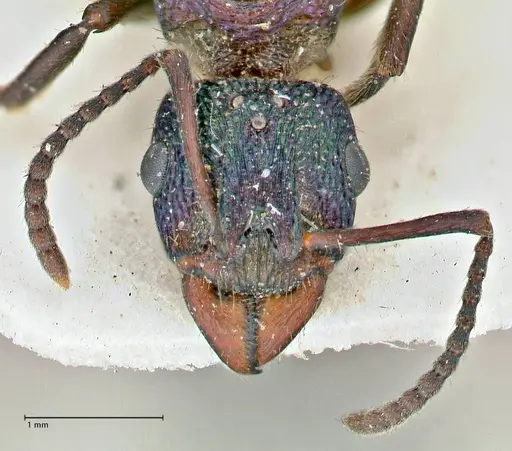
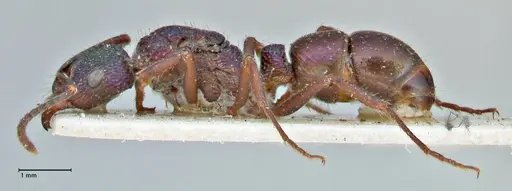
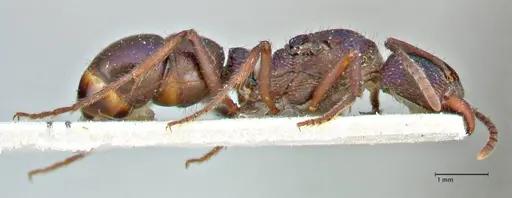
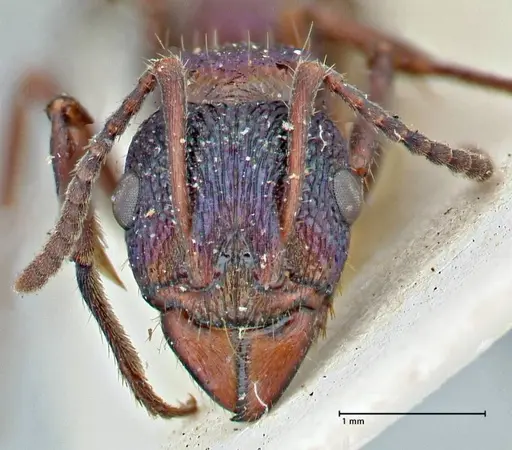
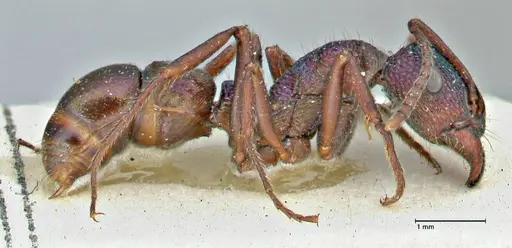
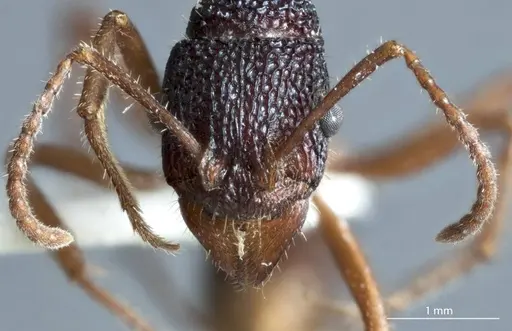
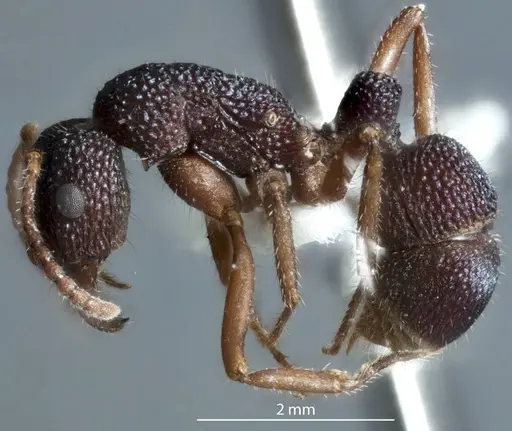
Rhytidoponera metallica is a small to medium-sized ant native to Australia, instantly recognizable by its striking metallic green to blue-black iridescent coloration . Workers measure 1.5-4.5mm, while queens reach approximately 6mm . This species is one of the most abundant and widespread ants across the Australian continent, commonly found in both native habitats and urban environments such as parks and gardens . What makes R. metallica particularly unusual is its queenless colony structure - instead of a single egg-laying queen, several workers called gamergates (reproductive workers) take on the reproductive role . The species is also a keystone seed disperser throughout Australia, collecting seeds with elaiosomes (fat-rich attachments) and transporting them to nest sites where they germinate . However, keepers should be aware that this ant has a potent sting that can cause painful reactions and, in rare cases, anaphylactic shock in sensitive individuals .
Quick Summary
- Difficulty: Expert
- Origin & Habitat: Native to Australia, found throughout the continent in diverse habitats including urban areas, parks, gardens, and sclerophyll forest [5][6]. Also introduced to New Zealand where it is established and considered invasive [11][12][13].
- Colony Type: Queenless colonies with multiple gamergates (reproductive workers). Polygynous (multiple reproducing workers) and polydomous (multiple connected nests). Approximately 5-15% of workers are gamergates [4][14]. Winged queens are rare or absent in most populations [7].
- Size & Growth:
- Queen: ~6mm (queens occasionally produced but rare in wild colonies) [3][9]
- Worker: 1.5-4.5mm [2]
- Colony: Up to 1,092 workers (average ~381 workers) [14]
- Growth: Moderate
- Development: Estimated 6-10 weeks based on typical ponerine development patterns (Development time not directly studied for this species, estimates based on related Ectatomminae ants)
- Antkeeping:
- Temperature: Keep at 22-26°C. They tolerate 18-30°C but growth slows outside this range. Provide a temperature gradient [5].
- Humidity: Moderate humidity. Keep nest substrate slightly moist but not waterlogged. They nest in soil and under stones [6][1].
- Diapause: Likely no strict diapause, but activity may slow in cool winters. Some keepers offer a mild cooling period (15-18°C) for a few weeks, but this is not well-studied [5].
- Nesting: Naturalistic setups with soil or plaster nests work best as they mimic soil-nesting behavior under stones or in rotting wood [1][7].
- Behavior: Aggressive foragers with a potent sting. Workers forage individually (solitary foraging) and hunt a wide range of invertebrate prey [4][15]. They also scavenge and collect seeds. Colonies are highly defensive and will sting any perceived threat. Escape prevention is critical, workers are small (1.5-4.5mm) and agile. The sting pain rating is 2 on the Schmidt scale [16].
- Common Issues: potent sting can cause painful reactions and anaphylaxis in sensitive individuals, handle with caution, queenless colony structure means no replacement queen if all gamergates die, colonies may be aggressive toward keepers and other ant colonies, this species is invasive in New Zealand, extreme precautions must be taken to prevent escape, and it should never be released outside its native Australian range, workers are small and can escape through tiny gaps, ensure formicarium is escape-proof
Nuptial Flight Activity Analysis 160 observations
Flight Activity by Hour 160 observations
Rhytidoponera metallica nuptial flight activity peaks around 11:00 during the late morning to early afternoon. Activity is spread across a 11-hour window (07:00–17:00). A secondary activity peak occurs around 13:00. Times may be influenced by human observation patterns.
Housing and Nest Setup
Rhytidoponera metallica does well in naturalistic setups that mimic their natural soil-nesting behavior. They nest under stones, in rotting wood, or in soil [7][1]. A formicarium with dirt or plaster chambers works well, as does a Y-tong nest with a dirt chamber. They prefer nests with some moisture retention but good drainage to prevent flooding. Provide an outworld (foraging area) connected to the nest where workers can hunt and scavenge. Because they are active solitary foragers [15], ensure the outworld is spacious enough for exploration. Escape prevention is extremely important, workers are small (1.5-4.5mm) and can squeeze through very tiny gaps. Use tight seals, PTFE or paraffin oil barriers, and cover ventilation points with fine mesh.
Feeding and Diet
These ants are opportunistic omnivores with a strong predatory drive. Feed them a varied diet including small live insects (fruit flies, crickets, mealworms) as the primary protein source. They also accept sugar sources like honey water or sugar water. In the wild, they are known to collect seeds with elaiosomes for seed dispersal [8], so they may show interest in seeds or grain-based foods. Feed protein-rich foods 2-3 times per week, and keep sugar water available at all times. Remove uneaten prey after 24 hours to prevent mold. Their venom is highly effective at incapacitating arthropod prey [4]. Avoid high-protein/low-carbohydrate diets as they shorten lifespan [17][18].
Temperature and Seasonal Care
Maintain temperatures between 22-26°C for optimal colony health and brood development. They can tolerate temperatures as low as 18°C and as high as 30°C, but growth slows outside this range [5]. As a species from temperate to subtropical Australia, they likely do not require a strict diapause, but activity may decrease in winter. Some keepers provide a mild cooling period (15-18°C) for 1-2 months to simulate natural seasonal changes, though this is not confirmed by research. A small heat cable or heating mat on one side of the nest can create a gradient for self-regulation. Avoid placing heat sources directly on water reservoirs as this causes excessive condensation.
Colony Structure and Reproduction
This species is unusual in that colonies are queenless, reproduction is handled by gamergates, which are workers that have mated and can lay eggs [4][7]. In the wild, approximately 5-15% of workers in a colony are gamergates [14]. Colonies are polygynous (multiple reproductive workers) and often polydomous (multiple connected nest sites). Alate queens are produced sporadically but are rare and appear to be mostly non-functional in nature [7]. When keeping this species, you will not have a traditional queen, instead, the colony is headed by mated workers. If all gamergates die, the colony cannot recover by producing a new queen. Colonies grow by budding (fission), where a group of workers and gamergates splits off to form a new nest [4].
Defense and Sting
Rhytidoponera metallica has a potent sting that causes moderate to significant pain. On the Schmidt sting pain index, it rates a 2 out of 4 [16]. The venom contains at least 123 different polypeptide compounds, making it complex and medically significant [4]. In rare cases, stings can trigger anaphylactic reactions, there are documented cases of children going into anaphylactic shock after being stung [1]. Workers are highly defensive and will sting readily when the colony is disturbed. Keep this in mind when handling the colony, use caution and consider wearing gloves. The sting leaves only small puncture marks, unlike the pustule reaction seen with some other ants [10]. It is the second most common cause of ant sting anaphylaxis in Australia [9].
Behavior and Foraging
Workers forage individually (solitary foraging) rather than in groups, hunting a wide range of invertebrate prey and scavenging [4][15]. They are active hunters and will readily take down prey much larger than themselves. Workers are also known to collect seeds with elaiosomes, playing an important role in seed dispersal throughout Australia [8]. Colonies can be aggressive and territorial. They establish dominance through antennal dueling and hierarchical behaviors [19]. Workers will defend the nest vigorously and coordinate attacks on intruders. In the wild, they are considered a disturbance-associated, opportunistic species that thrives in both native and urban environments [20]. They have good visual capabilities with head width about 1.44mm and use landmarks for navigation [21].
Frequently Asked Questions
Does Rhytidoponera metallica have a queen?
Typically, no. Most colonies are queenless and reproduction is done by gamergates, mated workers that lay eggs [4][7]. About 5-15% of workers are gamergates [14]. Rarely, winged queens are produced, but they rarely establish colonies in the wild.
Does Rhytidoponera metallica sting?
Yes, they have a potent sting rated 2 on the Schmidt pain scale [16]. The venom is complex and can cause painful local reactions. In rare cases, stings can trigger anaphylaxis, especially in sensitive individuals [9][10][1]. Handle with caution and wear protective gloves when working with the colony.
How big do Rhytidoponera metallica colonies get?
Colonies typically range from 79 to 1,092 workers, with an average of about 381 workers [14]. Growth is moderate, colonies expand over several years rather than exploding in size quickly.
What do Rhytidoponera metallica eat?
They are opportunistic omnivores. Feed small live insects (fruit flies, crickets, mealworms) as the main protein source, plus sugar water or honey. They may also take seeds due to their role as seed dispersers [8]. Offer protein 2-3 times per week and keep sugar water available. Remove uneaten prey after 24 hours.
Can I keep multiple queens together?
This species doesn't have traditional queens, it has multiple gamergates. Colonies are naturally polygynous with many reproducing workers, so a single colony can contain numerous gamergates. However, combining different colonies is not recommended as they may fight. Colony structure is complex with established hierarchies [19][7].
Do Rhytidoponera metallica need hibernation?
They likely do not require a strict diapause. As a species from temperate/subtropical Australia, they may show reduced activity in winter. Some keepers provide a mild cooling period (15-18°C) for a few weeks, but this is not well-studied. Simply maintaining room temperature above 18°C is usually sufficient [5].
Are Rhytidoponera metallica good for beginners?
This species is rated as expert difficulty. The potent sting and queenless colony structure make them challenging. The sting risk and the fact that they are invasive in New Zealand (requiring extreme containment precautions) mean they are not recommended for beginners. Experienced keepers may find them rewarding but must handle with caution.
How long does it take for eggs to become workers?
Development time has not been directly studied for this species. Based on typical Ectatomminae patterns, expect approximately 6-10 weeks from egg to worker at optimal temperatures (22-26°C). Growth is moderate.
What is the best nest type for Rhytidoponera metallica?
Naturalistic setups with soil or plaster nests are best as they mimic the species' natural soil-nesting behavior. Y-tong nests with dirt chambers are also suitable. They prefer some moisture in the nest substrate but need good drainage. Ensure the nest has chambers scaled to their size, workers range from 1.5-4.5mm. Escape-proofing is critical.
Why are my Rhytidoponera metallica dying?
Common causes include: temperature too cold (below 18°C slows growth), humidity too dry (they need moist substrate), poor nutrition (ensure varied protein and constant sugar), or stress from excessive disturbance. Also check for parasites, wild-caught colonies may bring in mites. The queenless structure means if all gamergates die, the colony cannot recover.
When is the nuptial flight of Rhytidoponera metallica?
The nuptial flight of Rhytidoponera metallica typically occurs From August to October.
What time of day does Rhytidoponera metallica fly?
The nuptial flight of Rhytidoponera metallica peaks around 11:00 during the late morning to early afternoon, with most activity between 07:00 and 17:00. Times may be influenced by human observation patterns.
Report an Issue
The current care sheet is based fully on literature. See inconsistencies, or something that's incorrect? Please , it will be resolved after review from an admin. Contributing to the blogs tab also helps providing information, to make us be able to further improve the caresheets. Thank you for your support!
References

This caresheet is licensed under CC BY-SA 4.0 .
Community Blogs
ANTWEB1008158
View on AntWeb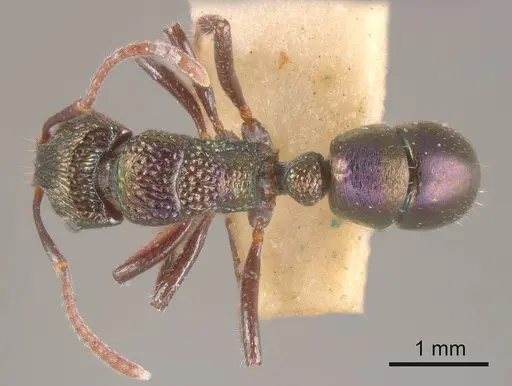
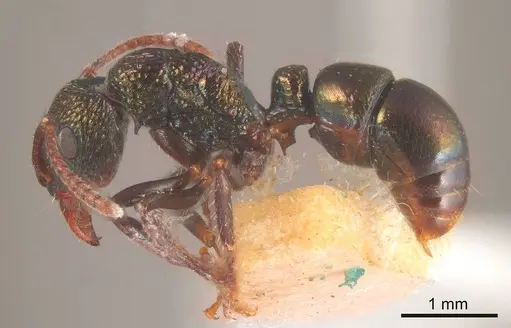
CASENT0172345
View on AntWeb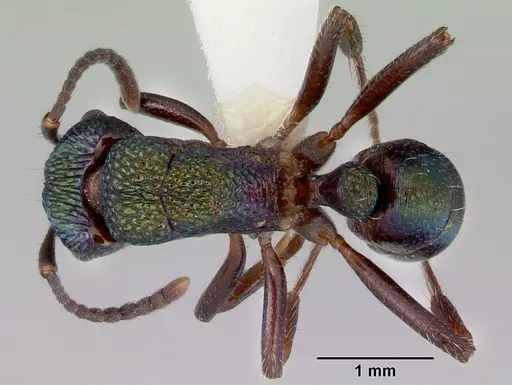
CASENT0172346
View on AntWeb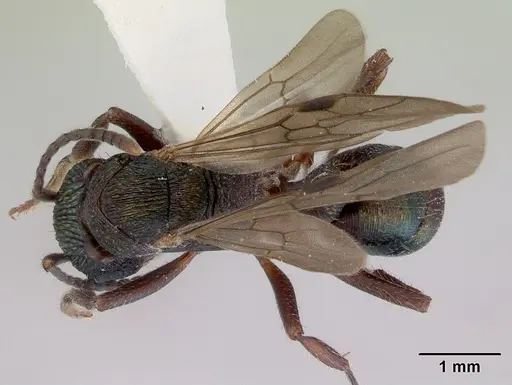
CASENT0172347
View on AntWeb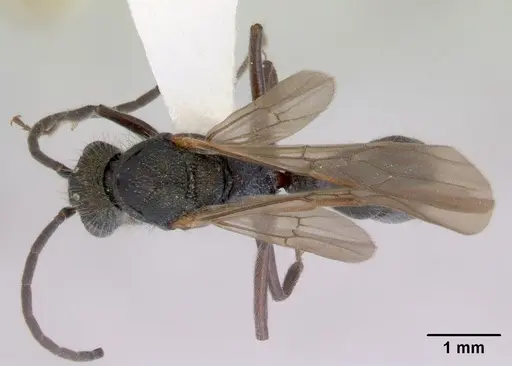
CASENT0281263
View on AntWeb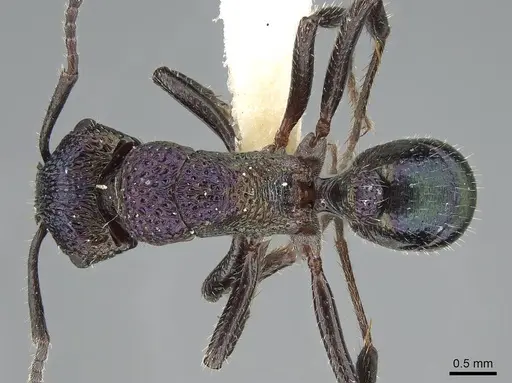
CASENT0900527
View on AntWeb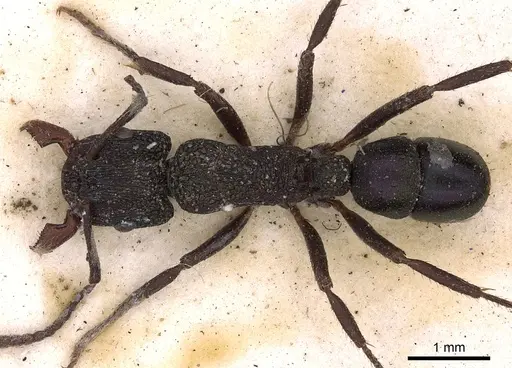
CASENT0907159
View on AntWeb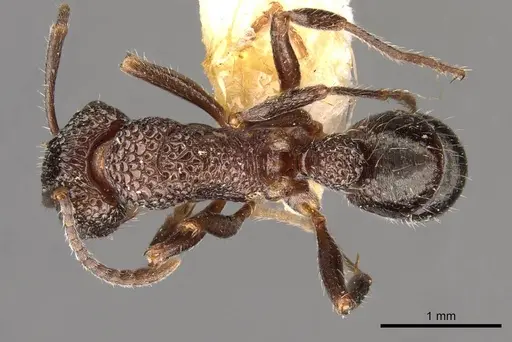
CASENT0915139
View on AntWeb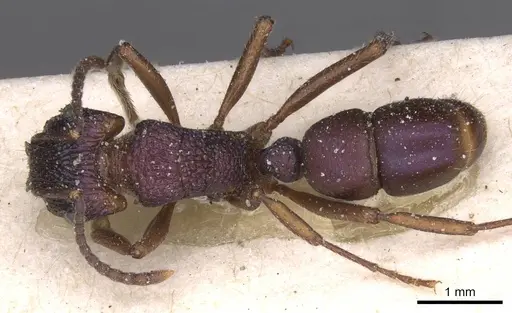
CASENT0915140
View on AntWeb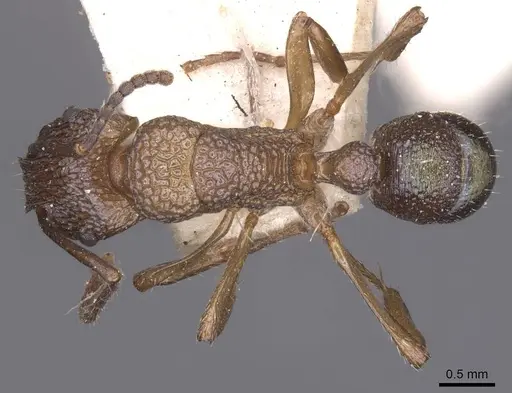
FOCOL2887
View on AntWeb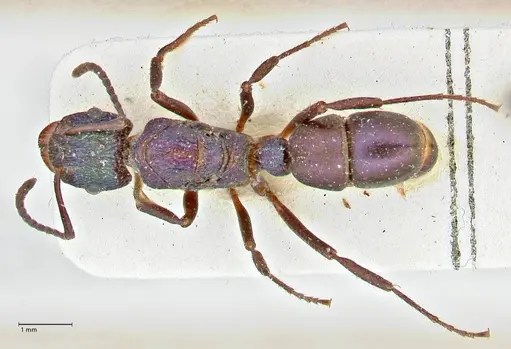
FOCOL2888
View on AntWeb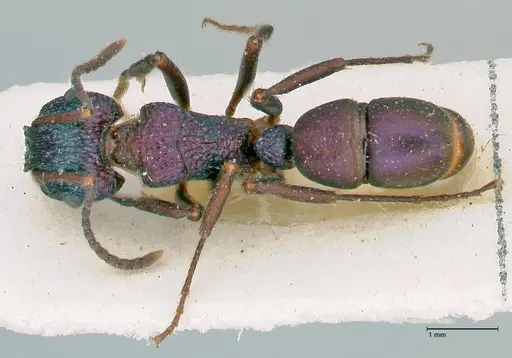
JDM32-002929
View on AntWeb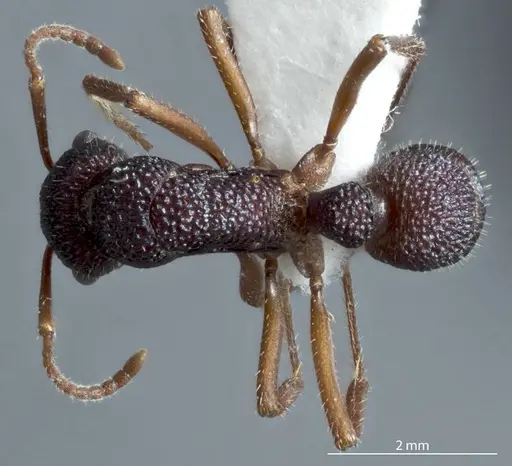
Literature
Loading distribution map...Loading products...