
Rhytidoponera koumensis
- Sci. Name
- Rhytidoponera koumensis
- Tribe
- Ectatommini
- Subfamily
- Ectatomminae
- Author
- Ward, 1984
- Distribution
- Found in 1 countries
Introduction
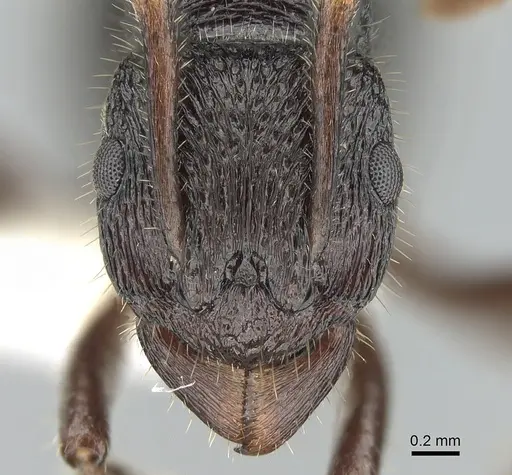
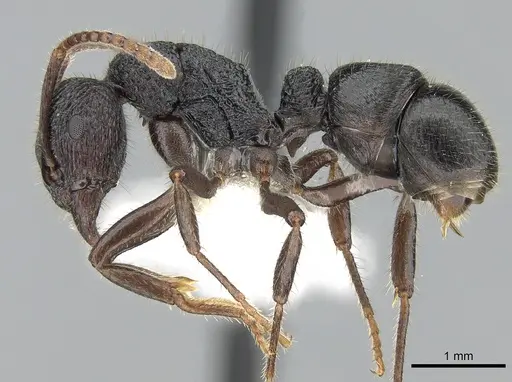
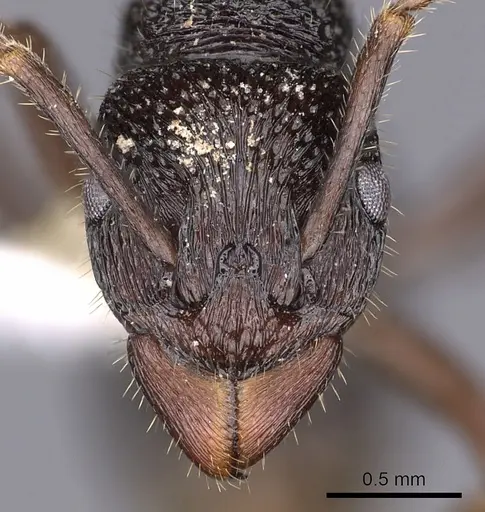
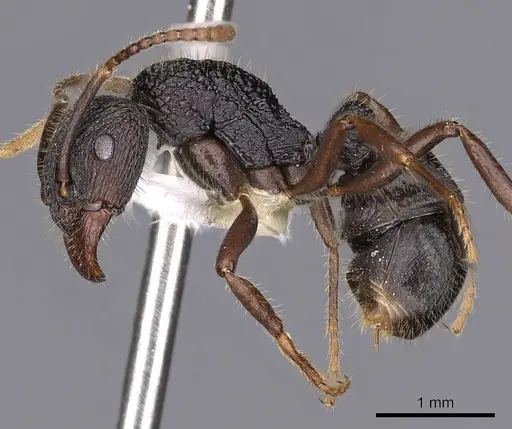
Rhytidoponera koumensis is a medium-sized ant endemic to New Caledonia, found only in the Australasian region . It has a robust build typical of the genus, with a distinctively angular mesosoma and a functional stinger for capturing prey. The exact body size is not published; based on related Rhytidoponera species, workers likely measure around 5-7 mm. Coloration is dark brown to black with a slight metallic sheen. These ants live in dry rainforest habitats on limestone substrates at low elevations (40-80 m) in the northern part of New Caledonia . This species is part of the unique ant fauna of an island known for high endemism. Like other Rhytidoponera, they are predatory and use their stinger to subdue prey. Social structure is not well documented for this species specifically. In some related Rhytidoponera, colonies can have ergatoid (wingless) queens that replace the primary queen, but this has not been confirmed for Rhytidoponera koumensis.
Quick Summary
- Difficulty: Medium
- Origin & Habitat: New Caledonia – specifically the dry rainforest zones on limestone at low elevations (40-80 m). Type localities are near Grottes de Koum and Koumac in the north of the main island [1][2].
- Colony Type: Unconfirmed – likely monogyne (single queen) with potential ergatoid replacement reproductives based on genus patterns, but not confirmed by available literature.
- Size & Growth:
- Queen: Exact measurements unpublished, inferred from genus patterns: likely around 6-8 mm.
- Worker: Exact measurements unpublished, inferred from genus patterns: likely around 5-7 mm.
- Colony: Likely moderate – up to several hundred workers, estimated from general Rhytidoponera colony sizes.
- Growth: Moderate – inferred from typical subtropical Ectatomminae development.
- Development: Estimated 6-10 weeks at optimal temperatures (24-28°C) based on related Ectatomminae species. (Development time is estimated from genus-level data, species-specific studies are not available.)
- Antkeeping:
- Temperature: Keep warm and stable: 24-28°C (75-82°F). Place a heating cable on one side of the nest to create a gradient. Avoid prolonged exposure below 20°C, as this can weaken the colony.
- Humidity: Moderate humidity – keep the nest substrate damp but not waterlogged. Provide a water tube for drinking. Aim for conditions that are moist but allow some drying between waterings, mimicking their dry rainforest habitat.
- Diapause: Likely minimal or no true diapause. New Caledonia has a mild subtropical climate. If the colony slows down in winter, reduce feeding and lower temperatures slightly (around 20°C) but full hibernation is probably not needed.
- Nesting: Soil-nesting species that does well in naturalistic setups with compact soil or in Y-tong/plaster nests with moist substrate. Adding some mineral content (e.g., crushed limestone) may mimic their native substrate. Tight-fitting lids are essential – these ants are active foragers.
- Behavior: Workers are active, predatory ants with a functional stinger. They hunt individually and will sting if the colony is disturbed – the sting is painful but not medically significant for most people. They are not overly aggressive toward keepers but will defend their nest. Escape prevention is critical: they are skilled escape artists. Use fluon on nest edges and seal all gaps.
- Common Issues: escape prevention is critical – active foragers will find any gap in housing., colonies may weaken if kept too cold – maintain warm temperatures year-round., test tube setups can flood if water reservoirs are overfilled – use an appropriately sized tube., wild-caught colonies may carry parasites that can devastate captive colonies., slow growth can frustrate beginners – patience is needed during the first year.
Housing and Nest Setup
You can keep Rhytidoponera koumensis in naturalistic setups that mimic their soil-nesting habits in dry rainforest. A Y-tong or plaster nest with moist substrate works well, or you can use a soil chamber with a flat stone covering. Adding some crushed limestone or mineral-rich soil may be beneficial, though standard ant-keeping soil mixes fine. Make sure chambers are sized for medium ants – narrow enough for security but wide enough for movement. Attach a water tube for constant drinking access. The outworld should allow for hunting and waste disposal [2].
Feeding and Diet
Rhytidoponera koumensis is predatory and needs a protein-rich diet. Offer small live or freshly killed prey 2-3 times per week: fruit flies, small crickets, mealworms, or other appropriately sized insects. They also need sugar – provide a drop of honey or sugar water once or twice weekly. Remove uneaten prey after 24-48 hours to prevent mold. A varied diet supports healthy development. They are flexible feeders and will scavenge as well as hunt [2].
Temperature and Seasonal Care
Maintain 24-28°C (75-82°F) for best colony health. These ants come from a subtropical island and don't tolerate cold well. A heating cable on one side of the nest lets workers choose their preferred temperature. During cooler months, you can drop to 20-22°C if the colony slows, but avoid going below 18°C. There is no true diapause requirement – consistent warmth year-round gives the best growth [2].
Behavior and Defense
These ants have a functional stinger and will sting if threatened. Workers are active, individual foragers that hunt with their stinger. They are not typically aggressive toward keepers but defend the nest when disturbed. The sting is painful but not dangerous for healthy adults – those with insect venom allergies should be cautious. Their active foraging means they constantly explore the outworld, so escape prevention is critical. Use fluon on potential escape points and check lid seals regularly. Workers can live for several years, queens live much longer.
Colony Development
Colony growth is moderate. After founding, eggs develop into first workers (nanitics) in about 6-10 weeks under warm conditions. These first workers are smaller than mature ones. Reaching a colony of several hundred workers typically takes 1-2 years. Although some Rhytidoponera species can produce ergatoid (wingless) replacement queens, it is not confirmed for this species. If you catch a wild queen, she will likely start the colony alone [2].
Frequently Asked Questions
Do Rhytidoponera koumensis ants sting?
Yes, they have a functional stinger and will sting if threatened. The sting is painful but not dangerous to healthy humans. Wash the area with soap and water and apply a cold compress if needed. Those with insect venom allergies should use extra caution.
How long does it take for first workers to appear?
Expect 6-10 weeks from egg to first worker at optimal temperatures (24-28°C). This is based on typical Rhytidoponera development since species-specific data is lacking. The first workers (nanitics) will be smaller than mature workers [2].
Can I keep Rhytidoponera koumensis in a test tube?
Test tubes work for founding colonies, but you will need to move them to a proper formicarium as the colony grows. Use a tube with an appropriately sized water reservoir. Once the colony reaches around 20-30 workers, upgrade to a Y-tong or naturalistic setup with soil substrate [2].
What do Rhytidoponera koumensis eat?
They are predatory and need protein. Offer small live or freshly killed insects like fruit flies, small crickets, or mealworms 2-3 times per week. Also provide sugar – honey or sugar water – once or twice weekly. Remove uneaten food promptly to prevent mold [2].
Are Rhytidoponera koumensis good for beginners?
They are rated medium difficulty. They need warm temperatures, escape prevention, and a proper protein diet. The sting may be concerning for newcomers. They are more demanding than basic species like Lasius but less challenging than tropical specialists. Some experience with medium-sized ants is helpful [2].
Do Rhytidoponera koumensis need hibernation?
No, they do not require true hibernation. Their native New Caledonia has a mild climate without harsh winters. If the colony slows down in winter, reduce feeding slightly and keep temperatures above 18°C year-round [2].
How big do Rhytidoponera koumensis colonies get?
Based on genus patterns, colonies likely reach several hundred workers at maturity. A well-established colony after 2-3 years may have 300-500 workers or more. Growth is moderate [2].
When should I move from test tube to formicarium?
Move when the colony reaches 20-30 workers or if the test tube shows mold or condensation issues. Use a Y-tong or naturalistic setup with moist soil. Connect the tube to the new nest gradually to let the ants explore and move in safely [2].
Why are my Rhytidoponera koumensis dying?
Common causes: temperatures below 20°C, mold from overwatering or uneaten food, stress from too much disturbance, or parasite infections from wild-caught colonies. Check temperatures are 24-28°C, remove uneaten food, and ensure good ventilation. Rapid die-offs often point to parasites [2].
Can I keep multiple queens together?
Rhytidoponera koumensis is likely monogyne. Combining unrelated queens is not recommended as they will probably fight. If you find a wild colony with multiple ergatoids, they may tolerate each other, but this is not the norm. Stick to single-queen colonies [2].
What temperature is best for Rhytidoponera koumensis?
Keep them at 24-28°C (75-82°F). This subtropical species needs warmth year-round. Use a heating cable on part of the nest for a gradient. Avoid extended periods below 20°C [2].
Is Rhytidoponera koumensis invasive?
No, this species is endemic to New Caledonia and is not known to be invasive elsewhere. It is only found in its native Australasian range [1][2].
Report an Issue
The current care sheet is based fully on literature. See inconsistencies, or something that's incorrect? Please , it will be resolved after review from an admin. Contributing to the blogs tab also helps providing information, to make us be able to further improve the caresheets. Thank you for your support!
References

This caresheet is licensed under CC BY-SA 4.0 .
Community Blogs
CASENT0281310
View on AntWeb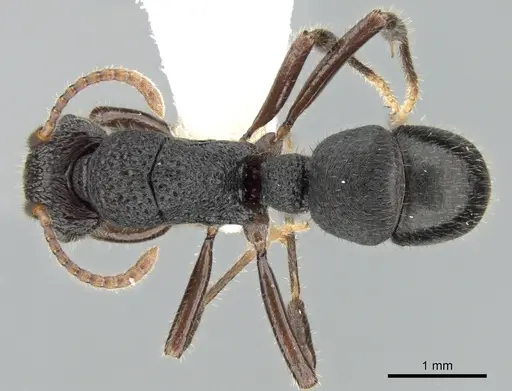
CASENT0900536
View on AntWeb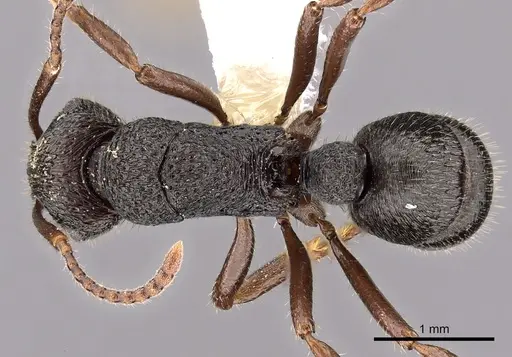
Literature
Loading distribution map...Loading products...