
Rhytidoponera impressa
- Sci. Name
- Rhytidoponera impressa
- Tribe
- Ectatommini
- Subfamily
- Ectatomminae
- Author
- Mayr, 1876
- Distribution
- Found in 1 countries
Introduction
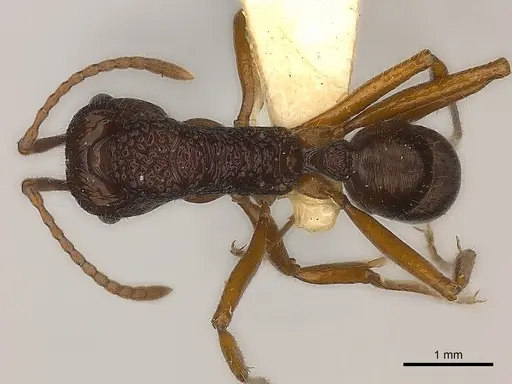
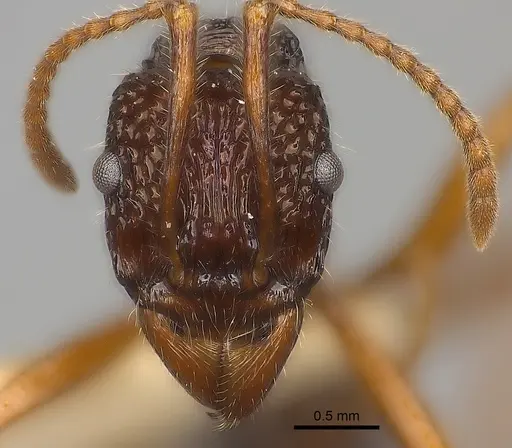
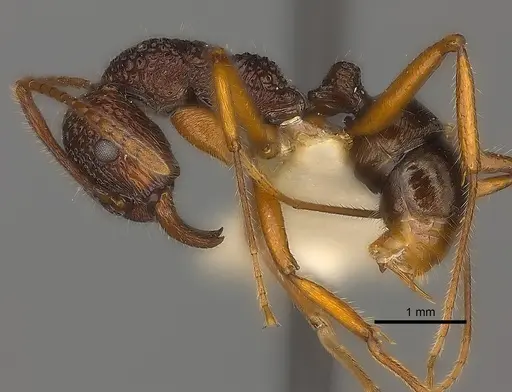
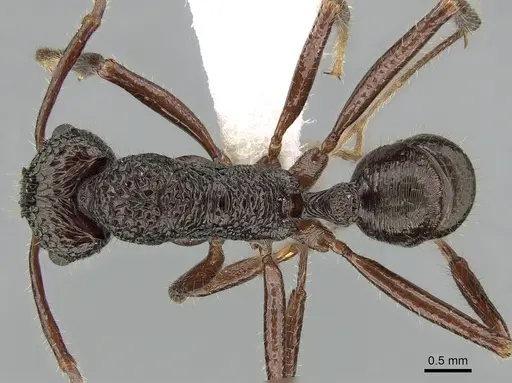
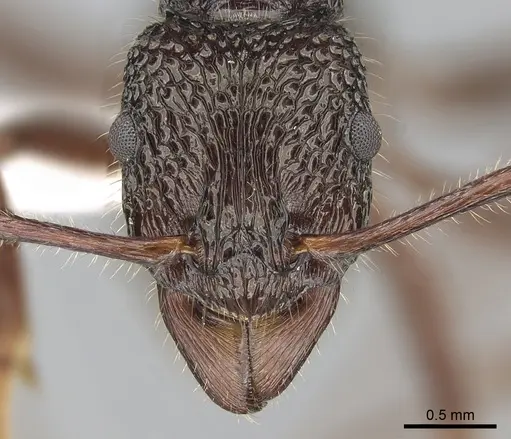
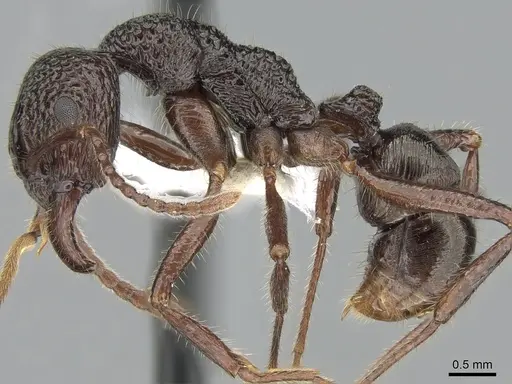
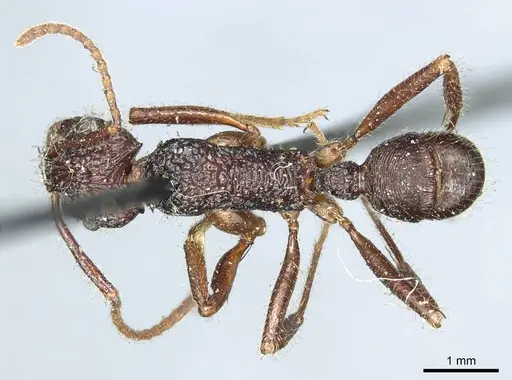
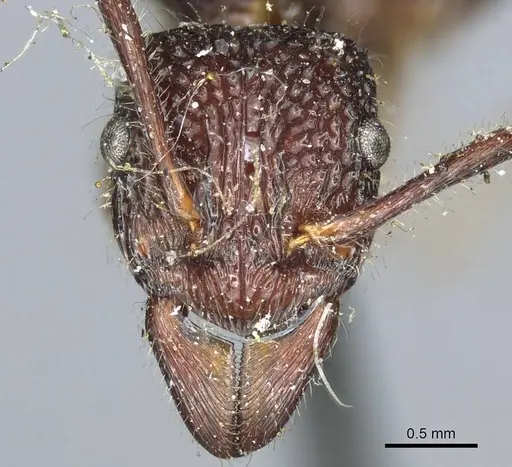
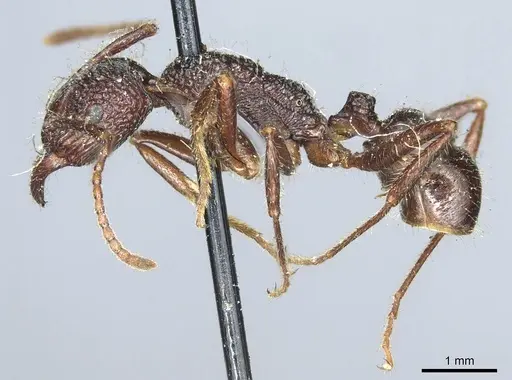
Rhytidoponera impressa is a medium-sized ant from the Ectatomminae subfamily, found in eastern Australia (Queensland) and New Guinea . Workers have a metallic green or blue-green sheen . This species inhabits subtropical rainforests in Queensland at elevations from about 350 to 1200 m . It is one of the few Rhytidoponera species where queens actually reproduce, and colonies can either have a winged queen or rely on gamergates (reproductive workers) .
Quick Summary
- Difficulty: Medium
- Origin & Habitat: Eastern Australia (Queensland) and New Guinea. Restricted to mesic (damp) subtropical rainforest habitats in Queensland at 350-1200 m elevation [4][1].
- Colony Type: Facultatively polygynous. Colonies can be queenright (single winged queen) or worker-reproductive (with multiple gamergates). Both types occur together in most populations. Northern populations have more queenright colonies, while southern ones rely more on gamergates [6][7][5].
- Size & Growth:
- Queen: Body size data unavailable. Queens have a robust thorax for wing muscles but are similar in overall length to workers [1].
- Worker: Body size data unavailable. Mean head width 1.29 mm [8].
- Colony: Unknown. Related Rhytidoponera species can have several hundred workers.
- Growth: Moderate (inferred from other Ponerine ants)
- Development: Unknown. No specific data available for this species. (Development likely takes weeks to months at warm temperatures, but exact timing is not documented.)
- Antkeeping:
- Temperature: Keep at stable warm temperatures (roughly low-to-mid 20s°C) similar to its subtropical rainforest origin. A gentle gradient allows self-regulation.
- Humidity: High humidity required. Keep the nest substrate consistently moist but not waterlogged. These ants come from damp rainforest environments.
- Diapause: No true diapause documented. Southern populations may reduce activity in cooler months but do not need a cold period. Keep active year-round.
- Nesting: Y-tong (AAC), plaster, or naturalistic nests with moist substrate. They prefer dark, humid chambers. Avoid dry conditions.
- Behavior: Predatory ant that hunts small invertebrates. Workers use a licking technique to consume liquid foods [8]. In polygynous colonies, workers show ‘boxing’ (rapid antennation) [9]. They have a functional sting (subfamily trait) but it is mild to humans. Escape risk moderate, standard barriers work. Active foragers benefit from space to hunt.
- Common Issues: high humidity needs mean mold can be a problem if ventilation is poor, predatory diet requires live prey, colonies may fail without adequate protein sources, reproductive complexity, southern colonies may lack queens and rely on gamergates, which is harder to manage, unknown colony size, if small, each loss has bigger impact
Housing and Nest Setup
Rhytidoponera impressa does well in Y-tong (AAC), plaster, or naturalistic nests with moist substrate. They prefer dark, humid chambers, so a nest with a water reservoir section works well. Since they are predatory, provide an outworld where they can forage and hunt. Test tube setups can work for small colonies, but move them to a more spacious formicarium once they have a dozen workers. Check for gaps, these ants explore actively, so seal any openings. [4][1]
Feeding and Diet
These ants are predators. Offer small live prey like fruit flies, pinhead crickets, and small mealworms. They also accept sugar sources like honey water, but protein should make up most of their diet [8]. Workers use a licking technique for liquids, so offer sugar water in a shallow dish [8]. Feed protein 2-3 times a week, remove uneaten prey after 24 hours to prevent mold. Specific preferences are not documented, but small insects work well.
Temperature and Seasonal Care
Keep at stable warm temperatures (roughly low-to-mid 20s°C), aim for 22-26°C as a guideline. A heating cable on one side creates a gradient. These ants come from subtropical rainforests and do not tolerate prolonged cold [4]. Southern populations may reduce activity in winter but do not need a cold diapause [6]. Avoid temperatures below 18°C for extended periods.
Colony Structure and Reproduction
Rhytidoponera impressa has two colony types: Type A (queenright, with one or more winged queens) and Type B (worker-reproductive, with gamergates). Both types occur sympatrically in most populations [5]. Northern populations have more queenright colonies, southern ones rely more on gamergates [6]. Queens have 16-18 ovarioles, workers 4-6 [1]. This is one of the few Rhytidoponera species where queens reproduce [1]. Gamergate colonies reproduce by fission [6]. For keepers, a colony may have a queen or multiple reproductive workers, both can rear brood.
Behavior and Defense
Workers are predatory and moderately defensive. They have a functional sting (subfamily Ectatomminae) but it is not painful to humans. In polygynous colonies, workers perform ‘boxing’, rapid antennation that likely helps maintain social order [9]. They are active foragers and may scavenge but prefer live prey. Their metallic blue-green coloration is distinctive [3]. Standard escape barriers work, they explore gaps but are not high-risk escape artists.
Growth and Development
Queens have 16-18 ovarioles, workers 4-6 [1]. The species is monandrous, queens mate once [10]. Worker reproductive totipotency exists, so workers can reproduce if the queen is lost [10]. Development time from egg to worker is not documented for this species. Based on related Ponerine ants, it likely takes weeks to months at optimal temperatures, but specific data are absent.
Frequently Asked Questions
How long does it take for Rhytidoponera impressa to produce first workers?
The exact development time is unknown. No specific data are available for this species.
Do Rhytidoponera impressa ants sting?
Yes, as a member of the Ectatomminae subfamily, they have a functional stinger. It is used for hunting and defense, but the sting is not particularly painful to humans.
Can I keep multiple queens together in one colony?
Established colonies may be queenright or have multiple gamergates (worker reproductives). Combining unrelated queens is not recommended and is untested. If you acquire a colony with multiple reproductives, they may coexist peacefully.
What do Rhytidoponera impressa eat?
They are predatory and need live prey such as fruit flies, small crickets, and mealworms. They also accept honey water or other sugar sources, but protein should make up the majority of their diet [8].
Are Rhytidoponera impressa good for beginners?
They are rated medium difficulty. They require high humidity, stable warmth, and a regular supply of live prey. If you have experience with Ponerine ants and can provide these conditions, they can be rewarding.
How big do Rhytidoponera impressa colonies get?
Colony size is undocumented. Related Rhytidoponera species can reach several hundred workers, but precise data for R. impressa are lacking.
Do Rhytidoponera impressa need hibernation?
No true hibernation has been documented. Southern populations may reduce activity in cooler months, but they do not require a cold diapause. Keep them at stable warm temperatures year-round.
Why is my colony dying?
Common causes include low humidity (keep substrate moist), insufficient protein (provide live prey regularly), temperatures too cool (stay above 18°C), or poor ventilation leading to mold. Check these factors.
What makes Rhytidoponera impressa special?
It is one of the few Rhytidoponera species where queens actually reproduce, and colonies can be either queenright or worker-reproductive (with gamergates). This flexible social structure is unusual [1][5].
When should I move from test tube to formicarium?
No specific guidelines exist for this species. A safe approach is to move the colony once you have at least 10-20 workers and significant brood. Ensure the new nest has high humidity.
Do they need a queen to survive?
Not necessarily. Colonies can be worker-reproductive: if the queen is lost, some workers (gamergates) can mate and produce offspring [5]. Your colony may survive without a queen.
Report an Issue
The current care sheet is based fully on literature. See inconsistencies, or something that's incorrect? Please , it will be resolved after review from an admin. Contributing to the blogs tab also helps providing information, to make us be able to further improve the caresheets. Thank you for your support!
References

This caresheet is licensed under CC BY-SA 4.0 .
Community Blogs
Literature
Loading distribution map...Loading products...