
Rhytidoponera fulgens
- Sci. Name
- Rhytidoponera fulgens
- Tribe
- Ectatommini
- Subfamily
- Ectatomminae
- Author
- Emery, 1883
- Distribution
- Found in 1 countries
Introduction
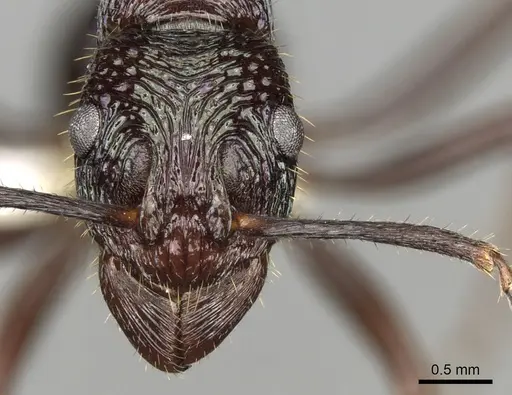
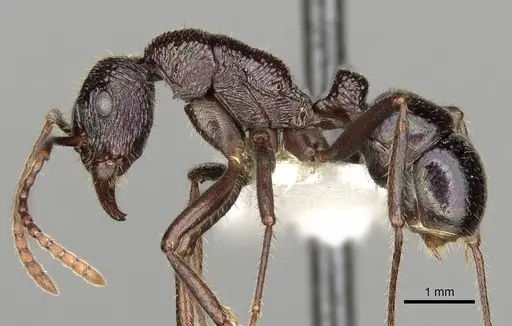
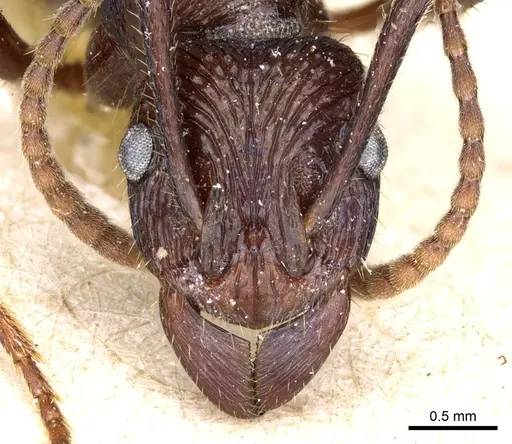
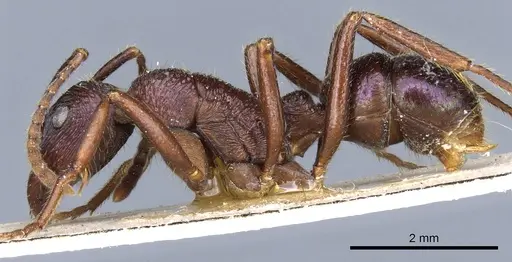
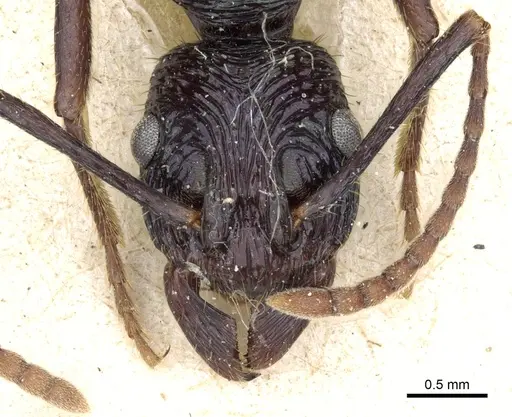
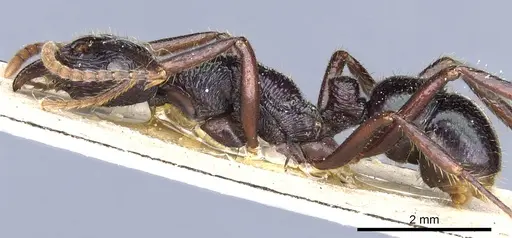
Rhytidoponera fulgens is a small to medium-sized ant species endemic to New Caledonia, an island in the South Pacific. Workers have a metallic or iridescent appearance, typical of the genus Rhytidoponera. The species was first described by Emery in 1883 and is known only from New Caledonia . It belongs to the subfamily Ectatomminae, which includes ants with a functional sting. There is very little published research on this species - most available information comes from taxonomic studies and distribution records. So much of its biology (such as colony structure, founding behavior, and specific care needs) is unconfirmed, with current keeping advice based on patterns seen in related Rhytidoponera and Ectatommini species.
Quick Summary
- Difficulty: Medium
- Origin & Habitat: Endemic to New Caledonia, an island in the South Pacific [2][1]. Specific habitat details are unconfirmed, but it is likely found in tropical forests, possibly under stones or in soil.
- Colony Type: Unknown, colony structure has not been documented. Based on typical Rhytidoponera patterns, it may be monogyne (single queen) with possible ergatoid workers, but this is speculative.
- Size & Growth:
- Queen: Size data unavailable for this species.
- Worker: Size data unavailable for this species.
- Colony: Unknown, no documented colony size.
- Growth: Unknown, limited data.
- Development: Unknown, no documented timeline. (Related tropical Ectatommini species take around 4-8 weeks at warm temperatures, but this is unconfirmed for Rhytidoponera fulgens.)
- Antkeeping:
- Temperature: No specific data available. As a tropical species from New Caledonia, it likely needs warm conditions. Start around 24-28°C and observe. Provide a temperature gradient with a heat cable on one side of the nest.
- Humidity: No specific data. Given its tropical origin, keep the nest substrate consistently moist but not waterlogged. Provide a water source (e.g., test tube) and maintain good ventilation to prevent mold.
- Diapause: Unconfirmed. Tropical species generally do not require hibernation, but this is not documented for Rhytidoponera fulgens. Keep warm year-round.
- Nesting: No specific nesting data. Based on genus patterns, likely nests in soil or under stones. In captivity, a Y-tong or plaster nest with high humidity retention should work. Provide a moisture gradient.
- Behavior: As a member of Ectatomminae, it has a functional sting used for defense and prey capture. Temperament is unknown but likely moderately aggressive and territorial. Workers are active foragers. Standard barrier methods (fluon, talcum) are recommended.
- Common Issues: tropical species are sensitive to prolonged cold, maintain stable warmth., high humidity needs may lead to mold if ventilation is poor., limited data means care adjustments may be needed, monitor colony response., escape prevention is still important even if workers are not known as special escape artists., if wild-caught, colonies may carry parasites or pathogens.
Temperature and Care
No specific temperature data exists for Rhytidoponera fulgens. As a species from the tropical island of New Caledonia, it likely requires warm, stable conditions. A starting range of 24-28°C is reasonable. Use a heating cable on one side of the nest to create a gradient, letting the ants choose their preferred spot. Avoid temperature drops below 20°C for extended periods, as tropical ants are generally not cold-tolerant. Room temperature alone is often too cool, a small heat source is recommended. Monitor with a thermometer near the nest.
Humidity and Water
Specific humidity needs are undocumented. Based on its tropical origin, maintaining high ambient humidity and a moist nest substrate is advised. Keep the substrate damp to the touch but not waterlogged. Provide a test tube water reservoir with cotton wicking. Good airflow is important to prevent mold while keeping humidity up. Rehydrate the nest when the surface starts drying, usually every few days depending on your setup. Avoid stagnant, overly wet conditions.
Feeding and Diet
Information on the natural diet of Rhytidoponera fulgens is lacking. As an ectatomminic ant, it is likely a generalist predator of small invertebrates. Offer protein sources such as fruit flies, small crickets, or mealworms 2-3 times per week. Remove uneaten prey after 24 hours to prevent spoilage. They may also accept sugar water or honey as an energy supplement, especially as the colony grows. Adjust prey size as the colony develops.
Nesting Preferences
There are no published observations of Rhytidoponera fulgens nesting sites. Most Rhytidoponera species nest in soil, under rocks, or in rotten wood. For captivity, a Y-tong (AAC) or plaster nest with good humidity retention is suitable. Provide a dark, secure founding chamber. As the colony grows, connect an outworld for foraging. Avoid overly dry nest materials.
Colony Founding
The founding behavior of Rhytidoponera fulgens has not been studied. It is unknown whether queens are claustral, semi-claustral, or dependent on hosts. If a queen is caught, place her in a standard test tube setup with water and keep her in darkness. Disturb her as little as possible for the first several weeks. Do not attempt to combine multiple queens unless you have evidence that this species is polygynous, most Rhytidoponera are not known to be, and queens may fight.
Behavior and Temperament
Behavioral observations specific to Rhytidoponera fulgens are not available. As a member of Ectatomminae, it possesses a functional sting and is likely a capable predator. Workers may be moderately aggressive in defense of the nest. They are not recorded as notorious escape artists, but standard ant-keeping barriers (fluon, talcum powder) should still be applied. The sting is not considered medically significant to humans but may cause mild irritation.
Frequently Asked Questions
How long does it take for Rhytidoponera fulgens to raise first workers?
Unknown, no documented timeline. Related tropical Rhytidoponera species take approximately 4-8 weeks from egg to worker at warm temperatures, but this is speculative.
Do Rhytidoponera fulgens ants sting?
Yes, as an ant from the subfamily Ectatomminae, it has a functional sting. It is used for subduing prey and defense. The sting is not dangerous to humans but may cause mild local irritation.
What temperature do Rhytidoponera fulgens need?
No specific data exists. Based on its tropical origin, keep the nest at 24-28°C. Use a heat cable if room temperature is lower. Avoid sudden drops in temperature.
Can I keep multiple queens together?
Not recommended. There is no evidence that Rhytidoponera fulgens is polygynous. Most Rhytidoponera species form single-queen colonies, and unrelated queens would likely fight.
How big do Rhytidoponera fulgens colonies get?
Unknown, there are no published colony size records. Related species may reach several hundred workers, but this is unconfirmed.
Do they need hibernation?
Unlikely, but unconfirmed. As a tropical species from New Caledonia, it probably does not require winter diapause. Maintain warm conditions year-round.
What do they eat?
Likely small invertebrates (e.g., fruit flies, small crickets) as primary protein, plus sugar water or honey for energy. This is inferred from related ectatomminic ants.
Is Rhytidoponera fulgens good for beginners?
Rated Medium difficulty. The lack of specific data on founding, temperature, and humidity means keepers may need to adapt and troubleshoot. It is better suited for those with some experience who are comfortable with unknowns.
When should I move them to a formicarium?
Wait until the colony has a small but stable group of workers and is actively foraging. Moving too early can stress the queen. A good sign is when the test tube becomes crowded.
Where is Rhytidoponera fulgens found?
This species is endemic to New Caledonia, an island in the South Pacific. It has been recorded from a few locations on the island and is not found anywhere else [2][1].
Why are my ants dying?
Possible causes include temperature stress (too cold), humidity imbalance (too dry or too wet leading to mold), disturbance during founding, or poor initial queen health. Check your setup and ensure conditions are consistent. If the queen was wild-caught, she may have been carrying parasites.
Report an Issue
The current care sheet is based fully on literature. See inconsistencies, or something that's incorrect? Please , it will be resolved after review from an admin. Contributing to the blogs tab also helps providing information, to make us be able to further improve the caresheets. Thank you for your support!
References

This caresheet is licensed under CC BY-SA 4.0 .
Community Blogs
CASENT0281309
View on AntWeb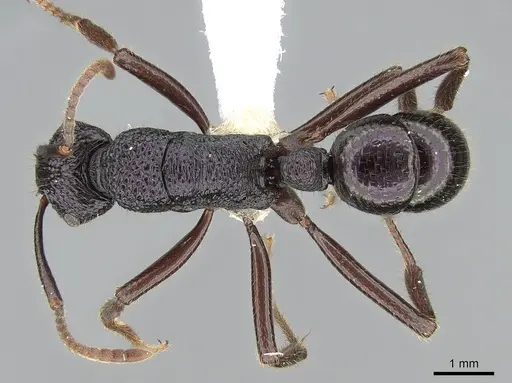
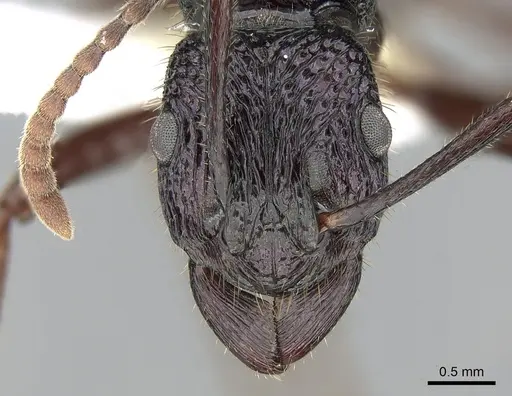
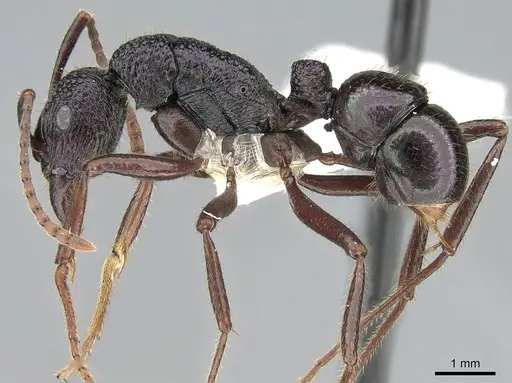
CASENT0281830
View on AntWeb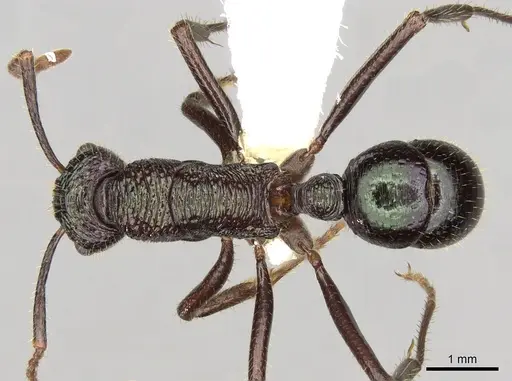
CASENT0903821
View on AntWeb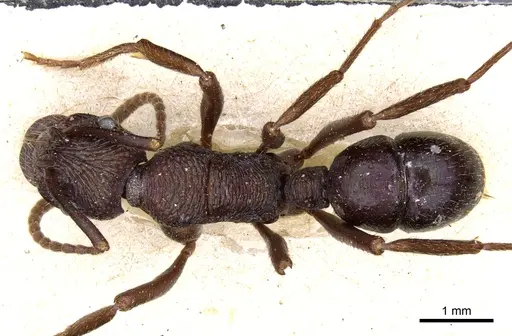
CASENT0903824
View on AntWeb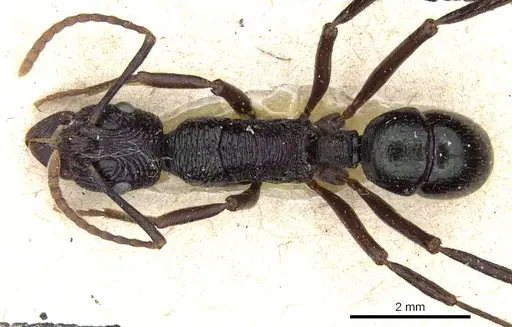
Literature
Loading distribution map...Loading products...