
Rhytidoponera convexa
- Sci. Name
- Rhytidoponera convexa
- Tribe
- Ectatommini
- Subfamily
- Ectatomminae
- Author
- Mayr, 1876
- Distribution
- Found in 1 countries
Introduction
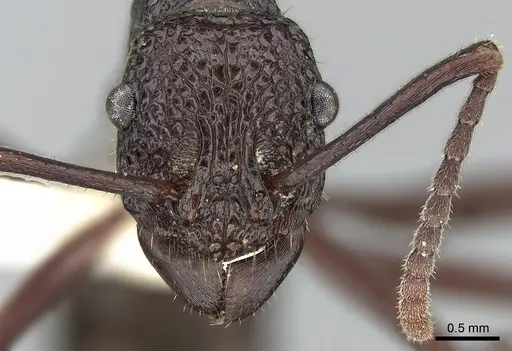
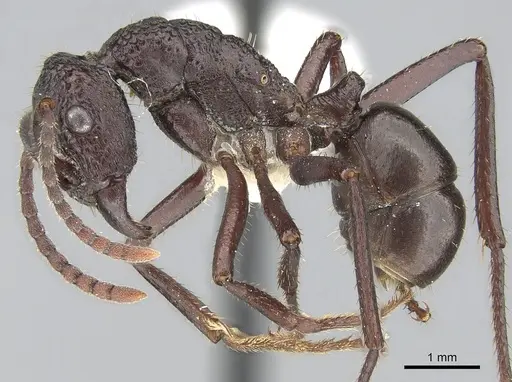
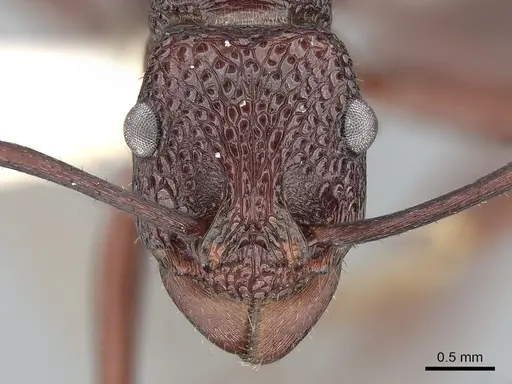
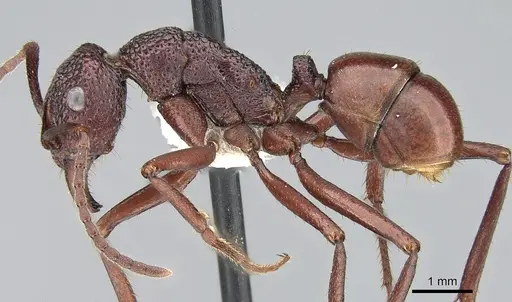
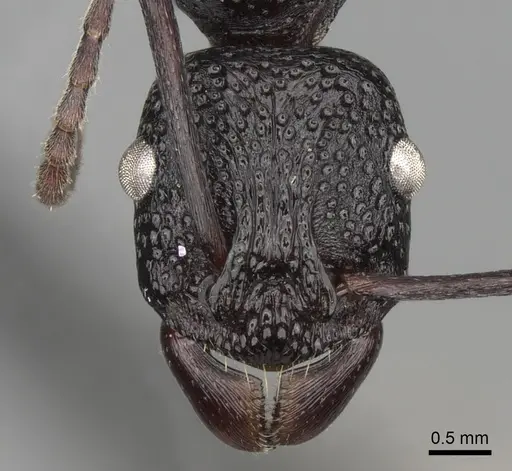
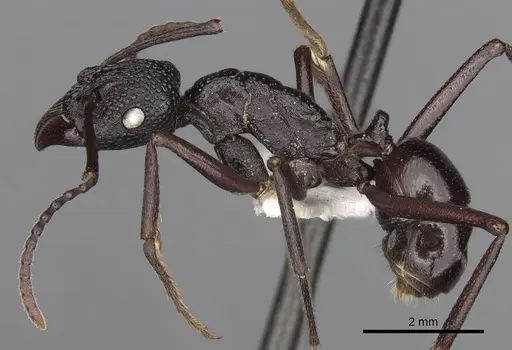
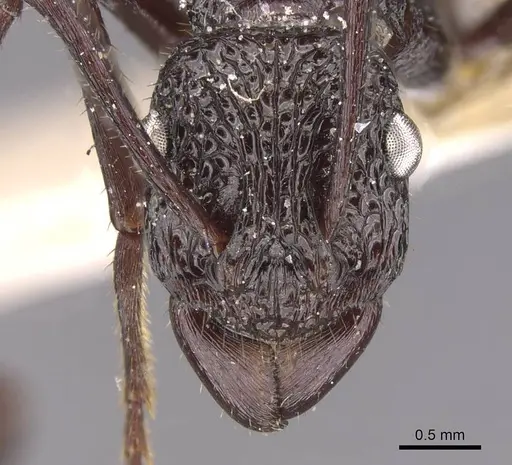
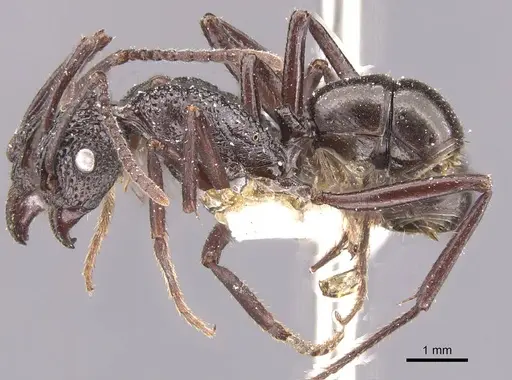
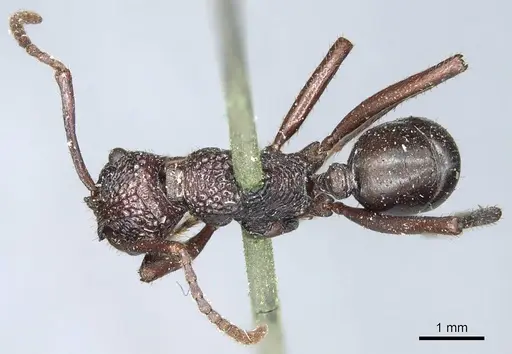
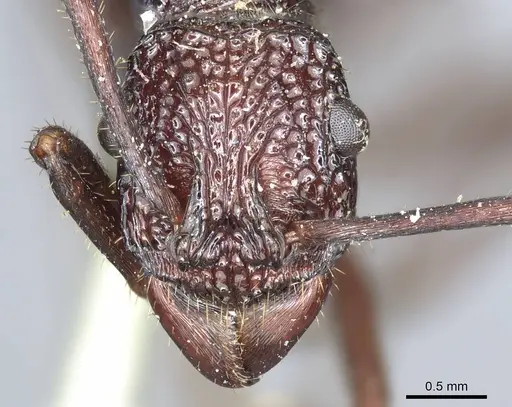
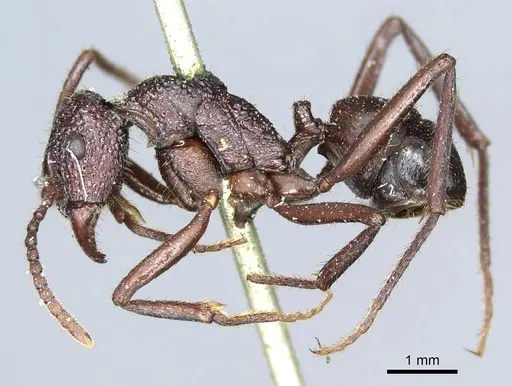
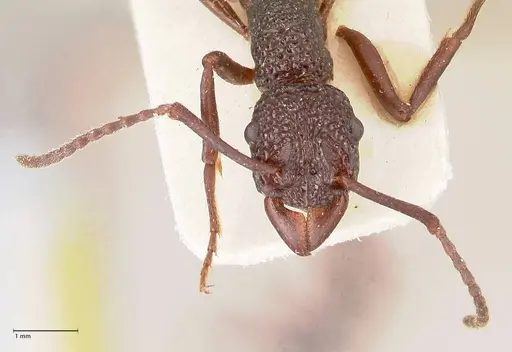
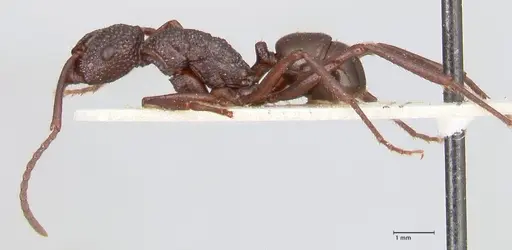
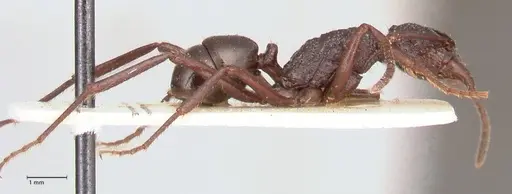
Rhytidoponera convexa is a medium-sized ant native to Australia. Workers are characterized by their distinctly short, high, and dorsally flattened petiolar node (the 'waist' segment) and a relatively simple head structure . The species occurs throughout most of inland Australia, from Queensland to South Australia . Originally described as Ectatomma convexum by Mayr in 1876,Rhytidoponera nigra is now considered a synonym . These ants are predator-scavengers that primarily hunt and consume other ant species, making them an interesting choice for antkeepers who want to observe specialized hunting behavior .
Quick Summary
- Difficulty: Hard
- Origin & Habitat: Inland Australia, found in arid and semi-arid regions across Queensland and South Australia, from Rockhampton and Gayndah to Mt Serle and Owieandana [1][2]. They inhabit dry woodlands and scrublands where they nest underground or beneath stones.
- Colony Type: Ergatoid (wingless) queens with limited dispersal ability [4]. The social structure regarding queen number is unclear, it may be monogyne or polygyne, but no direct observations confirm either. This unusual reproductive biology affects how colonies can be established in captivity.
- Size & Growth:
- Queen: Size data unavailable, no direct measurements exist. Inferred from the genus Rhytidoponera: queens are similar to workers but slightly larger.
- Worker: Not directly measured but described as mid-sized [1]. Likely 6-8 mm based on genus patterns, though specific data is lacking.
- Colony: Unknown, no colony size records found in the available literature.
- Growth: Moderate, estimated from related ectatommine species.
- Development: Unknown, no developmental timeline data available. Estimate based on related Ectatomminae species is 8-12 weeks at optimal temperature, but unconfirmed. (Temperature likely influences development speed, but no specific data exists for this species.)
- Antkeeping:
- Temperature: Likely 22-26 °C, inferred from its arid inland Australian habitat. Provide a gradient using a heating cable so workers can self-regulate. No specific experimental data confirms this range.
- Humidity: Low to moderate, matches its dry natural environment. Keep the nest substrate lightly moist but allow it to partially dry between waterings. Avoid constant saturation to prevent mold. Provide a moisture gradient.
- Diapause: Unknown, no research confirms diapause requirements. If the colony is from a region with cool winters, a cooler period may be beneficial, but no protocol is established. Monitor for natural winter slowdown.
- Nesting: Y-tong (AAC) or plaster nests work well for medium-sized ants. A naturalistic setup with deep substrate (5-10 cm) and flat stones or tiles for cover also suits them. Provide a dark, enclosed nesting area to mimic their natural underground nests.
- Behavior: Predator-scavenger that actively hunts other ant species. Workers forage solitarily and are efficient predators of Pheidole, Chelaner, Polyrhachis, Odontomachus, Iridomyrmex, and Meranoplus species [3]. Not aggressive toward humans but will defend the nest. Moderate escape risk, use standard barrier methods like fluon on smooth surfaces.
- Common Issues: limited dispersal due to ergatoid queens means you cannot start a colony from a flying queen, you need an established colony or colony fragment., specialized diet relying heavily on other ants can be challenging in captivity, live ant prey or high-protein alternatives are essential [3]., arid species prone to mold in overly humid conditions, avoid excessive moisture and ensure good ventilation., solitary foragers may not exploit food sources as efficiently as group-foraging species, so offer prey directly or in targeted spots., wild-caught colonies may host commensal crickets (Myrmecophilus testaceus), which are usually harmless but can cause stress [5].
Housing and Nest Setup
Rhytidoponera convexa does well in Y-tong (AAC) nests, which provide the dark, enclosed spaces these underground-nesting ants prefer. Chamber and passage sizes should accommodate medium-sized workers (roughly 6-8 mm). A naturalistic setup with a deep soil layer (5-10 cm) and flat stones or tiles on top also works excellently, letting you observe natural burrowing and hunting. The outworld should include a thin layer of sand or soil for foraging. Use standard escape prevention methods like fluon on smooth surfaces.
Feeding and Diet
This species is a specialized predator-scavenger that primarily hunts and consumes other ant species [3]. In captivity, offer live ant prey from other species, Pheidole, small Camponotus workers, and similar-sized ants make ideal prey. Based on field data, their diet consists mainly of Formicidae (52% of foraged items), along with Orthoptera, Coleoptera, Diptera, and spiders [3]. They will also accept other protein sources like small crickets, mealworms, and fruit flies, but live ant prey triggers the strongest foraging response. Sugar water or honey can be offered occasionally but is not their primary food. Feed every 2-3 days, removing uneaten prey after 24 hours to prevent mold.
Temperature and Seasonal Care
Based on its inland Australian habitat, a temperature range of 22-26 °C is likely suitable, though no specific experimental data exists. Use a heating cable on one side of the nest to create a gradient so workers can self-regulate. Regarding diapause, no research has confirmed requirements for this species. If your colony originates from a region with cool winters, a natural winter slowdown may occur, but this is not well documented. Monitor colony behavior and adjust conditions gradually if needed. [1]
Colony Establishment
Starting a colony of R. convexa presents unique challenges due to ergatoid (wingless) queens. Unlike most ants with nuptial flights, this species has limited dispersal because queens lack wings [4]. This means you cannot start a colony from a newly mated queen, you must acquire an established colony or colony fragment. When obtaining a colony, ensure it includes a functional queen (which appears similar to workers but slightly larger) and several workers. Growth is moderate, expect 6-12 months to reach 50+ workers under good conditions, though this is an estimate.
Behavior and Foraging
Workers are solitary foragers that actively hunt other ant species rather than forming groups [3]. They use chemical trails only minimally and explore independently, making them interesting to watch in the outworld. When they encounter prey, they use their mandibles to capture and subdue it. They are not aggressive toward humans but will defend their nest. These ants are most active during warmer parts of the day. Provide enrichment in the outworld: small obstacles, additional hunting areas, and occasional new prey items to stimulate natural foraging behavior.
Humidity Requirements
As an arid-adapted species, R. convexa prefers lower humidity than many tropical ants. Keep the nest substrate lightly moist but allow it to partially dry between waterings. The substrate should feel damp to the touch but not waterlogged. Provide a humidity gradient by moistening one end of the nest while leaving the other end drier. This lets ants self-regulate. Avoid constant saturation, too much humidity leads to mold and can kill the colony. Good ventilation helps maintain appropriate moisture levels. [1]
Frequently Asked Questions
How do I start a Rhytidoponera convexa colony?
You cannot start this species from a founding queen like most ants. R. convexa has ergatoid (wingless) queens with limited dispersal [4], meaning queens don't fly. You must acquire an established colony that includes workers and a functional queen. Expect to pay more for an established colony compared to founding colonies of other species.
What do Rhytidoponera convexa ants eat?
They are specialized predators that primarily hunt and eat other ant species [3]. In captivity, offer live ant prey (Pheidole, small Camponotus workers, Iridomyrmex) as their main food. They will also accept small crickets, mealworms, and fruit flies as alternatives. Sugar water can be offered occasionally but is not essential.
Do Rhytidoponera convexa ants sting?
Rhytidoponera belongs to the subfamily Ectatomminae, which includes ants capable of stinging. While not documented specifically for R. convexa, related species in this group can deliver painful stings. Handle with care and avoid provoking them, though they are not aggressive toward humans unless threatened.
What temperature do Rhytidoponera convexa need?
Keep them at 22-26 °C. Being from inland Australia, they can tolerate warmer conditions but do best in moderate warmth. Use a heating cable on one side of the nest to create a gradient, allowing workers to choose their preferred temperature zone.
How big do Rhytidoponera convexa colonies get?
Colony size has not been documented in the available literature. Based on related ectatommine species, they may form moderate-sized colonies, but no confirmed data exists.
Do Rhytidoponera convexa need hibernation?
Diapause requirements are unknown for this species. If your room temperature drops naturally in winter (below 18 °C), this may provide a rest period, but no research confirms this. If kept in a heated room year-round, no special hibernation is needed.
Are Rhytidoponera convexa good for beginners?
This species is rated as Hard difficulty. They are not ideal for beginners because: 1) colonies must be purchased established (no founding queens),2) they require live ant prey which is more specialized than standard feeder insects, and 3) their humidity needs are specific to arid species. However, experienced keepers interested in predator species will find them rewarding.
What size nest do Rhytidoponera convexa need?
A Y-tong (AAC) or plaster nest with medium-sized chambers works well. Passages should be roughly 6-8 mm to accommodate worker size. For naturalistic setups, provide at least 5-10 cm of substrate depth. They prefer dark nesting areas and will settle in enclosed spaces that mimic their natural underground nests.
Why is my Rhytidoponera convexa colony declining?
Common causes include: insufficient prey (they need regular live ant prey or high-protein alternatives), excessive humidity causing mold, temperatures outside the 22-26 °C range, or stress from relocation. They are also known to host the cricket Myrmecophilus testaceus [5], which could be present in wild-caught colonies but is usually harmless. Ensure consistent access to protein-rich food and stable environmental conditions.
Can I keep multiple queens together in Rhytidoponera convexa?
The ergatoid queen biology suggests colonies may have multiple functional queens [4], but this has not been confirmed. Combining unrelated queens is not recommended. If you obtain a colony, assume it already has the appropriate queen structure and do not attempt to introduce additional queens.
Report an Issue
The current care sheet is based fully on literature. See inconsistencies, or something that's incorrect? Please , it will be resolved after review from an admin. Contributing to the blogs tab also helps providing information, to make us be able to further improve the caresheets. Thank you for your support!
References

This caresheet is licensed under CC BY-SA 4.0 .
Community Blogs
ANTWEB1008312
View on AntWeb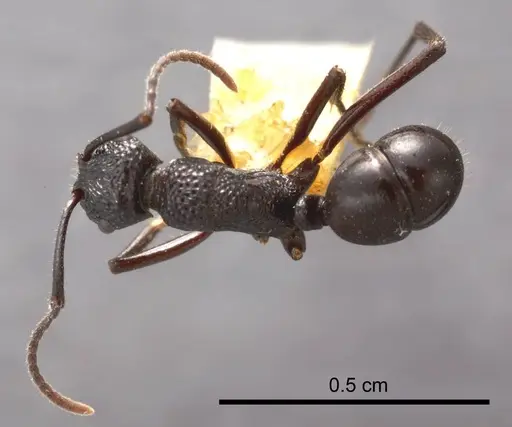
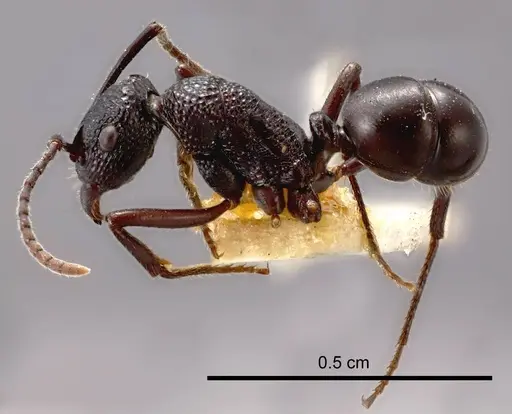
CASENT0281289
View on AntWeb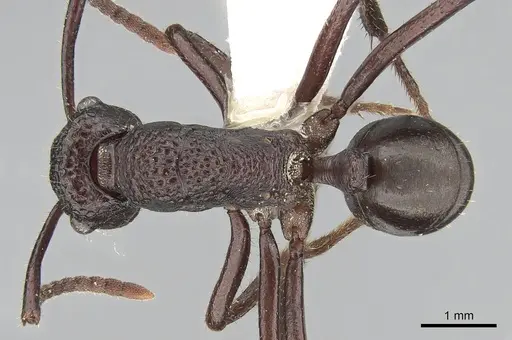
CASENT0281290
View on AntWeb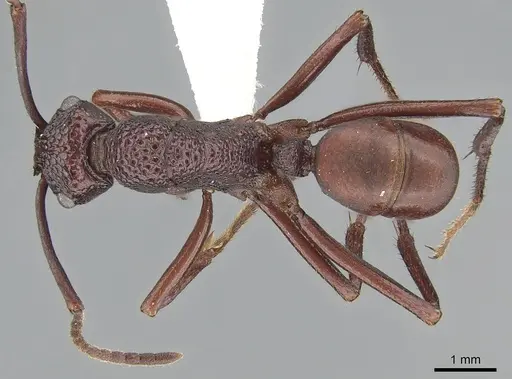
CASENT0281821
View on AntWeb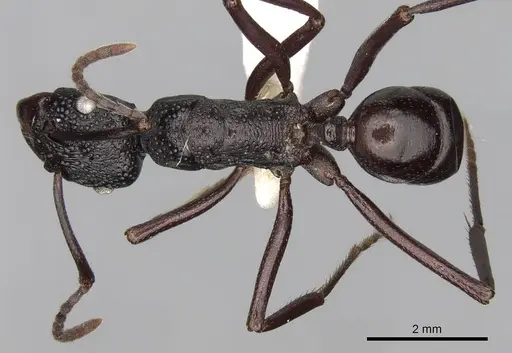
CASENT0915134
View on AntWeb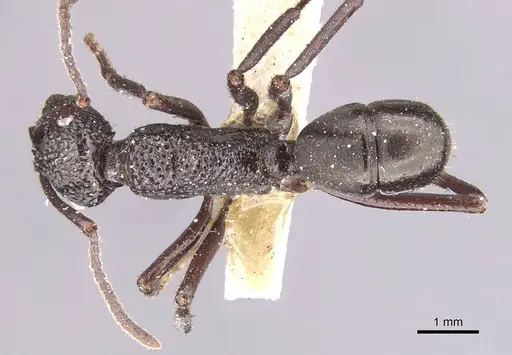
CASENT0915922
View on AntWeb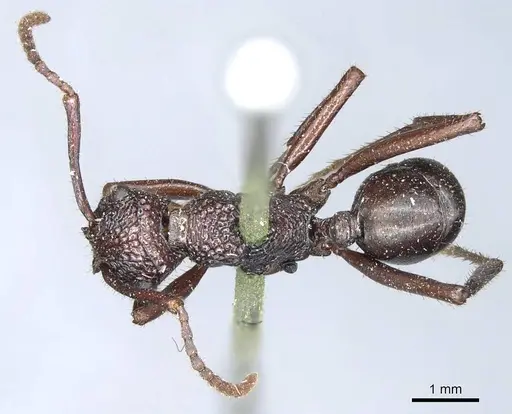
FOCOL0883
View on AntWeb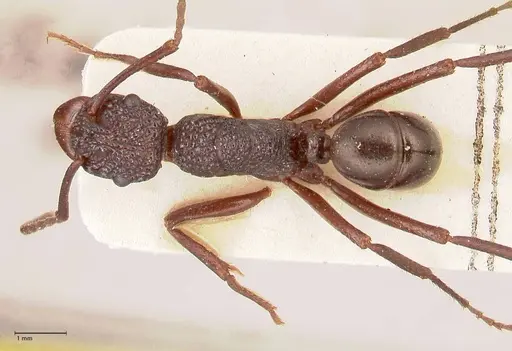
Literature
Loading distribution map...Loading products...