
Rhopalothrix weberi
- Sci. Name
- Rhopalothrix weberi
- Tribe
- Attini
- Subfamily
- Myrmicinae
- Author
- Brown & Kempf, 1960
- Distribution
- Found in 2 countries
Introduction
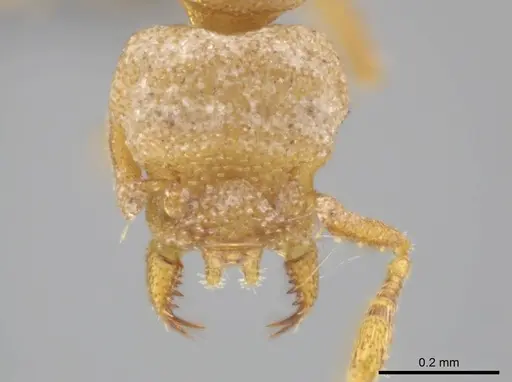
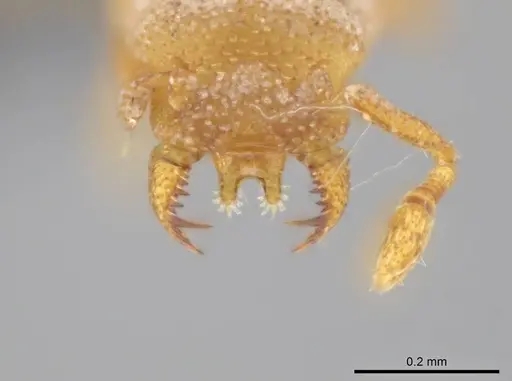
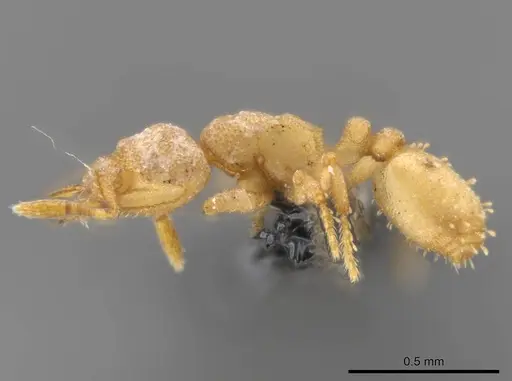
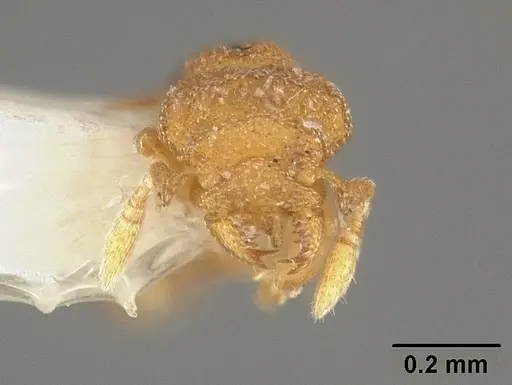
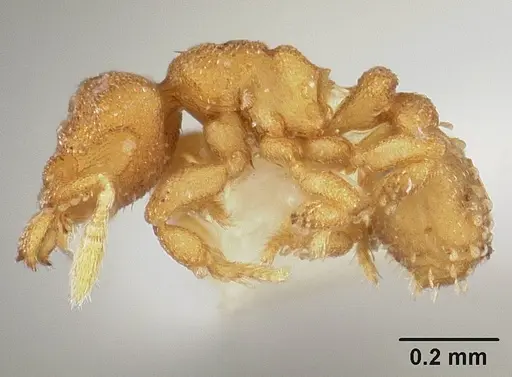
Rhopalothrix weberi is a tiny leaf litter ant belonging to the tribe Attini (fungus-growing ants), though this species is presumed predatory rather than fungus-cultivating. Workers are extremely small, with total length inferred from the Rhopalothrix genus-group at roughly 2-5 mm . Queens are slightly larger but still minute. The genus is part of the Basicerotini tribe, characterized by unusual mandibles with closely-spaced basal teeth and distinctive labral structures . These ants occur across the Neotropics, from Cuba through Central America to Colombia and the Guianas, living in lowland wet to moist forests between 200-575 m elevation . What sets R. weberi apart is its elusive nature. Researchers rarely collect workers - most specimens are dealate (wingless) queens found in leaf litter samples, suggesting workers may live mostly underground . This subterranean lifestyle means you likely won't see much activity in the outworld. The species is also morphologically difficult to distinguish from related genera, and there's potential for multiple cryptic species within what we currently call R. weberi .
Quick Summary
- Difficulty: Expert
- Origin & Habitat: Lowland wet to moist forest in the Neotropics, from Cuba through Mexico, Central America to Colombia and the Guianas, at 200-575 m elevation. Found in sifted leaf litter and rotting wood on the forest floor [2][3].
- Colony Type: Unknown colony structure. Only dealate queens and very few workers have been collected, suggesting possible subterranean worker colonies. No data on whether they are single-queen (monogyne) or multi-queen (polygyne).
- Size & Growth:
- Queen: Total length inferred from the Rhopalothrix genus-group at roughly 2-5 mm [1]
- Worker: Total length inferred from the Rhopalothrix genus-group at roughly 2-5 mm [1]
- Colony: Unknown, but likely under 100 workers based on related Basicerotini species and their cryptic, subterranean lifestyle [1]
- Growth: Unknown, no captive breeding data exists
- Development: Unknown, no direct observations. Based on typical Attini patterns, estimate 6-10 weeks at tropical temperatures, but this is a rough guess [1]. (Development is unconfirmed. Related Basicerotini species are slow developers due to their small size and cryptic habits.)
- Antkeeping:
- Temperature: Keep at 24-28°C. This is a lowland tropical species from warm, humid forests, aim for warm, stable conditions [2].
- Humidity: High humidity required. These ants live in forest floor litter where conditions are constantly damp. Keep the nest substrate consistently moist but not waterlogged, with good ventilation to prevent mold [2].
- Diapause: Unknown, no data on overwintering requirements. As a lowland tropical species, they may not need a true diapause, but a slight temperature reduction during winter months may be appropriate [2].
- Nesting: Natural nesting occurs in leaf litter and rotting wood [2]. In captivity, a small test tube setup with moist substrate works well, or a small plaster or Y-tong nest with chambers scaled to their tiny size. Provide leaf litter material in the outworld to simulate their natural forest floor habitat.
- Behavior: Presumed predatory like other Basicerotini, but feeding behavior has never been observed in captivity [4]. Workers are ground-dwelling and likely forage in the leaf litter layer [5]. Escape risk is extremely high due to their minute size, they can squeeze through the tiniest gaps. Temperament is unknown but likely non-aggressive given their cryptic habits. You will see very little activity from this species.
- Common Issues: tiny size makes escape prevention critical, use fine mesh and tight-fitting lids, no captive husbandry information exists, all care is experimental, subterranean habits mean you'll rarely see workers in the outworld, slow or nonexistent colony growth is expected, don't overfeed, males have never been collected, so captive reproduction may be impossible [2]
Housing and Setup
Rhopalothrix weberi is an expert-level species due to its minute size and complete lack of captive husbandry data. Housing should focus on humidity control and escape prevention. A small test tube setup (10-15 cm length) with a cotton plug and water reservoir works as a founding setup. For established colonies, a small plaster or Y-tong nest with chambers scaled to their tiny size is appropriate, avoid large, open spaces. The outworld should be small as well, with a shallow layer of moist substrate. Cover all connections with fine mesh (at least 0.5 mm or finer) because these ants will escape through any gap. Provide a small piece of damp leaf litter or rotting wood in the outworld to simulate their natural forest floor habitat [2].
Feeding and Diet
The diet of R. weberi is essentially unknown, this is one of the least-studied ants in captivity. As members of the Attini tribe, they are traditionally fungus-growers, but Rhopalothrix and related Basicerotini are presumed predatory rather than fungivorous [4]. Based on related genera, they likely hunt tiny micro-arthropods in leaf litter. Your best options are very small live prey: springtails, tiny booklice (psocids), and minute soil mites. Do not rely on sugar sources, these ants are not known to attend aphids or seek nectar. Feed very small amounts and remove any uneaten prey after 24-48 hours to prevent mold in the humid setup. If the colony accepts food, you may see tiny workers dragging prey into the nest [4][1].
Temperature and Humidity
As a lowland tropical species from wet forests, R. weberi needs warm, humid conditions. Maintain temperatures between 24-28°C, use a heating cable on one side of the nest if your room temperature is below this range. Place the heating on top of the nest, not underneath, to avoid evaporating moisture too quickly. Humidity should be high, the nest substrate should feel consistently damp but not soggy. Use a water tube for the nest and mist the outworld occasionally. Good ventilation is essential to prevent mold growth while maintaining humidity. Avoid temperature fluctuations and dry air, these conditions are likely fatal for this species [2].
Colony Behavior and Expectations
You should have very low expectations for visible activity. Based on field collections, workers appear to be subterranean, they stay underground and rarely venture into the leaf litter layer where they'd be caught in Winkler traps [2]. Most specimens collected are dealate queens, suggesting workers remain in the nest or in underground chambers. This means your colony will appear nearly inactive, with queens hidden away and workers rarely visible. Don't mistake this for death or failure, the colony is likely alive but simply living their natural cryptic lifestyle. Males have never been collected, so obtaining a mated queen or breeding this species in captivity may be impossible [2].
Difficulty and Realistic Expectations
This is genuinely an expert-only species. There is zero published information on captive husbandry, meaning every aspect of keeping R. weberi requires experimentation. You should only attempt this species if you have extensive experience with other tiny leaf litter ants and can provide the precise humidity and escape-prevention conditions they need. Even then, success is uncertain, the colony may slowly decline despite your best efforts simply because we don't know what they need. Consider this a conservation-focused project rather than a typical antkeeping endeavor. If you obtain a queen, document everything you try and share your findings with the antkeeping community [4][2].
Frequently Asked Questions
How long does it take for Rhopalothrix weberi to produce first workers?
Unknown, no captive breeding data exists. Based on related Basicerotini species, expect at least 6-10 weeks at optimal tropical temperatures, but this is purely an estimate [1].
Can I keep Rhopalothrix weberi in a test tube?
Yes, a test tube setup is appropriate for founding colonies. Use a small tube (10-15 cm) with a water reservoir and cotton plug. However, escape prevention is critical, these ants are tiny and will escape through any gap [2].
What do Rhopalothrix weberi ants eat?
Presumed predatory on tiny micro-arthropods. Offer very small live prey like springtails, tiny booklice, and minute soil mites. Sugar sources are unlikely to be accepted. This is based on related Basicerotini behavior, actual feeding has never been documented [4].
Are Rhopalothrix weberi good for beginners?
No, this is an expert-only species. There is zero captive husbandry information, their tiny size makes them difficult to house, and they require precise humidity conditions. Only experienced antkeepers should attempt this species [4].
How big do Rhopalothrix weberi colonies get?
Unknown, no colony size data exists. Based on related Basicerotini species and their cryptic, subterranean lifestyle, colonies likely remain small, probably under 100 workers [1].
Do Rhopalothrix weberi need hibernation?
Unknown, likely not required. As a lowland tropical species from consistent warm, humid forests, they probably don't need a true diapause. A slight temperature reduction during winter may be appropriate, but this is unconfirmed [2].
Why can't I find any information on keeping this ant?
Rhopalothrix weberi is one of the rarest and least-studied ants in captivity. They are rarely collected (mostly queens in litter samples), and no one has successfully bred them in captivity. All care information is experimental [2][4].
Why are there no workers in my colony?
This is normal, field collections show workers are rarely found. Workers appear to be subterranean, staying in underground chambers while queens disperse up into the litter layer. Your colony likely has workers, they're just hidden [2].
Report an Issue
The current care sheet is based fully on literature. See inconsistencies, or something that's incorrect? Please , it will be resolved after review from an admin. Contributing to the blogs tab also helps providing information, to make us be able to further improve the caresheets. Thank you for your support!
References

This caresheet is licensed under CC BY-SA 4.0 .
Community Blogs
CASENT0633332
View on AntWeb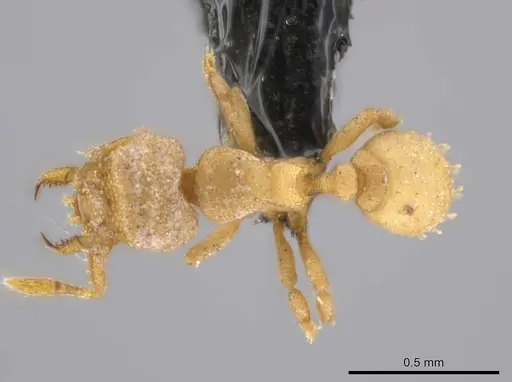
USNMENT00441672
View on AntWeb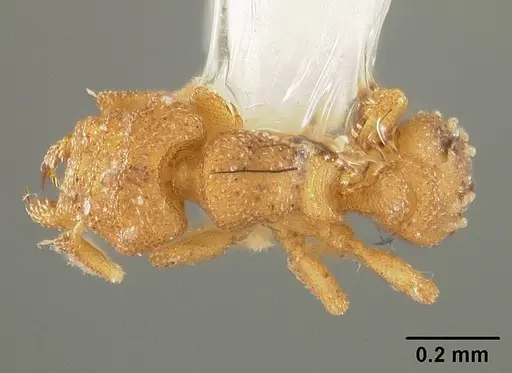
Literature
Loading distribution map...Loading products...