
Rhopalothrix therion
- Sci. Name
- Rhopalothrix therion
- Tribe
- Attini
- Subfamily
- Myrmicinae
- Author
- Longino & Boudinot, 2013
- Distribution
- Found in 3 countries
Introduction
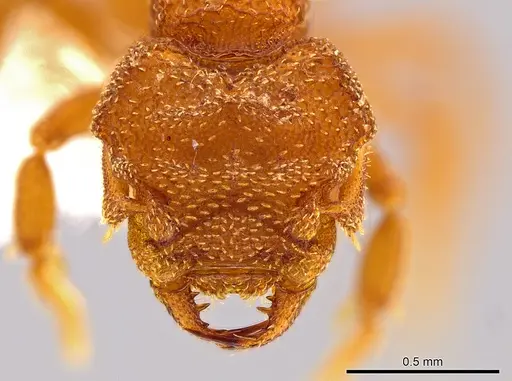
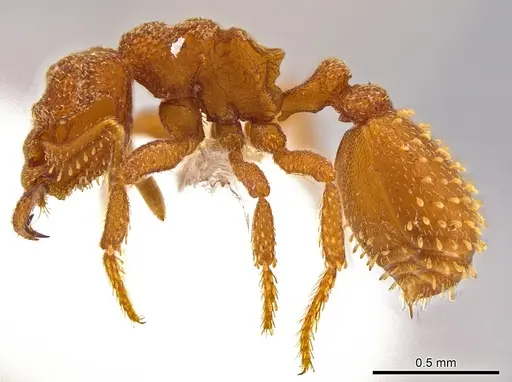
Rhopalothrix therion is one of the rarest and most mysterious ants in the world. This tiny species lives deep in the leaf litter of Central American cloud and rain forests, and scientists have collected only a handful of workers since its discovery in 2013 . They have a fierce-looking face with deep grooves and a broad, bilobed upper lip, which inspired their name "therion" (Greek for "fierce") . Their abdomen is covered in short, spatula-shaped hairs that give them a somewhat fuzzy appearance . These ants belong to the *Rhopalothrix isthmica* group, a lineage found only in the Neotropics with its highest diversity in Central America . Because no queens, males, or colonies have ever been found, almost everything about their biology remains a mystery .
Quick Summary
- Difficulty: Expert
- Origin & Habitat: Cloud and rain forests of Honduras, Nicaragua, and Costa Rica at 550-1420 m elevation [1]. They live exclusively in the leaf litter layer of wet, humid forests.
- Colony Type: Unknown, only the worker caste has been described, and no queens or males have ever been collected [1]. The colony structure is entirely unconfirmed.
- Size & Growth:
- Queen: Unknown, only workers have been described [1]
- Worker: Size data unavailable, only head width measurements exist in the literature, but total body length has not been recorded [1]
- Colony: Unknown, only single workers have been collected in the wild [1]
- Growth: Unknown
- Development: Unknown, no breeding or development data exists for this species (This species has never been kept in captivity, so no development timeline is available. Related Attini leaf-litter ants typically take 2-4 months from egg to worker at tropical temperatures.)
- Antkeeping:
- Temperature: Keep around 22-26 °C, mimicking the stable warm conditions of cloud forests. Avoid temperatures below 18 °C or above 30 °C [1].
- Humidity: Very high humidity is essential, these ants come from perpetually damp forest floors. The nest substrate should remain consistently moist but never waterlogged. Think of the humid air inside a greenhouse [1].
- Diapause: Unlikely, being a tropical species from consistent cloud forest environments, they probably do not require a winter rest period. However, slight seasonal slowing may occur [1].
- Nesting: These are leaf-litter specialists. In captivity, they would likely do best in a naturalistic setup with very small chambers scaled to their tiny size. A Y‑tong or plaster nest with fine, tight passages would work. The key is maintaining high humidity while allowing some ventilation to prevent mold [1].
- Behavior: Completely unknown in captivity. In the wild, they are cryptic leaf-litter dwellers that forage in the dark, humid micro‑environment between decaying leaves [1]. Their small size and rare occurrence suggest they are likely secretive and non‑aggressive. Escape prevention will be critical given their minute size, they can easily slip through standard barrier setups. Assume they are poor climbers and unlikely to escape from smooth surfaces.
- Common Issues: this species has never been kept in captivity, all care recommendations are speculative, tiny size means escape prevention must be excellent using fine mesh and tight barriers, no established feeding or diet information exists, start with micro‑prey like springtails and micro‑arthropods, high humidity requirements create mold risk, balance ventilation carefully, no colony founding information exists, wild colonies have never been observed, related leaf‑litter ants are extremely sensitive to drying out
Why This Species Is So Challenging
Rhopalothrix therion is not a species for beginners, in fact, it may never have been kept in captivity [1]. These ants are among the rarest in the ant‑keeping hobby because only a handful of wild workers exist in scientific collections, and no one has ever found a queen, a male, or a functioning colony [1]. Everything about their captive care is speculative rather than based on established husbandry practices. You cannot purchase this species from any commercial supplier, and any colonies would need to be wild‑caught, which presents its own challenges given their extreme rarity [1].
Natural History and Habitat
In the wild, Rhopalothrix therion lives exclusively in the leaf litter layer of wet Central American forests [1]. They have been collected at elevations between 550 and 1420 m, in both rain forest and cloud forest habitats [1]. Researchers find them using mini‑Winkler samples, a method where sifted leaf litter and soil are placed in special funnels that allow tiny arthropods to fall into collecting containers [1]. At three cloud forest sites in Nicaragua, these ants appeared in only 5-10% of samples, meaning you might need to sift through 100 samples to find even one [1]. In Costa Rica, they are known from just a single collection near Turrialba on the Atlantic slope, despite intensive sampling at nearby sites [1].
Physical Characteristics
Workers are extremely tiny, their only published measurement is head width, but total body length has not been recorded [1]. Their most distinctive feature is the labrum (upper lip), which is broader than long and has a bilobed shape with a notch in the middle [1]. The mandibles have 2-3 teeth on the chewing margin, and interestingly, an individual can have two teeth on one mandible and three on the other [1]. They have a large, triangular propodeal tooth (a spike on the rear of the mesosoma) and their first gastral tergite is covered in short, spatula‑shaped hairs that give them a slightly fuzzy look [1]. The name "therion" (meaning "fierce") was chosen because of their intimidating facial features and deep grooves on the face and mesosoma [1].
Tentative Care Recommendations
Since no captive husbandry exists for this species, any advice must be treated as educated speculation based on related leaf‑litter ants [1]. Given their cloud forest origin, they likely need temperatures in the low‑to‑mid 20s Celsius with very high humidity approaching saturation [1]. The nest should never dry out, these ants are adapted to the constantly moist environment of decomposing forest floor litter [1]. For nesting, a small‑scale naturalistic setup with tight chambers scaled to their minute size would be most appropriate. A Y‑tong nest with very narrow passages or a small plaster nest could work [1]. For food, start with tiny live prey like springtails, as these match their natural diet of micro‑arthropods living in leaf litter [1]. Sugar acceptance is uncertain, offer honey or sugar water occasionally but do not rely on it [1]. Escape prevention must be excellent due to their microscopic size [1].
Related Species and Taxonomy
Rhopalothrix therion belongs to the Rhopalothrix isthmica clade, a group of species restricted to the Neotropics with their center of diversity in Central America [2]. The genus Rhopalothrix as a whole is considered a rare inhabitant of wet forest leaf litter and soil [2]. This species forms a geographic replacement series with two close relatives, R. triumphalis and R. atitlanica, meaning these species occupy different regions but share similar physical features, particularly their distinctive labrum shape [1]. Understanding their taxonomic relationships helps us infer their care requirements from related species that might be slightly better studied, though even their closest relatives remain poorly known in captivity [1][2].
Frequently Asked Questions
Can I keep Rhopalothrix therion ants as a pet?
It is extremely unlikely you will ever find this species for sale. Rhopalothrix therion is known from only a handful of wild specimens and has never been documented in captivity. No commercial ant farms or suppliers offer this species, and collecting wild colonies would be nearly impossible given their extreme rarity [1].
How big are Rhopalothrix therion workers?
They are extremely tiny, only head width measurements are recorded in the literature, but their total body length has not been published. For comparison, a typical carpenter ant worker is 6-8 mm, so these are one of the smallest ants in Central America [1].
What do Rhopalothrix therion ants eat?
Their exact diet is unknown, but being leaf‑litter dwellers, they almost certainly eat tiny micro‑arthropods like springtails, mites, and other microscopic invertebrates living in decomposing leaf matter. In captivity, you would need to culture or provide these tiny live prey items [1].
Where does Rhopalothrix therion live in the wild?
They live in the leaf litter of cloud and rain forests in Honduras, Nicaragua, and Costa Rica, at elevations between 550 and 1420 m. They have never been found in any other habitat type [1].
How do I set up a nest for tiny leaf‑litter ants like Rhopalothrix?
For such small ants, you would need a nest with extremely tight chambers, likely less than 2 mm in passage width. A Y‑tong nest with narrow galleries or a small plaster formicarium with fine chambers would work. The key requirements are maintaining very high humidity and preventing escape through any gap larger than half a millimeter [1].
What temperature do cloud forest ants need?
Cloud forests have stable, mild temperatures year‑round, typically in the 18-24 °C range. For Rhopalothrix therion, aim for roughly 22-26 °C with high humidity. Avoid temperatures below 18 °C or above 30 °C. A small heat mat on one side of the nest can create a gentle gradient if your room temperature is below 22 °C [1].
Why is Rhopalothrix therion so rare in the wild?
They appear to naturally exist at very low population densities in cloud forests. Researchers find them in only 5-10% of leaf‑litter samples, meaning they are genuinely uncommon animals. Additionally, their range is limited to three countries in Central America, and within that range they are known from only a few specific locations [1].
Can I breed Rhopalothrix therion in captivity?
No breeding has ever been documented because no one has ever collected a colony. Without queens or males, captive breeding is impossible. Even if you found a worker, you cannot start a colony from a single sterile individual. This remains a species for scientific study rather than ant‑keeping [1].
Are Rhopalothrix therion ants aggressive?
Their temperament is completely unknown, but given their tiny size and cryptic lifestyle, they are almost certainly non‑aggressive and would avoid confrontation rather than seek it. Their "fierce" name refers to their appearance, not their behavior [1].
Report an Issue
The current care sheet is based fully on literature. See inconsistencies, or something that's incorrect? Please , it will be resolved after review from an admin. Contributing to the blogs tab also helps providing information, to make us be able to further improve the caresheets. Thank you for your support!
References

This caresheet is licensed under CC BY-SA 4.0 .
Community Blogs
CASENT0616292
View on AntWeb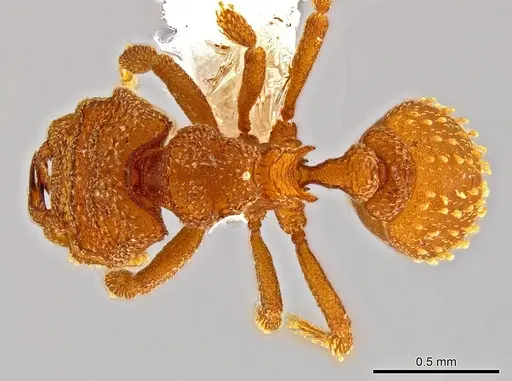
Literature
Loading distribution map...Loading products...