
Rhopalothrix ciliata
- Sci. Name
- Rhopalothrix ciliata
- Tribe
- Attini
- Subfamily
- Myrmicinae
- Author
- Mayr, 1870
- Distribution
- Found in 2 countries
Introduction
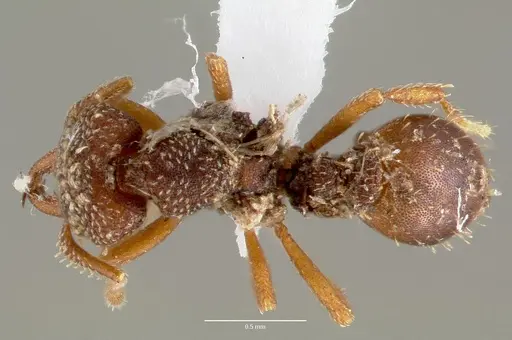
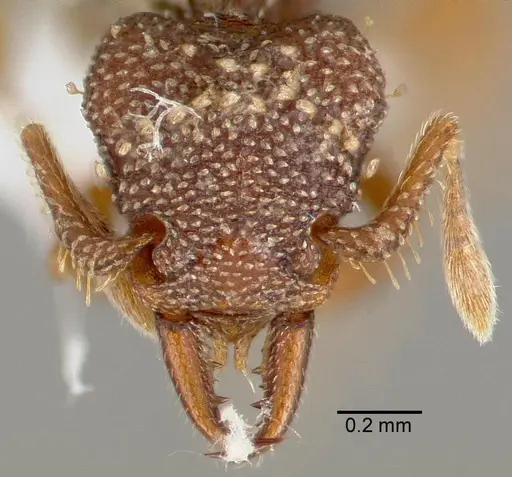
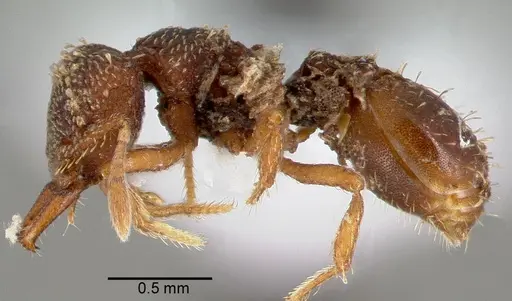
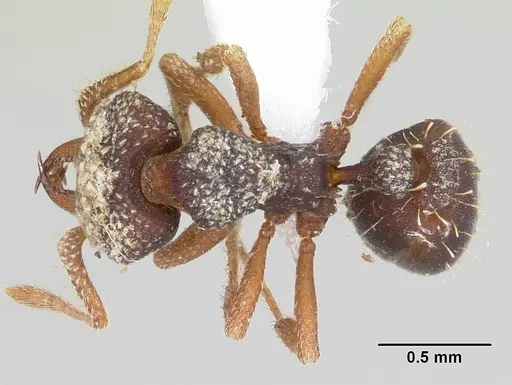
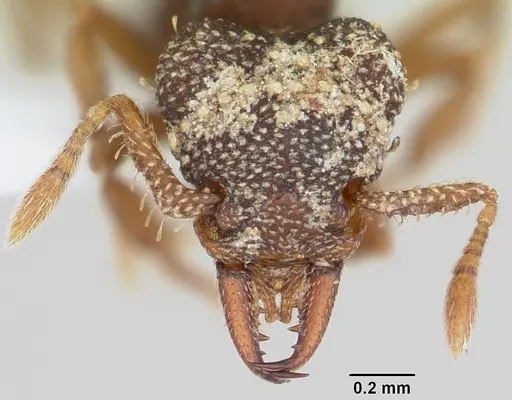
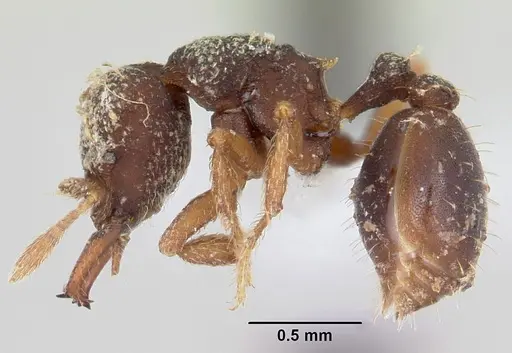
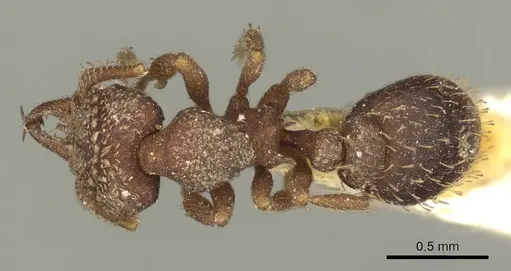
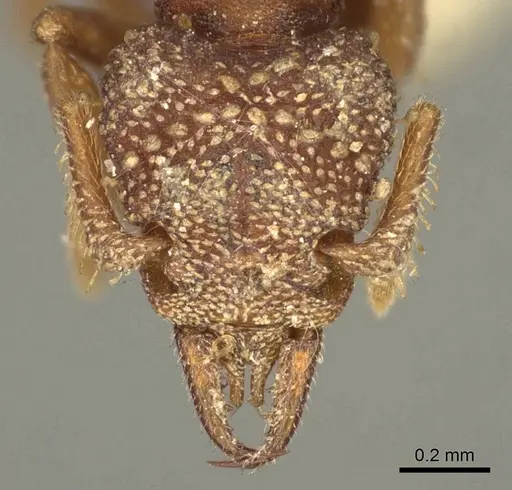
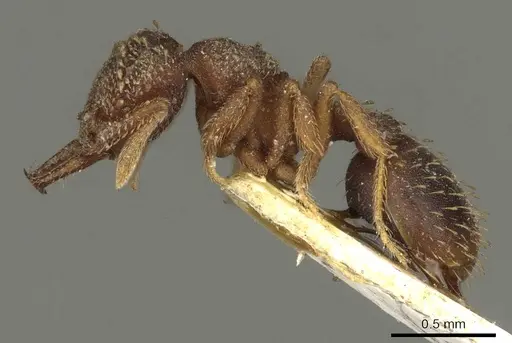
Rhopalothrix ciliata is a tiny leaf litter ant from the cloud forests of the northern Andes. Workers measure 2.6–3.1 mm in total length, with a rusty-brown colour and a dark band on the abdomen . Their face is covered with flat, scale-like hairs that form an arch across the head, and they also have long, club-shaped hairs on the body . These ants belong to the Rhopalothrix genus-group, which are small predators that live in forest leaf litter . One remarkable aspect of this species is its adaptability: while it naturally inhabits high-altitude cloud forests above 1500 m, it is also very abundant in modified environments like coffee plantations that include native trees . They are collected by sifting leaf litter, showing they forage deep in the forest floor layer .
Quick Summary
- Difficulty: Hard
- Origin & Habitat: Cloud forests and montane evergreen forests of the northern Andes, found at altitudes above 1500 m in Colombia, Ecuador, and Venezuela. They thrive in humid, shaded forest floor environments and are surprisingly abundant in agroecosystems like coffee plantations with native trees [2].
- Colony Type: Unconfirmed. No data on queen number or social structure.
- Size & Growth:
- Queen: Unconfirmed – no queen has been described in the literature.
- Worker: 2.6–3.1 mm total length [1][2]
- Colony: Unknown – no wild colony data available
- Growth: Unknown
- Development: Unknown – no direct data. Based on similar small leaf litter predators (2–5 mm), a rough estimate is 6–10 weeks at optimal temperature [4]. (Development timeline is unconfirmed. Rhopalothrix ciliata are leaf litter specialists, but no specific studies exist.)
- Antkeeping:
- Temperature: Keep at cool mountain conditions: aim for 18–22°C. These are high-altitude cloud forest ants, so they prefer cooler temperatures than most tropical ants. Avoid sustained temperatures above 25°C [2].
- Humidity: High humidity – keep the nest substrate consistently moist but not waterlogged, with good ventilation. Mimic the damp forest floor they come from [2].
- Diapause: Unknown – no specific data. Given their high-altitude origin, a cool period may be beneficial but is not confirmed.
- Nesting: A naturalistic setup with a deep leaf litter layer works best. Use a Y-tong nest or plaster nest with moist chambers, and an outworld with damp leaf litter or coco fiber. They are leaf litter foragers
Report an Issue
The current care sheet is based fully on literature. See inconsistencies, or something that's incorrect? Please , it will be resolved after review from an admin. Contributing to the blogs tab also helps providing information, to make us be able to further improve the caresheets. Thank you for your support!
References

This caresheet is licensed under CC BY-SA 4.0 .
Community Blogs
Literature
Loading distribution map...Loading products...