
Rhopalothrix atitlanica
- Sci. Name
- Rhopalothrix atitlanica
- Tribe
- Attini
- Subfamily
- Myrmicinae
- Author
- Longino & Boudinot, 2013
- Distribution
- Found in 1 countries
Introduction
Rhopalothrix atitlanica is an extremely rare ant from the cloud forests of Guatemala. Workers are very small, around 2-5 mm in total length . They belong to the isthmica clade within the genus Rhopalothrix, a group of small leaf litter predators that are notoriously difficult to find and study . This species is known only from the slopes of Volcán Atitlán in Guatemala, where it lives at elevations between 1050-1400 m in cloud forest and riparian forest . All six known specimens have been collected from sifted leaf litter using Winkler extraction - these ants are so rare that no queen or male has ever been described . This is a species for advanced antkeepers interested in truly obscure Myrmicinae, as captive care information does not exist.
Quick Summary
- Difficulty: Expert
- Origin & Habitat: Guatemala, cloud forest and riparian forest on the slopes of Volcán Atitlán at 1050-1400 m elevation [2]
- Colony Type: Unknown, only workers have been collected. No queen or male has ever been described [2]
- Size & Growth:
- Queen: Unknown, queen has never been described [2]
- Worker: 2-5 mm total length [1]
- Colony: Unknown, only six workers have ever been collected [2]
- Growth: Unknown
- Development: Unknown, no breeding data exists for this species (No colony has ever been successfully raised in captivity. Development timeline cannot be estimated from related species due to unique biology.)
- Antkeeping:
- Temperature: Based on cloud forest habitat at 1050-1400 m elevation, likely need cool conditions around 18-22°C with minimal fluctuation. The high elevation suggests they prefer stable, temperate conditions rather than warmth.
- Humidity: High humidity is essential, cloud forest environments maintain constant moisture. Keep substrate consistently damp but not waterlogged, with good ventilation to prevent mold.
- Diapause: Unknown, no seasonal data exists. Given the high-elevation cloud forest habitat, they may experience reduced activity during cooler months but this is unconfirmed.
- Nesting: Leaf litter specialists collected from sifted litter. A naturalistic setup with fine, moist substrate and abundant leaf litter would be most appropriate. Y-tong or plaster nests with very small chambers may work but this species has never been kept in captivity.
- Behavior: Behavior is unstudied in captivity. In the wild, they are leaf litter predators, part of the Basiceros group that hunts small prey in forest floor debris [1]. Their tiny size and rare occurrence suggest they are cryptic and likely nocturnal or crepuscular. Escape prevention is critical due to their minute size, standard barriers may not contain them. Aggression level is unknown.
- Common Issues: no captive husbandry information exists, this species has never been kept in captivity, only six wild specimens have ever been collected, making even basic biology unknown, queen and male are unknown, founding behavior cannot be determined, tiny size creates extreme escape risk with standard equipment, cloud forest humidity requirements are difficult to maintain consistently, no established feeding protocols exist for this species, related Basiceros species are cryptic predators with specialized diets
Rarity and Collection History
Rhopalothrix atitlanica is one of the rarest ants in the world to study. Only six specimens have ever been collected, all from the slopes of Volcán Atitlán in Guatemala [2]. The original specimens came from two locations: one at 1400 m elevation in cloud forest and another at 1070 m in riparian forest [2]. These ants were collected using Winkler extraction, a method where sifted leaf litter is placed in cloth bags and hung indoors, allowing tiny arthropods to crawl out over several days. This technique reveals just how cryptic and difficult to find these ants are, they simply cannot be collected by hand or with typical ant collecting methods. The fact that no queen or male has ever been described means we know almost nothing about their reproductive biology [2].
Taxonomy and Identification
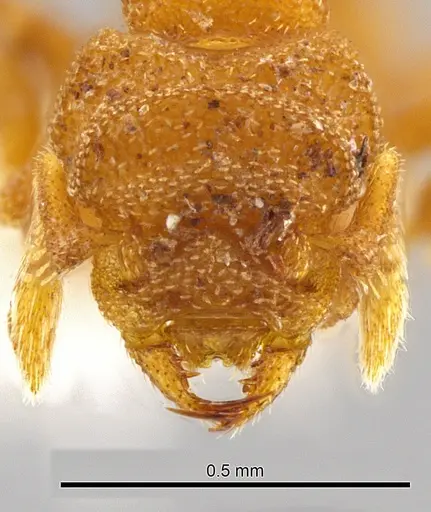
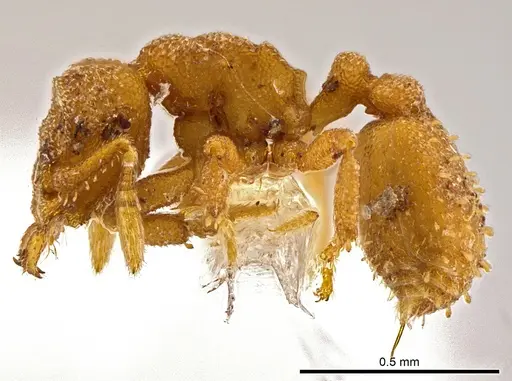
Rhopalothrix atitlanica belongs to the tribe Attini within Myrmicinae, but unlike most Attini (which are fungus-growing ants), this species is a leaf litter predator [1]. It is part of the monophyletic isthmica clade, a group of small Central American ants that are morphologically difficult to distinguish from related genera [2][1]. Workers can be identified by their bilobed or bidentate labrum (upper lip), mandibles with only two teeth, and distinctive squamiform (scale-like) setae covering the first gastral segment [2]. The genus Rhopalothrix is part of the 'Basiceros' group, small predatory ants that hunt through leaf litter rather than cultivate fungus.
Natural Habitat
This species lives exclusively in cloud forest environments at elevations between 1050-1400 m on Volcán Atitlán in Guatemala [2]. Cloud forests are characterized by constant mist, high humidity (often above 80%), and moderate temperatures that rarely get very warm due to the elevation. At the type locality, R. atitlanica occurs just below where its relative Rhopalothrix isthmica becomes abundant, at the lower edge of the cloud forest where it transitions to coffee plantations [2]. This suggests it prefers slightly warmer and likely drier conditions than true cloud forest specialists. The riparian forest collection site indicates it can tolerate areas with more water availability. All specimens have been found in sifted leaf litter, confirming it is a leaf litter specialist that lives deep in the forest floor debris [2].
Housing and Setup Recommendations
Since this species has never been kept in captivity, any recommendations are speculative but based on habitat clues. A naturalistic setup with a deep layer of moist, sifted leaf litter would best replicate their natural environment. The substrate should be kept consistently damp but never waterlogged, think the moisture level of a forest floor after rain. Given their extreme rarity and the complete lack of captive husbandry data, this species is not recommended for anyone except the most advanced antkeepers with specific interest in obscure Myrmicinae. If attempting to keep them, use test tubes with very fine mesh barriers or a custom-built naturalistic formicarium with chambers scaled to their tiny size. The key challenge is that we simply do not know what they eat, how they breed, or what conditions they need to survive, keeping them would be entirely experimental. [2]
Feeding and Diet
The diet of Rhopalothrix atitlanica is not directly studied, but as a member of the Basiceros group within Attini, they are presumed to be predators of small leaf litter arthropods [1]. In the wild, they likely hunt micro-arthropods like springtails, mites, and other tiny invertebrates found in forest floor debris. The mandible structure with two teeth suggests predatory behavior rather than fungus cultivation [2]. In captivity, one might attempt feeding tiny live prey such as springtails, but acceptance is completely unconfirmed. Related Basiceros species are known to be secretive predators that rarely come to food baits. Sugar sources are unlikely to be accepted given their predatory morphology. Any feeding attempts would be entirely experimental with no guarantee of success.
Frequently Asked Questions
Can I keep Rhopalothrix atitlanica as a pet ant?
This species has never been kept in captivity. Only six workers have ever been collected in the wild, and no queen or male has ever been described. There is no captive husbandry information available, making successful keeping extremely unlikely. This species is not recommended for any keeper except research scientists studying rare Central American ants.
What do Rhopalothrix atitlanica ants eat?
Their diet is unstudied, but as leaf litter predators in the Basiceros group, they likely hunt small micro-arthropods like springtails and mites in forest floor debris. Captive feeding has never been documented. If attempting to keep them, offering tiny live prey would be the most logical approach, but acceptance is completely unknown.
How big do Rhopalothrix atitlanica colonies get?
Unknown. Only six workers have ever been collected, and colony size in the wild has never been studied. Related species in the isthmica clade are typically small colony formers due to their cryptic leaf litter lifestyle.
What temperature do Rhopalothrix atitlanica need?
Based on their cloud forest habitat at 1050-1400 m elevation in Guatemala, they likely prefer cool conditions around 18-22°C with minimal temperature fluctuation. The high elevation suggests they are adapted to temperate conditions rather than warmth. This is an estimate based on habitat, not direct observation.
Are Rhopalothrix atitlanica good for beginners?
No. This species is absolutely not suitable for beginners or even intermediate antkeepers. No one has ever successfully kept this species in captivity, and basic biology including queen identity, founding behavior, diet, and colony structure remain completely unknown. This is an expert-only species that should only be attempted by researchers with specific interest in rare Neotropical Myrmicinae.
Where does Rhopalothrix atitlanica live?
This species is known only from the slopes of Volcán Atitlán in Guatemala, at elevations between 1050-1400 m. It occurs in cloud forest and riparian forest habitats, living in leaf litter on the forest floor. Its entire global range is limited to this small area in southern Guatemala.
Why is Rhopalothrix atitlanica so rare?
This species appears to naturally exist at very low population densities in its cloud forest habitat. Combined with its tiny size and cryptic leaf litter lifestyle, it is extremely difficult to detect even with specialized collection methods. The limited geographic range (only Volcán Atitlán) and specific habitat requirements (cloud forest elevation zone) further restrict its occurrence. Many rare ant species are simply overlooked rather than truly endangered, but R. atitlanica genuinely seems to be one of the rarest ants in the world.
Do Rhopalothrix atitlanica need hibernation?
Unknown. No seasonal data exists for this species. The cloud forest habitat at 1050-1400 m elevation experiences mild year-round temperatures with seasonal variation in rainfall rather than extreme cold. It is unknown whether they require any form of winter dormancy.
Can I find a queen of Rhopalothrix atitlanica to start a colony?
No queen of this species has ever been described or collected. The original species description only includes workers, no queen or male has ever been found despite specialized collection efforts. Even if you visited the type locality in Guatemala, finding a queen would be extraordinarily unlikely given that only six workers have been collected across all research efforts.
Report an Issue
The current care sheet is based fully on literature. See inconsistencies, or something that's incorrect? Please , it will be resolved after review from an admin. Contributing to the blogs tab also helps providing information, to make us be able to further improve the caresheets. Thank you for your support!
References

This caresheet is licensed under CC BY-SA 4.0 .
Community Blogs
CASENT0611854
View on AntWeb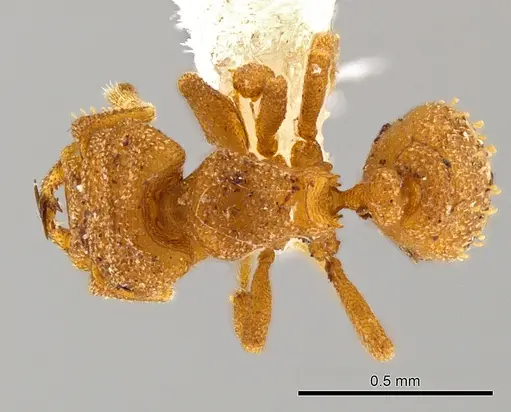
CASENT0629575
View on AntWeb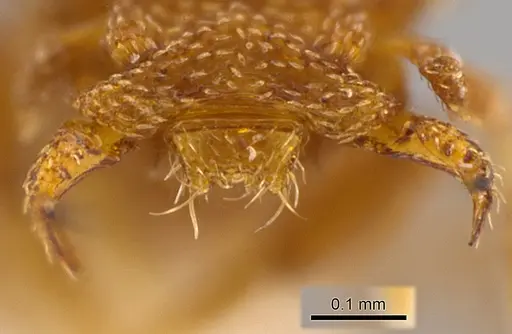
Literature
Loading distribution map...Loading products...