
Rasopone panamensis
- Sci. Name
- Rasopone panamensis
- Tribe
- Ponerini
- Subfamily
- Ponerinae
- Author
- Forel, 1899
- Distribution
- Found in 1 countries
Introduction
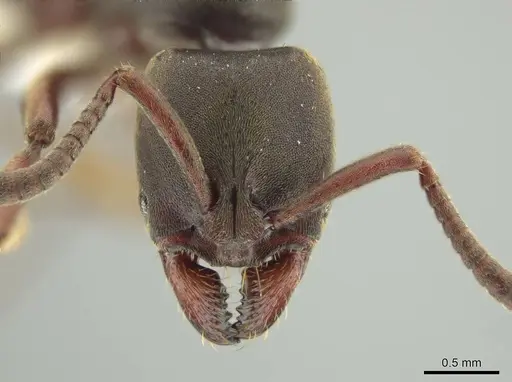
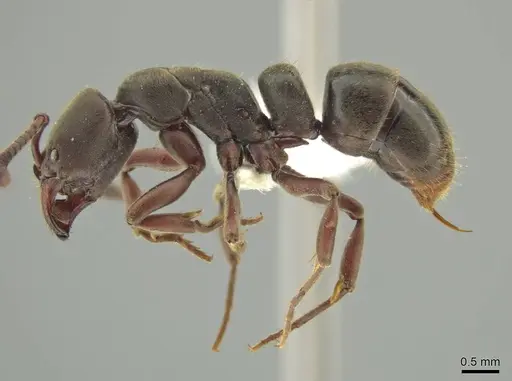
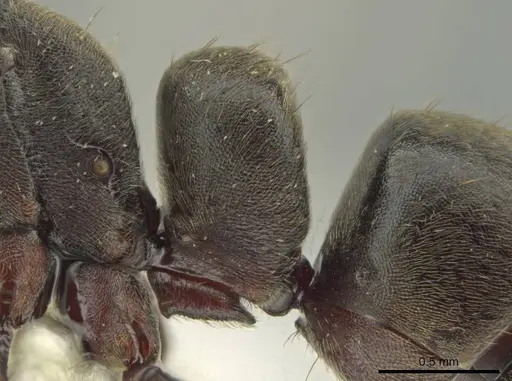
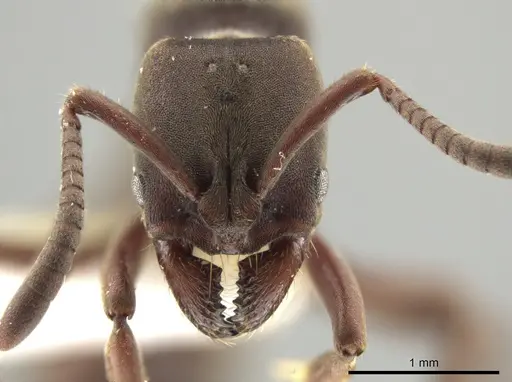
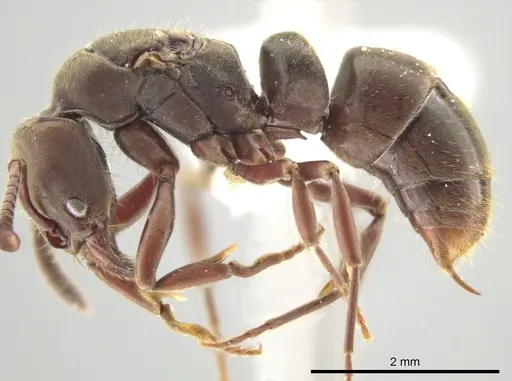
Rasopone panamensis is a medium-sized predatory ant native to the lowland forests of Costa Rica and Panama. Workers are dark reddish-brown, robust, and have the functional sting typical of Ponerinae. Their mandibles are striate (lined with fine grooves) and the petiolar node is cuboidal . They live in lowland wet to seasonal dry forests from sea level up to around 1070 m elevation, found on both the Pacific and Caribbean coasts of Costa Rica . What makes this species interesting is that it was only recently given full species status - it was previously lumped with *Rasopone ferruginea* until 2020 . That means much of what is ‘known’ about its care actually comes from general Ponerinae biology, not from species‑specific studies. As a predatory ant with a sting, it offers a more advanced keeping experience than common beginner species, but also comes with a lot of unknowns that keepers must work around.
Quick Summary
- Difficulty: Hard
- Origin & Habitat: Lowland wet to seasonal dry forests of Costa Rica and Panama, from sea level to 1070 m elevation. Found on both the Pacific coast (Nicoya Peninsula to Osa) and the Caribbean side (Hitoy Cerere south of Limón) [1].
- Colony Type: Unconfirmed, colony structure has not been studied. Likely a single queen (monogyne) based on related Ponerinae, but no direct evidence exists.
- Size & Growth:
- Queen: Total length not recorded. Head width 1.13-1.18 mm, body size unknown, based on related Ponerinae the queen likely reaches around 6-7 mm total length [1].
- Worker: Total length not recorded. Head width 1.12-1.36 mm, body size inferred from subfamily, workers are probably 5-7 mm [1].
- Colony: Maximum colony size is unknown. Related Ponerinae species rarely exceed a few hundred workers, but this is pure speculation.
- Growth: Not determined, no growth data available for this species.
- Development: Not available for this species. Based on related Ponerinae, development likely takes 8-12 weeks at warm temperatures, but confirm with your own observations. (Development time is inferred. Use stable heat (24-28 °C) and monitor your colony to build a reference.)
- Antkeeping:
- Temperature: As a lowland tropical species, *R. panamensis* probably needs warm, stable temperatures around 24-28 °C. Use a heating cable on one side of the nest to create a gradient. Avoid prolonged temperatures below 22 °C [1].
- Humidity: Forest floor ants require moderate to high substrate moisture. Keep the nest soil consistently damp but not waterlogged, aim for ‘moist to the touch’ conditions. Provide a humidity gradient in the nest [1].
- Diapause: No true diapause, as a tropical species it does not need hibernation. Activity may slow during cooler or drier periods in captivity.
- Nesting: Nesting preferences are unconfirmed. In nature the genus nests in soil, under stones, or in rotten logs. In captivity, use a naturalistic soil nest, plaster nest, or Y‑tong block with tight, enclosed chambers. Provide a deep substrate layer (2-3 cm) that stays moist [1].
- Behavior: Based on Ponerinae biology, workers are active hunters that patrol for live prey and will sting to defend the colony. They are not particularly prone to escaping, but their small size (around 5-7 mm) means standard escape barriers (Fluon) should still be used. Workers are relatively long‑lived for ants, a common trait in this subfamily.
- Common Issues: tropical temperatures below 22°C can slow or halt colony development, small colony size means any worker loss has a disproportionate impact, handle founding colonies with minimal disturbance, requires a steady supply of live prey, insufficient protein leads to colony decline, wild‑caught colonies may carry mites or other parasites, quarantine new colonies if possible, the sting is painful to humans, always use gloves or tools when handling the nest or outworld
Housing and Nest Setup
Since the natural nesting preferences of Rasopone panamensis have not been studied, keepers should draw on the habits of related Rasopone species, which nest in soil, under rocks, or inside rotten wood on the forest floor. A naturalistic setup with 2-3 cm of moist soil works well, as do plaster or Y‑tong (AAC) nests. These ants seem to prefer tight, enclosed chambers rather than wide open spaces. Provide a shallow water dish in the outworld for drinking. Because workers are only about 5-7 mm, apply a Fluon barrier to the container walls as standard escape prevention, they are not notorious escape artists, but size makes gaps dangerous [1].
Feeding and Diet
Like all Ponerinae, R. panamensis is a pure predator. In captivity they need live invertebrates, small crickets, fruit flies, mealworms, or any other appropriately sized arthropod. Offer food every 2-3 days, adjusting for colony size. Remove leftovers after 24 hours to prevent mold. A drop of sugar water or honey can be given occasionally as a supplement, but protein is the core requirement. For founding colonies, use tiny prey that the queen can handle alone: fruit flies or pinhead crickets [2].
Temperature and Heating
Being a lowland tropical ant from Costa Rica and Panama, R. panamensis needs warmth. Keep the nest at 24-28 °C with a gentle gradient so workers can thermoregulate. A heating cable on one side of the nest works well, avoid heating the entire nest evenly. If temperatures drop below 22 °C for long periods, the colony’s development will slow and health problems may appear. Most rooms are too cool, a small heat mat or a warm cupboard is often necessary [1].
Behavior and Temperament
These are active, hunting ants. Workers spend much of their time patrolling the outworld for prey. When disturbed they do not hesitate to sting, a trait shared by all Ponerinae. The sting is painful to humans but not medically dangerous (no severe allergic reaction expected). The colony stays relatively small, so handling is manageable, but always use tools (tweezers, gloves) when working near the nest. Workers have a long lifespan for ants, which means the colony can build up experience over time. Escape risk is low, but their small size means standard Fluon barriers should always be used [1].
Colony Founding
Founding behavior has not been directly observed for this species. Most Ponerinae, however, are claustral: the queen seals herself in a chamber and rears the first workers using stored fat reserves, never leaving to forage. If this is the case for R. panamensis, a standard test‑tube setup with a water reservoir and a darkened chamber is ideal for the founding phase. No food is needed until at least one nanitic (first worker) emerges. After that, offer tiny live prey. Foundresses should be left undisturbed for several weeks. Growth is slow, be patient [2].
Frequently Asked Questions
How long does it take for Rasopone panamensis to produce first workers?
There is no species‑specific data. Based on related Ponerinae, the egg‑to‑worker period probably takes 8-12 weeks at 24-28 °C, but this is an estimate. Keep the founding queen warm and undisturbed, and watch for the first nanitics.
Can I keep multiple Rasopone panamensis queens together?
Not recommended. There is no evidence that this species is polygyne, combining unrelated queens would likely lead to aggression. Treat them as singly‑queened.
What do Rasopone panamensis eat?
They are obligate predators that need live invertebrates. Offer small crickets, fruit flies, mealworms, or similar prey 2-3 times per week. A sugar‑water supplement can be given occasionally but is not essential [2].
Are Rasopone panamensis good for beginners?
No. They require warm temperatures, a consistent supply of live prey, and have a painful sting. They are better suited to keepers who already have experience with predatory colonies (e.g., other Ponerinae or Myrmicinae).
How big do Rasopone panamensis colonies get?
Maximum colony size is unknown. Related Rasopone and other Ponerinae rarely exceed a few hundred workers, so expect a modest colony that stays manageable.
Do Rasopone panamensis need hibernation?
No. As a tropical species from Costa Rica and Panama, they do not experience cold winters. Keep them warm year‑round, they may slow activity slightly during cool or dry spells but do not require artificial diapause [1].
What temperature is ideal for Rasopone panamensis?
Aim for 24-28 °C. Use a heating cable on one side of the nest to create a gradient. Avoid letting the nest drop below 22 °C for more than a few days [1].
When should I move Rasopone panamensis to a formicarium?
Wait until the colony has at least 20-30 workers before moving out of the founding test tube. A naturalistic soil nest or plaster/Y‑tong nest works well as a first formicarium.
Why are my Rasopone panamensis dying?
Common causes: temperatures below 22 °C, lack of live prey, too dry or too wet substrate, or parasites from wild‑caught colonies. Ensure stable warmth, feed live prey regularly, and maintain a moist but not waterlogged nest. Quarantine any wild‑caught material to avoid introducing mites.
Report an Issue
The current care sheet is based fully on literature. See inconsistencies, or something that's incorrect? Please , it will be resolved after review from an admin. Contributing to the blogs tab also helps providing information, to make us be able to further improve the caresheets. Thank you for your support!
References

This caresheet is licensed under CC BY-SA 4.0 .
Community Blogs
CASENT0644252
View on AntWeb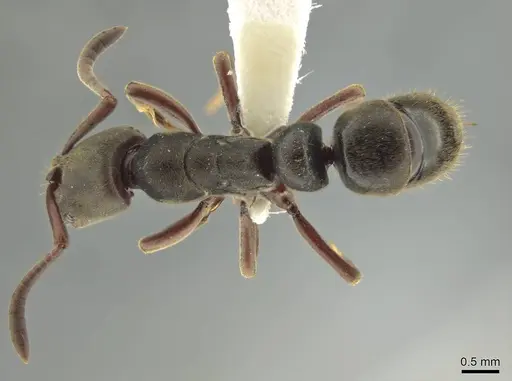
CASENT0644543
View on AntWeb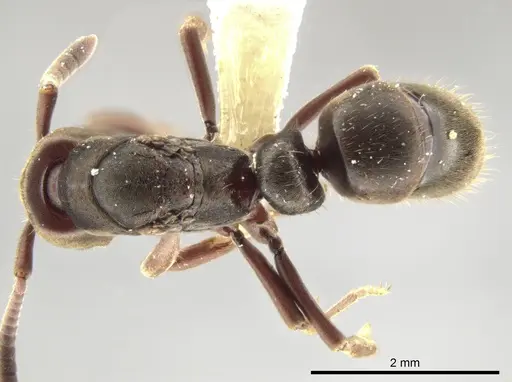
Literature
Loading distribution map...Loading products...