
Rasopone lunaris
- Sci. Name
- Rasopone lunaris
- Tribe
- Ponerini
- Subfamily
- Ponerinae
- Author
- Emery, 1896
- Distribution
- Found in 8 countries
Introduction
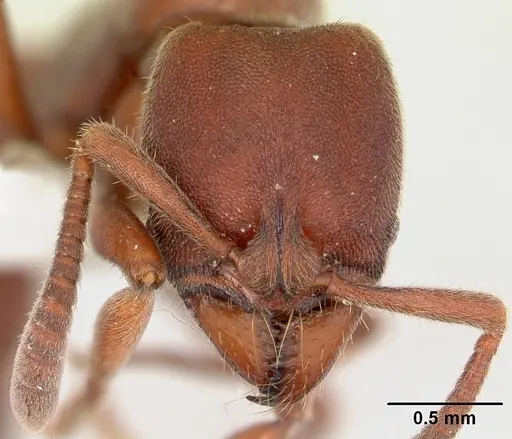
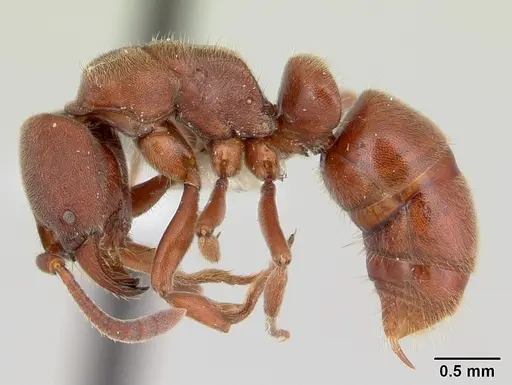
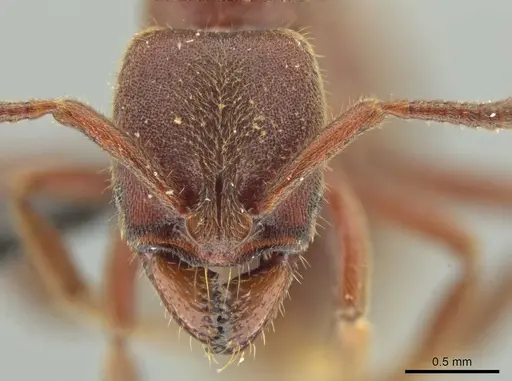
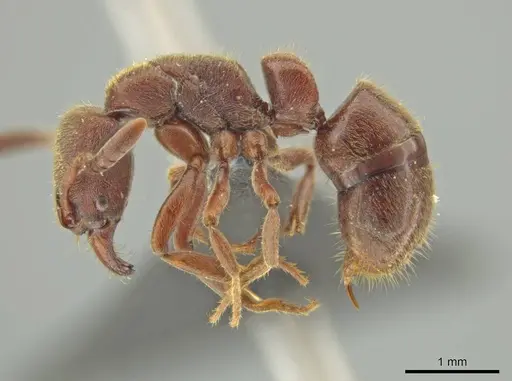
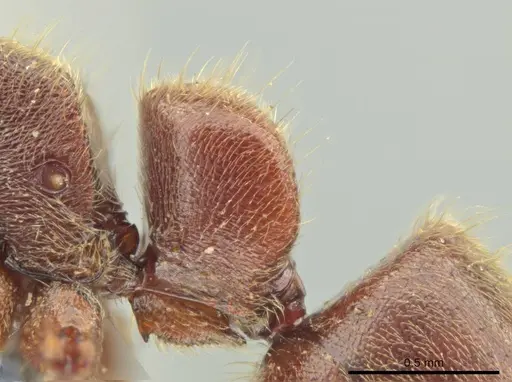
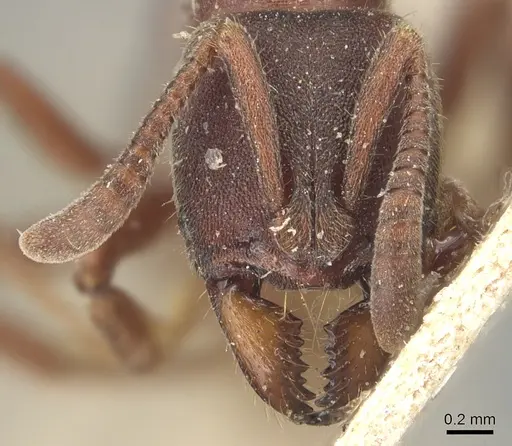
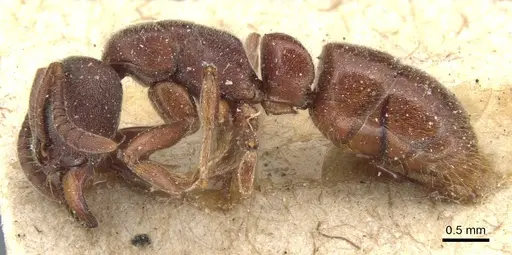
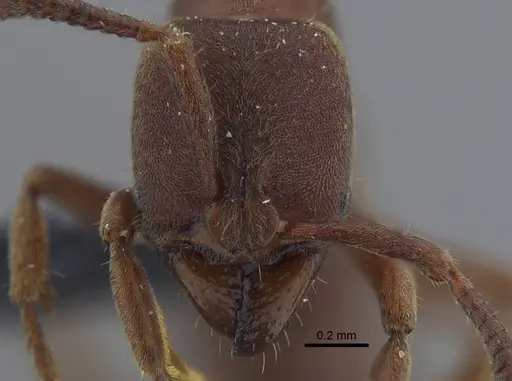
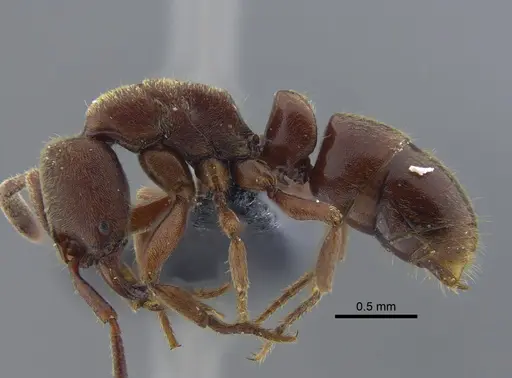
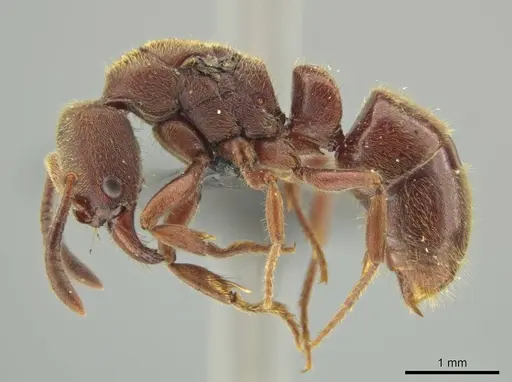
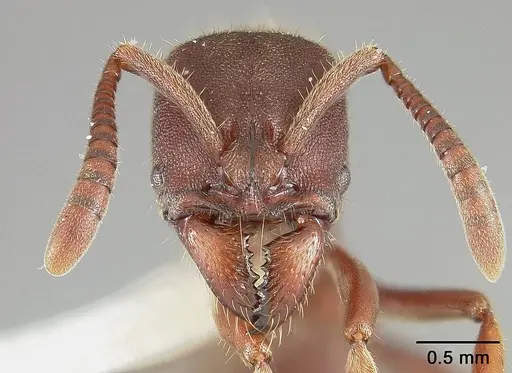
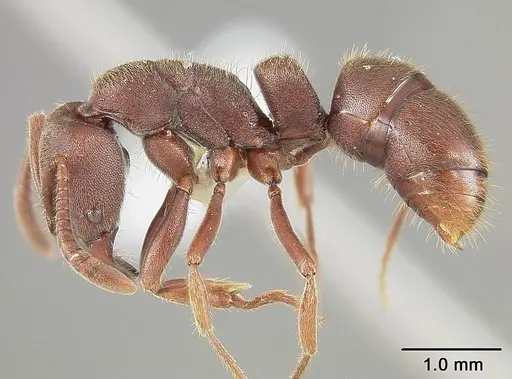
Rasopone lunaris is a small ponerine ant measuring 4-5.5 mm in total length, with a dark reddish‑brown body and reddish‑brown legs . Workers have a distinctive rectangular‑shaped petiole with nearly parallel anterior and posterior faces, which gives them a unique profile among related species. The species gets its name from the Latin word 'luna' (moon) because of the moon‑shaped petiole when viewed from above . These ants are part of the ferruginea complex and are nearly identical to *Rasopone ferruginea*, differing mainly in petiole shape . The species is widespread across tropical South America, found from Guatemala down to Argentina, typically living in leaf litter in lowland rain forests, cloud forests, and oak forests at elevations from 40 to 1850 meters . Interestingly, males have never been documented for this species, so their reproductive biology remains mysterious .
Quick Summary
- Difficulty: Medium
- Origin & Habitat: Tropical South America, found in lowland rain forest, primary wet forest, second growth rain forest, cloud forest, ridge forest, and oak forest from Guatemala down to Argentina [1][4]. Elevations range from 40 to 1850 meters, with most collections from leaf litter using Winkler sacs and Berlese funnels [2][3].
- Colony Type: Colony structure is unconfirmed. Based on typical Ponerinae patterns, likely single‑queen colonies, but no direct observations of founding or colony structure have been documented in scientific literature.
- Size & Growth:
- Queen: Approximately same size as workers, around 4-5.5 mm total length [1].
- Worker: 4-5.5 mm total length [1].
- Colony: Unknown, no colony size data available. Based on similar litter‑dwelling Ponerinae, likely small colonies of perhaps 50-200 workers.
- Growth: Unknown, inferred as moderate based on typical Ponerinae growth patterns.
- Development: Unconfirmed, no direct development data exists for this species. Based on typical Ponerinae patterns in tropical environments, estimate 6-10 weeks from egg to first worker at optimal temperatures. (This is an estimate based on related species. Actual development time may vary.)
- Antkeeping:
- Temperature: Based on their tropical distribution (lowland habitats sea level to 1050 m), keep them warm at 22-26°C. Avoid temperatures below 20°C, as this species is adapted to consistently warm conditions [3]. A gentle heat gradient lets them choose their ideal temperature.
- Humidity: These ants live in leaf litter in humid forests, aim for 70-85% humidity in the nest area. Keep the substrate consistently moist but not waterlogged. Provide damp areas they can access.
- Diapause: Unlikely, as a tropical species from lowland forests, they probably do not require a true diapause. They may slow activity during cooler periods, but no specific hibernation data exists.
- Nesting: In nature they live in leaf litter and soil [2]. In captivity, a naturalistic setup with moist substrate (like a mix of soil and coco fiber) works well, or a Y‑tong/plaster nest with good moisture retention. They prefer tight, enclosed spaces that mimic natural litter‑layer chambers.
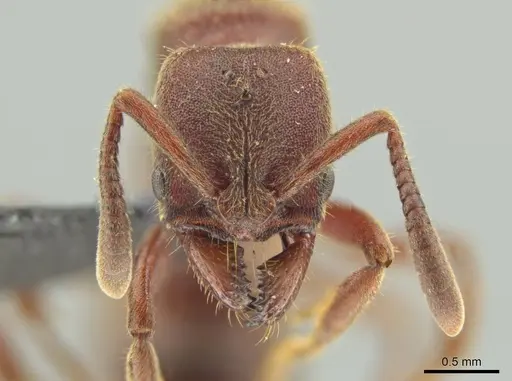
- Behavior: Rasopone lunaris is a predatory ponerine ant. Like other Ponerinae, they have a functional stinger and can deliver a painful sting if provoked. They are ground‑dwelling and likely forage individually in leaf litter for small prey. Workers are relatively small at 4-5.5 mm, so standard escape barriers work, but they can fit through small gaps. They are not aggressive toward keepers but will sting if threatened. Their eyes are relatively small (fewer than 50 ommatidia), indicating they likely rely more on chemical cues than vision for hunting [2].
- Common Issues: lack of documented care information means trial and error is required for feeding and housing, tropical species may be sensitive to temperature drops, keep consistently warm, small colony sizes mean losses have bigger impact, start with multiple colonies if possible, predatory diet requirements may be challenging, need consistent live prey supply, wild‑caught colonies may have parasites since they are collected from leaf litter
Housing and Nest Setup
Rasopone lunaris is a small leaf‑litter dwelling ant that needs a humid, enclosed nest environment. In captivity, use a naturalistic setup with a moist substrate (like coco fiber and soil) in a shallow container, or a Y‑tong/plaster nest that holds moisture well. The key is providing tight, enclosed chambers that mimic the small cavities they naturally inhabit in decaying wood and leaf litter [1][2]. Because they come from tropical forests, the nest should maintain high humidity, around 70-85%. A water reservoir or moist cotton in the outworld helps hold humidity. They are not arboreal, so focus on ground‑level setups rather than vertical spaces. The outworld can be simple, a foraging area where you offer prey items.
Feeding and Diet
As a Ponerinae ant, Rasopone lunaris is predatory and needs a protein‑based diet. Feed small live prey appropriate to their size, fruit flies, small crickets, mealworms, and other tiny insects work well. They likely hunt small arthropods in leaf litter, so live prey stimulates natural foraging behavior. You can offer pre‑killed prey if they accept it, but live prey triggers better hunting responses. Because they have small eyes (fewer than 50 ommatidia) and likely rely on chemical cues, prey movement is important for detection [2]. Sugar sources like honey or sugar water may be accepted occasionally but should not be the main food. Feed protein prey 2-3 times per week, removing uneaten prey within 24 hours to prevent mold.
Temperature and Seasonal Care
Keep your Rasopone lunaris colony at 22-26°C, this matches their tropical lowland habitat preferences. They are found from sea level to about 1050 m elevation in warm, humid forests, so temperature drops below 20°C should be avoided [3]. A small heat gradient (warming one side of the nest slightly) lets workers choose their ideal temperature. Since they come from regions with minimal seasonal temperature variation, they do not require a true hibernation or diapause period. However, they may show reduced activity during cooler periods. Room temperature in most homes (20-24°C) should be suitable, but monitor colony behavior, if workers become sluggish, consider warming the nest area slightly.
Handling and Defense
Rasopone lunaris belongs to the subfamily Ponerinae, meaning they have a functional stinger. Unlike ants that bite or spray formic acid, these ants can deliver a sting that causes pain. Work slowly and avoid disturbing the nest directly. If threatened, they may sting, the pain level is moderate but not extreme for such a small ant. They are not aggressive toward humans unless provoked or their nest is disturbed. For escape prevention, standard barriers work well since they are not particularly small or agile. Still, always use proper containment with any ant species. [1]
Colony Establishment
Starting a colony of Rasopone lunaris can be challenging since they are not commonly available in the antkeeping hobby. If you obtain a queen (dealate females have been collected in June in Costa Rica), give her a claustrum chamber, a small enclosed space where she can seal herself and raise the first workers [1]. The founding chamber should be humid and dark. After the first workers (nanitics) emerge, you can gradually connect them to a larger outworld. Because colony structure is unconfirmed, assume single‑queen founding. Queens are about the same size as workers (4-5.5 mm), which is unusual, most ant species have significantly larger queens. This may indicate the queen does not store as much fat for founding and may need to forage during early colony establishment, though this is unconfirmed [1][3].
Where They Live in the Wild
Rasopone lunaris is found across tropical South America, from Guatemala down to Argentina, in countries including Brazil, Colombia, Costa Rica, Ecuador, French Guiana, Panama, Paraguay, and Trinidad and Tobago [1][4]. They live in various forest types: lowland rain forest, primary wet forest, second growth rain forest, cloud forest, ridge forest, and oak forest at elevations between 40 and 1850 meters [1][3]. Most specimens are collected by sifting through leaf litter or using Winkler extraction methods, this tells us they are truly ground‑dwelling ants that live in the forest floor layer, not in above‑ground nests. Their small size (4-5.5 mm) and reduced eyes (fewer than 50 ommatidia) are adaptations for navigating in the dark, humid leaf litter environment where they hunt small prey [2].
Frequently Asked Questions
Can I keep Rasopone lunaris in a test tube?
A test tube can work for a founding queen and early colony, but these ants prefer more enclosed spaces than typical test tube setups. A small plaster or Y‑tong nest with good moisture retention is better long‑term. If using a test tube, keep it humid and dark, and be ready to move them to a more naturalistic setup once the colony reaches 10-15 workers.
How long until Rasopone lunaris has first workers?
The exact development time is unconfirmed for this species. Based on typical Ponerinae patterns in tropical conditions, expect 6-10 weeks from egg to first worker at optimal temperatures (around 24-26°C). This is an estimate, actual timing may vary.
What do Rasopone lunaris eat?
They are predatory ants that need protein. Feed small live prey like fruit flies, small crickets, mealworms, or other tiny insects. They may accept pre‑killed prey, but live prey triggers better hunting responses. Sugar water or honey may be accepted occasionally but should not be the main food source.
Are Rasopone lunaris good for beginners?
No, this is not an ideal beginner species. There is very little documented care information, they require specific humidity and temperature conditions, and they need a consistent live prey supply. Additionally, they can sting. If you are experienced with Ponerinae or predatory ants, this could be an interesting species to try.
How big do Rasopone lunaris colonies get?
Colony size is unconfirmed, no scientific data exists on maximum colony size. Based on similar litter‑dwelling Ponerinae, expect small colonies of perhaps 50-200 workers. They are not likely to become massive colonies like some Formica or Camponotus species.
Do Rasopone lunaris need hibernation?
No, as a tropical species from lowland forests, they do not require a true diapause or hibernation. They may show reduced activity during cooler periods, but no special winter care is needed. Keep them at consistent warm temperatures year‑round.
When is Rasopone lunaris alate season?
Dealate (wingless) females have been collected in June in Costa Rica, suggesting nuptial flights likely occur during the rainy season in tropical regions. However, males have never been documented, so the exact timing and reproductive behavior remains unknown.
Can I keep multiple Rasopone lunaris queens together?
This has not been documented. The colony structure is unconfirmed, we don't know if they are monogyne (single queen) or polygyne (multiple queens). Based on typical Ponerinae, they are likely single‑queen colonies. Do not attempt combining unrelated queens without documented evidence they can coexist.
Why are my Rasopone lunaris dying?
Without documented care information, trial and error is required. Common issues include: temperature too cold (keep above 22°C), humidity too low (they need 70-85%), insufficient protein (they need live prey), or stress from excessive disturbance. Wild‑caught colonies may also carry parasites from their leaf‑litter habitat. If a colony is declining, review temperature, humidity, and food quality first.
What makes Rasopone lunaris different from similar species?
Rasopone lunaris is nearly identical to Rasopone ferruginea but can be distinguished by its rectangular petiole with nearly parallel anterior and posterior faces. The petiole of R. ferruginea narrows toward the apex. Additionally, R. lunaris has a circular propodeal spiracle and is found only in South America (Paraguay and southern Brazil), while R. ferruginea is primarily Central American.
Is Rasopone lunaris invasive anywhere?
No, this species is native to tropical South America and has not been documented as invasive in any region. They are not known to establish in non‑native areas.
Report an Issue
The current care sheet is based fully on literature. See inconsistencies, or something that's incorrect? Please , it will be resolved after review from an admin. Contributing to the blogs tab also helps providing information, to make us be able to further improve the caresheets. Thank you for your support!
References

This caresheet is licensed under CC BY-SA 4.0 .
Community Blogs
CASENT0178179
View on AntWeb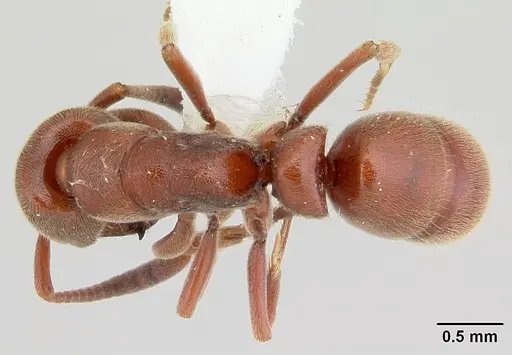
CASENT0644556
View on AntWeb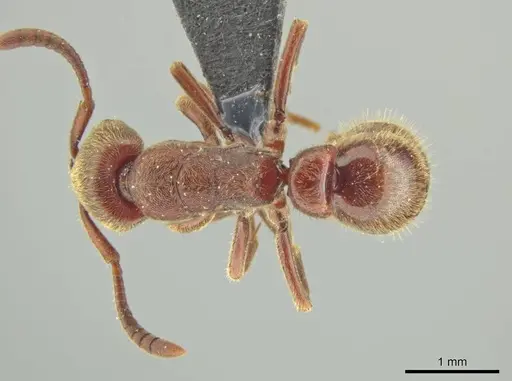
CASENT0903942
View on AntWeb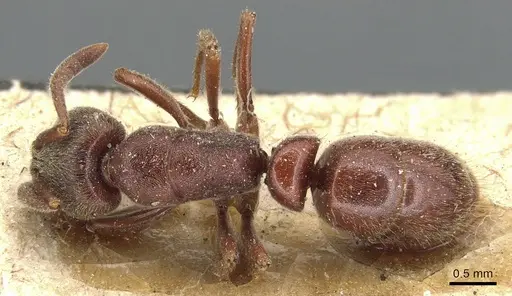
CBUMAGENT41708
View on AntWeb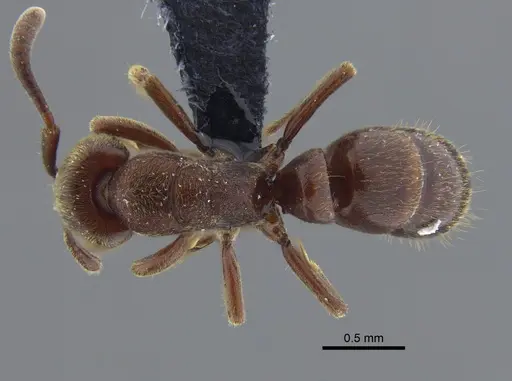
UFV-LABECOL-000359
View on AntWeb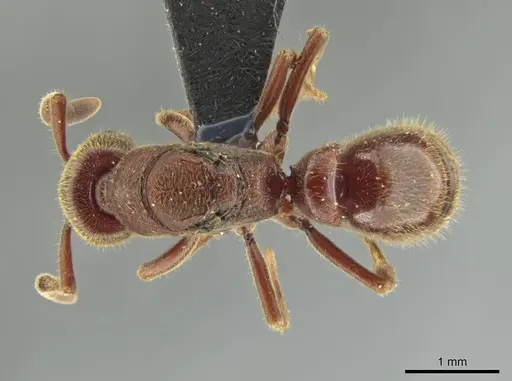
UFV-LABECOL-007332
View on AntWeb
USNMENT00413236
View on AntWeb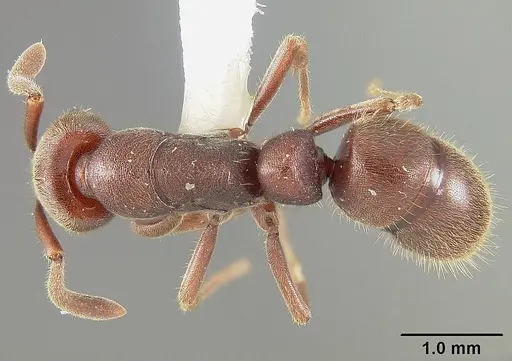
Literature
Loading distribution map...Loading products...