
Pseudoneoponera bispinosa
- Sci. Name
- Pseudoneoponera bispinosa
- Tribe
- Ponerini
- Subfamily
- Ponerinae
- Author
- Smith, 1858
- Distribution
- Found in 1 countries
Introduction
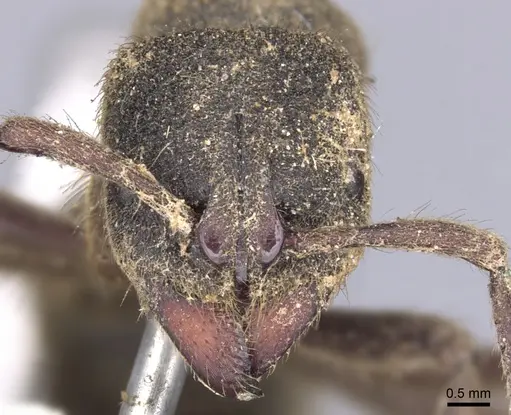
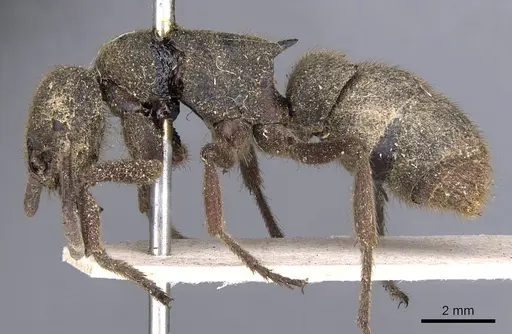
Pseudoneoponera bispinosa is a large predatory ant from South and Southeast Asia. Workers measure 16-18 mm, making them one of the bigger ponerine ants you'll come across . They are dark colored with two blunt spines on the middle section of the body (metanotum) pointing backwards and upwards - that's their main identifying mark. They are specialist predators, actively hunting small invertebrates instead of scavenging or farming honeydew . When threatened, they release a foamy liquid from their abdomen (gaster) as a defense, similar to their close relative Pseudoneoponera rufipes . They live in the Himalayan region at elevations of 500-1000 m and are active from spring through autumn, but they disappear during winter .
Quick Summary
- Difficulty: Medium
- Origin & Habitat: Native to the Indomalaya region (India, Nepal) and southern China. Found across the Himalayan foothills including Arunachal Pradesh, Assam, Himachal Pradesh, Jammu & Kashmir, Punjab, Uttarakhand, West Bengal, and Nepal's Tanahun district at around 530 m elevation. They inhabit forested areas and are active during warmer seasons [4][5][3].
- Colony Type: Likely monogyne (single queen colony) based on typical Ponerinae patterns, though colony structure has not been specifically documented for this species.
- Size & Growth:
- Queen: Unconfirmed, inferred from workers, likely 16-18 mm [1]
- Worker: 16-18 mm [1]
- Colony: Unknown, no published estimate
- Growth: Moderate, estimated based on similar large ponerines
- Development: Unknown, no specific data available (Development time is unconfirmed for this species. Keep conditions stable and monitor.)
- Antkeeping:
- Temperature: Keep at 22-26°C during the active season. They come from temperate Himalayan conditions and need moderate warmth. A heating cable on one side of the nest can create a gradient. Avoid overheating [2].
- Humidity: Moderate to high humidity, they naturally live on damp forest floors. Keep the nest substrate moist but not waterlogged, with some dry areas for choice.
- Diapause: Yes, they are not found during winter months (November-February) in their native range, indicating a winter rest is needed [3].
- Nesting: In nature they probably nest in soil or under stones in forest floor habitats. In captivity, a naturalistic setup with soil substrate or a Y-tong (AAC) nest with moist chambers works well. They prefer tight, dark spaces.
- Behavior: These ants are active hunters with a powerful sting. They defend their nest vigorously, so use caution when working with them. Workers are large and move slowly compared to smaller ants. They also produce a foamy defensive secretion when disturbed [1]. Escape risk is moderate due to their size, standard barriers usually work, but check that lids fit tightly.
- Common Issues: potent sting, handle carefully, as stings can be painful, specialized diet, they need live prey, not commercial ant foods, winter dormancy failure, colonies that don't cool down in winter often decline, slow colony growth, beginners may overfeed and cause mold, escape prevention, while not tiny, you don't want these stingers roaming free
Housing and Nest Setup
Pseudoneoponera bispinosa needs a nest that keeps stable humidity. A Y-tong (AAC) nest with moist chambers works well, or you can use a soil-filled container for a natural setup. These ants like dark, enclosed spaces, avoid bright light near the nest. Since they're large, make sure chambers are roomy enough. Keep the nest at 22-26°C [2]. The outworld (foraging area) should have space for hunting and a water source. Start a new colony in a test tube, then move them to a larger nest once the colony has a few workers.
Feeding and Diet
As specialist predators, these ants need live prey [2]. Offer small insects like fruit flies, small crickets, mealworms, and other tiny arthropods. Prey should be no bigger than the ant's head so they can handle it. They may accept protein-rich foods but usually ignore sugar sources. Feed every 2-3 days and remove leftovers to stop mold. Always provide a water source. Unlike many ants, they don't go for honey or sugar water, their diet is almost entirely predatory.
Temperature and Seasonal Care
Keep temperatures at 22-26°C during the active season. They naturally experience seasonal changes in the Himalayas, so a winter cooling period is important. From about November to February (or when temperatures drop below 15°C), reduce heating and let the colony enter dormancy. During this time they'll be less active and need minimal feeding, maybe once every 2-3 weeks. Don't feed heavily during dormancy. In summer they're active hunters and will take more food. Avoid extreme heat, they aren't adapted to very hot conditions [3][2].
Defense and Handling
This species has a potent sting and also produces a foamy defensive liquid from the gaster when threatened [1]. Workers aren't aggressive toward prey but will defend the nest fiercely. When working with the colony, use red light or move quickly but gently. To move the colony, wait until most workers are inside before closing the lid. Never handle them with bare hands, use soft tools like brushes or let them walk onto a piece of paper. The sting pain is comparable to a bee sting for larger species in this group.
Colony Development
Colony growth is moderate, expect 6-12 months from founding to reach a few dozen workers. The first workers (nanitics) will be smaller but grow quickly with regular feeding. Ponerinae colonies usually don't get as big as Formicinae or Myrmicinae species, a mature colony might reach a few hundred workers, but the exact size is unknown for this species. Since founding behavior is unconfirmed, watch the queen closely after she's placed in the setup. If you see eggs, offer small live prey regularly. Avoid disturbing the founding chamber too much.
Common Problems
The biggest mistake keepers make is offering the wrong food. They need live prey, commercial ant foods designed for omnivores will be ignored. Another common issue is skipping winter cooling. Without a rest period, colonies often decline. Mold can develop if you overfeed or keep the nest too wet. Check that all barriers are secure, even large ants can squeeze through tiny gaps. If workers seem sluggish and the colony stops growing, check temperature, humidity, and food quality [3].
Frequently Asked Questions
Does Pseudoneoponera bispinosa have a sting?
Yes, like all Ponerinae ants, it has a functional stinger. The sting is potent and can be painful, about as bad as a bee sting. Handle with caution and avoid letting them crawl on bare skin. They also produce a foamy defensive secretion when threatened [1].
What do Pseudoneoponera bispinosa ants eat?
They are specialist predators that need live prey [2]. Offer small insects like fruit flies, tiny crickets, mealworms, and other small arthropods. They ignore sugar sources like honey or sugar water. Prey should be no bigger than the ant's head.
How long does it take for Pseudoneoponera bispinosa to develop from egg to worker?
The exact development time is not known for this species. No published data is available. Keep the colony at stable temperatures (22-26°C) and monitor the brood. Related large Ponerinae species take about 8-12 weeks at optimal warmth, but this is an estimate.
Do Pseudoneoponera bispinosa need hibernation?
Yes, they appear to need a winter rest period. In their native Himalayan habitat, they are not found during winter (November-February). Reduce temperatures to about 15°C and feed very little during this time [3].
Are Pseudoneoponera bispinosa good for beginners?
This species is rated Medium difficulty. It's not the hardest ant to keep, but it has specific needs: live prey, seasonal cooling, and a potent sting. It's better for keepers who already have some experience. The specialized diet and defensive sting make it a step up from easier species.
How big do Pseudoneoponera bispinosa colonies get?
Colony size has not been documented in published research. Based on typical Ponerinae patterns, they probably stay in the hundreds of workers, but there's no reliable estimate. Expect a moderate colony rather than a huge one.
Can I keep multiple Pseudoneoponera bispinosa queens together?
This is not recommended. No data supports polygyny in this species, and most Ponerinae are monogyne. Combining unrelated queens would likely lead to fighting. Start with a single founding queen.
What temperature is best for Pseudoneoponera bispinosa?
Keep them at 22-26°C during the active season. They are adapted to temperate Himalayan conditions and prefer moderate warmth. A heating cable on one side of the nest can create a gradient, but avoid overheating. Room temperature in most homes is often suitable [2].
Where is Pseudoneoponera bispinosa found in the wild?
They are native to the Himalayan region: India (Arunachal Pradesh, Assam, Himachal Pradesh, Jammu & Kashmir, Punjab, Uttarakhand, West Bengal), Nepal (Tanahun district), and southern China. They occur at elevations around 500-1000 m [4][5].
Why is my Pseudoneoponera bispinosa colony declining?
Common causes: wrong food (they need live prey, not commercial ant food), no winter cooling, improper moisture (too wet or too dry), or temperatures outside 22-26°C. Check each of these. Also avoid overfeeding, leftovers create mold. If the colony is new, some founding failure is normal, just keep conditions stable [3].
Report an Issue
The current care sheet is based fully on literature. See inconsistencies, or something that's incorrect? Please , it will be resolved after review from an admin. Contributing to the blogs tab also helps providing information, to make us be able to further improve the caresheets. Thank you for your support!
References

This caresheet is licensed under CC BY-SA 4.0 .
Community Blogs
CASENT0902480
View on AntWeb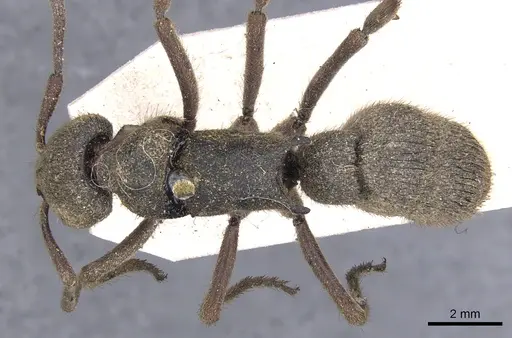
Literature
Loading distribution map...Loading products...