
Pseudomyrmex simulans
- Sci. Name
- Pseudomyrmex simulans
- Tribe
- Pseudomyrmecini
- Subfamily
- Pseudomyrmecinae
- Author
- Kempf, 1958
- Distribution
- Found in 1 countries
Introduction
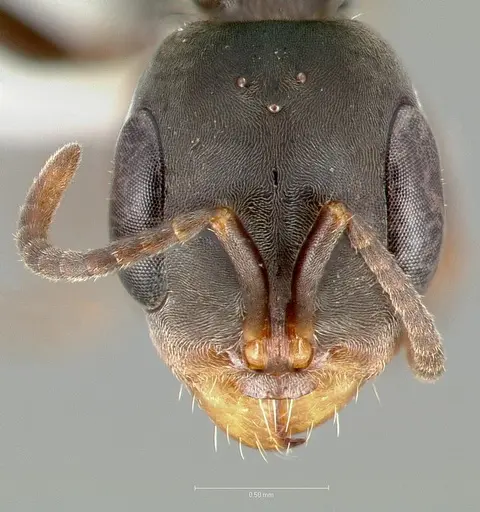
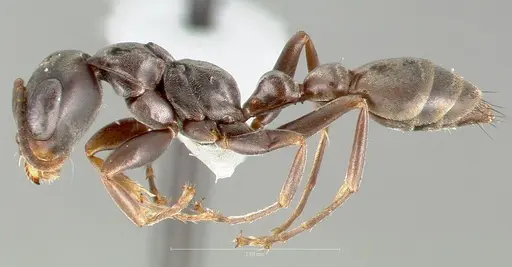
Pseudomyrmex simulans is a slender ant from Panama that lives exclusively inside the hollow swollen thorns of Vachellia collinsii acacias . Workers are dark brownish‑black with lighter legs and antennae, and have notably elongated eyes and a short, high petiole. Unlike their aggressive relatives in the P. ferrugineus group, these ants are timid and avoid confrontations . They feed on extrafloral nectar and harvest Beltian bodies (protein‑rich leaf‑tip structures) produced by the host acacia . This species is one of only two obligate plant‑ants in the P. gracilis group, meaning it cannot survive without its acacia partner .
Quick Summary
- Difficulty: Medium
- Origin & Habitat: Panama (Canal Zone, Veraguas, Los Santos, Panama provinces) in Neotropical forests. An obligate acacia‑ant that nests exclusively in the swollen thorns of Vachellia collinsii [1][2].
- Colony Type: Colony structure is poorly known. Based on related Pseudomyrmex species, they are likely monogyne (single queen) colonies, but this remains unconfirmed.
- Size & Growth:
- Queen: Size data unavailable (total length not reported in available literature).
- Worker: Size data unavailable (total length not reported in available literature).
- Colony: Unknown, likely limited by acacia thorn domatia space.
- Growth: Moderate (estimated from genus‑level data)
- Development: Unconfirmed, estimated 6-8 weeks at optimal tropical temperatures based on related Pseudomyrmex species. (Direct development data are lacking, this is a working estimate.)
- Antkeeping:
- Temperature: Maintain 24-28°C year‑round. These are tropical ants from Panama [3][1].
- Humidity: High humidity (70-80%) to replicate the moist interior of acacia thorns [1]. Keep the nest substrate consistently damp but not waterlogged.
- Diapause: No, as tropical ants, they do not require hibernation. Keep warm year‑round [1].
- Nesting: Provide enclosed, tight chambers mimicking acacia thorns, Y‑tong (AAC) nests with narrow cavities or test‑tube setups work well [1].
- Behavior: Workers are diurnal and forage alone, relying on vision to patrol their surroundings [4]. They are notably more timid than other acacia‑ants (e.g., P. spinicola) and will avoid conflict rather than defend aggressively [1]. They consume nectar and harvest Beltian bodies [3]. Despite their timid nature, they are agile and can escape easily, secure your setup.
- Common Issues: specialized diet as obligate acacia‑ant, may reject standard ant foods, try small live prey and sugar water persistently., timid and stress‑prone, avoid frequent disturbances, vibrations, and bright lights near the nest., tropical species requires constant warmth (24-28°C), cold spells can kill the colony quickly., limited natural history data, most care advice is based on genus‑level inference, so be prepared to experiment., colonies may stay small due to domatia space constraints, do not expect rapid growth.
Natural History and Host Association
Pseudomyrmex simulans is an obligate acacia‑ant, meaning it depends entirely on Vachellia collinsii for nesting and food. This specialization evolved independently from the well‑known P. ferrugineus group [2]. The ants live inside the hollow thorns (domatia) and feed on nectar and Beltian bodies [3]. Research shows they are weaker defenders than other acacia‑ants like P. spinicola, herbivory rates on their host trees are similar, despite P. simulans being present [3]. Field notes describe them as timid, avoiding confrontation [1].
Housing and Nest Setup
Since these ants naturally nest in enclosed acacia thorns, your setup should mimic tight, dark chambers. Y‑tong (AAC) blocks with narrow carved chambers or test tubes with a water reservoir work well. Keep humidity high (70-80%) by moistening the nest substrate or using a water reservoir. Avoid acrylic nests, they do not hold humidity well for this species. Ensure the nest is well ventilated to prevent mold. A small outworld can be connected for foraging [1].
Feeding and Diet
In the wild, P. simulans consumes nectar from extrafloral nectaries and Beltian bodies [3]. In captivity, provide a constant source of sugar water or honey. For protein, offer small live prey such as fruit flies, pinhead crickets, or tiny mealworms. They are agile hunters that forage alone [4]. They may be picky, if they refuse one protein source, try another. Do not feed seeds or processed foods, these are not part of their natural diet [3].
Temperature and Seasonal Care
As tropical ants from Panama [1], they need stable warmth year‑round. Keep the nest at 24-28°C. Use a heating cable or mat on one side to create a gradient, but avoid direct heat that dries out the nest. They do not require diapause (hibernation), maintain warmth continuously. Cold stress is a common killer of tropical species like this one [1].
Behavior and Temperament
Workers are diurnal and visually oriented, patrolling their territory alone [4]. Unlike the aggressive P. ferrugineus group, P. simulans is timid and will retreat from conflict rather than fight [1]. This makes them less likely to sting you, but they can still deliver a mild sting if grabbed. Their shy nature means they stress easily, keep vibrations and bright lights to a minimum. They are agile and can escape through small gaps, so seal any openings [4].
Frequently Asked Questions
How long does it take for Pseudomyrmex simulans to develop from egg to worker?
Direct development time is unknown. Based on related Pseudomyrmex species, expect roughly 6-8 weeks at 26°C, but this is an estimate, monitor your colony and adjust expectations.
What do Pseudomyrmex simulans ants eat?
They are obligate acacia‑ants that naturally feed on nectar and Beltian bodies [3]. In captivity, give them sugar water or honey and small live prey like fruit flies or tiny crickets. They may be selective, so offer a variety of small insects.
Can I keep Pseudomyrmex simulans in a test tube setup?
Yes, test tubes with a water reservoir mimic the enclosed thorns they prefer. Keep the tube in a humid, warm (24-28°C) environment and connect it to a small outworld for foraging.
Do Pseudomyrmex simulans ants sting?
As a member of the subfamily Pseudomyrmecinae, they have a sting. However, they are timid and rarely use it unless handled. The sting is mild and not dangerous to humans.
Are Pseudomyrmex simulans good for beginners?
This species is rated Medium difficulty. Their specialized diet and need for constant warmth make them less forgiving than hardier species. They suit keepers with some experience who can provide stable conditions.
Do Pseudomyrmex simulans need hibernation?
No. As tropical Panamanian ants, they do not require hibernation. Keep them warm (24-28°C) year‑round.
How big do Pseudomyrmex simulans colonies get?
Colony size is not documented. Based on the limited space inside acacia thorns, colonies are probably small, likely under a few hundred workers.
Why are my Pseudomyrmex simulans dying?
Common causes: cold temperatures (below 24°C), low humidity, stress from frequent disturbance, or refusal to eat offered food. Check your setup and ensure warm, humid, quiet conditions with appropriate food.
Can I keep multiple Pseudomyrmex simulans queens together?
Colony structure is unknown. Based on related Pseudomyrmex, they are likely monogyne, so keeping multiple queens together is not recommended without evidence.
What makes Pseudomyrmex simulans different from other acacia-ants?
Unlike the aggressive P. ferrugineus group, P. simulans is timid and avoids fights. It provides weaker defense to its host acacia compared to species like P. spinicola [3]. It also belongs to the P. gracilis group, representing an independent evolution of acacia specialization [2].
Report an Issue
The current care sheet is based fully on literature. See inconsistencies, or something that's incorrect? Please , it will be resolved after review from an admin. Contributing to the blogs tab also helps providing information, to make us be able to further improve the caresheets. Thank you for your support!
References

This caresheet is licensed under CC BY-SA 4.0 .
Community Blogs
CASENT0005852
View on AntWeb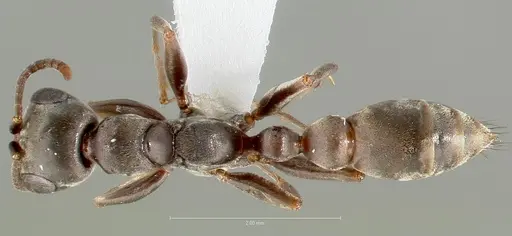
Literature
Loading distribution map...Loading products...