
Pseudomyrmex schuppi
- Sci. Name
- Pseudomyrmex schuppi
- Tribe
- Pseudomyrmecini
- Subfamily
- Pseudomyrmecinae
- Author
- Forel, 1901
- Distribution
- Found in 3 countries
Introduction
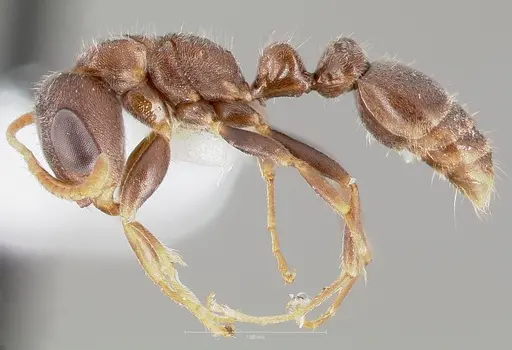
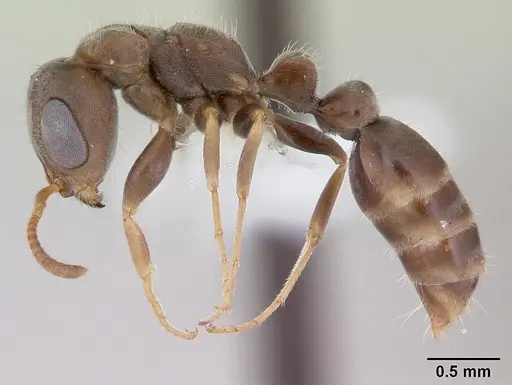
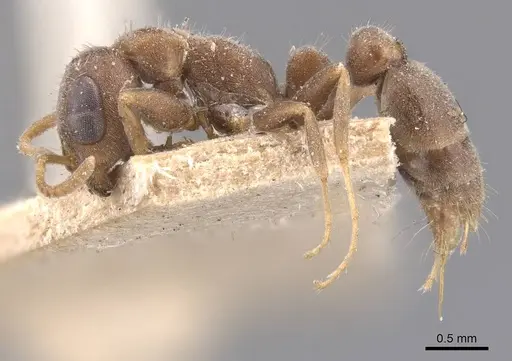
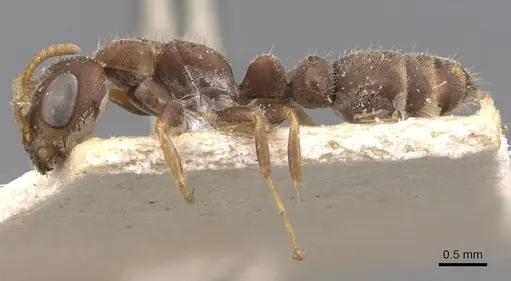
Pseudomyrmex schuppi is a relatively large arboreal ant species from the Neotropical region, found across Argentina, Brazil, and Paraguay . Workers are about 4-5mm long (inferred from head width and genus proportions) and have a distinctive high, broad petiole with a smoothly rounded top when viewed from the side. The front part of the body (propodeum) is raised noticeably above the middle section (mesonotum). They are medium to dark brown with lighter antennae and legs . These ants live in trees, nesting in Cecropia trees and under epiphytes in forest canopies . They have been recorded in dry forests, Atlantic forest fragments, and even the Pantanal floodplain, showing some adaptability to different wetness levels . Unlike well-known acacia ants, Pseudomyrmex schuppi is not a specialized mutualist but still depends on tree habitats. Research found them in intermediate and late-stage forests, but not in very young or very mature ones . They have also turned up in urban areas like Salvador, Brazil, though only rarely . This species belongs to the oculatus species group based on genetics and body shape . They have a well-developed sting and will aggressively defend their nest – a common trait among arboreal Pseudomyrmecinae.
Quick Summary
- Difficulty: Expert
- Origin & Habitat: Neotropical region, Argentina, Brazil, and Paraguay. Found in seasonally dry tropical forests, Atlantic forest fragments, and Pantanal floodplains. Arboreal, nesting in Cecropia trees and under epiphytes in forest canopies [8][4][2].
- Colony Type: Colony structure is not well documented. Based on related Pseudomyrmex species, probably single-queen (monogyne) colonies, but this is not confirmed in the literature [2].
- Size & Growth:
- Queen: Body length not documented – estimated around 5-6mm based on worker size and genus patterns.
- Worker: ~4-5 mm – inferred from head width and genus proportions (head width 0.82-0.93mm) [1].
- Colony: Colony size is not well documented. Based on related species and sampling data, likely moderate colonies typical of arboreal Pseudomyrmex [9].
- Growth: Moderate – based on typical Pseudomyrmex development patterns [7].
- Development: 6-10 weeks – estimated based on typical Pseudomyrmecinae development at tropical temperatures. (Development timeline is not specifically documented for this species. Estimates based on genus-level patterns for Pseudomyrmecinae in warm environments.)
- Antkeeping:
- Temperature: Keep at 24-28°C – these are tropical ants needing warmth. Provide a gradient so workers can choose. Avoid drops below 20°C.
- Humidity: Moderate to high humidity – they naturally live in forest canopies with good moisture. Keep the nest damp but not waterlogged, and ensure ventilation to avoid mold.
- Diapause: No – as a tropical species, they do not need hibernation. Keep warm year-round.
- Nesting: Arboreal nester requiring vertical space. Use Y-tong, plaster, or 3D-printed nests with vertical chambers. Provide cork bark, branches, or natural bark for climbing. Avoid acrylic nests. Ensure excellent ventilation and escape-proof seals.
- Behavior: These ants are arboreal, fast-moving, and will aggressively defend their nest using a painful sting. They are not particularly aggressive away from the nest but will sting if handled. Workers forage along tree branches and trunks. Their small size (~4mm) means they can escape through tiny gaps – extreme escape prevention is required.
- Common Issues: escape prevention is critical – use fine mesh (, tropical temperature requirements – they cannot handle cool conditions, keep warm year-round, arboreal nature means they need vertical climbing surfaces, horizontal setups may be rejected, wild-caught colonies may have parasites or fail to adapt to captivity – source from reliable breeders, invasive potential – do not release outside native range, dispose of colonies responsibly, stinging defense – handle with care, sting is painful (like a bee sting) but not medically serious
Natural History and Distribution
Pseudomyrmex schuppi is native to the Neotropical region, with confirmed records in Argentina, Brazil, and Paraguay [1][2]. It prefers forest canopies, nesting in Cecropia trees and under epiphytes [2]. In Brazil, researchers found a colony living in a Cecropia pachystachya tree [2]. It has been collected from seasonally dry tropical forests in Bahia and Minas Gerais [8], as well as from Atlantic forest fragments in the Alto Rio Grande region [9]. In the Pantanal floodplain, a single individual was caught during the rainy season [4]. This species also shows up in intermediate and late successional dry forests [3], and in one study it only appeared in 10-15 year old Atlantic forest patches [5]. Urban records exist from Salvador, where it turned up in road medians and squares, but only rarely (3.22% of samples) [6]. Ecologically, it seems to prefer established forests but can tolerate some disturbance.
Identification and Morphology
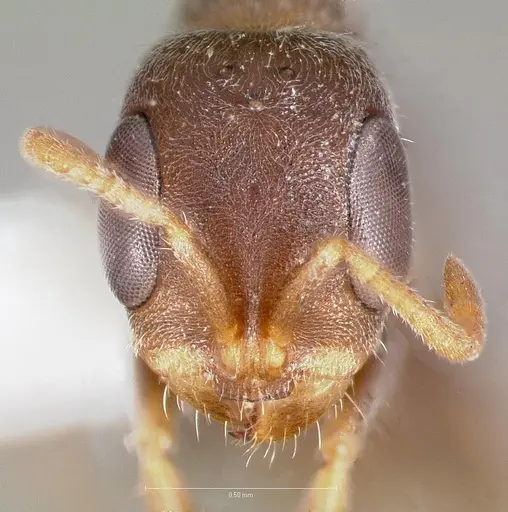
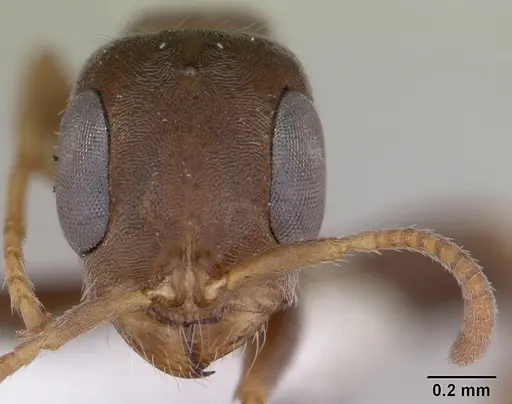
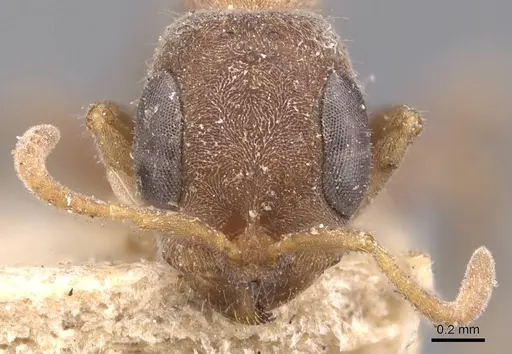
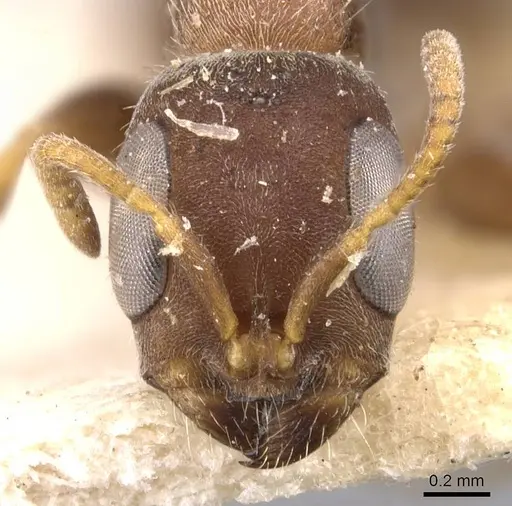
Workers are relatively large for the genus, with a head width (HW) of 0.82-0.93mm and head length (HL) of 0.96-1.18mm [1]. The most distinctive features are the high, broad petiole that is smoothly rounded on top when seen from the side, and the raised propodeum that sits higher than the mesonotum. The postpetiole is shifted backward in side view [1]. The head is densely punctured and dull, while the middle body (mesosoma) is also dull with fine wrinkles. The whole body has many standing and lying hairs, especially on the top of the middle body. Color is medium to dark brown, with lighter antennae and legs [1]. These ants can be told apart from the similar Pseudomyrmex oculatus by the shape of the petiole and differences in eye size [2].
Temperature and Care
Since Pseudomyrmex schuppi comes from warm tropical and subtropical forests, they need steady heat in captivity. Keep the nest area at 24-28°C. Create a warm zone on one side so the ants can move to cooler spots if they want. Room temperature (20-22°C) is usually too cool for them to thrive long-term. Use a heating cable or mat on the side or top of the nest – never put it underneath, as that can dry out the nest too much. Watch where the ants gather: if they all crowd in one corner, adjust the heat. These ants do not need a winter cooling period, keep them warm all year so the queen can keep laying eggs.
Housing and Nesting
Pseudomyrmex schuppi is an arboreal ant that naturally lives in tree hollows, under bark, and in epiphytes [2]. In captivity, give them vertical space. Avoid acrylic nests, instead use Y-tong (AAC), plaster, or 3D-printed nests with vertical chambers. You can also make a naturalistic setup with large pieces of cork bark or hollow branches. Provide climbing surfaces like cork, bark, or artificial plants so workers can move around. The outworld should include vertical elements and maybe a small branch or plant. Because workers are only about 4-5mm, they can squeeze through tiny gaps. Use very fine mesh (0.5mm or smaller) on all vents and openings. Apply fluon or PTFE barriers to the outworld walls. Seal all joints with silicone to prevent escapes.
Feeding and Diet
Based on what other arboreal Pseudomyrmex eat, Pseudomyrmex schuppi is probably omnivorous. In nature, they likely feed on honeydew from sap-sucking insects like aphids and scale insects, and also hunt small insects for protein. In captivity, offer a sugar solution (sugar water, honey, or maple syrup diluted 1:3) regularly. For protein, give small insects like fruit flies, tiny crickets, or small mealworms. Feed protein 2-3 times a week and remove anything left after 24 hours to prevent mold. Since workers are small, cut prey into small pieces or offer live prey that is appropriately sized. Watch what your colony prefers and adjust accordingly.
Chromosome and Genome Data
Genetic research on Pseudomyrmex schuppi has revealed interesting details. Males have a haploid chromosome number of n=24,with a karyotype formula of K=5M+19A (five metacentrics and nineteen acrocentrics) [7]. The species belongs to the oculatus species group, both by chromosomes and body shape [7]. Genome size measurements using flow cytometry found a mean 1C-value of 0.38 pg, which is about 371.64 million base pairs – a relatively small genome for ants [10]. This supports its placement in the Pseudomyrmecinae subfamily, known for compact genomes [10]. While these details are mainly of scientific interest, they show that Pseudomyrmex schuppi is a genetically distinct and well-studied species within its genus.
Frequently Asked Questions
Is Pseudomyrmex schuppi good for beginners?
No, this species is rated Expert difficulty. They need constant tropical temperatures, specialized arboreal housing, and extreme escape prevention. Their sting is painful, and they are not widely available. Only keep them if you have experience with tropical arboreal ants and can provide the right setup.
How long does it take for Pseudomyrmex schuppi to produce first workers?
The exact timeline is not documented. Based on related Pseudomyrmecinae in warm conditions, expect roughly 6-10 weeks from egg to worker at 24-28°C. Development speed depends on temperature, food quality, and colony health. Be patient – growth may be slow at first.
Do Pseudomyrmex schuppi ants sting?
Yes, they do. Pseudomyrmex schuppi belongs to the subfamily Pseudomyrmecinae, which has a well-developed sting. Workers will use it aggressively to defend their nest. The sting is painful, similar to a bee sting, but not dangerous unless you have an allergy. Handle with care and avoid disturbing the nest unnecessarily.
What temperature do Pseudomyrmex schuppi need?
Keep them at 24-28°C. These tropical ants need warmth all year. Avoid temperatures below 20°C, as that can weaken or kill the colony. Use a heating cable on one side of the nest to create a warm spot. Maintain stable conditions and avoid drafts.
Can I keep multiple Pseudomyrmex schuppi queens together?
Colony structure is not well documented. Most related Pseudomyrmex species are monogyne (single queen). Combining unrelated queens is risky and likely to cause fighting. If you have a colony, assume it has one queen and keep them together. Do not try to merge multiple queens.
What do Pseudomyrmex schuppi eat?
They are omnivorous. Offer a sugar source (sugar water, honey, or maple syrup diluted 1:3) regularly for energy. For protein, provide small insects like fruit flies, tiny crickets, or small mealworms. Feed protein 2-3 times per week and remove leftovers after 24 hours. Adjust amounts based on colony size.
Why are my Pseudomyrmex schuppi dying?
Common causes: temperatures below 20°C (they are tropical), escapes (their small size lets them slip through tiny gaps – check all seals), excessive humidity or dryness (aim for moderate dampness), or stress from wild-caught specimens. Ensure perfect escape prevention, maintain 24-28°C, keep nest damp but not wet, and provide varied food. If problems persist, the colony may have been sick when collected.
Do Pseudomyrmex schuppi need hibernation?
No. As a tropical species from Brazil, Argentina, and Paraguay, they are adapted to year-round warmth. Do not cool them down for winter. Keep temperatures at 24-28°C throughout the year to support continuous brood development.
What size do Pseudomyrmex schuppi workers reach?
Workers are about 4-5mm long (inferred from head width and genus proportions). Their head width is 0.82-0.93mm. Despite being called 'large' for Pseudomyrmex, they are still small ants. This tiny size means you need very fine mesh (under 0.5mm) to prevent escapes.
Where is Pseudomyrmex schuppi found naturally?
They are native to Argentina, Brazil, and Paraguay. They live in various forests including seasonally dry tropical forests, Atlantic forest fragments, and the Pantanal floodplain. They are arboreal, nesting in Cecropia trees and under epiphytes in the canopy [8][4][2].
Report an Issue
The current care sheet is based fully on literature. See inconsistencies, or something that's incorrect? Please , it will be resolved after review from an admin. Contributing to the blogs tab also helps providing information, to make us be able to further improve the caresheets. Thank you for your support!
References

This caresheet is licensed under CC BY-SA 4.0 .
Community Blogs
CASENT0005877
View on AntWeb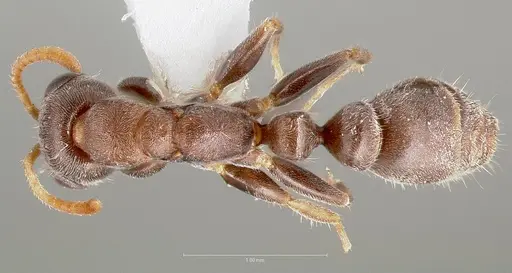
CASENT0173772
View on AntWeb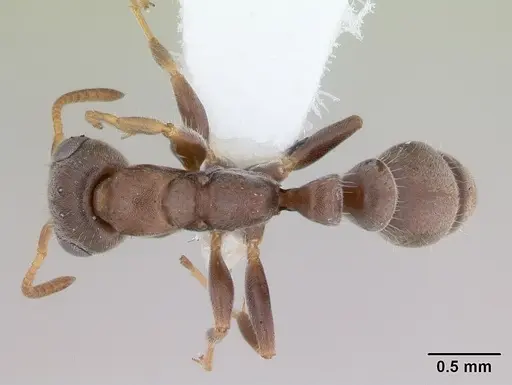
CASENT0907555
View on AntWeb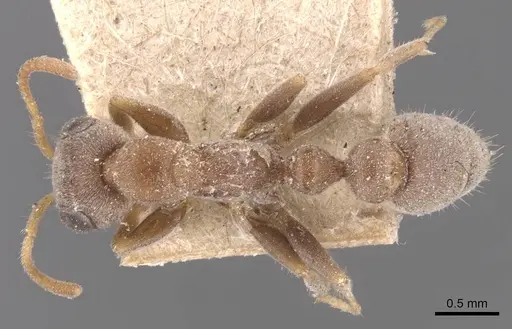
CASENT0907556
View on AntWeb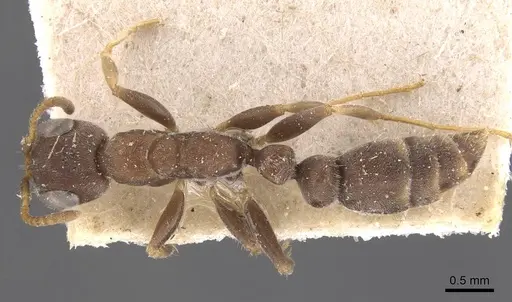
Literature
Loading distribution map...Loading products...