
Pseudomyrmex rufomedius
- Sci. Name
- Pseudomyrmex rufomedius
- Tribe
- Pseudomyrmecini
- Subfamily
- Pseudomyrmecinae
- Author
- Smith, 1877
- Distribution
- Found in 2 countries
Introduction
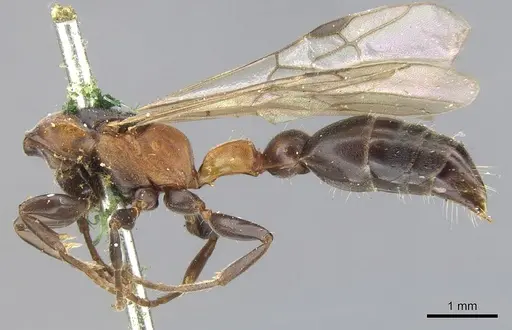
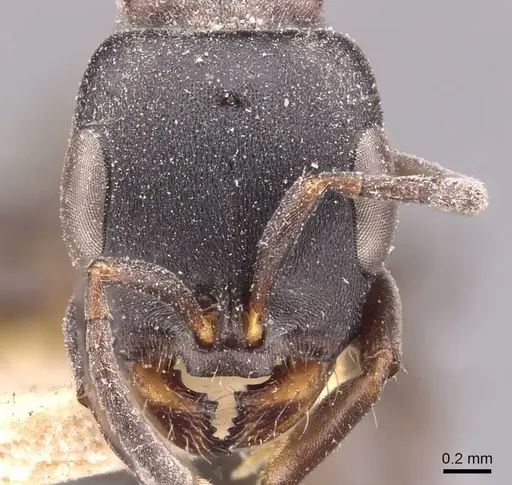
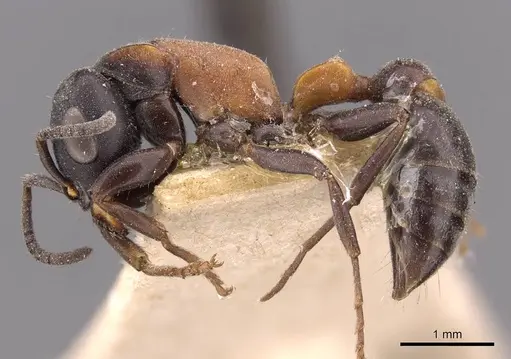
Pseudomyrmex rufomedius is a slender, long-legged ant found only in Guatemala and southern Mexico . Workers and queens have a striking bicolored body: the head and gaster are dark brown, while the narrow waist segment (petiole) is bright orange . They have a broad head with relatively small eyes, a flattened pronotum with distinct side edges, and the groove between the mesonotum and propodeum is almost invisible - the back section forms a continuous, raised, side-squeezed plate . This species belongs to the P. sericeus group, a set of species often associated with domatia-bearing plants like acacias . The fossil species P. antiquus looks very similar to modern P. rufomedius, suggesting this ant has kept its basic shape for millions of years .
Quick Summary
- Difficulty: Medium
- Origin & Habitat: Tropical forests of Guatemala and southern Mexico [1][2].
- Colony Type: Colony structure is not well documented for this species. Based on related Pseudomyrmex species, colonies are likely single-queen, but this has not been confirmed by research.
- Size & Growth:
- Queen: Size data unavailable. Inferred from the Pseudomyrmex genus: roughly 7-8 mm.
- Worker: Size data unavailable. Inferred from the Pseudomyrmex genus: roughly 5-7 mm.
- Colony: Up to several hundred workers (estimated from related species).
- Growth: Moderate
- Development: Estimated 6-8 weeks at 25-28°C, based on typical Pseudomyrmecinae development [3]. (Direct measurements for this species are not available.)
- Antkeeping:
- Temperature: 24-28°C. This tropical species needs consistent warmth [1]. Do not let it drop below 22°C.
- Humidity: High humidity. Keep the nest substrate damp to the touch but not waterlogged. These ants come from humid tropical forests [1].
- Diapause: No, this is a tropical species. Maintain warm temperatures year-round.
- Nesting: In nature, they likely nest in plant domatia or dead twigs. In captivity, use a Y‑tong (AAC) or plaster nest that holds humidity well. Provide tight, enclosed spaces.
- Behavior: Pseudomyrmex ants have a well-developed sting and will use it if the nest is threatened, but they are not overly aggressive toward keepers. Workers are very active, fast‑moving, and visual hunters. Their small size (5-7 mm) means escape prevention is critical, use fine mesh and tight lids.
- Common Issues: tropical species needs constant warmth, cold temperatures slow brood development and can be fatal., escape prevention is critical due to small size and active foraging, use fluon or tight sealing., high humidity can promote mold if ventilation is poor, balance moisture with airflow., wild‑caught colonies may carry mites or parasites, quarantine new colonies., founding phase is unconfirmed for this species, if claustral, do not disturb the queen early on.
Housing and Nest Setup
Specific nesting preferences for Pseudomyrmex rufomedius are undocumented. Based on typical Pseudomyrmex behavior, they prefer enclosed, tight spaces. Use a Y‑tong (AAC) or plaster nest that holds humidity well. The chambers should be sized for their small workers (5-7 mm). Add a water reservoir to keep the substrate damp but not wet. Keep the nest dark, cover it with a cloth or slide. Avoid dry conditions, these ants come from humid forests [1].
Feeding and Diet
Like many Pseudomyrmex, this species is predatory and likely also takes honeydew from hemipterans. Offer small live prey such as fruit flies, pinhead crickets, and tiny mealworms. They are active hunters and will chase moving food. Provide sugar water or honey occasionally, but protein should make up most of the diet. Feed every 2-3 days, removing uneaten prey after 24 hours to avoid mold. A constant sugar source is optional [3].
Temperature and Humidity
Keep the temperature at 24-28°C. This tropical species from Guatemala will not develop properly below 22°C [1]. Use a heating cable on one side of the nest to create a gradient, letting the ants choose their preferred spot. Humidity should stay high, the nest substrate should feel damp. Mist the outworld occasionally and make sure the water reservoir stays full. Good ventilation is important to stop mold, especially with the high moisture levels [1].
Colony Founding and Growth
Founding behavior is unconfirmed for Pseudomyrmex rufomedius. If it follows the typical Pseudomyrmex pattern, the queen is claustral: she seals herself in a small, dark chamber and raises the first workers without needing food. During this phase, do not disturb her, stress can cause her to eat the eggs or abandon the nest. The first workers (nanitics) likely appear after 6-8 weeks at optimal temperatures. Once they emerge, start offering small prey. The colony grows gradually, taking several months to reach a noticeable size.
Behavior and Temperament
Pseudomyrmex ants are equipped with a sting and will use it to defend the nest, but they are not aggressive toward keepers unless handled. Workers are alert and fast‑moving, with good eyesight. They are active during the day and will explore vertical surfaces. Because they are small (5-7 mm), escape prevention is essential, apply fluon or a similar barrier around the outworld rim. They hunt visually and will actively search for prey [2].
Seasonal Care
As a tropical species from Guatemala, Pseudomyrmex rufomedius does not need hibernation [1]. Keep temperatures steady year‑round. In nature, the main seasonal change is between wet and dry seasons, so you can slightly reduce misting during what would be the dry season, but do not lower the temperature. Avoid drafts, air conditioning, or any cold spots, the colony must stay warm to remain active.
Frequently Asked Questions
How long does it take for Pseudomyrmex rufomedius to produce first workers?
If the queen is claustral (typical for Pseudomyrmex), expect the first workers after 6-8 weeks at 25-28°C. This is an estimate, no direct data exists for this species.
What do Pseudomyrmex rufomedius ants eat?
They are predatory and need live prey such as fruit flies, pinhead crickets, and small worms. They will also take sugar water or honey, but protein should be the main food [3].
Do Pseudomyrmex rufomedius ants sting?
Yes, as a member of the Pseudomyrmecinae subfamily, they have a well‑developed sting. They are not aggressive toward keepers but will sting if the nest is threatened. The sting is mild for most people.
Can I keep Pseudomyrmex rufomedius in a test tube?
Test tubes work for the founding stage. Use a small tube with a water reservoir (cotton ball) for humidity. Once the colony has 10-15 workers, move it to a proper nest like Y‑tong or plaster that can better hold humidity.
What temperature do Pseudomyrmex rufomedius need?
Keep them at 24-28°C. This tropical species needs warmth, temperatures below 22°C will slow development. Use a heating cable to create a gradient [1].
Are Pseudomyrmex rufomedius good for beginners?
This species is rated medium difficulty. They require high humidity, steady warmth, and good escape prevention. They are better for keepers who have some experience with tropical ants.
How big do Pseudomyrmex rufomedius colonies get?
Based on related species, colonies likely reach several hundred workers. Growth is moderate, expect several months to see noticeable numbers.
Do Pseudomyrmex rufomedius need hibernation?
No. This is a tropical species from Guatemala that does not need hibernation. Keep them warm all year at 24-28°C [1].
Why are my Pseudomyrmex rufomedius dying?
Common causes: temperatures below 22°C, low humidity, mold from poor ventilation, or too much light. Check your setup and make sure the nest is dark, warm, and humid. Wild‑caught colonies may also carry parasites.
When should I move my colony to a formicarium?
Move to a proper nest (Y‑tong, plaster) once the colony has 10-15 workers. The test tube becomes hard to maintain after that point. Make sure the new nest holds humidity well.
Can I keep multiple Pseudomyrmex rufomedius queens together?
Not recommended, this species is likely monogyne (single‑queen). Combining unrelated queens would probably lead to fighting. Keep one queen per colony.
Where is Pseudomyrmex rufomedius found?
This species is only known from Guatemala and southern Mexico. It lives in tropical forests [1][2].
Report an Issue
The current care sheet is based fully on literature. See inconsistencies, or something that's incorrect? Please , it will be resolved after review from an admin. Contributing to the blogs tab also helps providing information, to make us be able to further improve the caresheets. Thank you for your support!
References

This caresheet is licensed under CC BY-SA 4.0 .
Community Blogs
CASENT0902925
View on AntWeb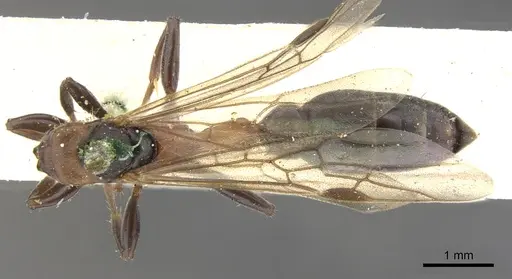
CASENT0907565
View on AntWeb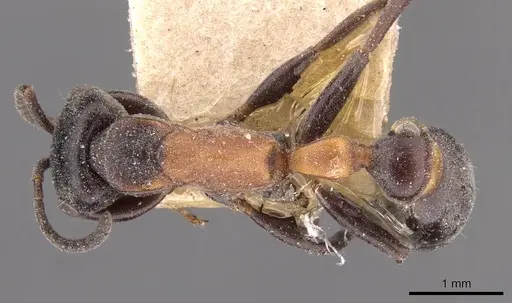
Literature
Loading distribution map...Loading products...