
Pseudomyrmex malignus
- Sci. Name
- Pseudomyrmex malignus
- Tribe
- Pseudomyrmecini
- Subfamily
- Pseudomyrmecinae
- Author
- Wheeler, 1921
- Distribution
- Found in 5 countries
Introduction
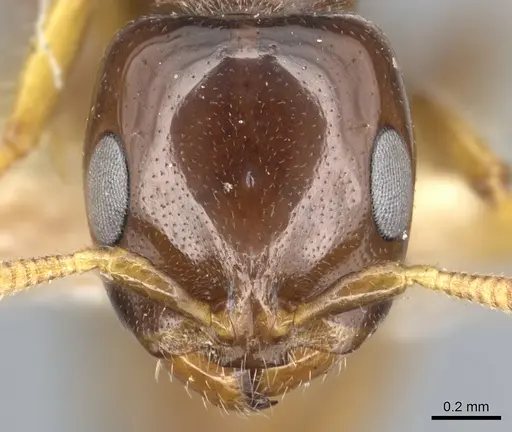
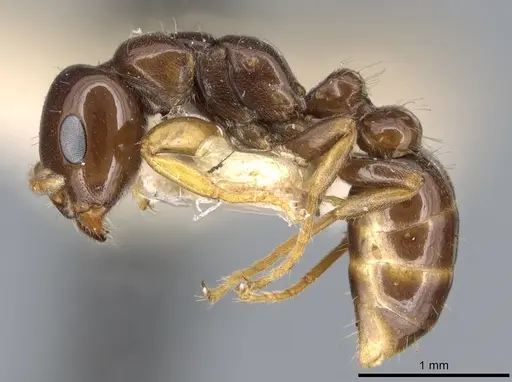
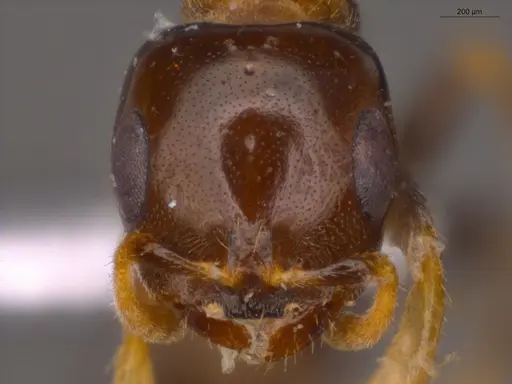
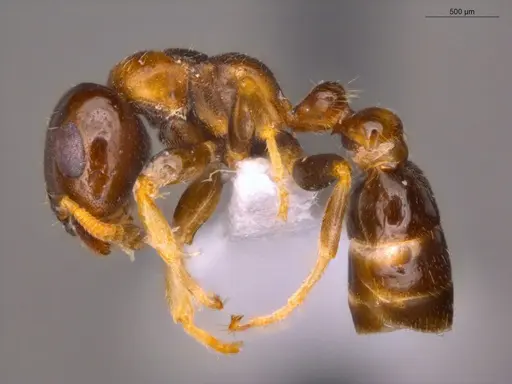
Pseudomyrmex malignus is a small, slender arboreal ant native to the eastern Amazon basin. Workers have a head length of 0.91-1.18 mm, and total body length is estimated at around 4-6 mm based on related species [inferred]. Their color ranges from orange-brown to dark brown, with the head and last segments of the gaster usually darker . They can be identified by their smooth, shiny head, well-separated frontal carinae, and the absence of erect hairs on the sides and back of the head . These ants live exclusively in hollow twigs and branches of Tachigali trees (e.g., T. paniculata and T. rusbyi) in the rainforest canopy . They are less commonly encountered than relatives like Pseudomyrmex concolor but share the same range across French Guiana, Guyana, Suriname, and Trinidad and Tobago .
Quick Summary
- Difficulty: Expert
- Origin & Habitat: Eastern Amazon basin (French Guiana, Guyana, Suriname, Trinidad and Tobago). They inhabit the rainforest canopy and nest exclusively in hollow twigs and branches of Tachigali trees [1][2].
- Colony Type: Likely monogyne (single queen), colony structure is unconfirmed for this species.
- Size & Growth:
- Queen: Size data unavailable, inferred from genus: ~6-8 mm total length
- Worker: Size data unavailable, inferred from genus: ~4-6 mm total length. Head length 0.91-1.18 mm (head only) [1].
- Colony: Unknown, likely several hundred workers based on related species
- Growth: Unknown, likely moderate based on tropical arboreal ant patterns
- Development: Unconfirmed, likely 4-8 weeks based on related tropical Pseudomyrmex species (Development timeline has not been directly studied for this species.)
- Antkeeping:
- Temperature: Keep at 24-28°C. These are tropical ants from the Amazon basin requiring warm, stable conditions
- Humidity: High humidity (70-85%). Provide a damp substrate in the outworld and maintain moisture in the nest without waterlogging
- Diapause: No, as tropical ants from near the equator, they do not require a winter dormancy period
- Nesting: Arboreal setup is essential. These ants naturally inhabit hollow twigs and branches of Tachigali trees. Provide artificial nests that mimic narrow, vertical spaces, bamboo sections, hollow twigs, or acrylic nests with small chambers scaled to their tiny size [1]
- Behavior: These are quick-moving, alert arboreal ants that actively patrol their territory. As members of the Pseudomyrmecinae subfamily, they have a well-developed sting used for defense, but their small size makes the sting negligible to humans. They likely defend their nest vigorously when disturbed. Escape prevention is critical due to their tiny size, use fine mesh and seal all gaps.
- Common Issues: arboreal nature makes standard ground-based nests unsuitable, use vertical, twig-like setups, tiny size means escapes are likely without fine mesh barriers and careful sealing, high humidity needs can lead to mold if ventilation is poor, limited available care information makes successful husbandry challenging, wild-caught colonies may have specialized needs tied to their Tachigali host trees
Natural History and Host Association
Pseudomyrmex malignus is a specialized arboreal ant that lives in an obligate association with Tachigali trees in the Amazon basin. Unlike many ants that nest in soil, these ants inhabit hollow twigs and small branches within the rainforest canopy [1]. They are less common than their relatives Pseudomyrmex concolor and Pseudomyrmex penetrator but overlap broadly with them in distribution across eastern Hylaea [1]. Workers are slender and fast-moving, traits common among Pseudomyrmecinae that patrol vegetation for honeydew and small prey. Their smooth, shiny head and reduced pilosity may be adaptations to their arboreal lifestyle [1].
Housing and Nest Setup
Replicating their natural arboreal habitat is crucial. Standard test tube setups for ground-nesting ants are unsuitable. Instead, provide an arboreal-style nest that mimics narrow, vertical twig chambers. Bamboo sections, hollow twigs, or acrylic nests with small, tight-fitting chambers work well. Scale the chambers to the workers' tiny size. Include vertical structures in the outworld (twigs, mesh) for foraging at different heights. Ensure excellent escape prevention, use fine mesh and seal all gaps, as these ants can squeeze through tiny openings.
Temperature and Humidity Requirements
As tropical ants from the Amazon basin, Pseudomyrmex malignus requires warm, stable conditions. Maintain temperatures between 24-28°C, avoiding drops below 22°C. Use a heating cable on one side of the nest to create a gradient, but avoid drying out the nest. Humidity should be high (70-85%), reflecting their rainforest canopy origin. Keep the nest substrate moist but not waterlogged. Mist the outworld regularly and consider a water reservoir in the nest. Good ventilation prevents mold, but avoid strong airflow that dries the environment.
Feeding and Diet
Like other Pseudomyrmecinae ants, this species is likely omnivorous. In nature, they feed on honeydew from sap-sucking insects on their host Tachigali trees, and they capture small arthropods. In captivity, provide a constant source of sugar water or honey for energy. For protein, offer small live prey such as fruit flies, springtails, or tiny mealworms. They are active foragers, so place food in the outworld. Remove uneaten prey within 24-48 hours to prevent mold.
Colony Development and Growth
The development timeline for Pseudomyrmex malignus is undocumented. Based on related tropical species, expect roughly 4-8 weeks from egg to first worker at optimal temperature (24-28°C). The first workers (nanitics) will be smaller than mature workers. Colony size likely reaches several hundred workers over time, but maximum size is unknown. Growth rate is probably moderate. Be patient with founding colonies, as arboreal species can be sensitive to disturbance during this stage.
Frequently Asked Questions
Can I keep Pseudomyrmex malignus in a test tube setup?
No, test tube setups are not appropriate for this species. They are obligate arboreal ants that nest in hollow twigs and branches. You need an arboreal-style nest with narrow, vertical chambers scaled to their size.
What do Pseudomyrmex malignus eat?
They likely have an omnivorous diet similar to other Pseudomyrmecinae ants. Offer sugar water or honey for energy and small live prey (fruit flies, springtails) for protein.
How long does it take for first workers to appear?
The exact timeline is unknown. Based on related tropical Pseudomyrmex species, expect about 4-8 weeks from egg to first worker at optimal temperatures (24-28°C). Be patient.
Do Pseudomyrmex malignus ants sting?
Like all Pseudomyrmecinae, they have a sting, but their small size (around 4-6mm) means the sting is negligible to humans. They may still defend their nest vigorously when disturbed.
Are Pseudomyrmex malignus good for beginners?
No, this species is not recommended for beginners. They require specialized arboreal housing, high humidity and temperature, and there is very limited care information available. They are an expert-level species.
Do Pseudomyrmex malignus need hibernation?
No, they do not require hibernation. As tropical ants from near the equator, they are adapted to year-round warm conditions. Keep consistent temperatures year-round.
How big do Pseudomyrmex malignus colonies get?
Maximum colony size is unknown for this species. Based on related Pseudomyrmex species, they likely reach several hundred workers over time.
Why are my Pseudomyrmex malignus dying?
Common causes include: using the wrong housing (ground-level instead of arboreal), humidity too low, temperatures below 22°C, escape due to small size, and excessive disturbance during founding. Ensure you have an appropriate arboreal setup before acquiring this species.
Can I keep multiple queens together?
Colony structure is not well-documented. Based on typical Pseudomyrmex patterns, they likely form single-queen colonies. Combining unrelated queens is not recommended and has not been studied.
What temperature should I keep Pseudomyrmex malignus at?
Keep them at 24-28°C. Avoid temperatures below 22°C. Use a heating cable to maintain stable conditions without drying out the nest.
Report an Issue
The current care sheet is based fully on literature. See inconsistencies, or something that's incorrect? Please , it will be resolved after review from an admin. Contributing to the blogs tab also helps providing information, to make us be able to further improve the caresheets. Thank you for your support!
References

This caresheet is licensed under CC BY-SA 4.0 .
Community Blogs
CASENT0902888
View on AntWeb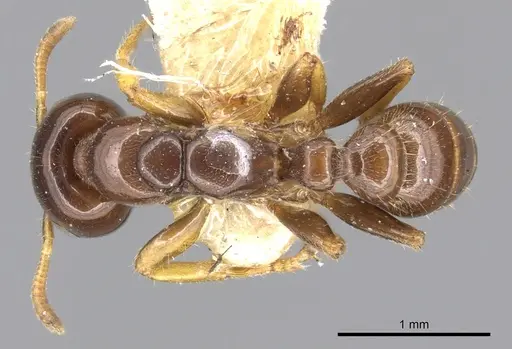
ECOFOG-CSG15-0079-07
View on AntWeb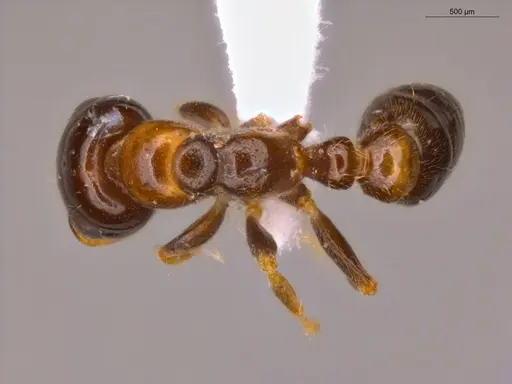
Literature
Loading distribution map...Loading products...