
Pseudomyrmex laevifrons
- Sci. Name
- Pseudomyrmex laevifrons
- Tribe
- Pseudomyrmecini
- Subfamily
- Pseudomyrmecinae
- Author
- Ward, 1989
- Distribution
- Found in 11 countries
Introduction
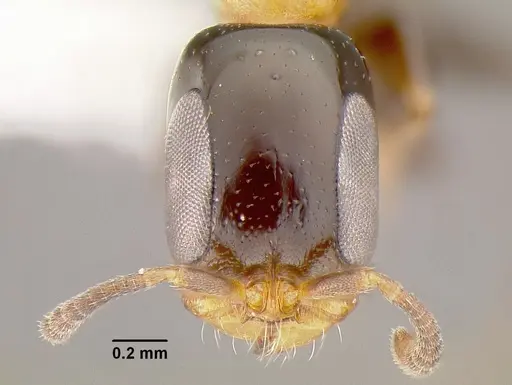
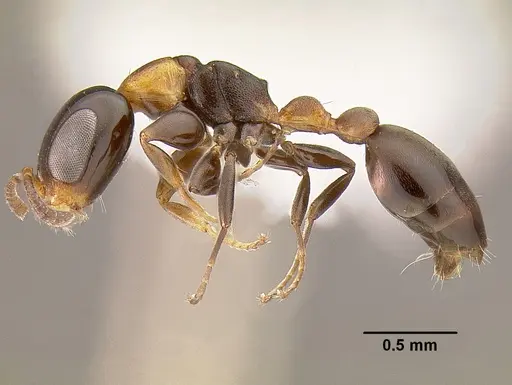
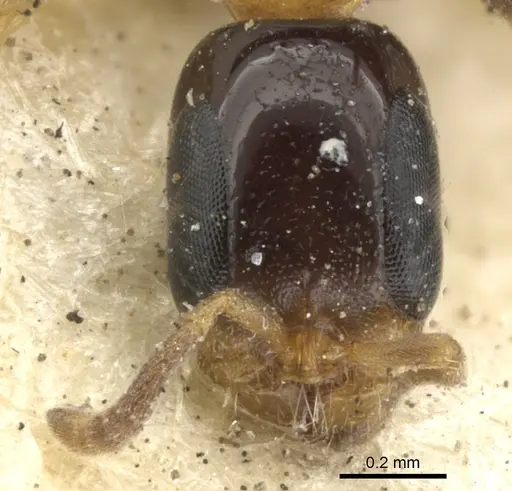
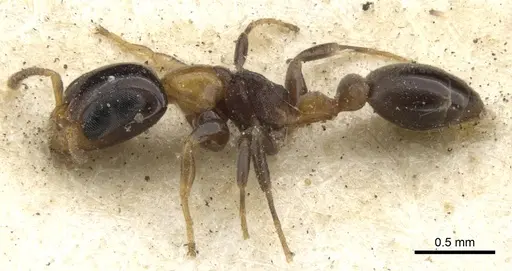
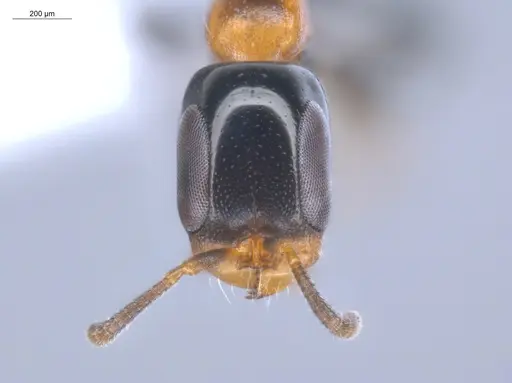
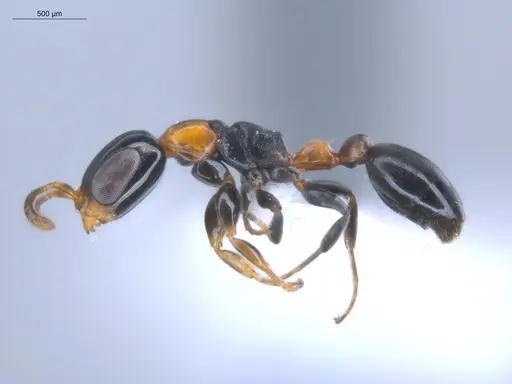
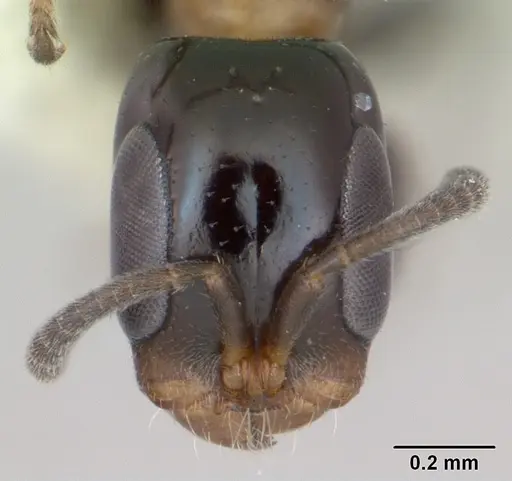
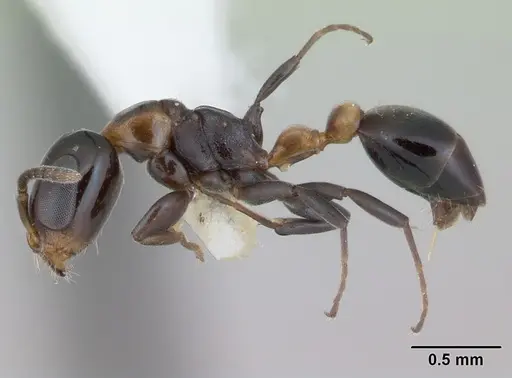
Pseudomyrmex laevifrons is a tiny Neotropical ant from the goeldii species group, closely related to Pseudomyrmex micans . Workers have a distinctive elongate head with large eyes, a smooth and shiny body with fine punctures, and a noticeably angled propodeum (the section between the thorax and abdomen). They have sparse standing hairs, with paired erect setae on the front of the pronotum, petiole, and postpetiole. Their body is dark brown with lighter mandibles, face area, and legs; the pronotum, petiole, and postpetiole are often a contrasting lighter medium to yellowish-brown . Like other members of the Pseudomyrmecinae subfamily, they possess a sting, though their timid nature makes stinging humans unlikely. These ants inhabit dead twigs in tropical forests from Nicaragua to Bolivia and central Brazil . They nest in various woody plants including vines and Melastomataceae trees . Unlike their acacia-ant relatives, P. laevifrons is a generalist dead-twig inhabitant. They are noted for their timid demeanor and forage as generalists in leaf litter and low vegetation .
Quick Summary
- Difficulty: Medium
- Origin & Habitat: Neotropical region, Nicaragua to Bolivia and central Brazil. Found in tropical moist forest, rainforest, second-growth rainforest, and rainforest edge [1].
- Colony Type: Unconfirmed. Based on related Pseudomyrmex species, likely monogyne (single queen) colonies. No documented ergatoid replacement queens.
- Size & Growth:
- Queen: Unknown, no queen measurements documented.
- Worker: Size data unavailable, workers are very small, typical of the Pseudomyrmex genus.
- Colony: Colony size not directly documented. Related Pseudomyrmex species can reach several hundred workers.
- Growth: Moderate, estimated based on genus patterns.
- Development: Unknown, based on genus patterns, estimate 4-8 weeks at optimal temperature (24-28°C). (Timeline is estimated, specific data for this species is unavailable.)
- Antkeeping:
- Temperature: Keep warm at 24-28°C. These are tropical rainforest ants requiring stable warm conditions [1].
- Humidity: High humidity required (70-85%). Keep nest substrate consistently moist but not waterlogged. Mist the outworld occasionally and provide a water source [1].
- Diapause: No, as a tropical species, they do not require hibernation. Maintain warm conditions year-round [1].
- Nesting: Natural nesting is in dead twigs of woody plants and vines [1]. In captivity, use a small test tube setup or a Y-tong (AAC) nest with narrow chambers. Provide small dead twigs or bamboo pieces in the outworld as enrichment.
- Behavior: These ants are noted for their timid demeanor, they flee rather than confront threats [1]. They are generalist foragers. As members of the Pseudomyrmecinae subfamily, they have a sting but are not aggressive. Their tiny size requires excellent escape prevention, use fine mesh and fluon barriers.
- Common Issues: escape prevention is critical due to their very small size, use fine mesh and tight-fitting barriers, tropical humidity requirements mean dry conditions will quickly stress colonies, slow colony growth may lead to overfeeding by impatient keepers, causing mold problems, wild-caught colonies may harbor parasites that can devastate captive colonies, test tube setups can flood if water reservoirs are too large for such tiny ants
Housing and Nest Setup
Because Pseudomyrmex laevifrons is tiny, you need appropriately scaled housing. A standard test tube setup works well, use a small diameter tube (around 8-10mm) with a cotton ball creating a water reservoir. Keep the reservoir modest to prevent flooding. Alternatively, a Y-tong (AAC) nest with narrow chambers suits their size. In the outworld, add small pieces of dead twigs, bamboo, or cork to mimic their natural dead-twig habitat [1].
Escape prevention must be excellent. Use fluon on rim barriers and ensure all connections are tight. Even small gaps that would not concern larger ants can allow these tiny workers to escape. A small outworld is fine for founding colonies.
Feeding and Diet
Like other Pseudomyrmex species, these ants are generalist omnivores. They likely hunt small arthropods in captivity and will accept small live prey such as fruit flies, pinhead crickets, and tiny insects. Offer protein sources twice weekly. They also accept sugar water, honey, or diluted maple syrup, workers readily collect honeydew and nectar in the wild.
For such small ants, prey must be appropriately sized. Fruit flies (Drosophila) and small springtails make ideal live prey. Crush larger insects before offering. Remove uneaten prey within 24-48 hours to prevent mold. Keep a constant sugar source (a small drop on cotton) refreshed every few days. [1]
Temperature and Humidity
These tropical ants require warm, humid conditions year-round. Maintain temperatures between 24-28°C, this mimics their natural rainforest environment [1]. Room temperature may be sufficient if your home stays in this range, otherwise, use a heating cable on one side of the nest to create a gentle gradient. Place heating on top of the nest material, not underneath, to prevent excessive drying.
Humidity should be high at 70-85%. The nest area should have consistently moist substrate, the test tube water reservoir helps. Mist the outworld occasionally and ensure good ventilation while maintaining humidity. A water source in the outworld is important. Watch for condensation: excessive condensation means overly wet conditions, while its absence indicates drying.
Behavior and Temperament
Pseudomyrmex laevifrons is known for its timid demeanor, these ants flee rather than confront threats [1]. This makes them peaceful but easily outcompeted by more aggressive species. They are generalist foragers, actively hunting and scavenging in the lower vegetation layer.
Like other Pseudomyrmecinae, they have a sting, but their small size and timid nature make it negligible for humans. They are active foragers and will establish regular foraging patterns. Their timid nature also means they may be stressed by excessive disturbance, minimize nest inspections during the founding stage and early colony development.
Colony Development
Colony development for Pseudomyrmex laevifrons has not been directly documented. Based on genus patterns, the queen likely seals herself in a small chamber and raises the first brood alone (claustral founding). This has not been confirmed [1]. The first workers (nanitics) will be smaller than mature workers and may take several weeks to emerge.
Growth rate is likely moderate, expect several months before you see significant colony growth. The tiny colony size means population increases will seem slow. Be patient and avoid overfeeding, which causes mold in small colonies. Once you have 20-30 workers, growth typically accelerates as more foragers bring back more food.
Seasonal Care
As a tropical species from rainforest environments, Pseudomyrmex laevifrons does not require hibernation or diapause [1]. Maintain warm, humid conditions year-round. Seasonal temperature variations in their native range (Nicaragua to Brazil) are minimal compared to temperate regions, so avoid exposing them to temperatures below 20°C for extended periods.
During the dry season in their native habitat, humidity may drop somewhat, in captivity, maintain consistently high humidity regardless of season. There is no need to simulate seasonal changes unless you are attempting to trigger nuptial flights, which has not been documented for this species in captivity.
Frequently Asked Questions
How long does it take for Pseudomyrmex laevifrons to produce first workers?
The exact timeline is unknown. Based on related Pseudomyrmex species, the queen likely raises the first brood alone (claustral founding) and the first workers emerge after 4-8 weeks at optimal temperature (24-28°C) [1].
What do Pseudomyrmex laevifrons ants eat?
They are generalist omnivores. Offer small live prey (fruit flies, tiny crickets, springtails) twice weekly as protein. Also provide a constant sugar source like honey water or maple syrup. Remove uneaten prey within 48 hours to prevent mold [1].
Do Pseudomyrmex laevifrons ants sting?
They have a sting like other Pseudomyrmecinae, but they are very small and timid. They are not known to deliver significant stings to humans, they will flee rather than engage. The sting would likely be imperceptible due to their tiny size.
What temperature do Pseudomyrmex laevifrons need?
Keep them warm at 24-28°C. These are tropical rainforest ants requiring stable warm conditions year-round [1].
Are Pseudomyrmex laevifrons good for beginners?
They are rated as Medium difficulty. Their small size and escape risk make them slightly challenging for complete beginners, but their docile nature and lack of aggression make them manageable. The main challenges are escape prevention and maintaining high humidity [1].
How big do Pseudomyrmex laevifrons colonies get?
Colony size is not directly documented, but based on related Pseudomyrmex species, colonies likely reach several hundred workers [1].
Can I keep multiple Pseudomyrmex laevifrons queens together?
Colony structure is unconfirmed for this species. Combining unrelated queens has not been documented and is not recommended. If you obtain a wild colony, it likely has a single queen like most Pseudomyrmex species.
What humidity do Pseudomyrmex laevifrons require?
High humidity at 70-85% is needed. These ants naturally live in damp rainforest environments. Keep the nest substrate consistently moist but not waterlogged. Mist the outworld occasionally and ensure good ventilation [1].
Do Pseudomyrmex laevifrons need hibernation?
No, as a tropical species, they do not require hibernation or diapause. Maintain warm, humid conditions year-round. Avoid exposing them to temperatures below 20°C for extended periods [1].
Why are my Pseudomyrmex laevifrons escaping?
Their very small size means they can squeeze through tiny gaps. Use fine mesh on all ventilation, apply fluon to rim barriers, and ensure all connections are tight. Check for gaps smaller than 1mm [1].
When should I move Pseudomyrmex laevifrons to a formicarium?
Wait until the colony has at least 50-100 workers before moving to a formicarium. Test tubes work well for founding colonies and smaller groups. A Y-tong or plaster nest with appropriately small chambers works well once the colony is established.
What type of nest is best for Pseudomyrmex laevifrons?
A small test tube setup works well for founding colonies. For established colonies, a Y-tong (AAC) nest with narrow chambers or a small naturalistic setup with dead twigs works best. The key is appropriately scaled chambers for their tiny size [1].
Report an Issue
The current care sheet is based fully on literature. See inconsistencies, or something that's incorrect? Please , it will be resolved after review from an admin. Contributing to the blogs tab also helps providing information, to make us be able to further improve the caresheets. Thank you for your support!
References

This caresheet is licensed under CC BY-SA 4.0 .
Community Blogs
CASENT0762973
View on AntWeb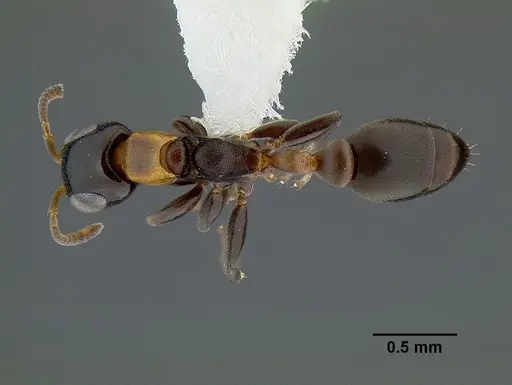
CASENT0902923
View on AntWeb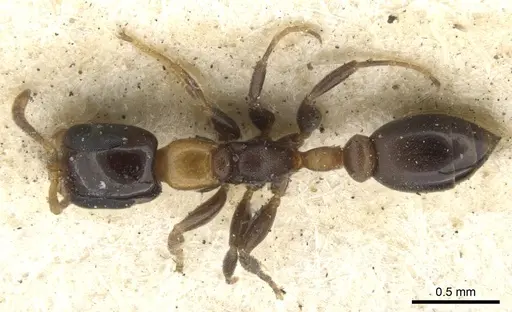
ECOFOG-BOUM-1256-01
View on AntWeb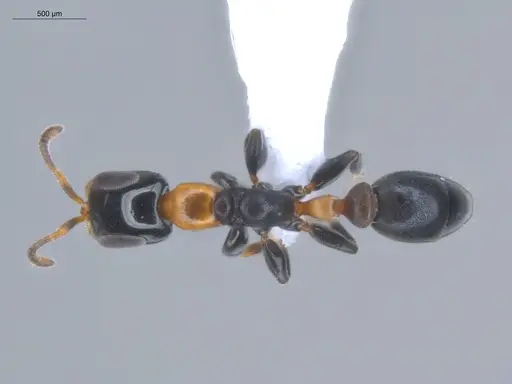
LACMENT142549
View on AntWeb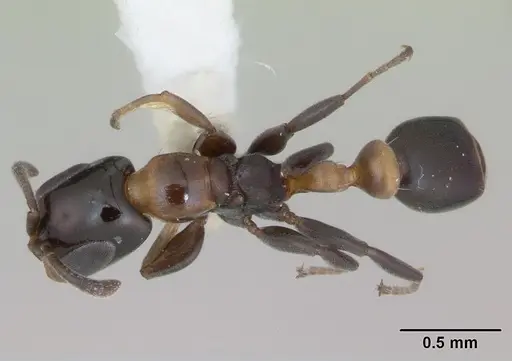
Literature
Loading distribution map...Loading products...