
Pseudomyrmex hospitalis
- Sci. Name
- Pseudomyrmex hospitalis
- Tribe
- Pseudomyrmecini
- Subfamily
- Pseudomyrmecinae
- Author
- Ward, 1999
- Distribution
- Found in 1 countries
Introduction
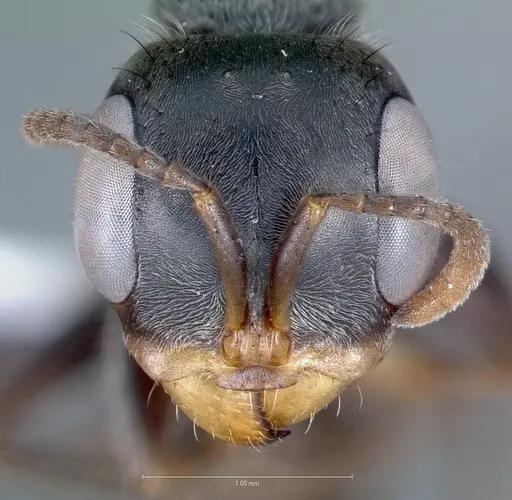
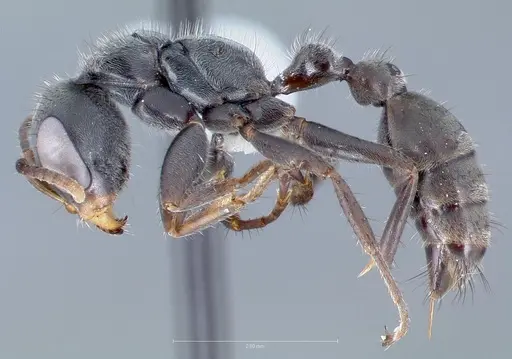
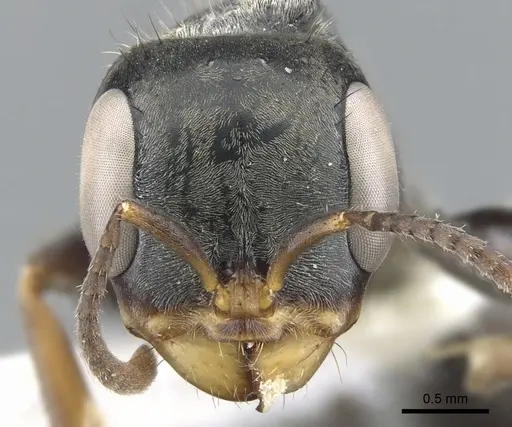
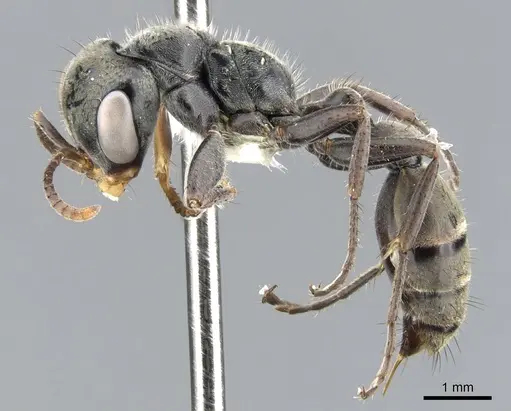
Pseudomyrmex hospitalis is a large, slender ant species. Workers are black with yellow-brown mandibles and dark brown legs that lighten toward the tips. They have a coat of fine silvery-white hairs mixed with thicker, longer black setae across the head, mesosoma, and petiole . This species belongs to the P. gracilis group and is known only from a handful of collections in northern Peru and recently in Brazil, where it inhabits hollow stem structures (domatia) in Tachigali trees . Unlike many plant-inhabiting Pseudomyrmex, workers are non-aggressive and timid - they may be opportunistic colonizers that move into trees not already defended by more aggressive species .
Quick Summary
- Difficulty: Expert
- Origin & Habitat: Northern Peru (San Martin region) at about 700 m elevation, and also recorded from Pará, Brazil [1][3][2]. Found inside Tachigali tree domatia (hollow stem chambers).
- Colony Type: Unknown colony structure, no data exists on queen number or social organization [1].
- Size & Growth:
- Queen: Unconfirmed, queen has not been described.
- Worker: Body size data unavailable (no total length recorded). Head width is approximately 1.76-1.84mm, indicating a relatively large ant for the genus [1].
- Colony: Unknown, only a few workers have ever been collected from any one tree [1].
- Growth: Unknown, no captive breeding data exists.
- Development: Unknown, no development data exists for this species. Related Pseudomyrmex species typically develop in 6-10 weeks at warm temperatures. (No captive colony data exists, this species is only known from wild collections.)
- Antkeeping:
- Temperature: Warm conditions likely needed. Start around 24-28°C and observe colony activity. Related tropical Pseudomyrmex species prefer warm temperatures.
- Humidity: High humidity required, these are rainforest-dwelling plant ants. Keep the nest substrate consistently moist but not waterlogged. Aim for a humid environment rather than specific percentages.
- Diapause: Unknown, no data on overwintering requirements. As a tropical species from Peru, likely active year-round without true hibernation.
- Nesting: Naturalistic setup with plant material works best. Related species live in plant domatia, so a planted terrarium with hollow bamboo sections or artificial domatia would be ideal. Y-tong, plaster, or 3D-printed nests with high humidity chambers may also work.
- Behavior: Workers are notably non-aggressive and timid compared to other Pseudomyrmex species [1]. They are likely passive foragers rather than active defenders of their host plant. Escape risk is moderate, their large size (for a Pseudomyrmex) makes them easier to contain than tiny ants, but standard escape prevention still applies.
- Common Issues: extreme rarity, wild collection nearly impossible and no captive colonies exist., no captive breeding data exists, all care recommendations are inferred from related species., timid nature may make them vulnerable to harassment by other insects in a mixed setup., tropical humidity requirements can be difficult to maintain consistently., host plant dependency may make long-term captive maintenance uncertain without appropriate plant material.
Species Overview and Identification
Pseudomyrmex hospitalis is a large, dark ant belonging to the P. gracilis group. Workers are black with yellow-brown mandibles and a lighter frontoclypeal complex. The most distinctive feature is the pilosity: a dense covering of fine, appressed silvery pubescence mixed with thicker black setae on the head, mesosoma, and petiole [1]. The legs are relatively short for the genus, and the petiole is notably high and broad with a short anterior peduncle. This species can be separated from the similar Pseudomyrmex gracilis by its shorter, broader petiole, shorter legs, and the presence of black setae on the propodeum and petiole (absent in P. gracilis) [1].
Distribution and Habitat
This species is known only from northern Peru (San Martin region, type locality) and more recently from the state of Pará in Brazil [1][2][3]. It has been collected exclusively from Tachigali trees, living inside the hollow petiole domatia (swollen stem chambers) that these plants produce. The type series was found in two different domatia on a single branch, along with a colony of Camponotus rectangularis [1]. Workers were not aggressive, and it is thought that P. hospitalis is a timid, opportunistic species that colonizes trees not already defended by more aggressive ant inhabitants [1].
Relationship with Host Plants
Pseudomyrmex hospitalis represents an interesting case of ant-plant symbiosis. Unlike the famously aggressive Pseudomyrmex that defend acacias or Triplaris trees, P. hospitalis appears to be a non-defensive, opportunistic resident of Tachigali [1]. It may behave similarly to Pseudomyrmex nigropilosus, a timid species that occupies swollen-thorn acacias left undefended by their typical aggressive inhabitants. This suggests P. hospitalis likely does not provide strong protective benefits to its host plant but still benefits from shelter and possibly plant secretions. For captive care, this implies they may not require a live host plant as urgently as some other Pseudomyrmex species [1].
Care Recommendations
Since this species has never been kept in captivity and basic biology is poorly understood, all care recommendations are experimental. Based on related Pseudomyrmex species (e.g., Pseudomyrmex gracilis), provide a warm (24-28°C), humid environment with moist substrate [4]. A naturalistic planted setup with hollow bamboo sections or artificial domatia would best approximate their natural habitat. Avoid acrylic nests, use Y-tong, plaster, or 3D-printed nests with a humidity gradient. Feed sugar water or honey regularly, plus small protein sources like fruit flies or pinhead crickets. The biggest challenge is obtaining a colony: P. hospitalis is one of the rarest ant species in the world, with only a handful of wild specimens ever collected, so this species should not be targeted for collection [1].
Related Species for Comparison
Pseudomyrmex hospitalis is a member of the P. gracilis group, which diverged from a common ancestor about 1.7 million years ago [4]. The most similar species is Pseudomyrmex gracilis, a widespread and better-studied ant. Other related plant-inhabiting species include the aggressive defenders of Triplaris and acacias (e.g., Pseudomyrmex viduus, Pseudomyrmex nigropilosus). P. hospitalis stands out for its non-aggressive nature and its apparent secondary role in Tachigali domatia [1]. Understanding the care of related Pseudomyrmex species provides the best guidance, though large gaps remain.
Frequently Asked Questions
Is Pseudomyrmex hospitalis available in the antkeeping hobby?
No. This is one of the rarest ant species in the world, known only from a handful of specimens from Peru and Brazil. No captive colonies exist, and wild collection is extremely difficult due to its limited distribution and cryptic habits [1].
What do Pseudomyrmex hospitalis ants eat?
No feeding data exists for this species. Based on related Pseudomyrmex, they likely consume honeydew from host plants and small insects. In captivity, offer sugar water or honey as a carbohydrate source, plus small live prey like fruit flies or pinhead crickets for protein [1].
How do I set up a nest for Pseudomyrmex hospitalis?
A naturalistic setup with plant material is ideal since they naturally live in plant domatia [1]. A small planted terrarium with hollow bamboo sections or artificial domatia would work. Alternatively, a Y-tong, plaster, or 3D-printed nest with high humidity chambers may be accepted. Keep the nest humid and warm.
Do Pseudomyrmex hospitalis ants sting?
Like all Pseudomyrmecinae, they have a sting, but this species is described as non-aggressive and workers were not particularly aggressive when handled [1]. Still, treat all ants as potentially capable of stinging if provoked.
What temperature and humidity do Pseudomyrmex hospitalis need?
As a tropical species from Peru, they require warm, humid conditions. Aim for 24-28°C and maintain high humidity by keeping the substrate consistently moist but not waterlogged. Use a heating cable on one side of the nest to create a temperature gradient.
Can beginners keep Pseudomyrmex hospitalis?
No. This species is rated Expert due to its extreme rarity, complete lack of captive breeding data, and specialized requirements. Even experienced antkeepers would find it impossible to obtain and maintain. Related, more common Pseudomyrmex species are better choices for learning the genus.
How big do Pseudomyrmex hospitalis colonies get?
Unknown. Only small numbers of workers have ever been collected, suggesting wild colonies are naturally small. Related plant-inhabiting Pseudomyrmex typically form colonies of several hundred workers at most [1].
Do Pseudomyrmex hospitalis need hibernation?
Unlikely. As a tropical species from Peru, it probably remains active year-round without a true diapause period. Slight temperature reductions during winter months may be appropriate but are not required.
Why is this species so rare?
Pseudomyrmex hospitalis appears to be genuinely uncommon in the wild. It may be a 'secondary' ant species that colonizes host plants only when more aggressive species are absent. This opportunistic, non-aggressive strategy could naturally limit its population density. Additionally, its remote habitat in northern Peru has received limited research attention [1].
Is Pseudomyrmex hospitalis aggressive?
No. Unlike most Pseudomyrmex species that aggressively defend their host plants, P. hospitalis workers are described as 'not particularly aggressive' [1]. This timidity is unusual for the genus and supports the idea that they are non-defensive, opportunistic inhabitants of Tachigali trees.
Report an Issue
The current care sheet is based fully on literature. See inconsistencies, or something that's incorrect? Please , it will be resolved after review from an admin. Contributing to the blogs tab also helps providing information, to make us be able to further improve the caresheets. Thank you for your support!
References

This caresheet is licensed under CC BY-SA 4.0 .
Community Blogs
CASENT0005839
View on AntWeb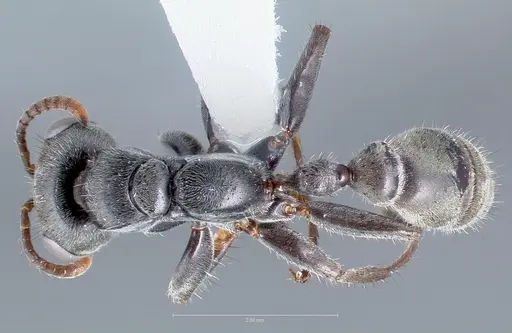
CASENT0902861
View on AntWeb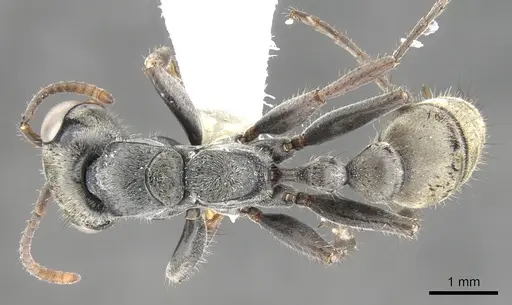
Literature
Loading distribution map...Loading products...