
Pseudomyrmex crudelis
- Sci. Name
- Pseudomyrmex crudelis
- Tribe
- Pseudomyrmecini
- Subfamily
- Pseudomyrmecinae
- Author
- Ward, 1999
- Distribution
- Found in 1 countries
Introduction
Pseudomyrmex crudelis is a medium-sized ant species native to the western foothills of the Amazon basin in Peru. Size data is unavailable; only head measurements (width 1.00-1.13mm) have been recorded, but full body length has not been documented. They have a distinctive dark brownish-black coloration with lighter appendages. This species belongs to the sericeus group and is notable for its exclusive association with Tachigali trees, where workers nest within the plant's hollow domatia structures and tend to pseudococcids (scale insects) for honeydew. They are highly aggressive defenders of their nest sites, comparable to the Pseudomyrmex viduus group species. This is a specialized plant-ant symbiont that represents a secondary colonization of Tachigali plants, having evolved more recently (around 3.7 million years ago) compared to other domatium-bearing ant groups .
Quick Summary
- Difficulty: Expert
- Origin & Habitat: Western foothills of the Amazon basin in Peru. This species is known only from Tachigali trees growing in this region, specifically documented in San Martín department near Tarapoto at around 220m elevation [1][3].
- Colony Type: Colony structure is unconfirmed. As a Pseudomyrmex species, they are likely monogyne (single queen colonies), though this has not been directly documented for Pseudomyrmex crudelis specifically. They inhabit plant domatia and tend pseudococcids within these structures [1].
- Size & Growth:
- Queen: Size data unavailable
- Worker: Size data unavailable
- Colony: Unknown, no colony size data available for this species
- Growth: Unknown, no development timing data available
- Development: Unknown, development has not been studied for this species (No direct data exists. As a tropical Pseudomyrmex species, development likely follows patterns typical for the genus (several months), but this is unconfirmed. Size data unavailable.)
- Antkeeping:
- Temperature: As a tropical Amazon species, keep warm around 24-28°C. This is an estimate based on the natural range in the Peruvian Amazon foothills, no specific thermal studies exist for this species [1].
- Humidity: High humidity is essential. In their natural habitat within Tachigali domatia, conditions are likely consistently humid. Keep substrate moderately to heavily moist, mimicking the damp interior of tree hollows in a tropical rainforest [1].
- Diapause: No, this is a tropical species from the Amazon basin with no documented diapause requirement. They likely remain active year-round [1].
- Nesting: This species is specialized to inhabit plant domatia. In captivity, a naturalistic setup with appropriate nesting chambers or a well-structured formicarium with narrow passages works best. They will not thrive in simple test tube setups, they need conditions that mimic their specialized plant-dwelling lifestyle [1].
- Behavior: Highly aggressive in defense of nest sites, comparable to the Pseudomyrmex viduus group species [1]. Workers are active foragers that tend to pseudococcids (scale insects) inside their host plants. They will defend their territory vigorously and have potent stings. Escape prevention is important as workers are moderately large and can climb well. They are plant-dwelling ants adapted to enclosed spaces within Tachigali domatia.
- Common Issues: specialized habitat requirements make captive care extremely difficult, they require plant-like nesting structures., no available colony size or growth rate data makes planning challenging., aggressive defense means stings are likely when disturbing the nest., humidity control is critical but poorly understood for this species., obtaining a colony may be nearly impossible as the species is only known from a very restricted range in Peru.
Natural History and Host Association
Pseudomyrmex crudelis is a specialized plant-ant symbiont that inhabits exclusively Tachigali trees in the western Amazon basin of Peru. This represents a secondary colonization of Tachigali plants, with the species complex originating approximately 3.7 million years ago, significantly younger than other domatium-bearing ant lineages [2]. Workers inhabit the hollow domatia structures within Tachigali stems, where they tend to pseudococcids (scale insects) for honeydew and raise their brood. The relationship is mutualistic, the ants protect the plant from herbivores while receiving shelter and honeydew from the tended insects. This species is extremely rare in scientific collections, known only from a few localities in the San Martín region of Peru [1][3].
Identification and Morphology
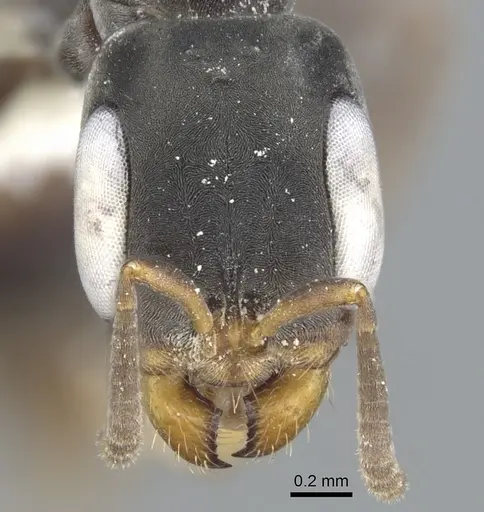
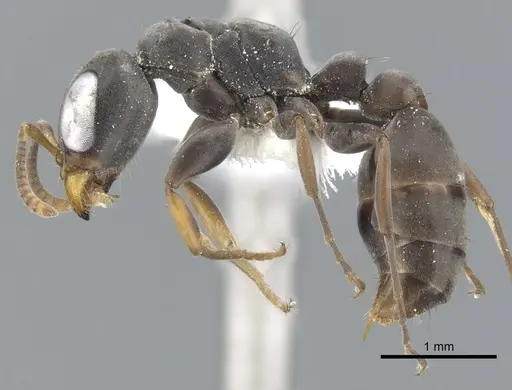
Workers of Pseudomyrmex crudelis are distinguished by their medium build and relatively narrow, elongated head. The petiole is notably high and broad with a subtrapezoidal shape. A key identifying feature is the prominent anteroventral petiolar process with a posteriorly-directed tooth. The body is dark brownish-black with lighter-colored appendages, and the mandibles, frontoclypeal complex, and protibia are yellowish-brown. Standing pilosity is sparse, typically with one pair of long stout setae on the pronotal humeri, petiole, and postpetiole. The species belongs to the Pseudomyrmex sericeus group, which can be distinguished from other Pseudomyrmex groups by specific morphological characteristics [1].
Housing and Nesting Requirements
This is one of the most challenging ant species to keep in captivity due to its highly specialized habitat requirements. In the wild, they live exclusively within Tachigali tree domatia, hollow internal structures of the plant [1]. Standard test tube setups are completely unsuitable. A naturalistic setup that mimics plant stem structures would be ideal, with narrow vertical chambers that retain humidity well. The nest should have multiple small chambers connected by narrow passages, similar to natural plant hollows. Given the extreme specialization, successful captive husbandry would require significant experimentation and likely access to appropriate plant materials or custom-built formicaria designed to simulate domatia conditions.
Feeding and Nutrition
In their natural habitat, workers tend to pseudococcids (scale insects) inside Tachigali domatia, obtaining honeydew as their primary carbohydrate source [1]. They also likely supplement with small arthropod prey. In captivity, providing a consistent honeydew source would be essential, this could be attempted with scale insect cultures or by offering sugar water/honey as a substitute. Protein should be provided via small insects. However, replicating their specialized trophobiotic relationship with pseudococcids would be extremely challenging. The keeper should be prepared for a difficult feeding regimen that differs significantly from typical ant husbandry.
Aggressive Behavior and Defense
Pseudomyrmex crudelis is noted to be highly aggressive in defending its nest sites, comparable to species in the Pseudomyrmex viduus group [1]. This means colonies will readily attack and sting any perceived threat. When maintaining this species, disturbance to the nest should be minimized, and protective equipment should be worn when any maintenance is necessary. The sting is likely painful given the ant's size and aggressive nature. This species is not suitable for keepers who want frequent interaction or observation of their colony, they are best left undisturbed in their setup.
Availability and Legal Considerations
Pseudomyrmex crudelis is one of the rarest ant species in the hobby due to its extremely restricted natural distribution. It is known only from the western foothills of the Amazon basin in Peru, specifically documented from the San Martín department near Tarapoto. There are no established captive breeding populations in the antkeeping hobby, and wild collection would be extremely difficult given the species' rarity and the protected status of its habitat. This species is not recommended for captive keeping except for the most advanced and specialized antkeepers with specific scientific or conservation interests. Any acquisition would require careful consideration of legal export regulations from Peru [1][3][4].
Frequently Asked Questions
Can I keep Pseudomyrmex crudelis in a test tube setup?
No, test tube setups are completely unsuitable for this species. Pseudomyrmex crudelis is a specialized plant-dwelling ant that lives exclusively within Tachigali tree domatia. They require naturalistic setups with narrow, enclosed chambers that mimic plant hollows with high humidity [1].
How difficult is Pseudomyrmex crudelis to keep?
This is an expert-level species, likely the most difficult Pseudomyrmex to keep. Their extreme specialization to Tachigali plant domatia, combined with their aggressive nature and complete lack of captive husbandry data, makes them unsuitable for most antkeepers [1].
What do Pseudomyrmex crudelis ants eat?
In the wild, they primarily obtain honeydew from pseudococcids (scale insects) they tend inside Tachigali domatia. They also likely hunt small arthropods. In captivity, you would need to provide sugar sources (honey/sugar water) and small protein prey. Replicating their scale insect relationship would be extremely challenging [1].
Do Pseudomyrmex crudelis ants sting?
Yes, they are highly aggressive defenders of their nest sites and will readily sting. Their sting is likely painful given their size. This species should be kept with minimal disturbance and handled only when absolutely necessary with proper protection [1].
Where does Pseudomyrmex crudelis live in the wild?
This species is known only from the western foothills of the Amazon basin in Peru, specifically the San Martín department near Tarapoto at around 220m elevation. They exclusively inhabit Tachigali trees, living within the hollow domatia structures of these plants [1][3].
How big do Pseudomyrmex crudelis colonies get?
Colony size is unknown, no colony size data exists for this species. Given their specialized habitat within plant domatia, colonies are likely smaller than typical ground-nesting ants due to the limited space within their host plants [1].
Do Pseudomyrmex crudelis need hibernation?
No, this is a tropical Amazon species with no diapause requirement. They likely remain active year-round in the stable warm and humid conditions of their natural habitat [1].
Can beginners keep Pseudomyrmex crudelis?
Absolutely not. This species is not recommended for anyone below expert level. The combination of highly specialized habitat requirements, aggressive behavior, lack of any captive husbandry data, and extreme rarity makes this species suitable only for advanced antkeepers with specific scientific interests [1].
How long does it take for Pseudomyrmex crudelis to develop from egg to worker?
This is unknown, no development timing data exists for this species. As a tropical Pseudomyrmex, development likely takes several months, but this is purely speculative.
Is Pseudomyrmex crudelis available in the antkeeping hobby?
No, this species is essentially unavailable in the antkeeping hobby. It is known only from a very restricted range in Peru and has never been established in captive breeding. Wild collection would be extremely difficult and likely illegal without proper permits [1][3].
What temperature do Pseudomyrmex crudelis need?
As a tropical Amazon species from the Peruvian foothills, they likely require warm conditions around 24-28°C. This is an estimate based on their natural range, no specific thermal studies exist for this species [1].
Report an Issue
The current care sheet is based fully on literature. See inconsistencies, or something that's incorrect? Please , it will be resolved after review from an admin. Contributing to the blogs tab also helps providing information, to make us be able to further improve the caresheets. Thank you for your support!
References

This caresheet is licensed under CC BY-SA 4.0 .
Community Blogs
CASENT0902863
View on AntWeb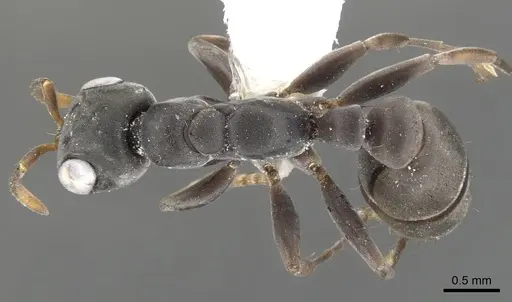
Literature
Loading distribution map...Loading products...