
Pseudolasius familiaris
- Sci. Name
- Pseudolasius familiaris
- Tribe
- Lasiini
- Subfamily
- Formicinae
- Author
- Smith, 1860
- Distribution
- Found in 2 countries
Introduction
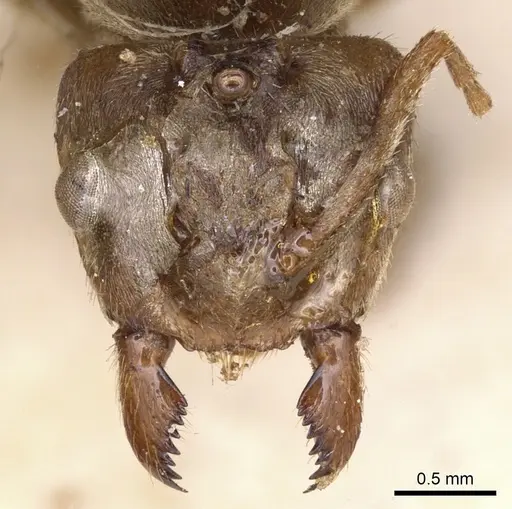
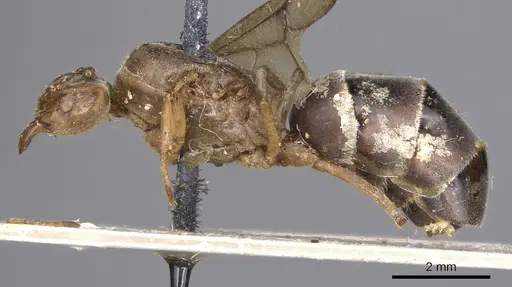
Pseudolasius familiaris is a medium-sized ant found across South and Southeast Asia, from India and Nepal through Indonesia to southern China . Workers measure 6-7 mm and have a reddish-yellow body with a darker reddish-brown abdomen, covered in erect hairs and dense silky pubescence on the gaster . The mandibles have 8 teeth, antennae have 12 segments, and the scape extends beyond the back of the head . They nest in soil, under stones, and on the ground surface in various forest types from lowland to montane up to 3000 m elevation, and even in human‑modified habitats like rubber plantations .
Quick Summary
- Difficulty: Medium
- Origin & Habitat: Native to Indomalaya and southern Palaearctic: India, Nepal, Bhutan, Myanmar, Malaysia, Indonesia (Borneo, Sulawesi, Ambon), and China (Yunnan, Sichuan) [1][8][5][2]. Found in tropical lowland wet forests, montane forests, and disturbed areas like rubber plantations, up to 3000 m elevation [7][5][6].
- Colony Type: Unconfirmed – based on typical Formicinae patterns, likely monogyne (single queen). No direct studies on queen number or ergatoid queens exist.
- Size & Growth:
- Antkeeping:
- Temperature: Keep at 20–26°C. They tolerate a wide elevation range (574–3000 m), but avoid prolonged temperatures above 30°C or below 15°C [5][7].
- Humidity: Moderate – keep the nest substrate moist but not waterlogged. In the wild they nest in soil and under stones, so provide a humidity gradient [5].
- Diapause: Likely yes – given their Himalayan distribution, reduce temperature to 10–15°C for 2–3 months during winter to simulate natural conditions [7].
- Nesting: Soil‑based nests. Provide a naturalistic setup with a deep soil chamber or use plaster/Y‑tong/3D‑printed nest with a moisture gradient. They nest under stones and in soil [5].
- Behavior: Workers forage on the ground, under stones, and within soil [5]. They are shy and non‑aggressive, typical of forest‑dwelling Formicinae. Their 6–7 mm size means standard escape prevention (tight lids, barriers) is sufficient.
- Common Issues: unknown founding behavior – queens may fail to start colonies if conditions are not ideal, so monitor closely., moisture management – too wet leads to mold, too dry desiccates brood, aim for a moist but not soggy substrate., diapause requirements are inferred, skip diapause may affect long‑term health., limited captive care data – adapt observations from related Formicinae species.
Natural History and Distribution
Pseudolasius familiaris has a broad range across South and Southeast Asia. It is recorded from Nepal, Bhutan, India (Arunachal Pradesh, Himachal Pradesh, Jammu & Kashmir, Meghalaya, Sikkim), Myanmar, Malaysia, Indonesia (Borneo, Sulawesi, Ambon), and China (Yunnan, Sichuan) [1][2][8][5][3]. They inhabit tropical lowland wet forests, montane forests (up to 3000 m), and even disturbed rubber plantations, showing ecological flexibility [7][6]. Workers are easily recognized by their reddish‑yellow body, dark brown gaster, erect setae, and dense silky pubescence on the abdomen [1][2]. The mandibles have 8 teeth and the scape extends beyond the posterior margin of the head [4][2].
Nesting and Foraging
In the wild, P. familiaris nests in soil, under stones, and on the ground surface [5]. They forage in three places: on the ground surface, under stones, and within soil [5]. Specific diet studies are lacking, but as a member of the Lasiini tribe they are likely generalist omnivores feeding on honeydew, small insects, and nectar. In captivity, offer sugar water and protein prey (e.g. fruit flies, small mealworms). No evidence of seed storage or specialized hunting.
Captive Care Guidelines
20 workers appear. Cover the outworld to prevent escape. Diet: Constant access to a sugar source (honey or sugar water) and protein 2–3 times per week. Development: Unknown, but expect 6–10 weeks for first workers at optimal temperature. [5][7]
Behavior and Temperament
Pseudolasius familiaris is a shy, non‑aggressive forest ant. Workers actively forage on the ground and under stones [5]. They do not have a painful sting – Formicinae typically have a reduced stinger or use acid sprays. Standard escape prevention (tight lids, barrier tape) is adequate. The ants are calm and suitable for observation, though detailed behavioral studies are lacking.
Frequently Asked Questions
How long does it take for Pseudolasius familiaris to develop from egg to worker?
The exact timeline is unknown. Based on related Formicinae, expect about 6–10 weeks at 24 °C.
What do Pseudolasius familiaris eat?
Likely generalist omnivores: accept sugar water and small insects (fruit flies, pinhead crickets). Provide a varied diet with constant sugar and protein 2–3 times per week.
Do Pseudolasius familiaris need hibernation?
Yes, they probably require a winter rest period because they live in Himalayan regions [7]. Reduce temperature to 10–15 °C for 2–3 months.
Can I keep multiple Pseudolasius familiaris queens together?
Unlikely – most Formicinae are monogyne. Co‑founding has not been studied, so do not combine unrelated queens.
What size colony do Pseudolasius familiaris reach?
Colony size data is unavailable. Related Formicinae often reach several hundred to a few thousand workers.
Are Pseudolasius familiaris good for beginners?
They are medium difficulty because little captive care information exists. Suitable for keepers with some experience.
What nest type is best for Pseudolasius familiaris?
A soil‑based nest (plaster, Y‑tong, or 3D‑printed with a soil chamber). They naturally nest in soil and under stones [5].
When should I move my colony to a formicarium?
Move when the colony reaches 20–30 workers or when the test tube becomes crowded. Provide a nest with soil chambers.
What temperature range is ideal for Pseudolasius familiaris?
20–26 °C is ideal. Avoid extremes above 30 °C or below 15 °C for extended periods [5][7].
Report an Issue
The current care sheet is based fully on literature. See inconsistencies, or something that's incorrect? Please , it will be resolved after review from an admin. Contributing to the blogs tab also helps providing information, to make us be able to further improve the caresheets. Thank you for your support!
References

This caresheet is licensed under CC BY-SA 4.0 .
Community Blogs
CASENT0901892
View on AntWeb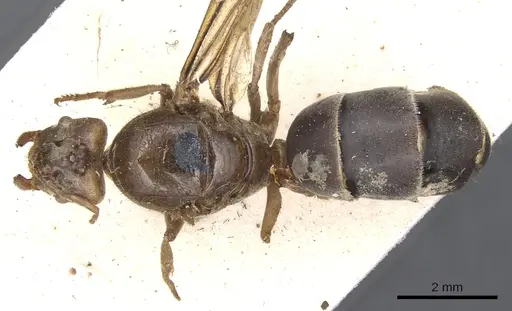
Literature
Loading distribution map...Loading products...