
Pseudolasius circularis
- Sci. Name
- Pseudolasius circularis
- Tribe
- Lasiini
- Subfamily
- Formicinae
- Author
- Viehmeyer, 1916
- Distribution
- Found in 0 countries
Introduction
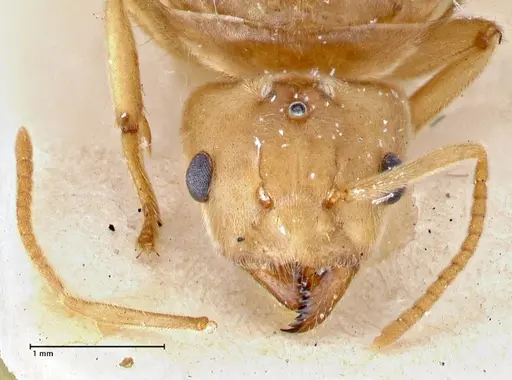
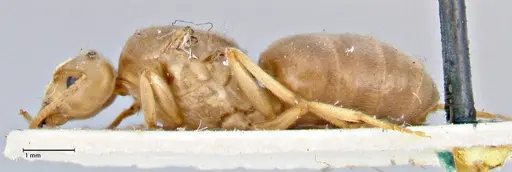
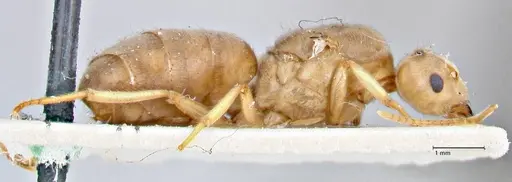
Pseudolasius circularis is a small ant species known only from Singapore . The queen was originally described by Viehmeyer in 1916,but workers have never been formally described in scientific literature . Specimens have been collected while attracted to lights at night, suggesting nocturnal foraging behavior . Pseudolasius belongs to the Formicinae subfamily (tribe Lasiini), making them relatives of the common Lasius ants. This species is a true rarity in the antkeeping hobby because almost nothing is known about its biology, colony structure, or captive care. Only a single queen was used for the original description, and no subsequent field studies or captive observations have been published. If you manage to acquire this species, you will be documenting entirely new information.
Quick Summary
- Difficulty: Unknown
- Origin & Habitat: Only known from Singapore [1]. Collected at night while attracted to artificial lights [2][3], indicating nocturnal or crepuscular activity.
- Colony Type: Unknown. No documented observations of colony structure.
- Size & Growth:
- Queen: Size data unavailable, not recorded in available literature.
- Worker: Workers are undescribed in scientific literature.
- Colony: No data available.
- Growth: Unknown
- Development: Unknown, no development data exists for this species. (No species-specific development data. Estimates from related Lasiini are speculative.)
- Antkeeping:
- Temperature: No species-specific data. Based on Singapore's warm climate (25-32°C year-round), maintain temperatures around 24-28°C. A small heating cable can create a gradient if needed.
- Humidity: High humidity preferred, Singapore humidity often exceeds 80%. Keep nest substrate consistently moist but not waterlogged. Provide a water tube.
- Diapause: No, Singapore has no winter. Maintain stable warm conditions year-round.
- Nesting: No nesting data exists. Start with a test tube setup or a small soil nest with moist substrate. Avoid acrylic nests.
- Behavior: Almost nothing documented. Attraction to lights suggests nocturnal foraging [2][3]. Their small size and secretive nature mean escape prevention is critical, use fluon or similar barriers on all setups.
- Common Issues: no established captive care protocols, you will be pioneering all husbandry methods., workers are undescribed, making species identification very difficult without an expert., extremely rare in the hobby, no verified sources for acquisition., lack of data increases risk of unintentional errors in temperature, humidity, or feeding., no information on disease or stress tolerance.
Discovery and Taxonomy
Pseudolasius circularis was described by Hugo Viehmeyer in 1916 from a single queen collected in Singapore [1]. The species name 'circularis' refers to a feature in the original description, but the exact meaning is unclear. Only the queen caste has been formally described, workers remain unknown in the scientific literature [1]. This makes P. circularis one of the few ant species where the worker caste is entirely undocumented.
Distribution and Habitat
This species is known only from Singapore [1]. The only published records are of individuals attracted to lamps at night [2][3], suggesting nocturnal activity. Singapore's environment is consistently tropical with temperatures 25-32°C, high humidity, and abundant rainfall. The specific microhabitat (soil, leaf litter, wood) is unknown.
Keeping an Undescribed Species
Pseudolasius circularis presents a unique challenge: it has no established captive care protocol, and even confirming the species identity is difficult without an expert. This makes it an experimental species for experienced keepers only. Start with a standard test tube setup with moist cotton. For humidity, keep the tube moist but not waterlogged. Since nothing is known about diet, begin with diluted honey water (1:4 honey to water) and small protein sources like fruit flies or pinhead crickets. Observe carefully and document everything, your findings could become the first care notes for this species.
Feeding Experiment
Because no feeding data exists, you will need to experiment. Offer food in the evening (given likely nocturnal activity) and remove uneaten portions after 24-48 hours to prevent mold. Test diluted honey water, small insects (fruit flies, small crickets, mealworm pieces), and possibly soft fruits. Note which items are accepted and which are ignored. Keep portions small to avoid contaminating the nest.
Temperature and Humidity Guidelines
Without direct data, extrapolate from Singapore's climate. Keep temperatures in the range 24-28°C. Use a small heating cable on one side to create a gradient if room temperature is cooler. For humidity, aim for moderate to high, the nest substrate should feel consistently moist but never soggy. Provide a water tube for drinking. Do not attempt hibernation, maintain stable conditions year-round.
Frequently Asked Questions
How do I keep Pseudolasius circularis?
There is no established care guide for this species, you will be pioneering captive husbandry. Start with a test tube setup with moist cotton, keep temperatures around 24-28°C, and maintain high humidity. Offer sugar water and small protein sources. Document everything.
What do Pseudolasius circularis eat?
Unknown, no feeding observations exist. Based on related Formicinae, they likely accept sugar sources and small insects. Begin with diluted honey water and small prey like fruit flies. Test different foods and observe what gets accepted.
How long does it take for Pseudolasius circularis to develop from egg to worker?
Unknown, no development data exists. Estimates from other Formicinae at tropical temperatures are purely speculative.
Are Pseudolasius circularis good for beginners?
No, this species has no documented captive care history and even the worker caste is undescribed. Only experienced keepers who enjoy experimentation should attempt it.
How big do Pseudolasius circularis colonies get?
Unknown, no colony size data exists. Any claims are purely speculative.
Can I keep multiple Pseudolasius circularis queens together?
Not documented. Related Formicinae are typically single-queen, but we have no data for this species. Do not attempt combining unrelated queens without supervision.
Where does Pseudolasius circularis live?
Only known from Singapore [1]. Collected at night attracted to lamps [2][3], suggesting nocturnal foraging.
Do Pseudolasius circularis need hibernation?
No, Singapore has no winter. Maintain warm, stable conditions year-round. Some reduced activity during cooler or drier periods may occur naturally.
Why is there no information about this ant?
Pseudolasius circularis is an extremely rarely encountered species. Only the queen was described scientifically, workers remain undescribed. They appear to be secretive and uncommon in their limited range.
Report an Issue
The current care sheet is based fully on literature. See inconsistencies, or something that's incorrect? Please , it will be resolved after review from an admin. Contributing to the blogs tab also helps providing information, to make us be able to further improve the caresheets. Thank you for your support!
References

This caresheet is licensed under CC BY-SA 4.0 .
Community Blogs
FOCOL2676
View on AntWeb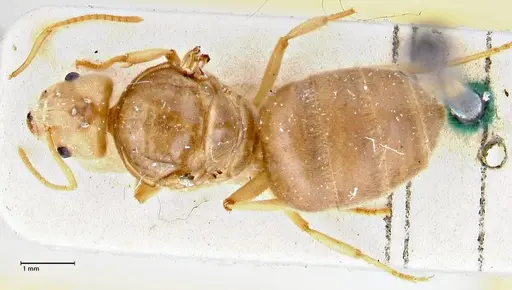
Literature
Loading distribution map...Loading products...