
Psalidomyrmex wheeleri
- Sci. Name
- Psalidomyrmex wheeleri
- Tribe
- Ponerini
- Subfamily
- Ponerinae
- Author
- Santschi, 1923
- Distribution
- Found in 1 countries
Introduction
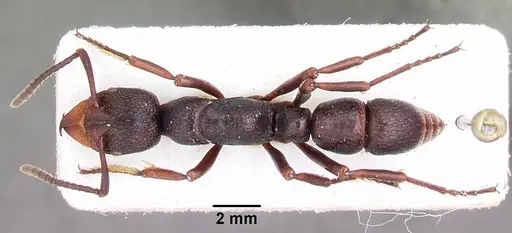
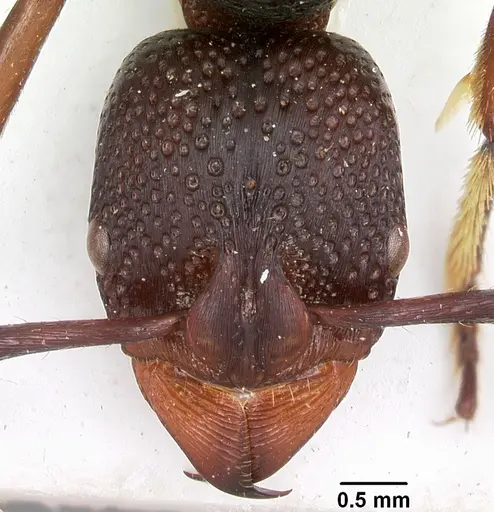
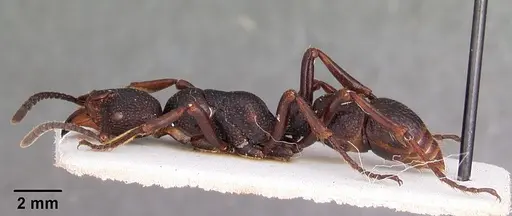
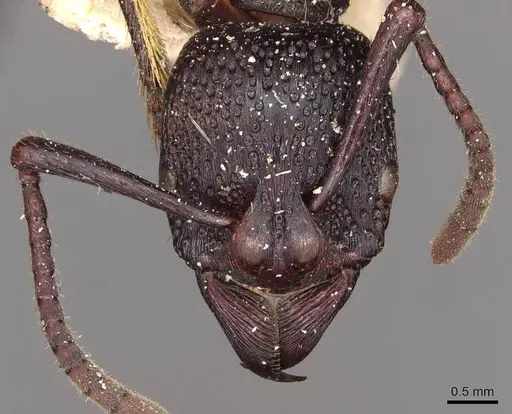
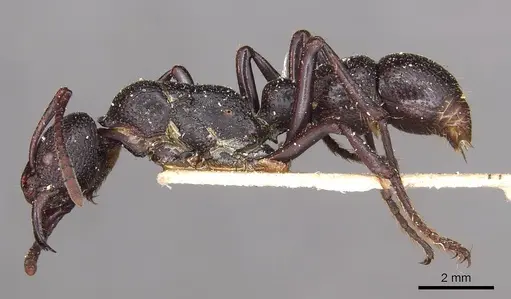
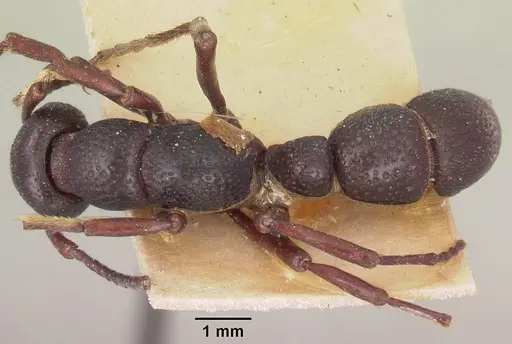
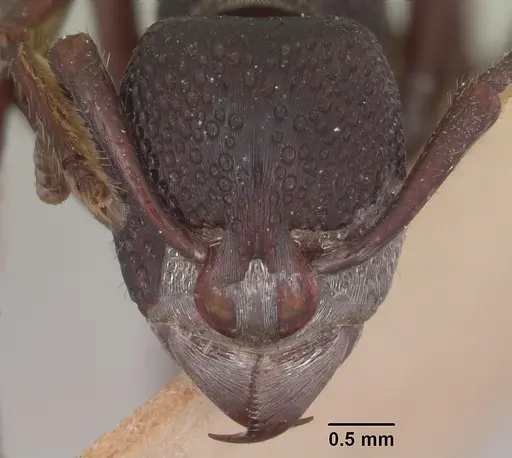
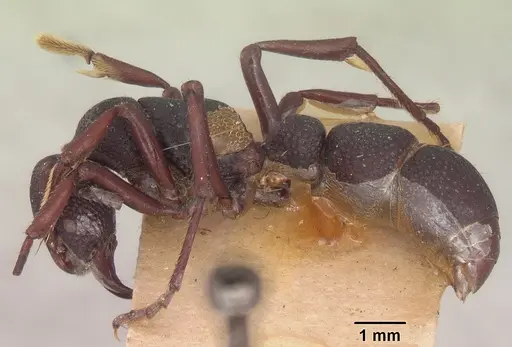
Psalidomyrmex wheeleri is a predatory ant species recorded in the Democratic Republic of Congo (provinces BU, HU, IT) in Central Africa . These ants belong to the subfamily Ponerinae, known for their powerful mandibles and active hunting behavior. Workers are medium-sized with distinctive elongated mandibles adapted for capturing prey. In their natural rainforest habitat, they nest in soil or decaying wood on the forest floor and hunt small invertebrates. Unlike many ants that rely on carbohydrates, Psalidomyrmex species are primarily predatory and require a protein-rich diet.
Quick Summary
- Difficulty: Medium
- Origin & Habitat: Democratic Republic of Congo (provinces BU, HU, IT) in Central Africa [1]. Presumably inhabits tropical rainforest regions.
- Colony Type: Likely single-queen (monogyne) based on typical Ponerinae patterns, but not confirmed. Colony structure may be small to moderate.
- Size & Growth:
- Queen: Size data unavailable. Based on genus Psalidomyrmex, queens are medium-sized.
- Worker: Size data unavailable. Based on genus Psalidomyrmex, workers are medium-sized.
- Colony: Unknown. Probably moderate, but no confirmed estimates.
- Growth: Moderate, typical for Ponerinae predators.
- Development: Estimated 8-12 weeks at optimal tropical temperatures, based on related Ponerinae species. Direct measurements unavailable. (Development time is estimated from genus-level data. Ponerinae brood development is typically slower than in fast-growing genera.)
- Antkeeping:
- Temperature: Keep warm (roughly 24-28°C) as a tropical species. Provide a slight gradient using a heating cable on one side. Avoid temperatures below 20°C.
- Humidity: Maintain high humidity. Keep nest substrate consistently moist but not waterlogged. Provide a water tube for drinking. Monitor condensation as an indicator.
- Diapause: Likely minimal or no true diapause given their tropical origin. Some reduction in activity during cooler periods may occur, but formal hibernation is not required.
- Nesting: Naturalistic setups with moist substrate work well. Y-tong or plaster nests with good moisture retention are suitable. Avoid dry, exposed setups. Test tubes are not recommended long-term.
- Behavior: These ants are active hunters with well-developed prey drive. Workers patrol for small invertebrates and use their sting for defense. They are not aggressive toward keepers but will defend the nest if threatened. Activity may be nocturnal or crepuscular. Escape risk is moderate, they can climb smooth surfaces but are not known for squeezing through tiny gaps.
- Common Issues: colonies often fail when kept too dry, moisture is critical for this rainforest species., feeding only sugar or honey leads to starvation, they require live or protein-rich prey., slow development can cause keepers to overfeed, leading to mold and mite problems., test tube setups dry out too quickly, use naturalistic or plaster nests for better moisture retention., wild-caught colonies may carry parasites that can devastate a captive colony.
Housing and Nest Setup
Psalidomyrmex wheeleri requires humid, dark nesting conditions that mimic their forest floor habitat. Naturalistic setups with moist soil or coco fiber work best, layer damp substrate in a container with hiding structures like bark or stones. Y-tong (AAC) nests with narrow chambers also work well if you maintain high humidity through a water reservoir or regular misting. Plaster nests are excellent because they hold moisture. Avoid test tube setups, as they dry out too quickly and don't provide the dark, humid environment these ants prefer. The outworld should be simple with a foraging area where you can offer prey items.
Feeding and Diet
These ants are specialized predators that require live or freshly killed protein. Unlike many ants, they show little interest in sugar water or honey. Offer small live insects like fruit flies, pinhead crickets, small worms, or other tiny arthropods every 2-3 days. Frozen insects may be accepted but live prey triggers their hunting instincts more reliably. Remove uneaten prey after 24 hours to prevent mold. Some keepers report success with protein jelly or canned insects as alternatives, but live prey is best.
Temperature and Humidity
As a tropical species from the Congo, these ants need warm, humid conditions year-round. Maintain nest temperatures roughly between 24-28°C. A slight gradient is beneficial, warmer on one end allows the ants to self-regulate. Use a low-wattage heating cable placed on top of the nest (never underneath) if room temperature falls below 24°C. Humidity should stay high, the nest substrate should feel consistently damp but not sitting in water. A water tube attached to the nest provides drinking access. Monitor condensation as an indicator of humidity levels.
Colony Development and Growth
Ponerinae ants like Psalidomyrmex typically develop more slowly than many common ant species. The queen lays eggs singly, and larvae develop through several instars before pupating. Expect 8-12 weeks from egg to first worker (nanitic) at optimal temperatures, based on related species. The first workers are often smaller than mature workers, and the colony may grow slowly initially. Once established with several workers, growth accelerates but remains moderate compared to fast-growing genera. A mature colony size is unknown, but likely moderate. Patience is key, rapid growth should not be expected.
Behavior and Temperament
These ants are active hunters with a strong prey drive. Workers patrol the nest area searching for small invertebrates to capture with their mandibles. They are not aggressive toward humans but will defend the nest if threatened. Their sting is functional and can produce mild pain if stung. Activity patterns may be crepuscular or nocturnal, you may notice more activity during evening hours. They do not form large raiding parties or display swarming behavior. Workers are relatively long-lived, typical of Ponerinae. Communication relies on chemical signals and tactile interactions.
Frequently Asked Questions
How long does it take for Psalidomyrmex wheeleri to produce first workers?
Expect 8-12 weeks from egg to first worker at optimal temperatures (24-28°C). This is estimated from related Ponerinae species, as direct data for this species is unavailable.
What do Psalidomyrmex wheeleri ants eat?
They are specialized predators that require live or frozen protein. Feed small insects like fruit flies, pinhead crickets, or small worms every 2-3 days. They are unlikely to accept sugar sources like honey or sugar water.
Can I keep Psalidomyrmex wheeleri in a test tube?
Test tubes are not ideal for this species because they cannot maintain the high humidity these ants need long-term. Use a naturalistic setup with moist substrate or a Y-tong/plaster nest with humidity control.
How big do Psalidomyrmex wheeleri colonies get?
The maximum colony size is unknown. Based on related Ponerinae, colonies likely stay moderate (tens to a few hundred workers). Growth is moderate, not rapid.
Do Psalidomyrmex wheeleri need hibernation?
No, hibernation is not required. As tropical ants from the Congo, they need warm conditions year-round. Some reduction in activity during cooler periods may occur, but they do not enter true diapause.
Are Psalidomyrmex wheeleri good for beginners?
This species is rated Medium difficulty. Their humidity requirements and need for live protein make them better suited for keepers with some experience. Beginners may struggle with these specific needs.
When should I move my colony to a formicarium?
Move to a naturalistic or plaster nest once the colony reaches about 20-30 workers and you notice the temporary setup drying out. The key trigger is maintaining humidity becoming difficult, not a specific worker count.
Why are my Psalidomyrmex wheeleri dying?
The most common causes are: too dry conditions (critical for this rainforest species), starvation from lack of protein prey, or mold from overfeeding. Ensure humidity is high, offer live prey regularly, and remove uneaten food promptly.
Can I keep multiple queens together?
Combining unrelated queens is not recommended. While colony structure is not fully studied for this species, Ponerinae are typically monogyne (single queen). Multiple foundresses would likely fight.
Report an Issue
The current care sheet is based fully on literature. See inconsistencies, or something that's incorrect? Please , it will be resolved after review from an admin. Contributing to the blogs tab also helps providing information, to make us be able to further improve the caresheets. Thank you for your support!
References

This caresheet is licensed under CC BY-SA 4.0 .
Community Blogs
Literature
Loading distribution map...Loading products...