
Psalidomyrmex foveolatus
- Sci. Name
- Psalidomyrmex foveolatus
- Tribe
- Ponerini
- Subfamily
- Ponerinae
- Author
- André, 1890
- Distribution
- Found in 2 countries
Introduction
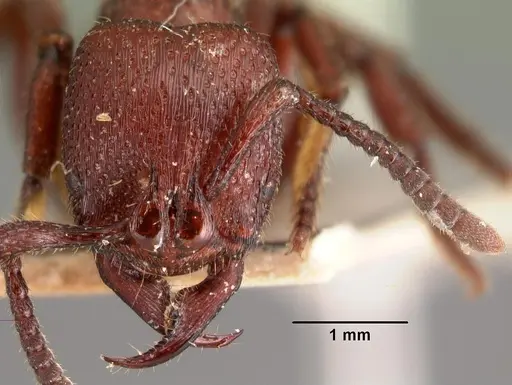
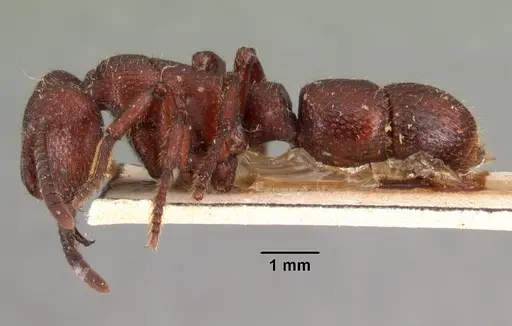
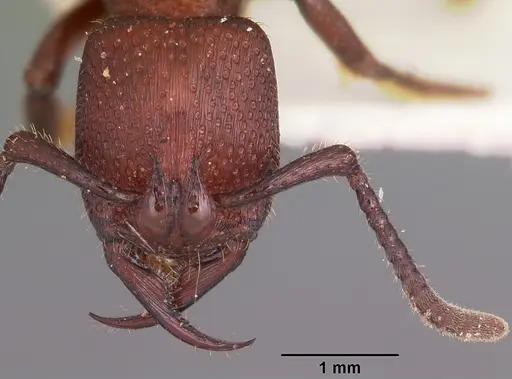
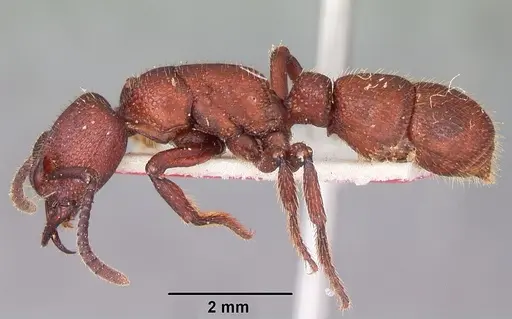
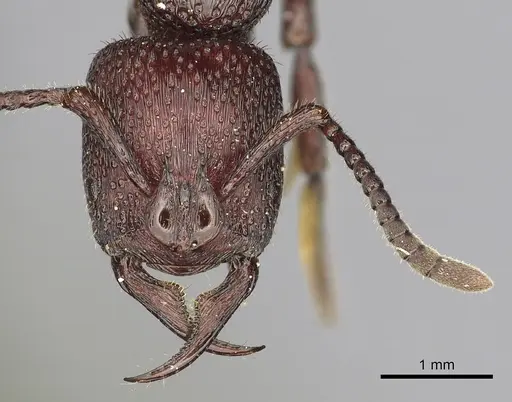
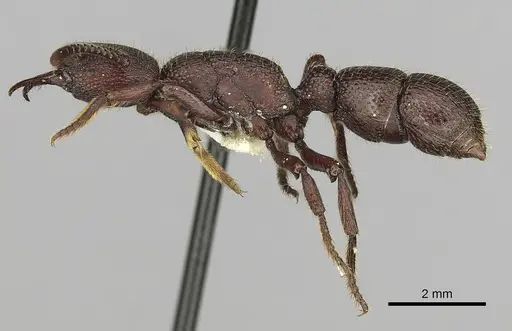
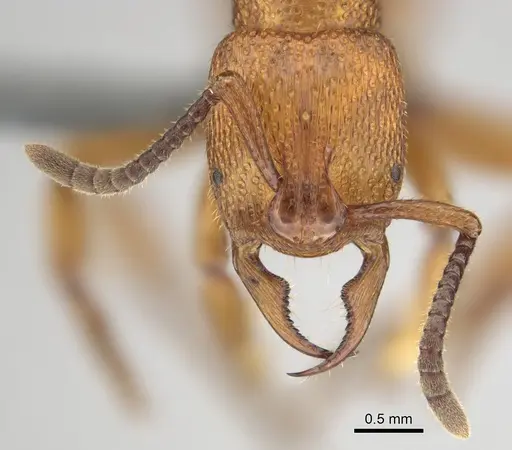
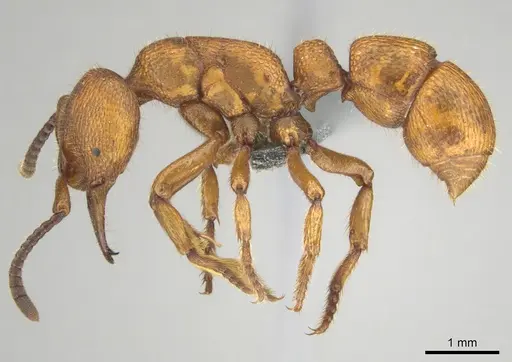
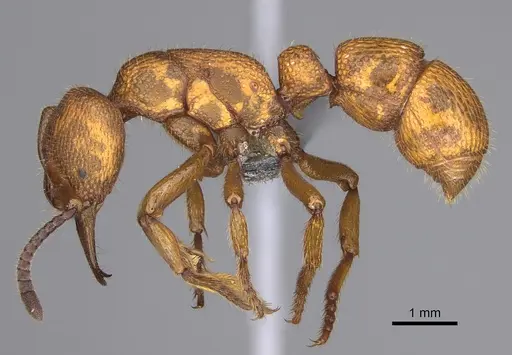
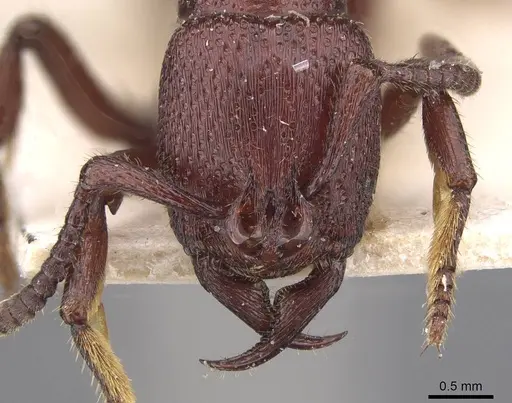
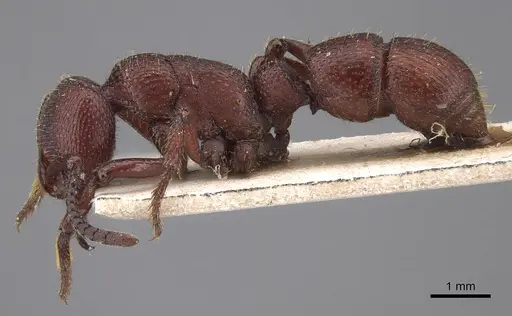
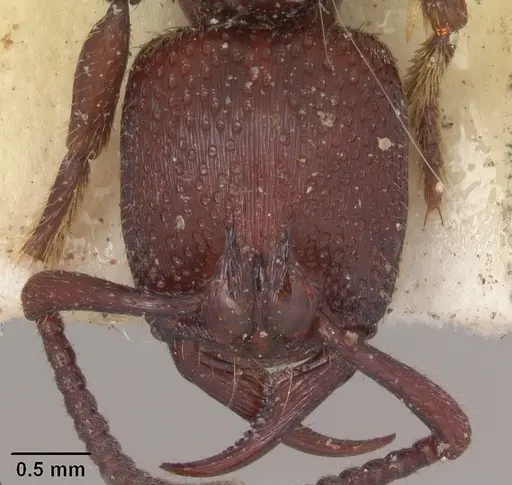
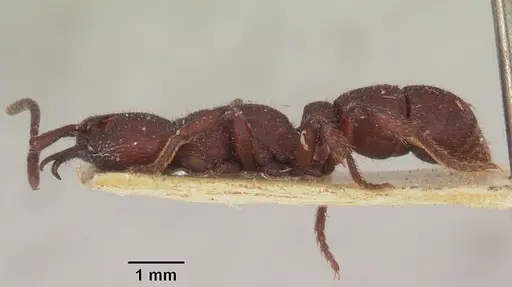
Psalidomyrmex foveolatus is a medium-sized ponerine ant native to West Africa, found across Benin, Ghana, Guinea, Ivory Coast, Nigeria, Senegal, and Sierra Leone . Workers have a lighter coloration than related species like Psalidomyrmex procerus, with fine longitudinal striation on the thorax and head . The species was first described from workers in Sierra Leone . It nests in soil and forages beneath the surface, often at the base of cocoa trees . Males have been collected from the same locality . As a Ponerine ant, it is predatory and may help regulate soil invertebrate populations.
Quick Summary
- Difficulty: Medium
- Origin & Habitat: West Africa (Benin, Ghana, Guinea, Ivory Coast, Nigeria, Senegal, Sierra Leone). Found in soil at the base of cocoa trees in Nigeria, and in forest-savannah mosaic environments in Ivory Coast [1][3]. Forages underground rather than on open surfaces.
- Colony Type: Unknown, colony structure has not been documented in available research.
- Size & Growth:
- Queen: Unknown, no measurement data available
- Worker: Unknown, no measurement data available
- Colony: Unknown, no colony size data available
- Growth: Unknown, no growth rate data available
- Development: Unknown, no direct measurements exist. Based on typical Ponerinae development, an estimate of 6-10 weeks at warm tropical temperatures is possible, but unconfirmed. (Development timeline is speculative. Ponerine ants commonly take 6-12 weeks from egg to worker at optimal temperatures.)
- Antkeeping:
- Temperature: As a West African tropical species, maintain 24-28°C. Use a heating cable on one side of the nest to create a gradient. No specific thermal data is available for this species.
- Humidity: Keep substrate consistently moist. This soil-nesting ant requires humid conditions, aim for damp but not waterlogged substrate. No specific humidity measurements exist.
- Diapause: Unknown, tropical species likely do not require a formal hibernation period, but may slow down during cooler periods.
- Nesting: Soil-nesting, use a deep substrate setup like Y-tong, plaster, or a naturalistic soil nest. Foraging occurs underground, so provide a layer of substrate in the outworld [1].
- Behavior: Temperament is likely defensive, as typical for Ponerine ants. They have a potent sting used for hunting and defense. Escape prevention should be good since they are medium-sized, but seal all gaps. Their underground foraging means they are less likely to climb smooth surfaces.
- Common Issues: limited documented care information, keepers must adapt from general Ponerinae knowledge, constant temperature and humidity are critical, any prolonged deviation may cause colony decline, potent sting makes handling risky, use caution when cleaning or moving the nest, colony size and growth rate are unknown, making long-term planning difficult, founding behavior is unconfirmed, founding may fail without the right conditions
Natural History and Distribution
Psalidomyrmex foveolatus is recorded from Benin, Ghana, Guinea, Ivory Coast, Nigeria, Senegal, and Sierra Leone [1]. It was first described by André in 1890 from Sierra Leone workers [1]. In Nigeria, specimens were collected from soil at the base of a cocoa tree at the Cocoa Research Institute of Nigeria, Idi Ayunre [1]. In Ivory Coast, it has been found in forest-savannah mosaic environments, suggesting some habitat flexibility [3]. Workers have a lighter coloration than the related Psalidomyrmex procerus, with fine longitudinal striation on the thorax and head [2]. Males from Bibundi (Cameroon) are smaller than Ps. procerus workers and share similar sculpture [2].
Nest Preferences and Housing
This species nests in soil and forages underground [1]. In captivity, provide a deep, moist substrate nest such as Y-tong (AAC) or plaster. A naturalistic soil setup with a layer of substrate in the outworld allows them to forage naturally. Keep the substrate consistently damp but not waterlogged. Dry conditions will stress the colony. Since they are subterranean, deeper chambers are preferred [1].
Feeding and Diet
As a Ponerine ant, Psalidomyrmex foveolatus is likely predatory, feeding on small invertebrates encountered while foraging underground. In captivity, offer live prey such as fruit flies, small crickets, mealworms, and other appropriately-sized insects. Protein should form the bulk of the diet. Sugar sources may be accepted occasionally but are not a primary need. Feed every 2-3 days, adjusting based on consumption. Remove uneaten prey to prevent mold. Specific dietary preferences for this species are not documented.
Temperature and Seasonal Care
A West African tropical species, P. foveolatus requires warm temperatures. Maintain the nest area at 24-28°C for activity and brood development. Use a heating cable on one side to create a gradient. Room temperature may suffice if within this range, otherwise provide gentle heating. No specific data on thermal limits exists. Unlike temperate ants, this species likely does not require a formal hibernation period, but it may slow down in cooler periods. Monitor health and adjust temperature if workers become sluggish.
Defense and Handling
Ponerine ants, including this species, have a potent sting used for defense and hunting. Treat this ant as capable of delivering a painful sting when disturbed. Work slowly and avoid direct disturbance of the nest. Use good escape prevention, seal connections between nest and outworld, and ensure no gaps larger than 1mm exist. Their underground foraging habit reduces climbing on smooth surfaces, but still take standard precautions.
Frequently Asked Questions
How long does it take for Psalidomyrmex foveolatus to develop from egg to worker?
The exact development timeline is unknown, no specific measurements exist. Based on typical Ponerinae development, expect 6-10 weeks at 24-28°C, but this is an estimate.
What do Psalidomyrmex foveolatus ants eat?
They are likely predatory like other Ponerines. Offer small live insects such as fruit flies, small crickets, and mealworms. Protein should be the main food. Sugar water may be accepted occasionally but is not required.
What temperature do Psalidomyrmex foveolatus ants need?
Maintain 24-28°C. This tropical West African species needs consistent warmth. Use a heating cable on part of the nest to create a gradient. No specific optimal temperature is confirmed for this species.
Do Psalidomyrmex foveolatus ants sting?
Yes, as a Ponerine ant it almost certainly has a potent sting. Handle with care and avoid disturbing the nest directly.
What type of nest should I use for Psalidomyrmex foveolatus?
They are soil-nesting and forage underground. Use a deep substrate nest such as Y-tong, plaster, or a naturalistic soil setup. Keep the substrate consistently damp [1].
Are Psalidomyrmex foveolatus good for beginners?
This species is rated as Medium difficulty. However, because little specific care information is available and their requirements are tropical, they are not ideal for beginners. They may be manageable for intermediate keepers willing to adapt from general Ponerinae care.
How big do Psalidomyrmex foveolatus colonies get?
Colony size is unknown, no documented data exists. Based on typical Ponerinae, colonies may reach several hundred workers, but this is speculative.
Do Psalidomyrmex foveolatus need hibernation?
Probably not. As a West African tropical species, it likely does not require a formal hibernation period. It may slow down during cooler periods but should not be exposed to prolonged cold.
Where is Psalidomyrmex foveolatus found?
This species is native to West Africa, recorded in Benin, Ghana, Guinea, Ivory Coast, Nigeria, Senegal, and Sierra Leone [1].
Can I keep multiple Psalidomyrmex foveolatus queens together?
Colony structure is unconfirmed, the number of queens per colony has not been documented. Combining unrelated queens is not recommended since this species' social organization is unknown.
Report an Issue
The current care sheet is based fully on literature. See inconsistencies, or something that's incorrect? Please , it will be resolved after review from an admin. Contributing to the blogs tab also helps providing information, to make us be able to further improve the caresheets. Thank you for your support!
References

This caresheet is licensed under CC BY-SA 4.0 .
Community Blogs
CASENT0101471
View on AntWeb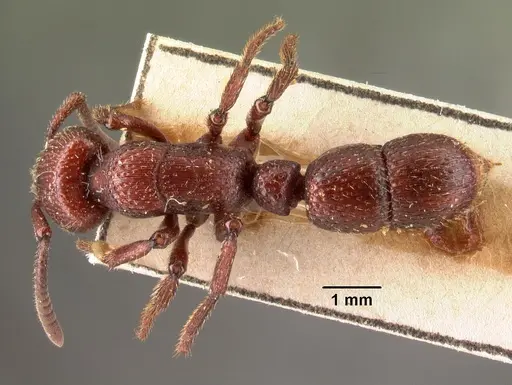
CASENT0102911
View on AntWeb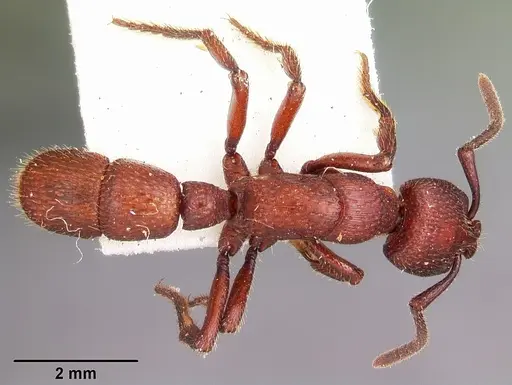
CASENT0249241
View on AntWeb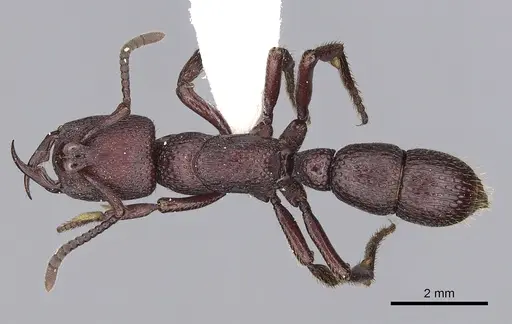
CASENT0815785
View on AntWeb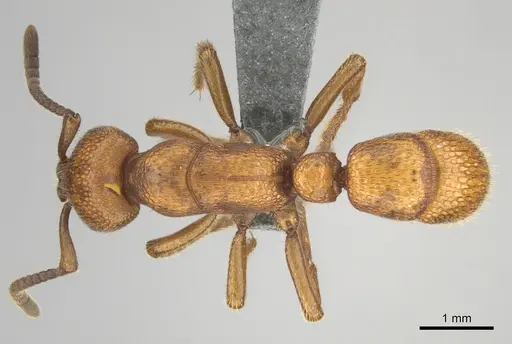
CASENT0915461
View on AntWeb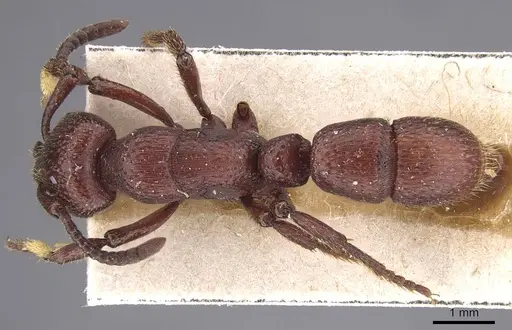
SAM-HYM-C002830
View on AntWeb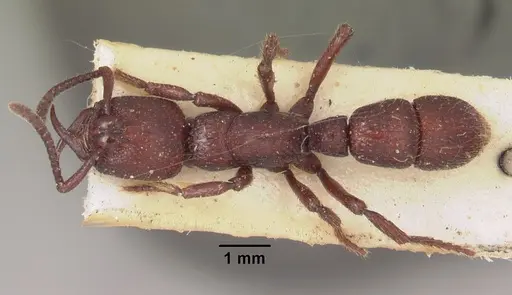
Literature
Loading distribution map...Loading products...