
Protanilla jongi
- Sci. Name
- Protanilla jongi
- Tribe
- Leptanillini
- Subfamily
- Leptanillinae
- Author
- Hsu <i>et al.</i>, 2017
- Distribution
- Found in 1 countries
Introduction
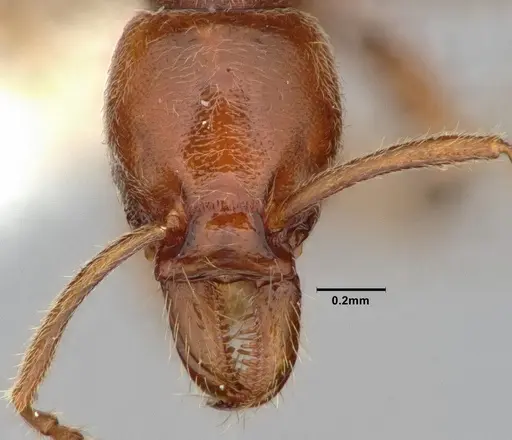
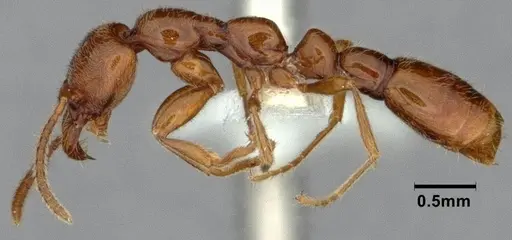
Protanilla jongi is a trap-jaw ant native to central Taiwan, found at elevations around 840 meters in tea gardens near secondary forests . Workers are blind and very small, but exact body size is unknown . Queens are slightly darker brown . This species has a trap-jaw mechanism, allowing workers to open mandibles 180 degrees for hunting . They are extreme specialists, feeding only on geophilomorph centipedes .
Quick Summary
- Difficulty: Expert
- Origin & Habitat: Central Taiwan (Nantou) at 840m altitude in tea garden near secondary forest. Nesting chamber in soil at approximately 20cm depth, covered by a stone [1].
- Colony Type: Single-queen colony observed in laboratory, but social structure unconfirmed [1].
- Size & Growth:
- Queen: size data unavailable
- Worker: size data unavailable
- Colony: Up to 25 workers [1]
- Growth: Slow
- Development: Unknown, no development data available (No specific data on development timeline.)
- Antkeeping:
- Temperature: Unknown, no specific data available.
- Humidity: Keep nest substrate consistently moist but not waterlogged, based on their soil-nesting habitat [1].
- Diapause: Unknown, no documented diapause behavior.
- Nesting: Soil-nesting species. Natural nesting chamber at 20cm depth in soil under stone [1]. In captivity, provide deep, moist soil or a plaster nest with moisture reservoir.
- Behavior: Workers are specialized predators with trap-jaw mandibles that open 180 degrees [1]. They guard nest entrances with mandibles locked in striking position [1]. Colony produces a strong odor [1]. Escape prevention is critical due to small size.
- Common Issues: extreme prey specialization makes feeding difficult, they only accept certain centipedes [1]., small size means escapes are likely without fine mesh barriers., strong odor may be unpleasant in enclosed spaces [1]., slow colony growth requires patience., no available information on founding behavior or development timeline makes captive breeding challenging.
Housing and Nest Setup
Protanilla jongi is a soil-nesting ant that requires deep, humid substrate. In the wild, colonies nest about 20cm below the surface in chambers under stones [1]. For captivity, create a naturalistic setup with at least 10-15cm of moist soil or use a plaster nest with a water reservoir to maintain humidity [1]. Because workers are tiny, escape prevention must be excellent, use tight-fitting lids and fine mesh on any ventilation holes.
Feeding and Diet
This species has extreme prey specialization: they only accept geophilomorph centipedes approximately 3-4cm in length [1]. All other prey types are rejected [1]. You will need a reliable source of live geophilomorph centipedes.
Trap-Jaw Hunting Behavior
Workers can open their mandibles to 180 degrees and snap them shut during predatory interactions [1]. They grab centipede appendages with mandibles and sting to paralyze prey [1]. Workers guard nest entrances with mandibles locked in striking position [1].
Temperature and Seasonal Care
Specific temperature requirements are not documented. Aim for moderate temperatures based on their habitat, but observation of colony activity is the best guide [1]. No documented diapause requirement exists.
Colony Dynamics and Odor
The studied colony had up to 25 workers and one dealated queen [1]. Colonies are likely small. A strong, distinct odor is produced by the colony [1].
Frequently Asked Questions
What do Protanilla jongi ants eat?
They only eat live geophilomorph centipedes approximately 3-4cm in length. All other prey is rejected [1].
How long does it take for Protanilla jongi to develop from egg to worker?
This is unknown, no development data exists for this species.
Can I keep Protanilla jongi in a test tube setup?
A test tube is not ideal. This is a soil-nesting species that requires deep, moist substrate [1].
Do Protanilla jongi ants sting?
Yes, workers have a long sting used to paralyze prey [1].
Are Protanilla jongi good for beginners?
No, this is an expert-level species due to extreme prey specialization and small size.
How big do Protanilla jongi colonies get?
Based on studied colony, up to 25 workers [1].
Do Protanilla jongi need hibernation?
Unknown, no documented diapause behavior.
Why are my Protanilla jongi dying?
Most likely causes: wrong prey, improper humidity, or temperature issues. Also check for escape due to small size [1].
Can I keep multiple Protanilla jongi queens together?
Not recommended, the studied colony had a single queen [1].
What makes Protanilla jongi unique compared to other ants?
They have a trap-jaw mechanism for hunting, are extreme specialists feeding only on centipedes, and produce a noticeable colony odor [1].
Report an Issue
The current care sheet is based fully on literature. See inconsistencies, or something that's incorrect? Please , it will be resolved after review from an admin. Contributing to the blogs tab also helps providing information, to make us be able to further improve the caresheets. Thank you for your support!
References

This caresheet is licensed under CC BY-SA 4.0 .
Community Blogs
CASENT0842693
View on AntWeb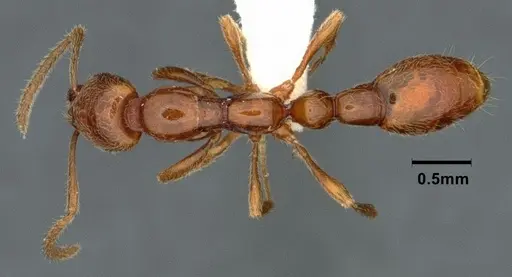
Literature
Loading distribution map...Loading products...