
Protalaridris punctata
- Sci. Name
- Protalaridris punctata
- Tribe
- Attini
- Subfamily
- Myrmicinae
- Author
- Lattke, 2018
- Distribution
- Found in 1 countries
Introduction
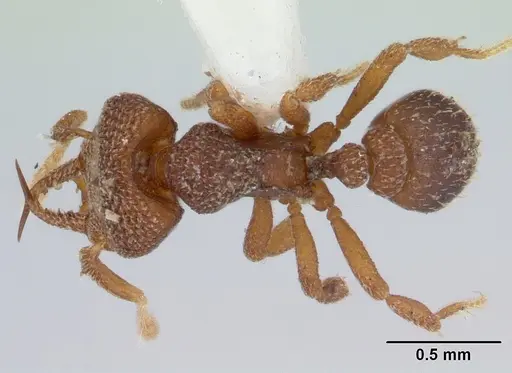
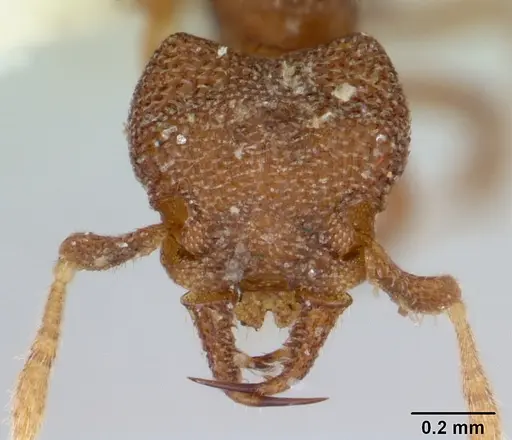
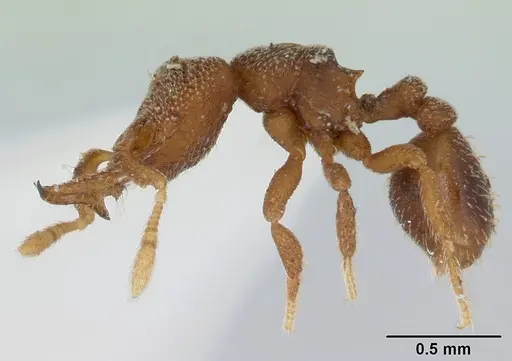
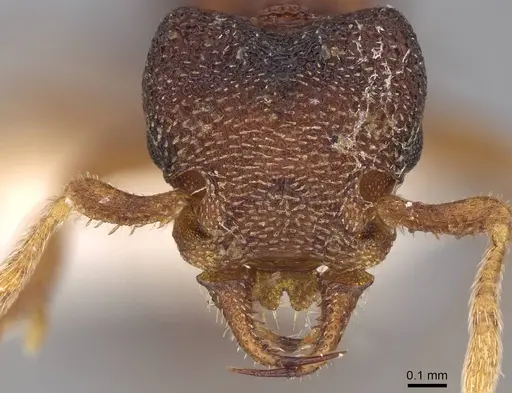
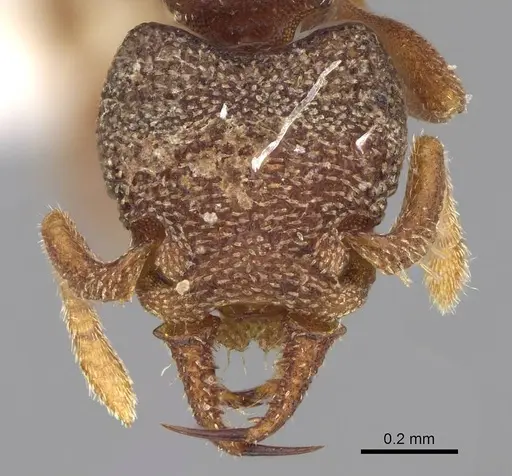
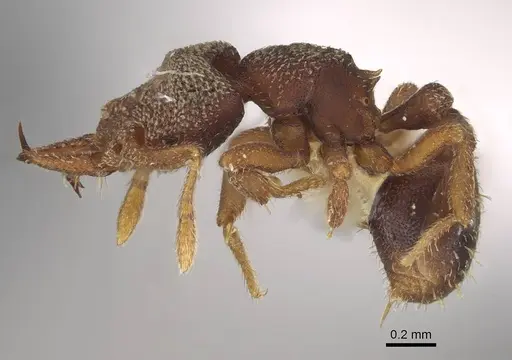
Protalaridris punctata is a rare ant species from cloud forests in Venezuela's Coastal Mountains. Workers have complex mandibles with multiple teeth and a prominent ventral tooth, and the head is hexagonal with a transverse crest . The scape has 8-10 erect hairs, and the species is only known from Parque Nacional Henri Pittier at 1225m elevation . Size data unavailable - no total length measurements provided in research. This species belongs to the tribe Attini but is a predator, not a fungus-grower. Its elaborate mandibles suggest specialized prey capture. The queen has reduced eyes and was found in a soil sample, indicating unusual biology .
Quick Summary
- Difficulty: Expert
- Origin & Habitat: Cloud forest in Parque Nacional Henri Pittier, Venezuela at 1225m elevation, found in leaf litter [1][2].
- Colony Type: Unknown, only isolated specimens have been collected [1].
- Size & Growth:
- Queen: Size data unavailable, no total length measurements provided.
- Worker: Size data unavailable, no total length measurements provided.
- Colony: Unknown, only a few specimens ever collected [1].
- Growth: Unknown.
- Development: Unknown, no data exists [1]. (This species has never been kept in captivity.)
- Antkeeping:
- Temperature: Inferred from cloud forest habitat: aim for cool conditions, roughly 18-22°C [1].
- Humidity: High humidity required, keep substrate consistently moist but not waterlogged [1].
- Diapause: Unknown, cloud forests have mild seasons, so diapause may not be needed [1].
- Nesting: Likely nested in soil or rotting wood in nature. In captivity, use test tube setup or small plaster nest, avoid acrylic nests [1].
- Behavior: No behavioral observations exist. Based on morphology, they are likely slow-moving, cryptic predators. Escape risk is high due to tiny size, use fine mesh barriers. Aggression level is unknown.
- Common Issues: no captive breeding data exists, this species has never been kept in captivity, extremely small size makes feeding difficult, likely needs micro-prey like springtails, only known from a few wild specimens, availability is extremely limited, high humidity requirements may lead to mold problems if ventilation is poor
Discovery and Rarity
Protalaridris punctata was described in 2018 and is known only from a single leaf litter sample in Venezuela's cloud forest [1]. A dealate queen was found in a soil sample at higher altitude [1]. This extreme rarity means almost nothing is known about their biology, and they have never been kept in captivity. The genus name refers to their deadly mandibles, designed for impaling prey [1].
Identification and Morphology
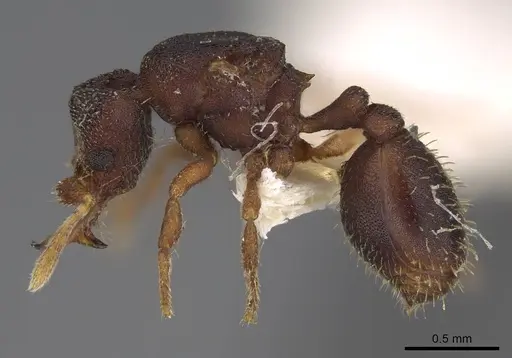
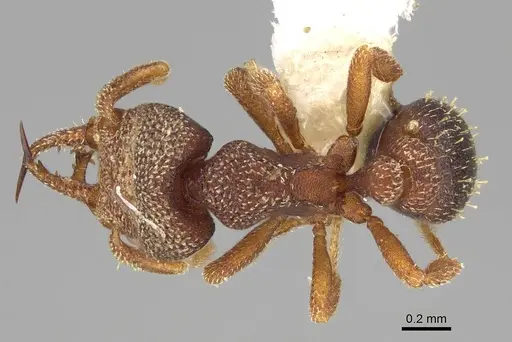
Workers have a hexagonal head with a transverse crest and 8-10 erect hairs on the scape [1]. Mandibles have a dorsal row of 5-8 preapical teeth and a prominent ventral tooth [1]. Eyes are reduced but distinct. Size data unavailable, no total length measurements provided. Body color is mostly ferruginous with darker tints [1].
Natural Habitat and Conditions
This species is found only in cloud forests at 1225m elevation in Venezuela [1]. Cloud forests have constant mist, high humidity, and cool temperatures. In captivity, replicate these conditions: keep temperatures cool (18-22°C), maintain high humidity, and provide moist substrate [1].
Feeding and Diet
Diet is unconfirmed, but morphology suggests they are predators hunting small arthropods in leaf litter [1]. In captivity, offer micro-prey like springtails or fruit fly larvae. Do not provide sugar water, they are likely strict predators [1].
Housing and Nesting
Use a test tube setup for founding colonies or small plaster nests for established colonies. Avoid acrylic nests, use Y-tong, plaster, or soil nests [1]. Escape prevention is critical due to tiny size, use fine mesh barriers. Provide a humidity gradient with moist substrate [1].
Frequently Asked Questions
Can I keep Protalaridris punctata as a pet ant?
This species has never been kept in captivity and is extremely rare. Only expert antkeepers should attempt it, as you would be pioneering all aspects of their care [1].
How big do Protalaridris punctata colonies get?
Unknown, only a handful of workers have ever been collected [1].
What do Protalaridris punctata eat?
Unconfirmed, but they are likely predators. Offer small live prey like springtails or fruit fly larvae [1].
What temperature do Protalaridris punctata need?
Cool conditions, roughly 18-22°C, based on their cloud forest origin [1].
How long does it take for Protalaridris punctata to develop from egg to worker?
Unknown, no development data exists [1].
Are Protalaridris punctata good for beginners?
No, this is an expert-only species due to rarity and unknown care requirements [1].
Do Protalaridris punctata need hibernation?
Unknown, cloud forests have mild seasons, so diapause may not be needed [1].
Can I keep multiple Protalaridris punctata queens together?
Unknown, only one dealate queen has been found, and no colony structure data exists [1].
Where is Protalaridris punctata found in the wild?
Only in Parque Nacional Henri Pittier, Venezuela, at 1225m elevation in cloud forests [1][2].
Report an Issue
The current care sheet is based fully on literature. See inconsistencies, or something that's incorrect? Please , it will be resolved after review from an admin. Contributing to the blogs tab also helps providing information, to make us be able to further improve the caresheets. Thank you for your support!
References

This caresheet is licensed under CC BY-SA 4.0 .
Community Blogs
Literature
Loading distribution map...Loading products...