
Protalaridris bordoni
- Sci. Name
- Protalaridris bordoni
- Tribe
- Attini
- Subfamily
- Myrmicinae
- Author
- Lattke, 2018
- Distribution
- Found in 1 countries
Introduction
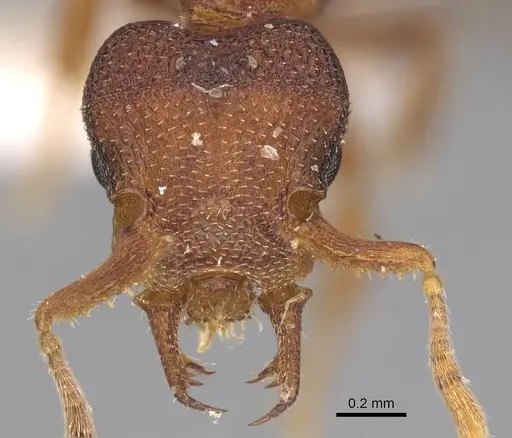
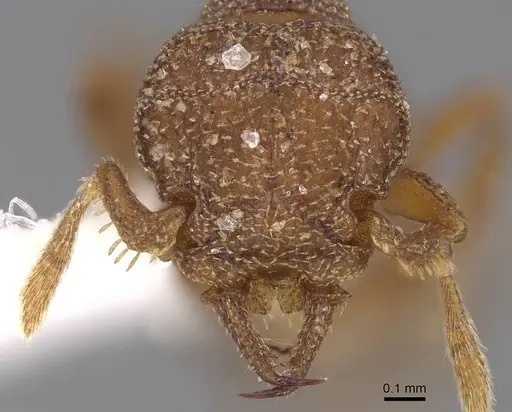
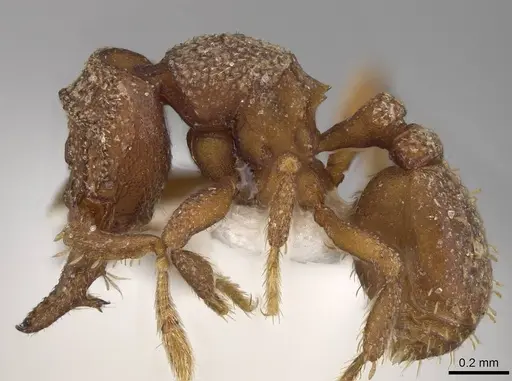
Protalaridris bordoni is a rare ant species described in 2018,known only from Henri Pittier National Park in Venezuela . Workers are very small, but exact body size is unavailable from current data . They have complex mandibles with a prominent ventral tooth and reduced eyes to a single ommatidium . The species is often covered in a layer of debris, particularly in cuticular grooves . This ant was discovered living alongside Protalaridris punctata, with specimens found only 10 meters apart, the only known site where two Protalaridris species co-occur .
Quick Summary
- Difficulty: Expert
- Origin & Habitat: Henri Pittier National Park, Aragua, Venezuela at 1200-1450m elevation in cloud forest [1][2].
- Colony Type: Unconfirmed, only six workers and one queen have been collected [1].
- Size & Growth:
- Antkeeping:
- Temperature: Based on cloud forest habitat, likely cool temperatures around 18-22°C [1].
- Humidity: High humidity likely needed, keep substrate moist but not waterlogged [1].
- Diapause: Unknown, no seasonal data [1].
- Nesting: Found in leaf litter and soil samples, recommend naturalistic setup with moist substrate [1][2].
- Behavior: Behavior unstudied. Mandible structure suggests predatory behavior [1]. Eyes reduced, so rely on chemical/tactile senses [1][2]. Escape prevention critical due to minute size [1]. Sting present as typical for Myrmicinae, but behavior unobserved.
- Common Issues: never been kept in captivity, no care protocols exist [1], tiny size makes escape prevention extremely difficult [1], high humidity requirements may cause mold in enclosed nests [1], feeding habits unknown, diet is speculative [1], only known from a single wild population, wild collection is unlikely [1]
Discovery and Rarity
Protalaridris bordoni was described in 2018 [1]. The entire known population comes from a small area in Henri Pittier National Park at elevations between 1200-1450 meters [1]. Only six workers and a single queen have ever been collected, making it one of the rarest ants [1]. No antkeeper has maintained a colony, so all care would be pioneering [1].
Unique Morphology
The mandibles form a cage-like structure with a prominent ventromedially directed tooth [1]. This suggests predatory behavior [1]. Eyes are reduced to a single ommatidium, indicating reliance on non-visual senses [1][2]. Workers are very small, with size data unavailable [1]. Many specimens have a coating of light-colored debris [2].
Natural Habitat and Environment
Protalaridris bordoni is known only from cloud forest in Venezuela [1]. It was found in leaf litter and soil samples, indicating ground-nesting behavior [1][2]. The habitat has high humidity and moderate temperatures [1]. Both Protalaridris species were found only 10 meters apart, suggesting different microhabitats [1][2].
Taxonomy and Relationships
Protalaridris belongs to the tribe Attini within Myrmicinae [1]. The genus has unusual mandible morphology, suggesting a specialized ecological niche [1]. The deep labral cleft is a distinctive feature [1][2].
Feeding and Diet
Diet is completely unstudied [1]. Mandible structure suggests predatory behavior, likely hunting small arthropods [1]. For captive care, experimentation with tiny live prey would be needed [1].
Housing and Escape Prevention
Workers are very small, so escape prevention is critical [1]. Standard equipment may not work, custom tight housing is needed [1]. High humidity requirements add challenges [1].
Frequently Asked Questions
Can I keep Protalaridris bordoni as a pet?
No, this species has never been kept in captivity and is extremely rare [1].
What do Protalaridris bordoni ants eat?
Unknown, no feeding observations exist. Their mandibles suggest predatory behavior [1].
How big do Protalaridris bordoni colonies get?
No data on mature colony size, only six workers and one queen have been observed [1].
What temperature and humidity do Protalaridris bordoni need?
Based on habitat, likely cool temperatures (18-22°C) and high humidity [1].
Are Protalaridris bordoni good for beginners?
No, this is an expert-level species due to rarity and lack of care data [1].
Where is Protalaridris bordoni found?
Only in Henri Pittier National Park, Venezuela [1].
How long do Protalaridris bordoni take to develop from egg to worker?
Unknown, no captive breeding data [1].
Can I find Protalaridris bordoni in the wild?
Extremely unlikely, only collected by researchers in a protected park [1].
Do Protalaridris bordoni need hibernation?
Unknown, no seasonal data [1].
Report an Issue
The current care sheet is based fully on literature. See inconsistencies, or something that's incorrect? Please , it will be resolved after review from an admin. Contributing to the blogs tab also helps providing information, to make us be able to further improve the caresheets. Thank you for your support!
References

This caresheet is licensed under CC BY-SA 4.0 .
Community Blogs
CASENT0248768
View on AntWeb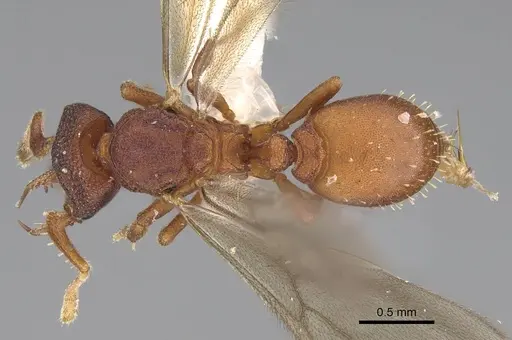

CASENT0248771
View on AntWeb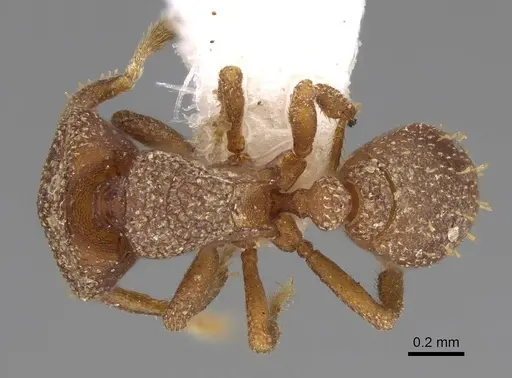
Literature
Loading distribution map...Loading products...