
Proformica mongolica
- Sci. Name
- Proformica mongolica
- Tribe
- Formicini
- Subfamily
- Formicinae
- Author
- Emery, 1901
- Distribution
- Found in 2 countries
Introduction
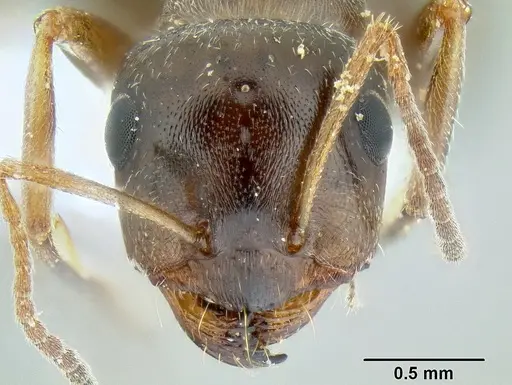
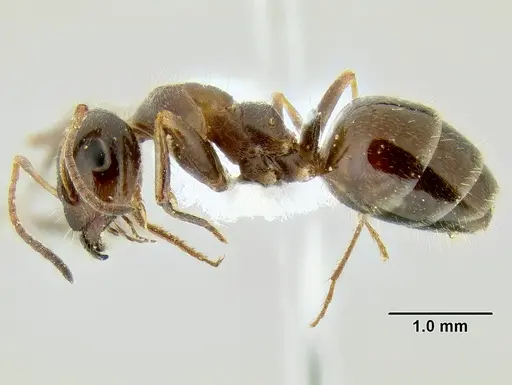
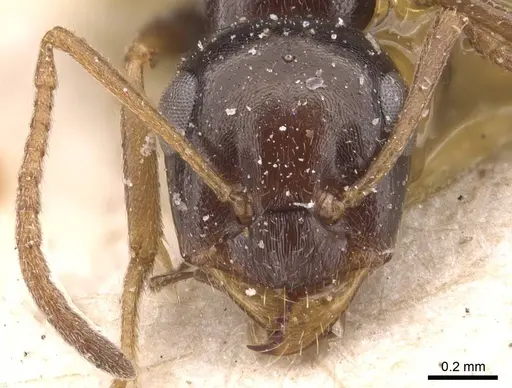
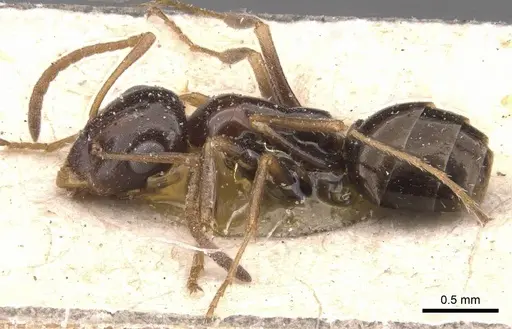
Proformica mongolica is a small to medium-sized ant native to the grasslands and steppes of Central Asia. Workers have a total length greater than 2.5 mm, with a dark brown to black body and dense setae on the dorsal mesosoma . The head has a quadrated occipital margin, and the clypeus bears 2-3 erect setae . This species is endemic to the desert grassland ant subregion and serves as an indicator species for these dry, open habitats . It is one of the most common ants in Mongolia, recorded in 11 out of 16 regions . This ant is a host for the slave-making ant Rossomyrmex . In the wild, colonies nest in soil without mounds, creating crater-shaped entrances that weather into simple holes, and nests extend deep into the ground . They forage on the surface and likely tend aphids on grass roots while also scavenging on animal carcasses .
Quick Summary
- Difficulty: Medium
- Origin & Habitat: Native to the Palaearctic region, including Mongolia, China (northern Shaanxi, Xinjiang, Tibet), Kyrgyzstan, Kazakhstan, and southern Russia. Inhabits desert grassland, steppe, and semi-desert zones at elevations around 1400-1500 meters [3][4][7].
- Colony Type: Colony structure is not documented in scientific literature. Unconfirmed whether colonies are monogyne (single queen) or polygyne (multiple queens).
- Size & Growth:
- Queen: Size data unavailable, no total length measurements in context.
- Worker: Greater than 2.5 mm total length [1][2].
- Colony: Up to several hundred workers, based on common status in Mongolia [4].
- Growth: Moderate.
- Development: Estimated 6-10 weeks at optimal temperature. (Development time is temperature-dependent, warmer conditions accelerate growth.)
- Antkeeping:
- Temperature: Keep at room temperature, roughly 20-25°C, with a gentle gradient[3][4].
- Humidity: Low to moderate humidity, keep nest substrate moderately dry with a small moist area for brood [8][7].
- Diapause: Yes, likely required for 3-4 months at 10-15°C during winter.
- Nesting: Ground-nesting species, use soil, Y-tong, or plaster nests with dry to moderately moist substrate [6].
- Behavior: Generally peaceful and non-aggressive. Like all Formicinae, they lack a stinger and defend by spraying formic acid. Workers are active foragers, accepting sugar sources and protein. Escape risk is moderate due to small size. As a host for Rossomyrmex, colonies may be targeted by slave-making ants if kept outdoors near native populations.
- Common Issues: excessive humidity can harm brood, maintain dry conditions with a moist area, skipping winter diapause may cause colony health issues, colonies may be targeted by slave-making ants if kept near native populations, limited published care information requires some experimentation, test tube setups may be too humid, use naturalistic or Y-tong nests for dry adaptation
Natural History and Distribution
Proformica mongolica is a specialist of steppe and desert grassland habitats across Central Asia. Its range includes Mongolia, northern China, Kyrgyzstan, Kazakhstan, and southern Russia [4][9]. The species is endemic to the desert grassland ant subregion and indicates dry, open environments [3]. It inhabits elevations around 1400-1500 meters and is adapted to harsh continental conditions [3][4]. Colonies nest in soil without mounds, creating simple burrows that extend deep underground, with crater-shaped entrances that weather into holes [6]. This ant is associated with dry desert-steppes and semi-desert communities [10][11].
Housing and Nest Setup
Replicate natural steppe conditions with a soil-filled container for burrowing or a Y-tong/plaster nest. Keep the nest substrate dry to slightly moist, with a small moist area for brood. Provide a deep substrate layer for chamber creation. Room temperature (20-25°C) is suitable, with a gentle gradient if needed. Ensure secure escape prevention, as workers can squeeze through small gaps [6][8].
Feeding and Diet
In captivity, offer sugar sources like honey or sugar water, and protein such as small insects (fruit flies, mealworms). Feed protein twice weekly and keep sugar available. Remove uneaten prey after 24-48 hours to prevent mold. Fresh water should always be accessible in the outworld [6].
Seasonal Care and Hibernation
As a temperate species, provide a winter rest period of 3-4 months at 10-15°C, typically from November to February. Reduce feeding during hibernation and keep the nest slightly moist to prevent desiccation. Before hibernation, ensure the colony is well-fed with fat reserves.
Behavior and Interactions
This species belongs to the tribe Formicini and defends by spraying formic acid, as is typical for Formicinae. Workers are active foragers using chemical trails. Notably, P. mongolica is a host for the slave-making ant Rossomyrmex [5]. Colonies are relatively peaceful but should be housed separately from other ant species to avoid parasitism.
Frequently Asked Questions
How long does it take for Proformica mongolica to raise first workers?
Exact time is not documented, but based on related Formica species, expect 6-10 weeks from egg to worker at 20-25°C.
What temperature do Proformica mongolica need?
Keep them at 20-25°C with a gentle gradient, based on their temperate steppe habitat [3][4].
Do Proformica mongolica need hibernation?
Yes, likely required for 3-4 months at 10-15°C during winter, inferred from their temperate origin.
What do Proformica mongolica eat?
They accept sugar sources and protein like small insects, in the wild, they tend aphids and scavenge on carcasses [6].
Are Proformica mongolica good for beginners?
Rated Medium difficulty due to limited care information and dry-habitat requirements. Not recommended for absolute beginners.
How big do Proformica mongolica colonies get?
Colonies can reach up to several hundred workers, based on their common status in Mongolia [4].
Can I keep multiple Proformica mongolica queens together?
Colony structure is unconfirmed, single-queen colonies are likely, but combining queens is not recommended without specific research.
What type of nest is best for Proformica mongolica?
A naturalistic soil setup or Y-tong/plaster nest with dry to moderately moist substrate suits this dry-adapted species [6][8].
Why is my Proformica mongolica colony declining?
Common causes include excessive humidity, skipped hibernation, poor nutrition, or stress. Ensure dry conditions and annual winter rest.
Report an Issue
The current care sheet is based fully on literature. See inconsistencies, or something that's incorrect? Please , it will be resolved after review from an admin. Contributing to the blogs tab also helps providing information, to make us be able to further improve the caresheets. Thank you for your support!
References

This caresheet is licensed under CC BY-SA 4.0 .
Community Blogs
CASENT0106258
View on AntWeb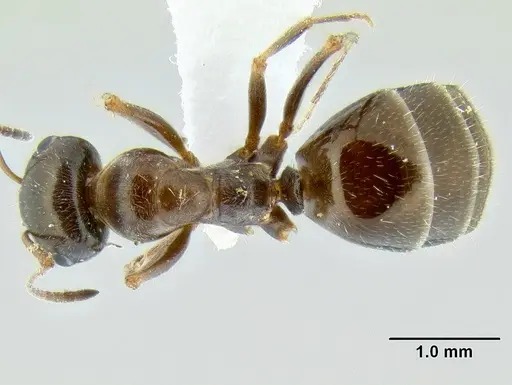
CASENT0905712
View on AntWeb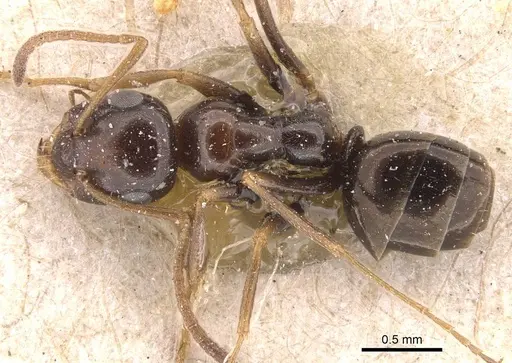
Literature
Loading distribution map...Loading products...