
Proformica ferreri
- Sci. Name
- Proformica ferreri
- Tribe
- Formicini
- Subfamily
- Formicinae
- Author
- Bondroit, 1918
- Distribution
- Found in 3 countries
Introduction
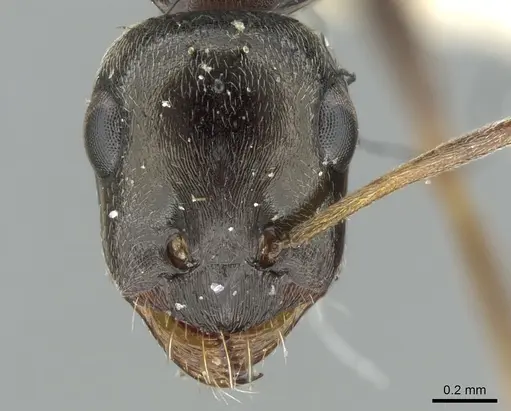
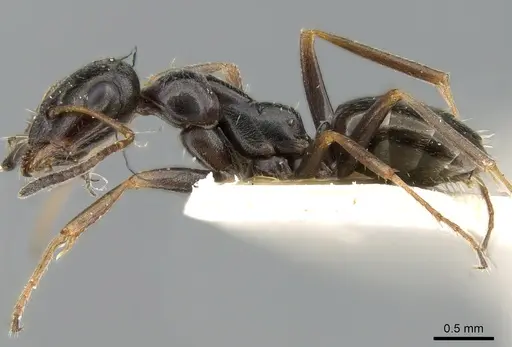
Proformica ferreri is a small ant native to the Iberian Peninsula and Iran, with workers measuring around 3-5 mm . It has a dark body with distinct pubescence on the first gaster segment . The species is found in montane areas with moderate rainfall in Iran and in grasslands below 1000 m altitude in Spain . Larger workers develop distended abdomens and function as repletes, storing liquid food for the colony . This adaptation helps the colony survive in dry conditions.
Quick Summary
- Difficulty: Medium
- Origin & Habitat: Iberian Peninsula (Spain, Portugal) and Iran, in grasslands and montane areas below 1000 m altitude, nesting under stones or with poorly developed craters [6][4][5][3].
- Colony Type: Social structure is unconfirmed, but observations suggest possible ergatoid (wingless) queens in some populations [7]. One wild colony had 1426 workers with no queen found, indicating possible queen replacement by ergatoid reproductives [1].
- Size & Growth:
- Queen: Size data unavailable, no total length measurements in literature.
- Worker: 3-5 mm [1].
- Colony: Up to 1426 workers documented in one wild colony [1].
- Growth: Moderate, inferred from related Formicinae species.
- Development: Estimated 6-10 weeks under optimal conditions, based on related Formicini species. (Development timeline not directly studied, temperature affects growth rate.)
- Antkeeping:
- Temperature: Keep at 22-26°C. Based on related Proformica species, which tolerate high temperatures [8].
- Humidity: Prefer dry to moderately damp conditions, keep nest substrate slightly moist but allow drying periods between waterings [6].
- Diapause: Likely requires winter rest period of 2-3 months at 10-15°C, inferred from temperate Mediterranean distribution.
- Nesting: Natural nests under stones, in captivity, use Y-tong (AAC) or plaster nests with a thin layer of substrate [6].
- Behavior: Docile and not aggressive toward keepers. Workers are active foragers, omnivorous, feeding on sugary liquids and small arthropods [6]. Escape risk is moderate due to small size, standard barrier methods work well.
- Common Issues: colonies may fail if kept too cold, they need warm conditions year-round, small initial colony size means slow development, patience is required, repletes can be mistaken for queens, they are normal food storage workers, dry conditions can kill founding colonies, monitor humidity carefully, wild-caught colonies may have parasites that affect survival in captivity
Housing and Nest Setup
Proformica ferreri nests naturally under stones or in shallow excavations with poorly developed crater entrances [6]. For captive care, use a Y-tong (AAC) nest or plaster formicarium. Keep the nest substrate slightly moist but allow it to dry between waterings, as they prefer dry to moderately damp conditions [6]. Provide a thin layer of soil or sand (1-2 cm) to satisfy nesting instincts. Place the nest in a warm area, but avoid direct heating that could dry it out too quickly. The outworld should have a water source and feeding station.
Feeding and Diet
These ants are omnivorous, feeding on sugary liquids and small arthropods [6]. In captivity, offer sugar water or honey water constantly. For protein, provide small insects like fruit flies or mealworm pieces 2-3 times per week. Repletes (workers with distended abdomens) store liquid food, this is normal behavior. Remove uneaten prey after 24 hours to prevent mold.
Temperature and Seasonal Care
Keep the nest at 22-26°C for optimal activity. This species is heat-loving, and related Proformica can tolerate high temperatures [8]. During winter, reduce temperature to 10-15°C for 2-3 months to allow natural dormancy, as inferred from their temperate distribution. Monitor colony activity, if workers cluster, they may need warmer conditions.
Colony Structure and Development
One wild colony had 1426 workers and 7 large sexual larvae, but no queen was found, suggesting possible ergatoid queens [1][7]. Repletes are specialized workers that store food, they are not queens. Colony growth is moderate, expect 6-10 weeks from egg to first worker under optimal conditions.
Behavior and Temperament
Proformica ferreri is docile and not aggressive. Workers are active foragers, searching for food in the outworld. They are categorized as a heat/open specialist, preferring sunny nesting areas [6]. Escape risk is moderate, use standard barriers like Fluon on walls. Repletes are a unique trait, swollen workers are normal, not a sign of disease.
Frequently Asked Questions
How long does it take for Proformica ferreri to produce first workers?
Expect 6-10 weeks from egg to first worker under optimal conditions (22-26°C). This is an estimate based on related Formicini species [8].
Can I keep multiple Proformica ferreri queens together?
Not recommended. The full colony structure is unconfirmed, and combining unrelated queens could result in fighting. Single-queen colonies are safest.
What do Proformica ferreri ants eat?
They are omnivorous. Offer sugar water or honey constantly, and feed small insects 2-3 times per week [6].
What temperature do Proformica ferreri need?
Keep them at 22-26°C. This is a heat-loving species, and related Proformica tolerate high temperatures [8].
Do Proformica ferreri need hibernation?
Yes, a winter rest period is likely required. Reduce temperature to 10-15°C for 2-3 months during winter, inferred from their temperate distribution.
How big do Proformica ferreri colonies get?
Wild colonies can reach over 1400 workers. In captivity, expect moderate growth to several hundred workers over time [1].
Are Proformica ferreri good for beginners?
They are moderate difficulty. They require warm conditions and specific humidity. Their docile nature makes them interesting for keepers with some experience [6].
Why are some workers swollen? Is something wrong?
Nothing is wrong, those are repletes, specialized workers that store liquid food. This is normal behavior for this species [1].
When should I move them to a formicarium?
Keep founding colonies in a test tube setup until they have 20-30 workers. Then move to a small formicarium or Y-tong nest for more space.
Report an Issue
The current care sheet is based fully on literature. See inconsistencies, or something that's incorrect? Please , it will be resolved after review from an admin. Contributing to the blogs tab also helps providing information, to make us be able to further improve the caresheets. Thank you for your support!
References

This caresheet is licensed under CC BY-SA 4.0 .
Community Blogs
CASENT0906299
View on AntWeb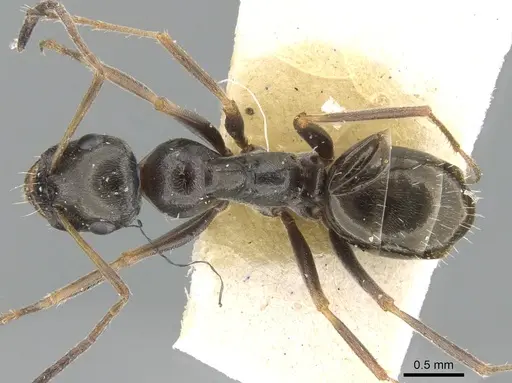
Literature
Loading distribution map...Loading products...