
Procryptocerus tortuguero
- Sci. Name
- Procryptocerus tortuguero
- Tribe
- Attini
- Subfamily
- Myrmicinae
- Author
- Longino & Snelling, 2002
- Distribution
- Found in 1 countries
Introduction
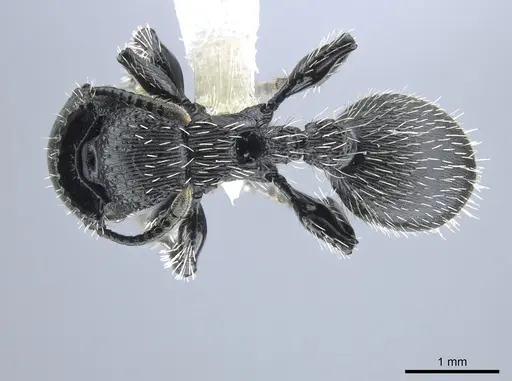
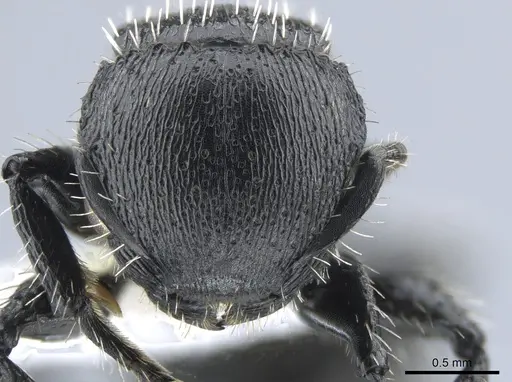
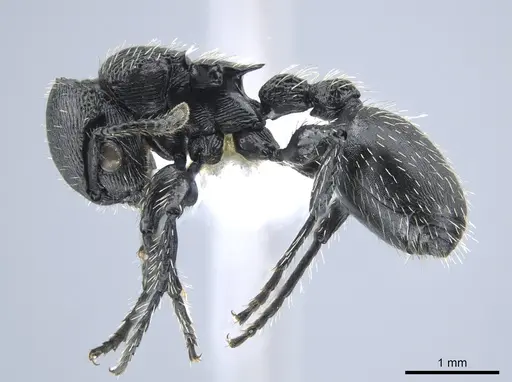
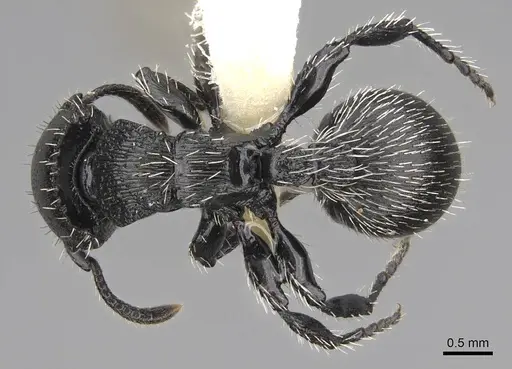
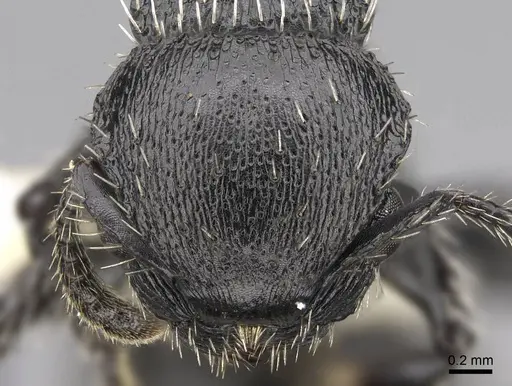
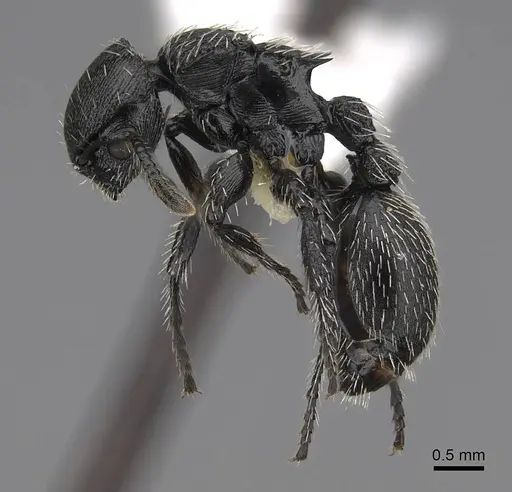
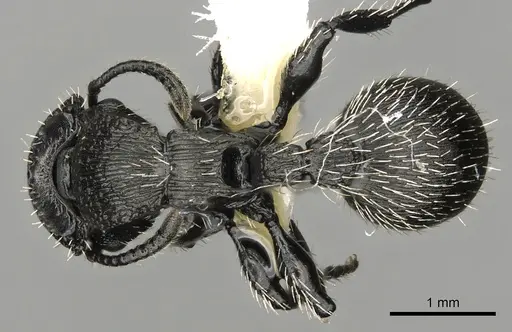
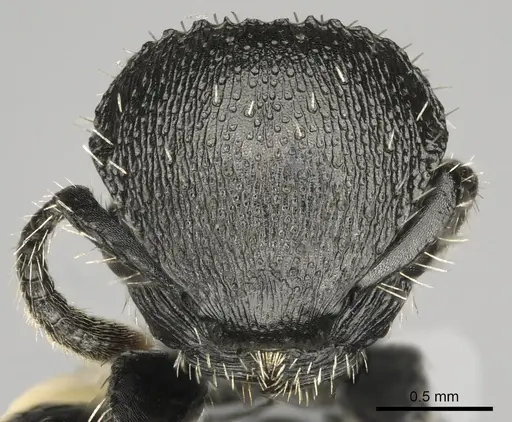
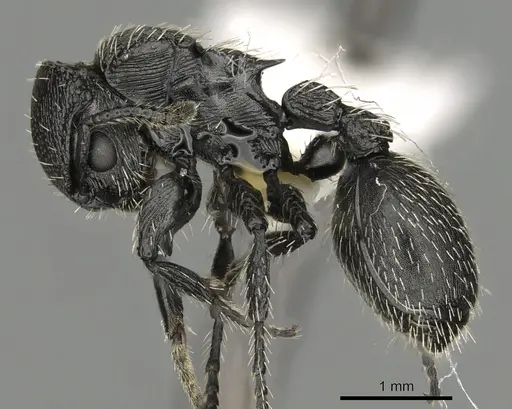
Procryptocerus tortuguero is a small ant native to lowland rainforests of Costa Rica and Colombia . Workers have evenly dispersed erect setae on the face and a crenate frontovertexal margin . The species nests in dead plant stems, often in the terminus of branches . A documented nest contained 108 workers, one dealate queen, and brood . This ant is arboreal, foraging and nesting in vegetation rather than on the ground. Its unique nesting habit in plant stems makes it a challenging species for antkeepers, as it requires vertical housing setups.
Quick Summary
- Difficulty: Expert
- Origin & Habitat: Lowland rainforests of Costa Rica (Tortuguero area) and Colombia (Cauca) [1][2]. Found in primary wet forest, often in canopy-level vegetation [1].
- Colony Type: Monogyne colonies with a single queen, confirmed from a nest sample [1].
- Size & Growth:
- Queen: Size data unavailable, no total length measurements exist.
- Worker: Size data unavailable, no total length measurements exist.
- Colony: Up to 108 workers in natural nests [1].
- Growth: Unknown, no captive breeding data.
- Development: Unknown, no development data available. (No captive records exist for this species.)
- Antkeeping:
- Temperature: Keep warm at 24-28°C, based on lowland tropical habitat [1].
- Humidity: Keep nest substrate consistently moist but not waterlogged, with a humidity gradient [1].
- Diapause: No, this is a tropical species with no winter dormancy [1].
- Nesting: Provide vertical or angled nest structures to mimic natural stem nesting [1].
- Behavior: Workers are arboreal, foraging in vegetation up to 20 meters high [1]. Temperament is unstudied, but likely not aggressive. Escape risk is high due to small size, ensure tight enclosures to prevent escapes.
- Common Issues: no captive breeding records exist, this species has never been established in captivity., high humidity requirements can lead to mold if not managed properly., arboreal nesting means standard horizontal formicariums are unsuitable., lack of biological data makes captive care challenging., rarely available in the antkeeping hobby.
Natural History and Distribution
Procryptocerus tortuguero was first described from Costa Rica, specifically the Tortuguero area in Limón Province [1]. The type series was collected from a trailside woody plant stem with an old machete cut, where ants inhabited the dead terminus of the branch [1]. Recent records expand the range to Cauca, Colombia, the first South American record [2]. Specimens have been found from low vegetation to rainforest canopy approximately 20 meters high, indicating arboreal habits [1].
Nesting Biology
Nests are located in dead plant stems, such as cut or broken branches [1]. The ants excavate chambers in wood, either themselves or using existing tunnels from stem-boring insects [1]. One nest contained 108 workers, one dealate queen, and brood, suggesting a single-queen colony structure [1]. In captivity, provide vertical or angled nest structures to mimic this natural habitat.
Temperature and Humidity Requirements
As a lowland tropical species, Procryptocerus tortuguero requires warm conditions year-round [1]. Maintain temperatures around 24-28°C. Humidity should be high, with the nest substrate kept moist but not saturated, and a gradient provided for self-regulation [1]. Good ventilation is essential to prevent mold.
Feeding and Diet
The specific diet of this species is unstudied. Based on related Attini ants, they may consume small insects, honeydew, and sugar sources [1]. In captivity, offer varied diet including small live prey and sugar water, observing acceptance.
Housing in Captivity
This species requires vertical or angled nest structures to mimic natural stem nesting [1]. Standard horizontal formicariums are unsuitable. Use dead bamboo sections or custom vertical setups. Escape prevention is critical due to small size, ensure tight-fitting lids and barriers.
Frequently Asked Questions
Can I keep Procryptocerus tortuguero as a pet ant?
This species is not recommended for antkeepers due to no captive breeding records and lack of biological data [1]. You would be pioneering husbandry with no established guidelines.
What do Procryptocerus tortuguero ants eat?
Their specific diet is unstudied. In captivity, offer small live prey like fruit flies and sugar sources such as honey or sugar water [1].
How big do Procryptocerus tortuguero colonies get?
The largest documented natural colony had up to 108 workers [1]. Maximum colony size in captivity is unknown.
What temperature do Procryptocerus tortuguero ants need?
Keep them warm at 24-28°C based on their tropical lowland habitat [1].
Do Procryptocerus tortuguero ants need hibernation?
No, this is a tropical species with no natural diapause [1].
What type of nest should I use for Procryptocerus tortuguero?
Use vertical or angled nest structures to mimic natural stem nesting [1]. Horizontal formicariums are unsuitable.
Where can I get Procryptocerus tortuguero ants?
This species is extremely rare in the antkeeping hobby and not commonly available [1][2].
How long does it take for Procryptocerus tortuguero to develop from egg to worker?
Unknown, no development data exists for this species [1].
Are Procryptocerus tortuguero ants aggressive?
Their temperament is unstudied. Based on arboreal habits, they are likely not particularly aggressive but will defend their nest.
Report an Issue
The current care sheet is based fully on literature. See inconsistencies, or something that's incorrect? Please , it will be resolved after review from an admin. Contributing to the blogs tab also helps providing information, to make us be able to further improve the caresheets. Thank you for your support!
References

This caresheet is licensed under CC BY-SA 4.0 .
Community Blogs
Literature
Loading distribution map...Loading products...