
Proceratium nilo
- Sci. Name
- Proceratium nilo
- Tribe
- Proceratiini
- Subfamily
- Proceratiinae
- Author
- Hita Garcia <i>et al.</i>, 2014
- Distribution
- Found in 0 countries
Introduction
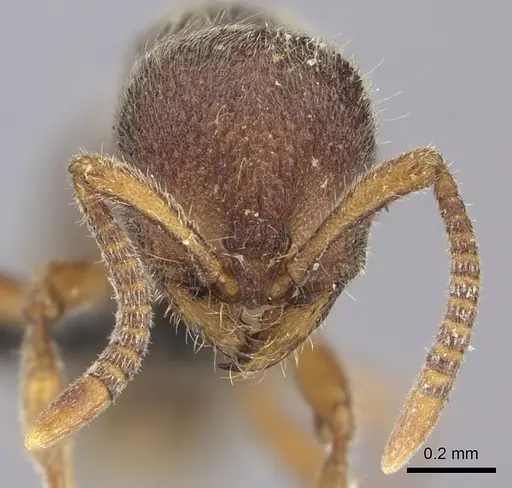
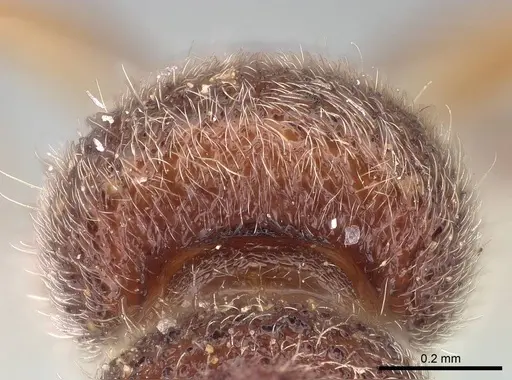
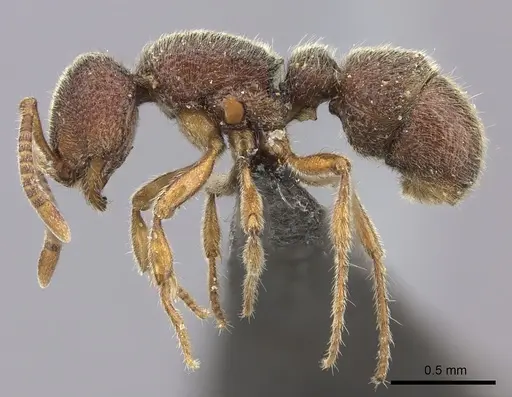
Proceratium nilo is an extremely rare African ant species known only from a single worker specimen collected in the Nilo Forest Reserve in northeastern Tanzania. Workers are tiny at 3.31 mm total length, with completely absent eyes, a uniquely inflated rear mesopleura, and a strongly recurved abdomen. Their body has a dense mat of short pubescence with longer standing hairs, and the head, mesosoma, and petiole are brown while the mandibles, legs, and inflated mesopleural area are yellowish to light brown . This species is part of the P. arnoldi clade and is one of the least-known ants globally. The only known specimen was found in a mountain primary forest at about 1000 m altitude, with dense canopy cover (90-95%) and moist soils covered by leaf litter. No data exists on colony structure, reproduction, or captive behavior, making this species extremely challenging to keep, if it can even be acquired .
Quick Summary
- Difficulty: Expert
- Origin & Habitat: Nilo Forest Reserve in the East Usambara mountains, Tanga region, northeastern Tanzania. They inhabit primary mountain forest at approximately 1000 m altitude with dense canopy cover and moist loamy to sandy clay loam soils covered by leaf litter [1].
- Colony Type: Unknown, only a single worker has ever been collected, so colony structure is unconfirmed.
- Size & Growth:
- Antkeeping:
- Temperature: Likely 20-24°C based on mountain forest habitat, start in low-mid 20s°C and observe [1].
- Humidity: Keep substrate consistently moist but not waterlogged, with areas of slight drying, based on forest floor conditions [1].
- Diapause: Unknown, no seasonal data, based on Tanzanian origin, minimal hibernation may be needed [1].
- Nesting: Unknown specifically, inferred from genus to prefer soil, rotting wood, or under stones in humid environments [1].
- Behavior: Nothing is known about specific behavior. Based on genus patterns, they are likely predatory on small invertebrates and use chemical cues for navigation due to absent eyes. They are not aggressive but escape prevention is important due to tiny size [1].
- Common Issues: extremely limited availability, this species has never been found for sale and may not exist in the antkeeping hobby., no captive breeding data exists, even if available, successful colony founding is undocumented., unknown founding requirements, queens have never been documented, so founding behavior is unconfirmed., single specimen means virtually no biological data, everything must be inferred from related species., risk of keeping wild-caught colonies, parasites or disease from limited stock could kill colonies.
Availability and Acquisition
Proceratium nilo is essentially unavailable in the antkeeping hobby. This species is known from only a single worker specimen collected in 2005,and no additional specimens have been found. There are no documented colonies in captivity, and it is extremely unlikely that any P. nilo colonies exist. For these reasons, this species remains of scientific interest rather than a viable antkeeping project [1].
Natural Habitat and Environment
The only known specimen was collected in the Nilo Forest Reserve, a mountain forest with dense canopy cover (90-95%) and little logging. The altitude was approximately 1000 m, with soils ranging from moist loamy sand to sandy clay loam, covered by about 1 cm of leaf litter. This suggests a preference for humid, shaded forest floor environments [1].
Related Species Care Inference
Since no specific data exists for P. nilo, care must be inferred from related Proceratium species. These ants are predatory, using a unique abdominal structure to capture prey, and typically live in small colonies in soil or rotting wood in humid forests. They are not aggressive and rely on chemical cues due to absent eyes. If keeping Proceratium, provide high humidity, cool-to-moderate temperatures, and small live prey, but this is unconfirmed for P. nilo [1].
Why This Species Is Not Recommended for Keeping
Proceratium nilo should not be considered for antkeeping due to: it has never been found in the trade and likely never will be, no captive breeding data exists, complete lack of basic biological data means any attempt would be speculative, and if acquired, it would be invaluable for science, not home keeping. Look for documented Proceratium species instead [1].
Frequently Asked Questions
Can I keep Proceratium nilo ants?
No. Proceratium nilo is essentially impossible to keep because only a single worker has ever been collected, and no colonies exist in captivity. There is no way to obtain this species, and even if you could, no one has documented the basic biology needed to keep them successfully [1].
Where does Proceratium nilo live?
They are only known from the Nilo Forest Reserve in the East Usambara mountains of northeastern Tanzania, at approximately 1000 m altitude in a primary mountain forest with dense canopy and moist soils covered by leaf litter [1].
How big are Proceratium nilo workers?
The only known worker measures 3.31 mm in total length. No queens or other castes have been documented [1].
Do Proceratium nilo ants have eyes?
No, they have completely absent eyes, which is unusual for Proceratium and suggests they navigate through chemical and tactile senses rather than vision [1].
What do Proceratium nilo eat?
Unknown specifically, but Proceratium species are predatory and likely hunt small invertebrates. Based on genus patterns, they may accept springtails, fruit flies, or other tiny arthropods [1].
How many queens do Proceratium nilo colonies have?
Unknown. Only a single worker has been collected, so colony structure is unconfirmed. Most Proceratium species likely have single queens, but this is not verified for P. nilo [1].
Do Proceratium nilo ants need hibernation?
Unknown. Based on their Tanzanian mountain forest origin, they may experience moderate seasonal changes but not harsh winters. True hibernation may not be necessary, though some seasonal slowing is possible [1].
Are Proceratium nilo good for beginners?
Absolutely not. This species is not available, has no captive care data, and is one of the least-known ants in the world. Even experienced antkeepers would have no framework for keeping them successfully [1].
What makes Proceratium nilo unique?
They are one of the rarest ants, known from only a single specimen. They have completely absent eyes, a uniquely inflated rear mesopleura, and a strongly recurved abdomen. All scientific knowledge comes from one worker collected in 2005 [1].
Can I find Proceratium nilo for sale?
No. This species has never been documented in the antkeeping hobby and likely never will be. The only known specimen is in a museum. If interested in Proceratium, look for more common species with documented care [1].
Report an Issue
The current care sheet is based fully on literature. See inconsistencies, or something that's incorrect? Please , it will be resolved after review from an admin. Contributing to the blogs tab also helps providing information, to make us be able to further improve the caresheets. Thank you for your support!
References

This caresheet is licensed under CC BY-SA 4.0 .
Community Blogs
CASENT0235688
View on AntWeb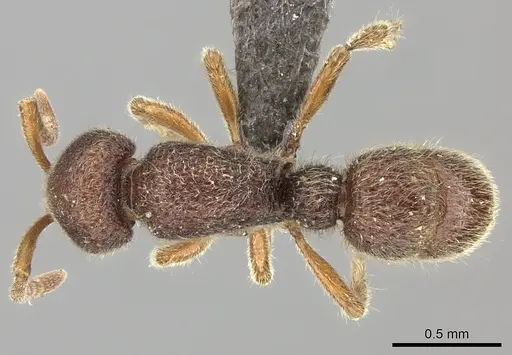
Literature
Loading distribution map...Loading products...