
Proceratium mancum
- Sci. Name
- Proceratium mancum
- Tribe
- Proceratiini
- Subfamily
- Proceratiinae
- Author
- Mann, 1922
- Distribution
- Found in 5 countries
Introduction
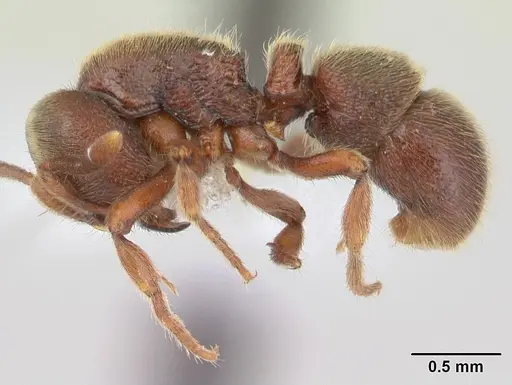
Proceratium mancum is a tiny, cryptic ant species in the subfamily Proceratiinae. Workers measure about 2.62–3.02 mm and queens about 3.58–4.27 mm (total length). They are dark ferrugineous-brown with slightly lighter antennae and legs. The fourth abdominal segment is notably enlarged and projects forward, giving them a unique appearance. Their most distinctive feature is the long body hairs, especially on the legs, where hairs reach at least half the length of the basitarsus . They belong to the silaceum clade and differ from related species by these longer hairs . This species ranges from Mexico through Central America (Belize, Costa Rica, Guatemala, Honduras) to Colombia, where it is recorded in Antioquia, Caquetá, and Quindío departments at elevations around 980 m . It is a rare, cryptic soil and leaf litter ant, typically collected by sifting leaf litter. Most notably, it is a specialist predator of spider eggs – a highly specialized diet that makes it unusual among ants .
Quick Summary
- Difficulty: Hard
- Origin & Habitat: Neotropical region from Mexico to Colombia, found in Belize, Costa Rica, Guatemala, Honduras, and Colombia (Antioquia, Caquetá, Quindío) at elevations around 980 m. Inhabits soil and leaf litter in tropical forests [2][3][4][5].
- Colony Type: Unknown colony structure. Type specimens indicate single queens, but wild colony organization has not been documented.
- Size & Growth:
- Antkeeping:
- Temperature: Unknown. Based on Neotropical distribution and elevation (~980 m), likely prefers warm conditions around 22–26°C. Start in this range and adjust based on activity.
- Humidity: High humidity is essential – these are forest floor ants from damp leaf litter. Keep substrate consistently moist but not waterlogged.
- Diapause: Unknown – no research on seasonal behavior. Neotropical species likely do not require true hibernation.
- Nesting: Natural nesting in soil and leaf litter. In captivity, a small test tube setup or a small plaster or 3D-printed nest with moist substrate works well. Their tiny size requires appropriately scaled chambers.
- Behavior: Very cryptic and likely docile. As a specialist predator of spider eggs, they are probably slow-moving and stealthy. No aggressive behavior documented, but their small size makes escape prevention critical – they can slip through tiny gaps.
- Common Issues: specialized spider egg diet is extremely hard to source in captivity, no available information on colony founding or development timelines, tiny size creates significant escape risk, virtually nothing is known about their biology, so keepers must pioneer husbandry, wild-caught colonies may be stressed from collection methods
Appearance and Identification
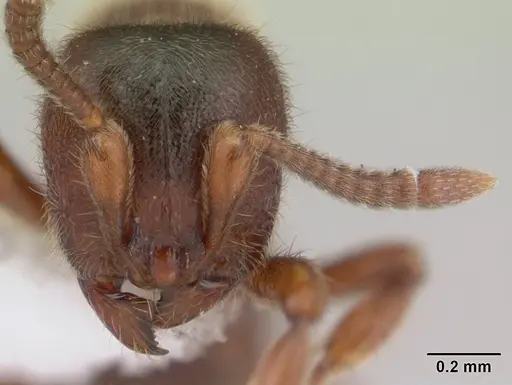
Proceratium mancum workers are tiny at 2.62–3.02 mm, queens 3.58–4.27 mm (total length). They are dark ferrugineous-brown with slightly lighter antennae and legs. The most distinctive feature is the long body hairs, especially on the mid and hind basitarsi, where hairs reach at least half the basitarsal length. This distinguishes them from related species like Proceratium silaceum, Proceratium croceum, and Proceratium crassicorne, which have shorter hairs. The fourth abdominal segment is enlarged and projects forward, and the eyes are very small, appearing as dark dots beneath the integument [1][2].
Distribution and Habitat
This species has a wide Neotropical distribution from Mexico through Central America to Colombia. Confirmed records include Belize, Costa Rica, Guatemala, Honduras, and Mexico, and in Colombia from Antioquia, Caquetá, and Quindío departments at elevations around 980 m. It is a rare, cryptic ant found in soil and leaf litter, typically collected by sifting leaf litter [2][3][4][5].
Feeding and Diet
Proceratium mancum is a specialist predator of spider eggs [2]. This highly specialized diet presents major challenges for captive care. In the wild, they hunt spider eggs rather than scavenging or hunting other insects. In captivity, obtaining spider eggs regularly would be extremely difficult. You might experiment with offering tiny live prey like springtails or small insect larvae, but acceptance is uncertain given their specialized natural diet. This species is NOT recommended for beginners precisely because of its specialized feeding requirements. Sugar sources are unlikely to be accepted.
Temperature and Care
No specific temperature data exists for this species. Based on their Neotropical distribution and elevation of approximately 980 m, they likely prefer warm but not extreme temperatures. Aim for roughly 22–26°C as a starting point and observe colony behavior. If workers become sluggish, slightly increase temperature, if they avoid the heated area, reduce it. Use a heating cable on one side of the nest to create a gradient, placing it on top of the nest to avoid excessive drying. High humidity is essential – these are forest floor ants from damp environments. Keep the substrate consistently moist but never waterlogged.
Nesting Requirements
In the wild, Proceratium mancum nests in soil and leaf litter on the forest floor. For captive care, a small test tube setup works well for founding colonies. Their tiny size means chambers and passages must be appropriately scaled – avoid large, open spaces. A small plaster or 3D-printed nest with tight chambers maintains humidity while allowing observation. Keep the nest area dark or dimly lit, as they are cryptic by nature. Ensure excellent escape prevention – their small size means they can slip through remarkably tiny gaps.
Challenges and Considerations
This is one of the most challenging species to keep because virtually nothing is known about its biology in captivity. The AntWiki explicitly states 'Nothing is known about the biology of Proceratium mancum.' You will essentially be pioneering husbandry for this species. Key challenges include: their specialized spider egg diet, unknown development timeline, unknown founding behavior, and their tiny size making them escape-prone. Expect trial and error. Document your observations carefully – any successful husbandry information would be valuable for the antkeeping community. This species is best suited for experienced keepers who enjoy the challenge of working with poorly studied species.
Frequently Asked Questions
How long does it take for Proceratium mancum to develop from egg to worker?
Unknown – no research exists on their development timeline. No estimate is available.
What do Proceratium mancum ants eat?
They are specialist predators of spider eggs in the wild. Captive feeding is extremely challenging since spider eggs are not readily available. You could experiment with tiny live prey like springtails, but acceptance is uncertain. Do not expect them to accept sugar sources.
Are Proceratium mancum ants good for beginners?
No. This species is not recommended for beginners. Their biology is virtually unknown, they have highly specialized dietary requirements, and their tiny size creates housing and escape challenges. They are best suited for experienced antkeepers who enjoy pioneering husbandry of poorly studied species.
Do Proceratium mancum ants sting?
Proceratium belongs to the subfamily Proceratiinae, which does not have functional stingers. They are docile and not considered dangerous. However, their small size makes them difficult to handle and easy to lose.
What size colony do Proceratium mancum colonies reach?
Unknown – no colony size data has been documented. Given their small worker size and cryptic nature, colonies are likely small, possibly under 100 workers.
Do Proceratium mancum ants need hibernation?
Unknown – no research exists on their seasonal behavior. As a Neotropical species from mid-elevation forests, they likely do not require true hibernation.
Can I keep Proceratium mancum in a test tube?
Yes, a test tube setup is appropriate for this tiny species. Use a small test tube with a water reservoir, keeping the substrate moist but not flooded. Ensure excellent escape prevention with tight-fitting barriers.
Where is Proceratium mancum found?
They range from Mexico through Central America (Belize, Costa Rica, Guatemala, Honduras) to Colombia. They inhabit leaf litter and soil in Neotropical forests at elevations around 980 m.
How do I identify Proceratium mancum?
Workers are 2.62–3.02 mm (total length) with distinctive long body hairs, especially on the legs where hairs reach at least half the basitarsal length. The fourth abdominal segment is enlarged and projects forward. They are dark ferrugineous-brown with slightly lighter antennae and legs.
Why is Proceratium mancum so rare in collections?
They are cryptic soil and leaf litter ants that are rarely encountered. They are typically collected using leaf litter sifting methods, and their specialized diet and small size make them difficult to maintain in captivity.
Report an Issue
The current care sheet is based fully on literature. See inconsistencies, or something that's incorrect? Please , it will be resolved after review from an admin. Contributing to the blogs tab also helps providing information, to make us be able to further improve the caresheets. Thank you for your support!
References

This caresheet is licensed under CC BY-SA 4.0 .
Community Blogs
CASENT0603528
View on AntWeb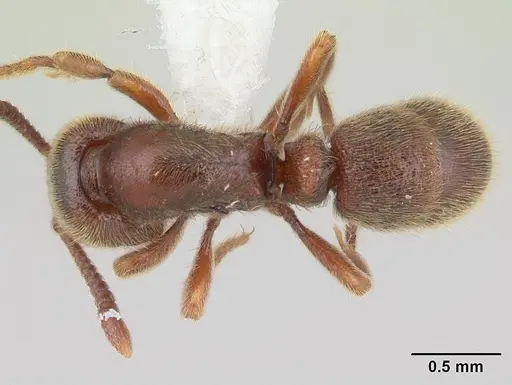
Literature
Loading distribution map...Loading products...