
Proceratium boltoni
- Sci. Name
- Proceratium boltoni
- Tribe
- Proceratiini
- Subfamily
- Proceratiinae
- Author
- Leston, 1971
- Distribution
- Found in 1 countries
Introduction
Proceratium boltoni is a tiny, cryptic ant native to Ghana, West Africa. Workers measure ~3.7 mm total length and are dark brown to black, with lighter legs and mandibles . They belong to the Stictum Clade and are among the smallest Proceratium species known. The only nest ever collected was found in a piece of rotten wood embedded in topsoil in disturbed savannah-like land in the Botany Gardens, Legon . This rare species is challenging to keep and best suited for advanced antkeepers.
Quick Summary
- Difficulty: Expert
- Origin & Habitat: Ghana, West Africa. The type locality is disturbed savannah-like land, where colonies nest in rotten wood and topsoil [2].
- Colony Type: Single-queen colonies documented [1].
- Size & Growth:
- Queen: Undocumented in primary literature, inferred from worker size (~4 mm based on Proceratium genus patterns) [1][2].
- Worker: ~3.6–3.8 mm [1].
- Colony: Up to ~100 workers (estimated from type colony of 34 mature workers and genus patterns) [1].
- Growth: Slow, inferred from cryptic lifestyle and small colony size.
- Development: Unknown, no direct data available. (Development likely slow, no studies confirm timeline. Patience is essential.)
- Antkeeping:
- Temperature: Keep at 24–28°C – inferred from tropical habitat (Ghana) [2]. Provide a gentle temperature gradient using a heating cable on one side of the nest.
- Humidity: High humidity required. Keep nest substrate consistently moist but not waterlogged – a water tube or moist soil chamber works well [2].
- Diapause: No – as a tropical species they do not need hibernation. Maintain warm conditions year-round [2].
- Nesting: Naturalistic setups with small pieces of rotting wood or moist soil-filled test tubes are best. Y-tong nests with narrow chambers can also work, but keep them dark and tight [2].
- Behavior: Proceratium boltoni is a cryptic, slow-moving species that avoids light and disturbance. Workers have a small sting but are non-aggressive and rarely use it against humans. They are nocturnal and forage singly. Escape prevention is critical due to their tiny size – use fine mesh (≤0.5 mm) on all openings.
- Common Issues: tiny size makes escape easy without fine mesh barriers, very slow growth can frustrate keepers expecting rapid colony development, extremely rare in the hobby – wild-caught colonies may suffer collection stress, high humidity needs can lead to mold if ventilation is poor, sensitive to disturbance and bright light – stress can cause colony decline
Natural History and Distribution
Proceratium boltoni is known only from Ghana, West Africa, making it one of the rarest Proceratium species in cultivation [2]. The original type colony was discovered in the Botany Gardens at Legon, Accra, within a piece of rotten wood embedded in surface soil. A second collection came from topsoil at the base of a tree in a mixed maize and cassava plot, about 600 m away [2]. Both sites were disturbed land that once was natural savannah [2]. This is the only African Proceratium collected from an actual nest. The type colony contained one dealate queen,34 mature workers,8 callow workers,3 worker pupae, and 5 larvae of various sizes [1]. An elongate greenish dipterous egg and a live nematode were also found with the colony, suggesting potential predatory or phoretic relationships [1].
Identification and Morphology
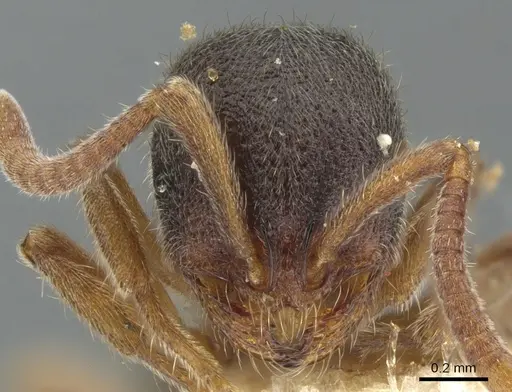
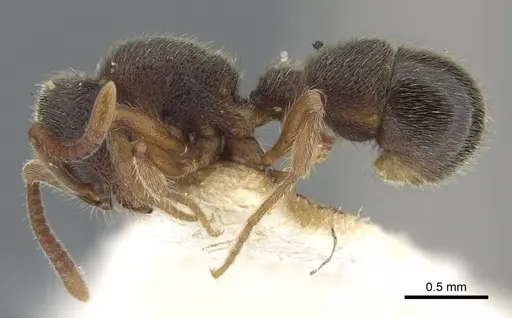
Proceratium boltoni workers are tiny, ~3.6–3.8 mm total length, among the smallest in the Stictum Clade [1]. The head is longer than broad with subparallel sides, and the vertex is convex in full face view. Distinctive features include a low, subparallel frontal carina, and a needle-shaped (spiniform) ventral process on the petiole [2]. The antenna has funicular joints 2–10 broader than long, and the eyes are present but small, with a single convex ommatidium below the head midline. Body color is dark brown to black, with the anterior head, scapes, mandibles, and legs lighter [1]. The mesosoma, petiole, and postpetiole have irregular foveolate-granulate sculpture, while the first gastral tergite is smooth with fine foveae [1].
Housing and Nest Preferences
In nature, Proceratium boltoni nests in small cavities in rotten wood and topsoil, preferring dark, humid microhabitats [2]. For captive care, a naturalistic setup with small pieces of decaying wood or a moist soil-filled test tube works well. These ants like tight spaces scaled to their tiny size – avoid large, open chambers. Y-tong (AAC) nests with narrow passages are an option, but keep them small and completely dark. Use a water tube or moist substrate to maintain high humidity. The outworld should be simple and easy to maintain at high humidity, misting occasionally helps. Cover all tubes and nests with opaque material to reduce light stress.
Feeding and Diet
Proceratium are specialized predators, and Proceratium boltoni likely accepts small live prey such as springtails, fruit fly larvae, and other tiny arthropods [1]. The type colony was found with a dipterous egg, suggesting they may also feed on arthropod eggs [1]. Offer small prey items every 3–5 days, adjusting for colony size. They are not known to accept sugars – avoid honey or syrup. Remove uneaten prey after 24 h to prevent mold. With a colony under 100 workers, even one small prey item per feeding may suffice.
Temperature and Seasonal Care
As a tropical species from Ghana, Proceratium boltoni requires warm conditions year-round [2]. Maintain nest temperature at 24–28°C, using a heating cable on one side to create a gentle gradient. Avoid fluctuations and cold drafts. No diapause is required, keep conditions stable throughout the year. Room temperature (22–24°C) may be acceptable in heated homes, but supplemental heating is recommended for optimal development [2].
Colony Development and Growth
The type colony of Proceratium boltoni contained 34 mature workers,8 callow workers,3 pupae, and 5 larvae [1]. This suggests colonies remain small even at maturity, likely under 100 workers based on genus patterns [1]. Growth is slow – Proceratium invest in individual worker quality over rapid numerical growth. The egg-to-worker timeline is unconfirmed, patience for possible 6–12 months before first nanitics is reasonable. Stress from disturbance or unsuitable conditions can halt development.
Behavior and Temperament
Proceratium boltoni is cryptic and slow-moving, avoiding light and disturbance. Workers have a small sting but are non-aggressive and rarely use it. They are nocturnal and forage singly or in small groups, not forming visible trails. Escape prevention is mandatory due to their tiny size – use fine mesh (≤0.5 mm) on all openings and seal connections. They are not dangerous to keepers but require gentle handling.
Frequently Asked Questions
How long does it take for Proceratium boltoni to produce first workers?
The exact timeline is unconfirmed. Based on other Proceratium, expect a slow process – possibly 8–12 weeks from egg to worker, but the first nanitics may take 6–12 months. Patience is essential [1].
What do Proceratium boltoni ants eat?
They are likely specialized predators. Offer small live prey like springtails, fruit fly larvae, and tiny arthropods. The type colony contained a dipterous egg, suggesting they may eat arthropod eggs [1]. Protein jelly may be accepted. Sugar sources are typically not accepted [1].
Do Proceratium boltoni ants sting?
They have a small sting but are non-aggressive and rarely use it against humans. They pose no real danger to keepers [2].
How big do Proceratium boltoni colonies get?
Based on the type colony with 34 mature workers and genus patterns, colonies likely stay under 100 workers. They are slow-growing and cryptic [1].
Can I keep Proceratium boltoni in a test tube?
Yes, a moist soil-filled test tube works well. Keep it dark and ensure tight, snug spaces. They prefer small chambers [2].
Do Proceratium boltoni need hibernation?
No – as a tropical species from Ghana, they do not require diapause. Maintain warm conditions (24–28°C) year-round [2].
Are Proceratium boltoni good for beginners?
No, this is an expert-level species. They require high humidity, specific prey, very slow growth, and excellent escape prevention. They are extremely rare in the hobby with no captive breeding data [1][2].
Why are my Proceratium boltoni dying?
Common causes: temperature too low (keep 24–28°C), humidity too low, poor ventilation leading to mold, stress from disturbance or light, or inadequate prey. These cryptic ants are sensitive to environmental changes [2].
When should I move Proceratium boltoni to a formicarium?
Wait until the colony has at least 20–30 workers and has been stable for months. They can remain in test tubes long-term, moving too early can cause stress. Only move when current space is overcrowded [1].
Where can I get Proceratium boltoni ants?
This species is extremely rare – only known from Ghana and not commercially cultured. Availability is nearly zero, specialized ant dealers may occasionally have them, but expect high difficulty obtaining colonies [2].
Report an Issue
The current care sheet is based fully on literature. See inconsistencies, or something that's incorrect? Please , it will be resolved after review from an admin. Contributing to the blogs tab also helps providing information, to make us be able to further improve the caresheets. Thank you for your support!
References

This caresheet is licensed under CC BY-SA 4.0 .
Community Blogs
CASENT0902424
View on AntWeb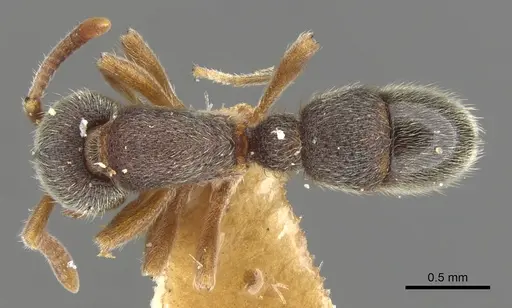
Literature
Loading distribution map...Loading products...