
Probolomyrmex zahamena
- Sci. Name
- Probolomyrmex zahamena
- Tribe
- Probolomyrmecini
- Subfamily
- Proceratiinae
- Author
- Hita Garcia & Fisher, 2014
- Distribution
- Found in 1 countries
Introduction
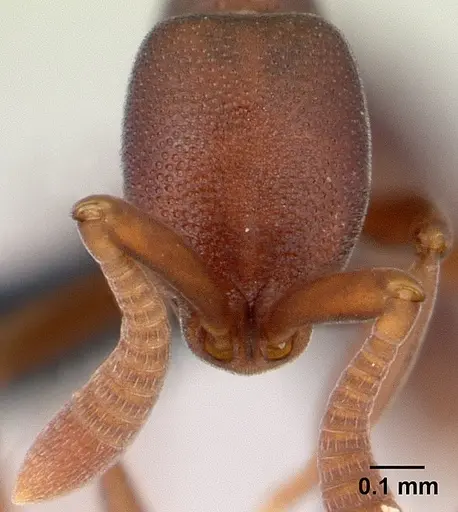
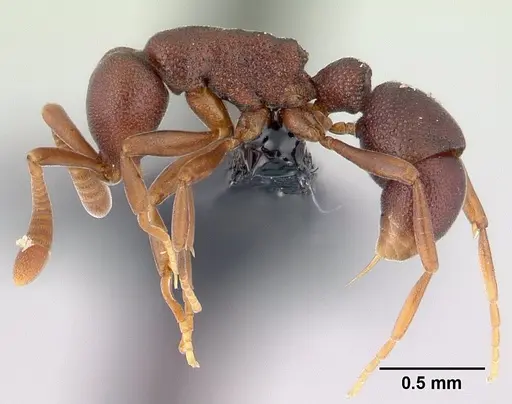
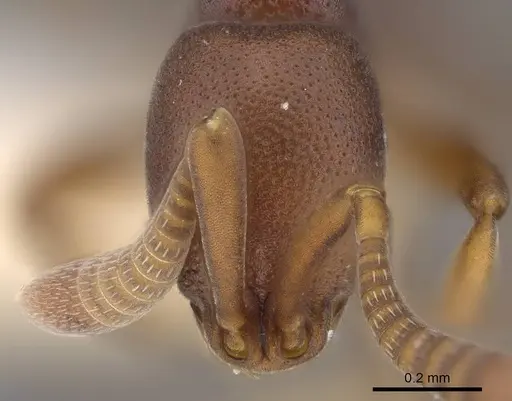
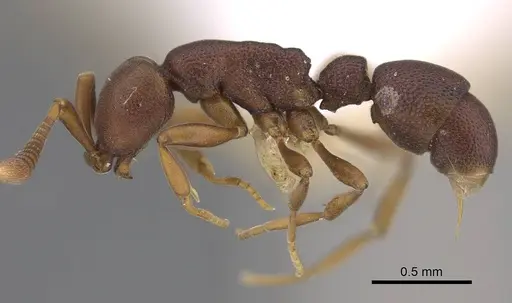
Probolomyrmex zahamena is a rare ant species found only in the rainforests of eastern Madagascar . Workers are among the smallest ants in the world, but exact body size is unknown . They are completely blind, have a short and high petiole, and possess a well-developed sting . Their body is dark reddish brown with lighter appendages . This species is only known from a single collection event in Zahamena National Park at 780m elevation, suggesting it is either rare or lives underground . It is the only known Probolomyrmex species in eastern Madagascar, despite extensive sampling, indicating it may be highly specialized or subterranean .
Quick Summary
- Difficulty: Expert
- Origin & Habitat: Tropical rainforest in Zahamena National Park, eastern Madagascar at 780m elevation [1][2]. All material collected from leaf litter sifting in a single rainforest site.
- Colony Type: Unknown colony structure. Only worker caste has been described, no queens or males have been documented. The species is likely hypogaeic (lives underground), which makes observing colony structure extremely difficult [1][2].
- Size & Growth:
- Queen: Unknown, queen has not been described in scientific literature [1][2]
- Worker: Size data unavailable, no total length measurements provided in literature [1][2]
- Colony: Unknown, only 11 workers have ever been collected [1][2]
- Growth: Unknown
- Development: Unknown, no development data exists for this species (No observations of brood or colony development have been documented.)
- Antkeeping:
- Temperature: Based on tropical rainforest habitat, likely warm (22-28°C), but no specific data [1][2]. Provide a gradient for self-regulation.
- Humidity: High humidity preferred, matching tropical rainforest conditions, but no specific data [1][2]. Keep nest substrate consistently moist but not waterlogged.
- Diapause: Unknown, no seasonal data exists. As a tropical species, they likely do not require hibernation, but this is unconfirmed.
- Nesting: Likely nests in soil or rotting wood in leaf litter, but no specific data [1][2]. In captivity, small, humid chambers with tight passages are needed.
- Behavior: No behavioral observations have been documented. As a Proceratiinae member, they likely have an elongated sting for predation on small soil arthropods [1][2]. Workers are blind and likely forage underground. Escape prevention must be excellent due to their tiny size, they can squeeze through standard barriers.
- Common Issues: lack of husbandry data may result in improper care and colony death., unknown diet may lead to starvation., tiny size increases escape risk if barriers are inadequate., queen unknown, colony founding impossible without a queen., hypogaeic nature makes monitoring health difficult., warning: this species is from zahamena national park, a protected unesco site. collecting queens or disturbing colonies may be illegal. check local laws before acquiring.
Why This Species Is Extremely Challenging
Probolomyrmex zahamena represents one of the most poorly documented ant species in the world. It was only described in 2014 from 11 workers collected in a single leaf litter sample in Zahamena National Park, Madagascar [1][2]. No queens, males, or colony samples have ever been found despite extensive ant surveys across Madagascar since 1992 [1][2]. This means absolutely no captive husbandry information exists, we don't know what they eat, how they nest, or what their colony structure looks like. The species is either genuinely rare or lives almost entirely underground, making it exceptionally difficult to study [1][2].
Natural History and What We Know
What we know about Probolomyrmex zahamena comes entirely from the 11 worker specimens collected in 2009. They were found in a tropical rainforest at 780m elevation in eastern Madagascar, sifted from leaf litter [1][2]. The workers are tiny and completely lack eyes, indicating they live in dark microhabitats underground or deep within leaf litter [1][2]. They have a well-developed sting that is very long relative to their body size, suggesting they are predators [1][2]. Their body is dark reddish brown with lighter brown appendages [1][2]. The distinctive petiole is short, high, and stout compared to other Probolomyrmex species [1][2].
Inferred Care Based on Related Species
Since no direct care information exists, we must extrapolate from the genus Probolomyrmex and subfamily Proceratiinae. Proceratiinae ants are known for their elongated stings and are typically predators or scavengers in forest floor habitats [1][2]. The complete lack of eyes confirms they navigate and forage in darkness, likely hunting small soil arthropods like springtails, mites, and other micro-invertebrates. In captivity, you would likely need to offer tiny live prey items. The leaf litter collection location suggests they prefer humid, shaded conditions with plenty of decaying organic matter. Given their extreme small size, any nest setup would need extremely tight chambers and passages.
Housing and Nesting
Probolomyrmex zahamena is likely hypogaeic, living underground or in leaf litter [1][2]. In captivity, this suggests needing small, humid chambers with tight passages. Standard ant equipment would be too large, so custom setups with moist substrate are recommended. Humidity must be high to prevent desiccation, but no specific data exists [1][2]. Ventilation must be minimal to maintain humidity while preventing mold growth.
Is This Species Right for You?
Probolomyrmex zahamena is absolutely not recommended for any ant keeper, including experts. This species has never been maintained in captivity, has no described queen, and no biological information exists whatsoever. There is no established care protocol, no known diet preferences, no documented development timeline, and no way to obtain a colony legally. The only known specimens are in museum collections. Keeping this species would require inventing entire husbandry protocols from scratch with essentially no guidance, and success would be extraordinarily unlikely. Additionally, being endemic to a protected area in Madagascar, collecting additional specimens would likely be illegal or impossible. [1][2]
Frequently Asked Questions
Can I keep Probolomyrmex zahamena as a pet ant?
No. This species has never been kept in captivity and no queen has ever been described. There is no established care protocol, no known source for colonies, and no biological information to guide husbandry. It is not recommended for any keeper.
Where does Probolomyrmex zahamena live?
Only known from Zahamena National Park in eastern Madagascar, at 780m elevation in tropical rainforest. All specimens came from a single leaf litter collection event [1][2].
How big are Probolomyrmex zahamena workers?
Exact body size is unknown, as no total length measurements are provided. Workers are among the smallest ants in the world, but specific dimensions are not available [1][2].
Do Probolomyrmex zahamena have eyes?
No. They are completely blind with no eyes at all [1][2]. This is typical of hypogaeic ant species that live in dark microhabitats.
What do Probolomyrmex zahamena eat?
Unknown. No feeding observations exist. Based on related Proceratiinae, they likely prey on small soil arthropods using their elongated sting, but this is entirely speculative.
How many queens does Probolomyrmex zahamena have?
Unknown. No queen has ever been described or collected. The entire colony structure is completely unstudied.
Are Probolomyrmex zahamena dangerous?
They possess a well-developed sting that is very long relative to their body size [1][2]. However, at their tiny size, they would be unable to penetrate human skin. The sting is designed for prey capture, not defense against vertebrates.
Why is Probolomyrmex zahamena so rare?
Either the species is genuinely uncommon in the wild, or it lives almost entirely underground (hypogaeic), making it extremely difficult to detect [1][2]. Despite extensive leaf litter sampling across Madagascar since 1992,this is the only Probolomyrmex species found in eastern Madagascar.
Can I find Probolomyrmex zahamena in the wild?
Extremely unlikely. They have only been collected once despite intensive surveys. They are only known from Zahamena National Park, a protected area, and likely require specialized habitat that is difficult to access.
What makes Probolomyrmex zahamena different from other ants?
They are among the smallest ants in the world, completely blind, and known from only 11 specimens collected in 2009 [1][2]. Their petiole (waist) is unusually short, high, and stout. They have a very long sting relative to body size. No other ant caste (queen, male, brood) has ever been documented.
Report an Issue
The current care sheet is based fully on literature. See inconsistencies, or something that's incorrect? Please , it will be resolved after review from an admin. Contributing to the blogs tab also helps providing information, to make us be able to further improve the caresheets. Thank you for your support!
References

This caresheet is licensed under CC BY-SA 4.0 .
Community Blogs
CASENT0150899
View on AntWeb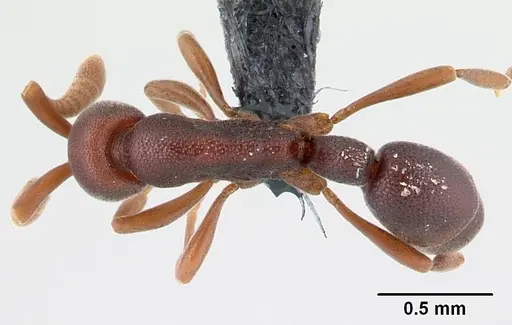
CASENT0914279
View on AntWeb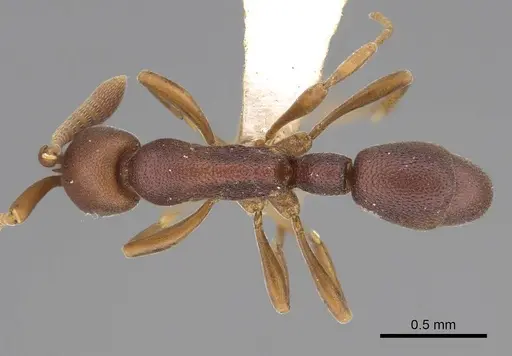
Literature
Loading distribution map...Loading products...