
Probolomyrmex dammermani
- Sci. Name
- Probolomyrmex dammermani
- Tribe
- Probolomyrmecini
- Subfamily
- Proceratiinae
- Author
- Wheeler, 1928
- Distribution
- Found in 1 countries
Introduction
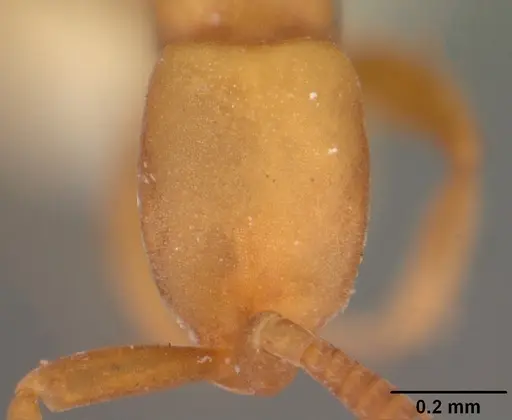
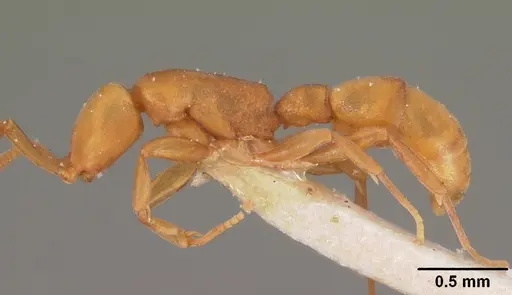
Probolomyrmex dammermani is a rare ponerine ant native to Southeast Asia, found in Indonesia (Java, Bali), the Philippines (Negros), Thailand, and Vietnam . These ants are among the smallest in the ant world - total length is not directly recorded, but head measurements confirm they are tiny. They have a ferruginous brown coloration and an elongated head . What makes P. dammermani notable is its extremely specialized diet: it is an obligate predator that exclusively hunts polyxenid millipedes, stripping their protective setae inside the nest before feeding . Colonies are very small, typically containing up to 21 workers with a single reproductive queen . Both queens and workers have only two ovarioles each, the lowest count recorded among ants studied . Larvae hang from the nest ceiling via a median suspensory tubercle, and pupae are naked without cocoons .
Quick Summary
- Difficulty: Expert
- Origin & Habitat: Tropical Southeast Asia, found in Indonesia (Java, Bali), Philippines (Negros), Thailand, and Vietnam. Nests are located in soil at 3-5cm depth in forested areas [1][3].
- Colony Type: Monogyne (single-queen) colonies with one dealate queen that mates and lays eggs. Workers are always virgin and cannot reproduce, this is the AQ (alate queen) reproductive type [6].
- Size & Growth:
- Queen: Total length not directly recorded, estimated ~2-3 mm (inferred from Probolomyrmex genus).
- Worker: Total length not directly recorded, estimated ~2-3 mm (inferred from Probolomyrmex genus).
- Colony: Up to 21 workers (average 14) [4][5]
- Growth: Slow
- Development: Unknown, no direct data available (Queens have only 2 ovarioles, the lowest recorded among ants, suggesting very slow egg production [4].)
- Antkeeping:
- Temperature: Keep warm, around 24-28°C, these are tropical ants from Southeast Asia [3]. Use a heating cable on one side of the nest to create a gentle gradient.
- Humidity: Maintain moderate to high humidity. Keep the nest substrate consistently moist but not waterlogged [3].
- Diapause: No, as a tropical species, they do not require hibernation. Keep temperatures stable year-round [3].
- Nesting: Soil-nesting species. In captivity, use a naturalistic setup with moist soil chamber, or a plaster nest with a dedicated soil area. Chambers must be very narrow to accommodate tiny workers. Test tube setups with soil chambers may work but require extremely careful escape prevention and humidity management [3].
- Behavior: These ants are peaceful but extremely specialized. Workers forage solitarily [7] and hunt polyxenid millipedes exclusively, the only food they will accept [2]. When they encounter prey, they approach slowly, then dash forward, grasp it, and sting to paralyze. The worker retrieves the paralyzed prey back to the nest. Inside the nest chamber,2-3 workers cooperate to strip the millipede's protective setae, a process that takes 30-60 minutes [3]. They are not aggressive toward humans and likely cannot sting effectively due to their tiny size. ESCAPE RISK IS EXTREME, their minute size means they can squeeze through gaps invisible to the naked eye. Excellent escape prevention (fine mesh, sealed edges) is absolutely critical.
- Common Issues: specialized diet makes feeding extremely difficult, they refuse all prey except polyxenid millipedes, which must be reliably sourced, tiny size means escapes are virtually guaranteed without fine mesh barriers (0.5mm or finer) and sealed edges, very small colony size means slow growth and high vulnerability to losses, low reproductive rate (only 2 ovarioles per queen) means colonies grow very slowly and any loss is hard to recover, wild-caught colonies may arrive with few workers and struggle to establish, handling and observation is hard due to their minute size
Housing and Nest Setup
Probolomyrmex dammermani is a tiny species [1] that requires careful housing due to its soil-nesting habits and extremely small size. In the wild, they nest 3-5cm below the surface in soil [3], so a naturalistic setup with a moist soil chamber works best. You can use a plaster or acrylic nest with a dedicated soil area, or a test tube setup with a soil chamber attached. The key requirement is maintaining consistent moisture in the substrate, it should feel damp but never waterlogged. Because these ants are barely half a millimeter in head length, standard formicarium chambers are far too large. Use tight, narrow chambers scaled to their tiny body size. Escape prevention is non-negotiable: use fine mesh (at least 0.5mm or finer), seal all edges with fluon or petroleum jelly, and check connections frequently. Even microscopic gaps will allow escapes.
Feeding and Diet - The Critical Challenge
This is the most challenging aspect of keeping P. dammermani. Laboratory experiments confirmed they will ONLY eat polyxenid millipedes, they refused every other prey offered including centipedes, termites, earwigs, spiders, and isopods [2][3]. Polyxenids are tiny millipedes (about twice the body length of the ants) that have distinctive bristle-like setae covering their bodies. In captivity, you would need to culture or collect these specific millipedes. This specialized diet makes P. dammermani one of the most difficult ants to keep, there is no substitute food source. Additionally, the ants perform an elaborate feeding ritual: workers strip the prey's setae (taking 30-60 minutes with 2-3 workers cooperating) before the colony feeds together. Adults and larvae feed on the prey, with workers later giving remains to larvae [3]. Without a reliable source of polyxenid millipedes, this species should not be attempted.
Temperature and Environmental Needs
As a tropical species from Southeast Asia [3], Probolomyrmex dammermani requires warm, stable temperatures. Aim for 24-28°C in the nesting area. A heating cable placed on one side of the nest creates an ideal gradient, allowing workers to regulate their temperature by moving between warmer and cooler areas. Since they nest in soil at shallow depths in the wild, they are accustomed to relatively stable underground conditions. Humidity should be moderate to high, the soil should remain consistently moist. These ants do not require any diapause or winter cooling period. Their small colony size and limited numbers mean they are more sensitive to environmental fluctuations than larger ant species. Avoid temperature swings and dry conditions.
Colony Structure and Reproduction
P. dammermani forms small monogyne colonies with a single reproductive queen. The queen is dealate (has shed her wings) and is the only mated female that lays eggs, workers are permanently virgin and cannot reproduce [6]. This is the AQ (alate queen) reproductive type. Remarkably, both queens and workers have only 2 ovarioles each, the lowest ovariole count ever recorded among ant species studied [4]. This directly correlates with their small colony size (up to 21 workers [5]) and slow growth rate. The queen mates during nuptial flights and then founds a colony independently (haplometrosis) [6], presumably sealing herself in a chamber to raise the first workers alone on stored fat reserves (though exact founding behavior is unconfirmed). Colonies grow very slowly due to the queen's limited egg production.
Behavior and Foraging
These ants are solitary foragers, a single worker leaves the nest to hunt for prey [7]. When a worker encounters a polyxenid millipede, she approaches slowly from the side with her abdomen bent forward underneath her thorax. She then dashes forward, grasps the prey, and stings to paralyze it. The worker retrieves the paralyzed prey by pulling its antennae or legs, carrying it underneath her body back to the nest. Inside the nest chamber, the real work begins: 2-3 workers cooperate to strip the millipede completely of its protective setae. Each worker repeatedly grasps and pulls the setae with mandibles for 1-3 minutes, then moves to the corner of the chamber to discard the setae and groom her mandibles. This process takes 30-60 minutes. After stripping is complete, up to 8 ants feed together on the prey, eventually separating it into small pieces for the larvae [3].
Frequently Asked Questions
Can I keep Probolomyrmex dammermani in a test tube?
Test tubes can work but are not ideal. These are soil-nesting ants that need constant moisture, and test tubes can flood or dry out. If using test tubes, connect a soil chamber and ensure excellent escape prevention, their tiny size means they will find any gap. A naturalistic setup with moist soil is more appropriate [3].
What do Probolomyrmex dammermani eat?
They eat ONLY polyxenid millipedes, tiny millipedes from the family Polyxenidae. Laboratory tests showed they refuse all other prey including centipedes, termites, spiders, and isopods [2][3]. You must have a reliable source of live polyxenid millipedes to keep this species.
How long does it take for the first workers to emerge?
Unknown, no direct data exists. Based on typical ponerine development and their small colony size, expect several months (possibly 3-6 months) from egg to first worker. The queen's extremely low ovariole count (only 2) suggests slow reproductive rate [4].
Are Probolomyrmex dammermani good for beginners?
No, absolutely not. This is an expert-level species due to their extremely specialized diet (only polyxenid millipedes), tiny size requiring excellent escape prevention, very small colony sizes, and slow growth. There are no substitute foods that they will accept [2].
How big do colonies get?
Very small, wild colonies reach 8-21 workers (average 14). This is one of the smallest colony sizes known in ants. Do not expect large colonies even in ideal conditions [4][5].
Do Probolomyrmex dammermani queens fight?
This species is monogyne, colonies have a single queen. Multiple queens are not kept together in established colonies. If you capture multiple dealate queens, they would likely fight or compete rather than form multi-queen colonies [6].
Do Probolomyrmex dammermani sting?
They likely have a stinger but due to their extremely small size (workers are only about 2-3 mm total length, inferred from genus), they probably cannot penetrate human skin. They are not considered dangerous to humans [1].
Do they need hibernation?
No, as a tropical Southeast Asian species, they do not require diapause or winter cooling. Keep temperatures stable year-round in the 24-28°C range [3].
Why are my ants dying?
The most likely causes are: lack of polyxenid millipedes (they will starve otherwise), escape through microscopic gaps, dry conditions, or temperature stress. This species has very specific requirements and should only be kept by experienced antkeepers with access to their specialized prey [2][3].
When should I move them to a formicarium?
Wait until the colony has at least 10-15 workers and is actively hunting. Given their small colony size and specialized needs, a naturalistic setup with soil chambers is more appropriate than a traditional formicarium. Ensure the setup maintains consistent humidity [3].
Can I keep multiple queens together?
No. This species is monogyne with single-queen colonies. Multiple unrelated queens would likely fight. Even if you capture multiple dealate queens, they should not be housed together [6].
What makes Probolomyrmex dammermani unique?
They are one of the most specialized ant predators known, exclusively hunting and eating polyxenid millipedes. They also have the lowest ovariole count ever recorded (only 2 per ovary in both queens and workers), resulting in extremely small colony sizes. Their elaborate prey-stripping behavior, where workers remove the prey's protective setae over 30-60 minutes before feeding, is also unique [4][2][3].
Report an Issue
The current care sheet is based fully on literature. See inconsistencies, or something that's incorrect? Please , it will be resolved after review from an admin. Contributing to the blogs tab also helps providing information, to make us be able to further improve the caresheets. Thank you for your support!
References

This caresheet is licensed under CC BY-SA 4.0 .
Community Blogs
CASENT0102220
View on AntWeb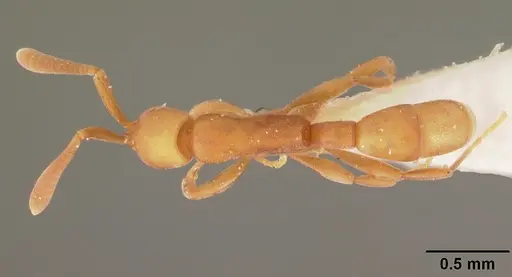
Literature
Loading distribution map...Loading products...