
Pristomyrmex trogor
- Sci. Name
- Pristomyrmex trogor
- Tribe
- Crematogastrini
- Subfamily
- Myrmicinae
- Author
- Bolton, 1981
- Distribution
- Found in 2 countries
Introduction
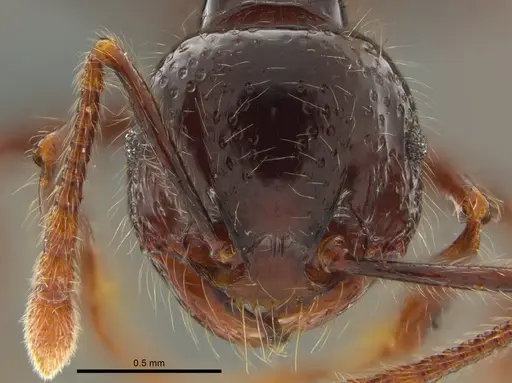
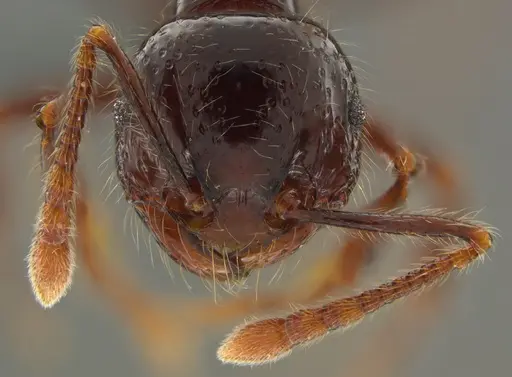
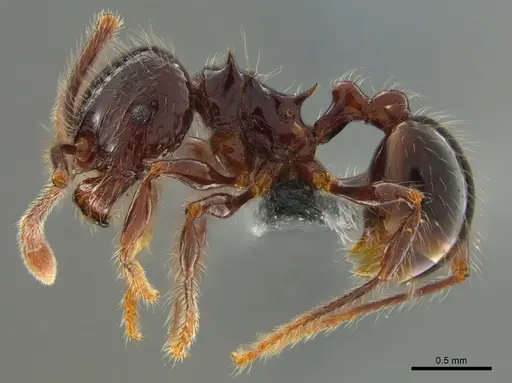
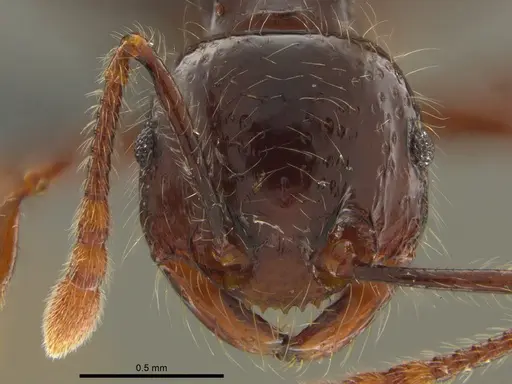
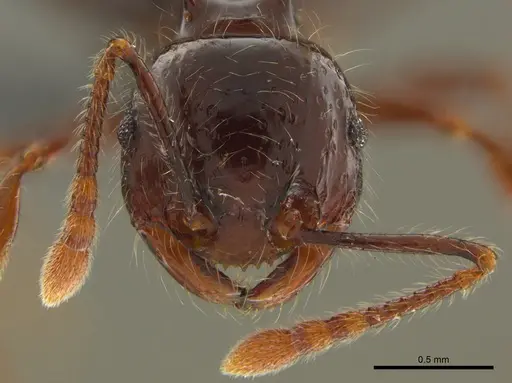
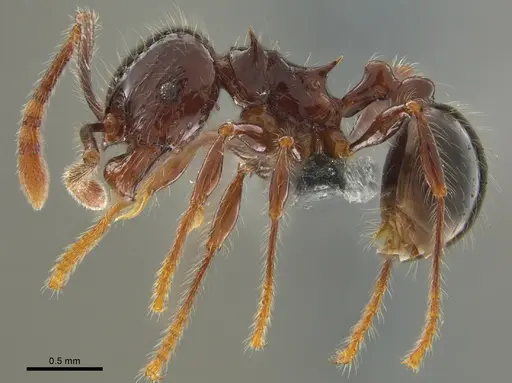
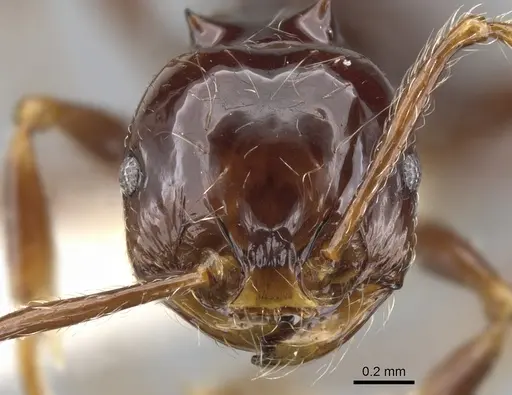
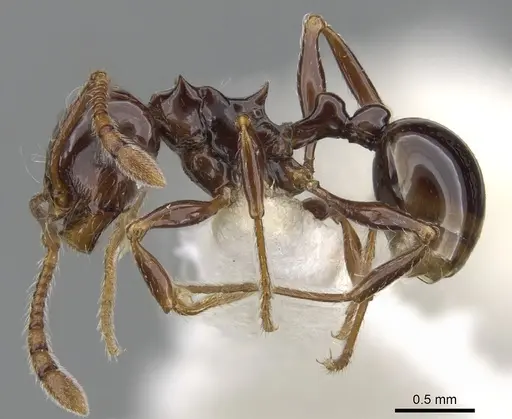
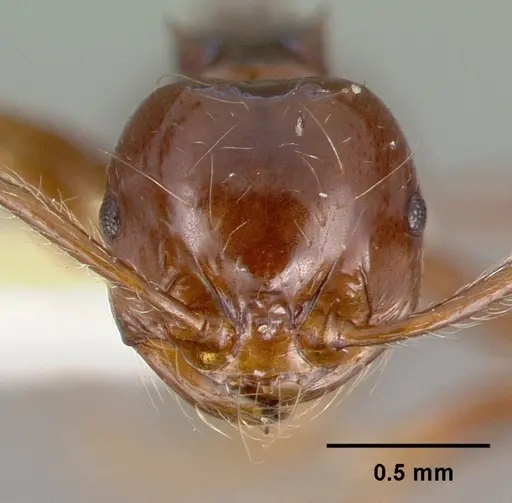
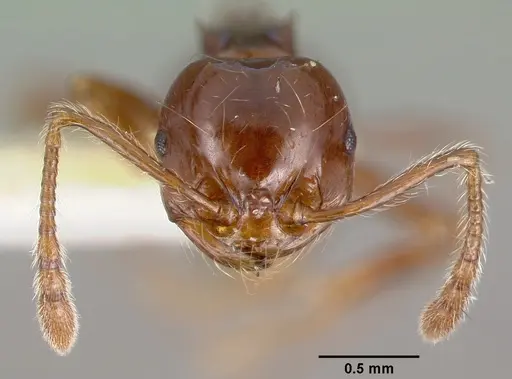
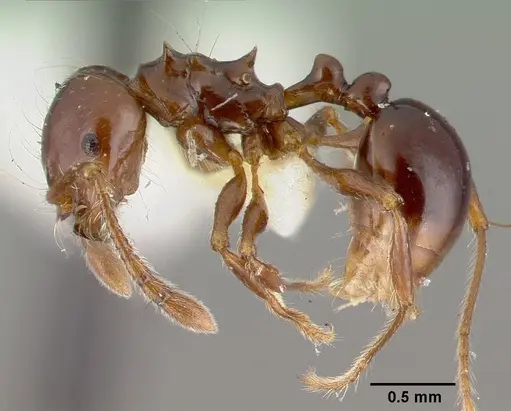
Pristomyrmex trogor is a small, glossy ant species native to the Afrotropical region, specifically found in the Democratic Republic of Congo and Rwanda. Workers measure 3.4-4.0 mm in total length , with a uniform chestnut-brown coloration, smooth and shining body, lack frontal carinae, and possess a pair of short spines on the pronotum . This species belongs to the Pristomyrmex Quadridens Group and is related to P. africanus, P. fossulatus, and P. orbiceps . This species is poorly studied, with only museum specimens and recent survey records available. No live colonies have been observed, and biological data is extremely limited .
Quick Summary
- Difficulty: Hard
- Origin & Habitat: Afrotropical region, Democratic Republic of Congo (Mt Kahuzi,1900m elevation) and Rwanda (Nyungwe tropical rainforest, Gishwati at 2000m) [2][3][1]
- Colony Type: Unconfirmed, colony structure not documented. Based on related Pristomyrmex species, likely monogyne (single queen), but this is inferred [1].
- Size & Growth:
- Queen: Unknown, no queen described [1]
- Worker: ~3.4-4.0 mm total length [1]
- Colony: Unknown, no data available
- Growth: Unknown
- Development: Unknown, no species-specific data. Based on typical Myrmicinae patterns, estimate 6-10 weeks at optimal temperature, but this is inferred [1]. (Development timeline is unstudied, estimate based on genus-level patterns.)
- Antkeeping:
- Temperature: Likely 22-26°C based on highland rainforest habitat [2][3]. Provide a gradient and observe colony activity.
- Humidity: High humidity likely required, rainforest habitat. Keep nest substrate consistently moist but not waterlogged [2][3].
- Diapause: Unknown, no data on seasonal requirements [1].
- Nesting: No specific nesting data. Based on morphology and habitat, likely nest in rotting wood or under bark. Use Y-tong or plaster nest with moisture retention [1].
- Behavior: Temperament unstudied. Based on subfamily Myrmicinae, defense mechanism is smear using modified stinger. Workers are small (under 4mm), so escape risk is high, use fine mesh and barriers. Related species are not particularly aggressive.
- Common Issues: this species has never been kept in captivity, no established care protocols exist, biological data is extremely limited, making informed care difficult, colony size and growth rate are unknown, making it hard to plan long-term housing, the species may have specific humidity or dietary requirements that are completely unknown, no information on whether they accept sugar sources or require live prey
Why This Species Is a Challenge
Pristomyrmex trogor presents a unique challenge because nothing is known about its biology in captivity or in the wild beyond museum specimens. This species has only been documented from the type series collected in 1957,plus recent survey records in Rwanda. No one has ever observed a live colony, documented their diet, or studied their development. Start with conservative, generalist approaches and document everything carefully. Your observations could become the first real data on this species [1][2].
Housing and Nest Setup
Since no direct nesting data exists, make educated guesses based on morphology and habitat. Workers are small (3.4-4.0 mm), smooth-bodied, and glossy, suggesting they prefer humid, enclosed spaces. A Y-tong or plaster nest with good moisture retention is reasonable. The highland rainforest habitat indicates consistent humidity. Start with a test tube setup for founding colonies, then transition to a small formicarium. Use fine mesh on all openings and apply barriers to prevent escapes [1].
Feeding Recommendations
No specific dietary data exists. Based on typical Pristomyrmex behavior, they are likely omnivorous generalists. Start with sugar water or honey as a constant sugar source, and protein sources like small insects. Feed protein 2-3 times per week and keep sugar available constantly. Monitor for acceptance and adjust based on what they consume [1].
Temperature and Humidity
The collection locations in Rwanda suggest cooler, temperate conditions. Aim for temperatures of 22-26°C, with a gradient for choice. Humidity should be high, keep nest substrate consistently moist but not waterlogged, with some drier areas. Good ventilation prevents mold while maintaining humidity. No diapause data exists, but monitor for seasonal slowdowns [2][3].
Behavior and Observation
With no behavioral observations published, you will discover everything firsthand. Based on related species, expect active foragers that search for food systematically. Workers are small, so movements may be quick. The defense mechanism is smear using a modified stinger, based on subfamily Myrmicinae. Document observations carefully, as any colony behavior could be the first recorded [1].
Frequently Asked Questions
How difficult is Pristomyrmex trogor to keep?
Difficulty is hard since this species has never been kept in captivity. This makes it an expert-level species for antkeepers who want to pioneer captive husbandry of an unstudied species [1].
What do Pristomyrmex trogor ants eat?
Diet is completely unstudied. Based on related Pristomyrmex species, they are likely omnivorous generalists. Start with sugar water/honey and small insects, then adjust based on what they accept [1].
What temperature do Pristomyrmex trogor need?
Based on their highland African rainforest habitat, aim for 22-26°C. Provide a temperature gradient so they can choose [2][3].
How big do Pristomyrmex trogor colonies get?
Colony size is completely unknown, no colony data has ever been published. Workers are small (3.4-4.0 mm), so colonies may remain modest, but this is speculative [1].
Do Pristomyrmex trogor ants sting?
Stinging capability is not documented, but based on subfamily Myrmicinae, they have a smear defense mechanism using a modified stinger.
Can I keep multiple Pristomyrmex trogor queens together?
Colony structure is unconfirmed. No data exists on whether they are monogyne or polygyne. Do not attempt combining unrelated queens without data [1].
How long does development take for Pristomyrmex trogor?
Egg-to-worker timeline is unknown. Based on typical Myrmicinae patterns, estimate 6-10 weeks at optimal temperature, but this is inferred [1].
What humidity do Pristomyrmex trogor require?
High humidity is likely required based on their rainforest habitat. Keep nest substrate consistently moist but not waterlogged [2][3].
Do Pristomyrmex trogor need hibernation?
Diapause requirements are completely unknown. The highland location suggests cooler seasonal temperatures but likely not true hibernation. Monitor for seasonal slowdowns [1].
Are Pristomyrmex trogor good for beginners?
No, this species is not recommended for beginners. No captive care protocols exist, and all husbandry knowledge must be developed through experimentation [1].
When do Pristomyrmex trogor have nuptial flights?
Nuptial flight timing is completely unknown. No observations of mating flights have been published [1].
What nest type is best for Pristomyrmex trogor?
No specific nesting data exists. Based on their smooth body and rainforest habitat, a Y-tong or plaster nest with moisture retention would be appropriate [1].
Report an Issue
The current care sheet is based fully on literature. See inconsistencies, or something that's incorrect? Please , it will be resolved after review from an admin. Contributing to the blogs tab also helps providing information, to make us be able to further improve the caresheets. Thank you for your support!
References

This caresheet is licensed under CC BY-SA 4.0 .
Community Blogs
CASENT0776096
View on AntWeb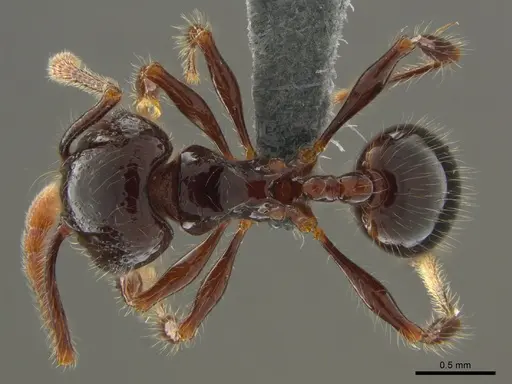
CASENT0776097
View on AntWeb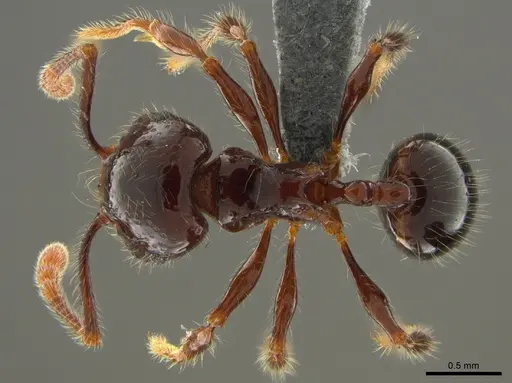
CASENT0776098
View on AntWeb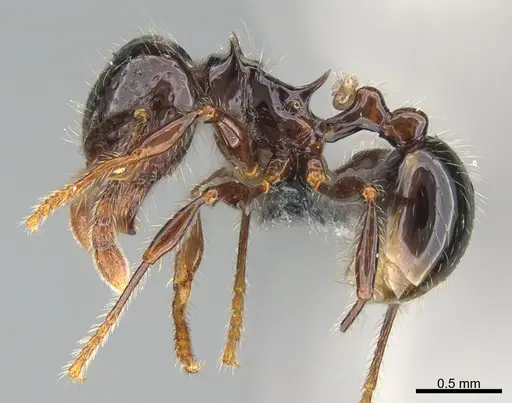
CASENT0901704
View on AntWeb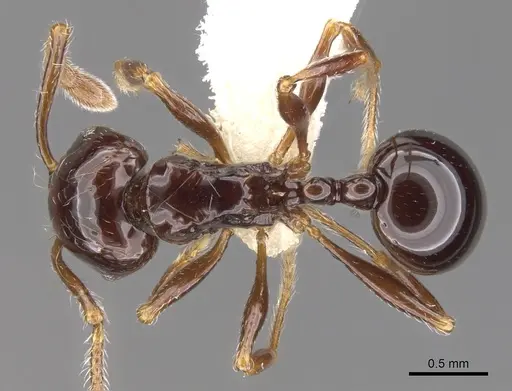
CASTYPE13686
View on AntWeb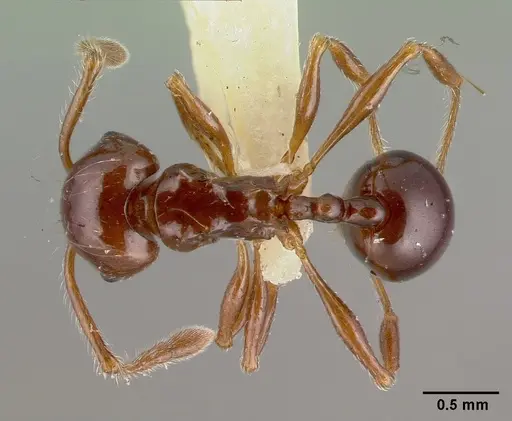
Literature
Loading distribution map...Loading products...