
Pristomyrmex trispinosus
- Sci. Name
- Pristomyrmex trispinosus
- Tribe
- Crematogastrini
- Subfamily
- Myrmicinae
- Author
- Donisthorpe, 1946
- Distribution
- Found in 1 countries
Introduction
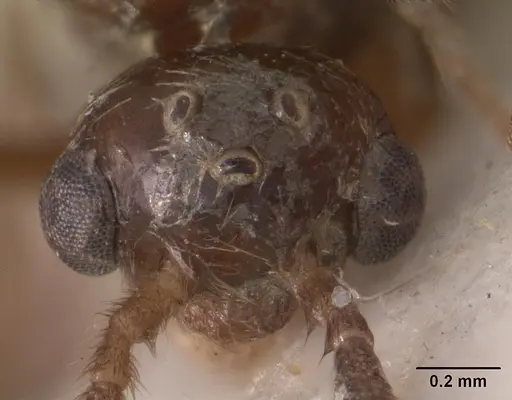
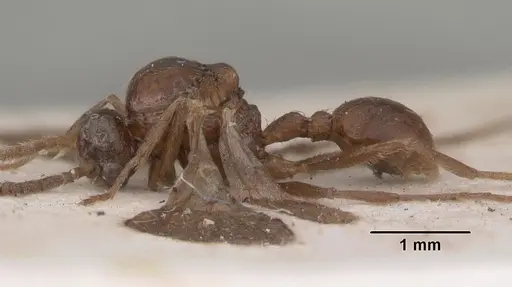
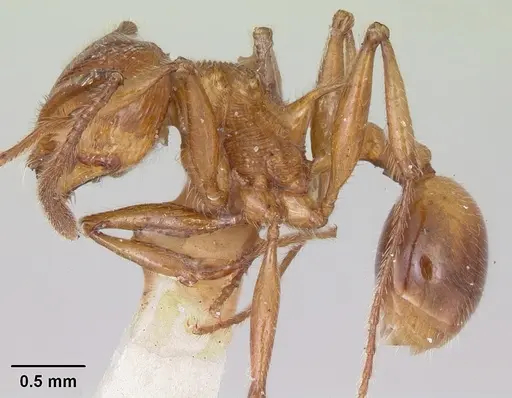
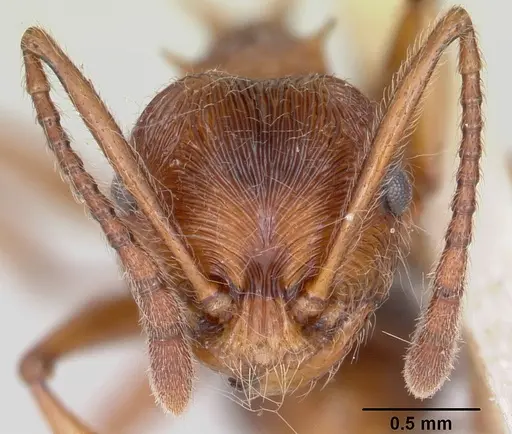
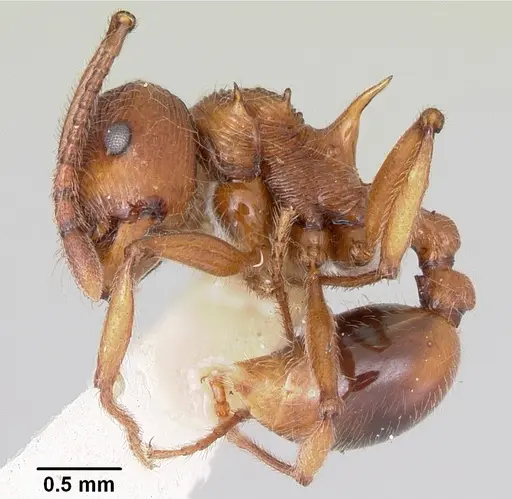
Pristomyrmex trispinosus is a small ant species endemic to Mauritius, found nowhere else in the world. Workers measure 4.5-4.68 mm and have three pairs of prominent spines on their body, with coarse striations covering their dorsal surfaces, ranging from yellow-brown to reddish-brown . When disturbed, they simulate death to avoid predators, a behavior called thanatosis . Queens have never been collected, so their reproductive biology remains unknown .
Quick Summary
- Difficulty: Unknown, species cannot be kept due to lack of queen specimens
- Origin & Habitat: Mauritius island in the Indian Ocean, found under flat stones in natural areas [1]
- Colony Type: Unknown, queens have never been collected, so colony structure is unconfirmed [1]
- Size & Growth:
- Antkeeping:
- Temperature: Temperature needs are unknown, based on Mauritius being tropical, keep around 22-28°C and observe [1]
- Humidity: Keep nest substrate consistently moist but not waterlogged, as they are from a tropical island [1]
- Diapause: Unknown, no research on overwintering requirements. Mauritius has mild temperatures, so diapause may not be necessary [1]
- Nesting: In the wild, colonies nest under flat stones. Use Y-tong, plaster, or soil nests with narrow chambers. Avoid tall open spaces [1]
- Behavior: This species is known for thanatosis, playing dead when disturbed. They are relatively docile and not aggressive. Workers are active foragers. Escape prevention should be standard for medium-sized ants [1]
- Common Issues: queens have never been found, so this species cannot be established from wild-caught colonies [1], extremely rare in the antkeeping hobby with no established care protocols [1], no information on what foods they accept in captivity [1], unknown whether they need hibernation or year-round active conditions [1]
Why This Species Is So Unusual
Pristomyrmex trispinosus is poorly documented. Despite being described in 1946,no queen has ever been collected. This means we don't know how they reproduce or their colony structure. Only workers and males have been found in wild nests [1].
Natural History and Distribution
This species is endemic to Mauritius. Workers have been collected from nests under flat stones, typically with up to 40 workers, males, larvae, and pupae [1]. The three pairs of spines distinguish it from related species [1].
Defensive Behavior
When disturbed, these ants simulate death to avoid predation, a behavior called thanatosis [1]. In captivity, you might observe this during maintenance. Give them time to recover [1].
Defense Mechanism
Pristomyrmex trispinosus belongs to the subfamily Myrmicinae and tribe Crematogastrini. Ants in this group typically have a smear defense mechanism, where they use a modified, flattened stinger to wipe venom onto enemies rather than piercing flesh. No specific studies exist on this species' defense, but it likely follows this pattern.
Keeping This Species - Current Status
Pristomyrmex trispinosus cannot be recommended for antkeeping because queens have never been collected. Without queens, colonies cannot be established. If interested in Pristomyrmex, consider other species with known care [1].
Frequently Asked Questions
Can I keep Pristomyrmex trispinosus as a pet?
No, this species cannot be kept in captivity because queens have never been collected [1].
Where can I find Pristomyrmex trispinosus queens?
Nowhere, queens of this species have never been documented [1].
What do Pristomyrmex trispinosus eat?
Unknown, no feeding observations have been documented for this species [1].
What temperature do Pristomyrmex trispinosus need?
No specific temperature data exists. Based on Mauritius climate, keep around 22-28°C [1].
Do Pristomyrmex trispinosus ants sting?
Unknown, no sting records exist for this species. As Myrmicinae, they likely can sting, but it's unstudied [1].
How big do Pristomyrmex trispinosus colonies get?
The largest documented wild colony had up to 40 workers [1].
Are Pristomyrmex trispinosus aggressive?
No specific aggression data exists, but they are not noted as aggressive. Their primary defense is playing dead [1].
Do Pristomyrmex trispinosus need hibernation?
Unknown, no research on overwintering exists. Mauritius has mild temperatures, so diapause may not be necessary [1].
What makes Pristomyrmex trispinosus different from other ants?
They have three pairs of prominent spines, are endemic to Mauritius, and queens have never been documented despite being described in 1946 [1].
Is Pristomyrmex trispinosus endangered?
Population status is unknown. They're endemic to Mauritius but no conservation assessments exist [1].
Report an Issue
The current care sheet is based fully on literature. See inconsistencies, or something that's incorrect? Please , it will be resolved after review from an admin. Contributing to the blogs tab also helps providing information, to make us be able to further improve the caresheets. Thank you for your support!
References

This caresheet is licensed under CC BY-SA 4.0 .
Community Blogs
CASENT0102284
View on AntWeb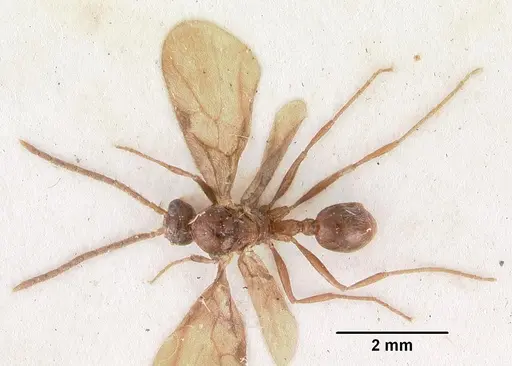
CASENT0102285
View on AntWeb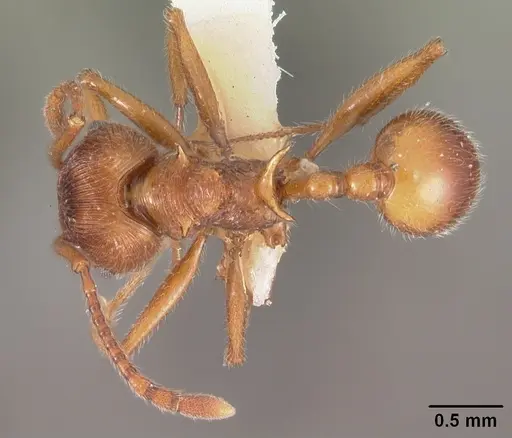
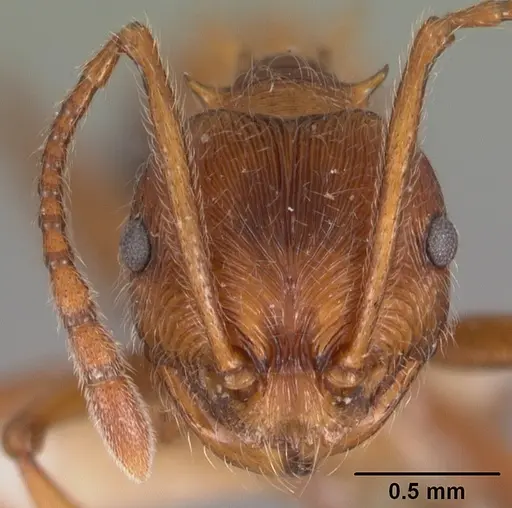
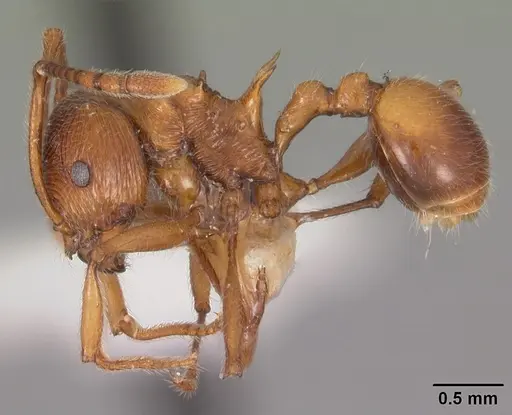
CASENT0103300
View on AntWeb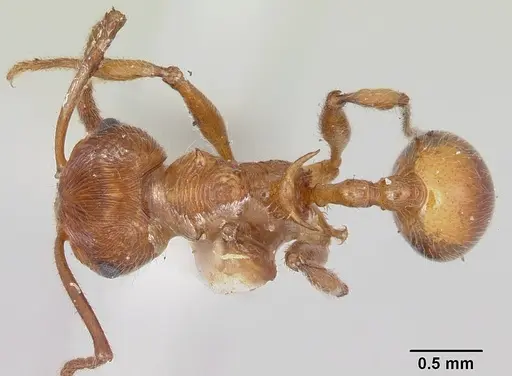
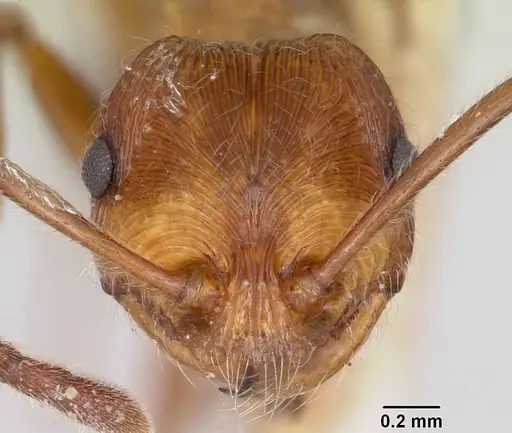
CASENT0103301
View on AntWeb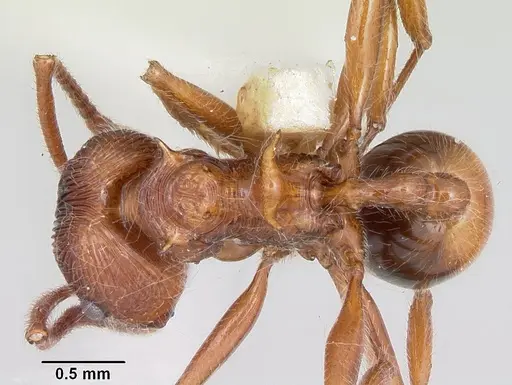
Literature
Loading distribution map...Loading products...