
Pristomyrmex orbiceps
- Sci. Name
- Pristomyrmex orbiceps
- Tribe
- Crematogastrini
- Subfamily
- Myrmicinae
- Author
- Santschi, 1914
- Distribution
- Found in 9 countries
Introduction
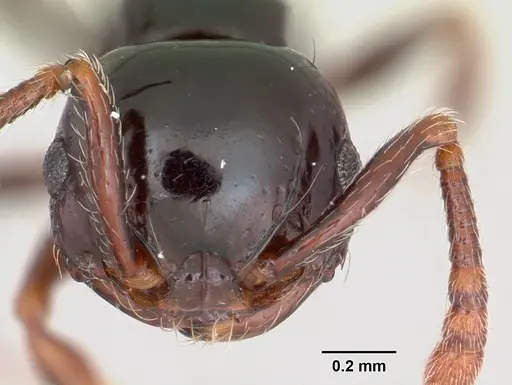
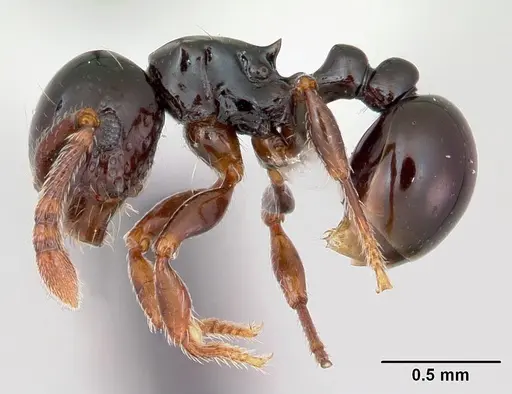
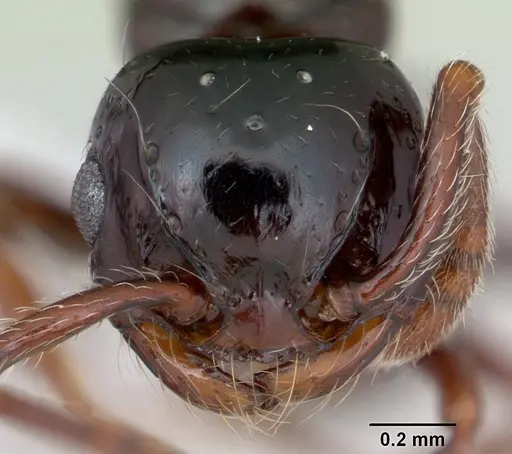
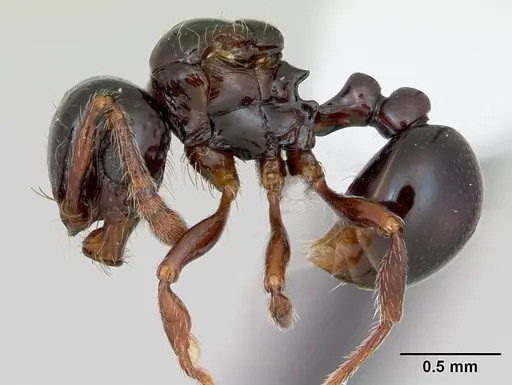
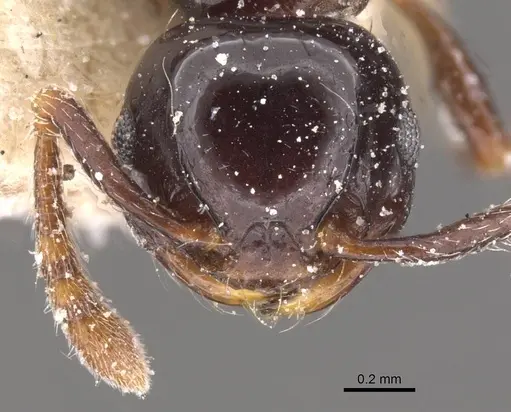
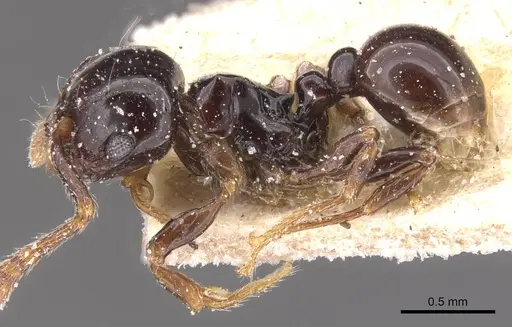
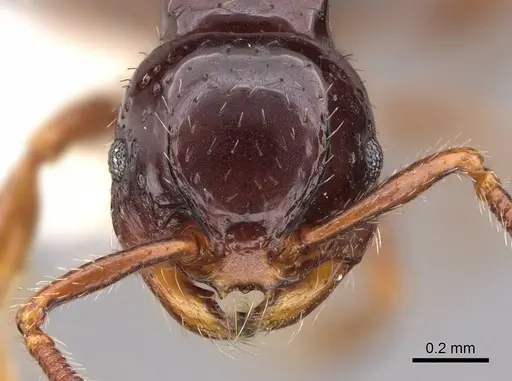
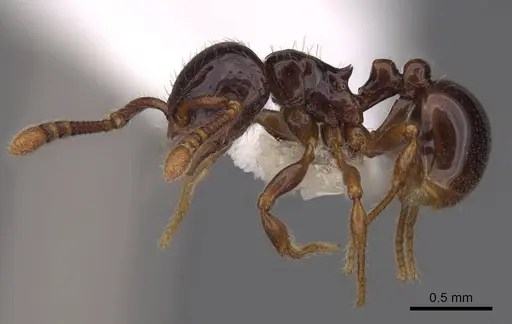
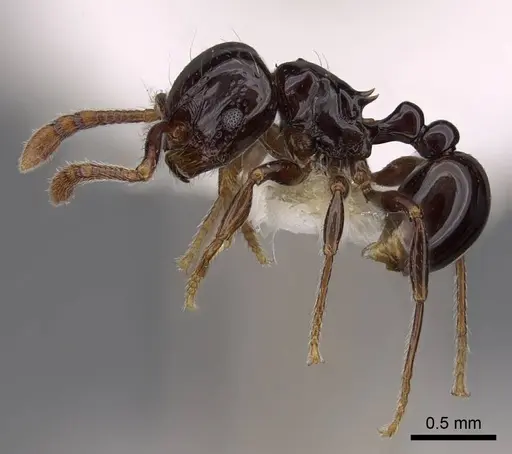
Pristomyrmex orbiceps is a small, dark ant species native to the wet forest zones of West and Central Africa. Workers measure 2.9-3.4 mm and are uniformly blackish brown to black with lighter appendages, and queens are slightly larger at 3.24-3.59 mm . They have distinctive blunt tubercles on the pronotum rather than sharp spines, and their eyes typically have 7-9 ommatidia . This species nests in fallen twigs or wood within the leaf litter layer, with workers foraging singly through forest floor debris . Their distribution spans multiple countries including Cameroon, Ghana, Ivory Coast, Democratic Republic of Congo, Gabon, and Uganda, from lowland to mid-elevation wet forests . What makes P. orbiceps interesting is its specialized nesting in decaying wood within leaf litter, a microhabitat that differs from many Myrmicinae species that nest in soil or larger dead wood.
Quick Summary
- Difficulty: Medium
- Origin & Habitat: Wet forest zones of West and Central Africa, found in leaf litter of lowland and montane forests in countries including Cameroon, Ghana, Ivory Coast, Democratic Republic of Congo, Equatorial Guinea, Gabon, Nigeria, Uganda, Central African Republic, and Angola [1][2][3].
- Colony Type: Colony structure is unconfirmed in scientific literature. Based on typical Pristomyrmex genus patterns, they likely establish single-queen (monogyne) colonies, but this has not been directly documented for this species.
- Size & Growth:
- Queen: ~3.24-3.59 mm [1]
- Worker: ~2.9-3.4 mm [1]
- Colony: Colony size data unavailable, no specific maximum observed or estimated in research.
- Growth: Unconfirmed
- Development: Unconfirmed, no species-specific data available. (Based on genus patterns, estimate 6-10 weeks at optimal temperature, but this is inferred and not confirmed.)
- Antkeeping:
- Temperature: Keep warm around 22-26°C, inferred from tropical forest habitat [1].
- Humidity: Keep nest substrate consistently moist but not waterlogged, as they inhabit damp leaf litter [1].
- Diapause: Diapause requirements are unconfirmed. As a tropical species, they likely do not require hibernation.
- Nesting: In nature, they nest in fallen twigs in leaf litter. In captivity, use test tube setups or small nests with moist substrate, such as Y-tong or plaster nests with moisture chambers [1].
- Behavior: Workers forage singly through leaf litter and are not particularly aggressive. Their defense mechanism is smearing venom onto enemies using a modified stinger, typical of Myrmicinae. Escape risk is moderate due to their small size (under 4mm), so use standard barrier methods like fluon on test tube setups [1].
- Common Issues: escape prevention is critical, their small size means they can squeeze through tiny gaps in equipment., colonies may fail if humidity drops too low, as they require consistently damp leaf litter conditions., slow growth compared to larger ant species may lead to beginner impatience and overfeeding., wild-caught colonies may carry parasites or pathogens that can cause colony decline in captivity., test tube setups require careful water management to prevent flooding of the nest chamber.
Natural History and Distribution
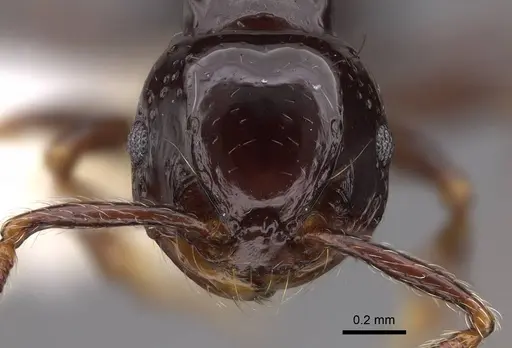
Pristomyrmex orbiceps is widely distributed throughout the wet forest zones of West and Central Africa. Their range includes Angola, Cameroon, Central African Republic, Democratic Republic of Congo, Equatorial Guinea, Gabon, Ghana, Ivory Coast, Nigeria, and Uganda. They have been documented at elevations ranging from 110m in lowland Gabon forests to 1150m in Cameroon montane areas [2][3]. In their natural habitat, these ants construct nests in fallen twigs or larger pieces of wood sitting in the leaf litter layer. Workers forage individually through the leaf litter, searching for small prey items and honeydew from aphid colonies [1]. The species can be identified by its smooth, polished head surface between the frontal carinae, blunt tubercles on the pronotum, and eyes with typically 7-9 ommatidia in the longest row [1].
Housing and Nest Setup
In captivity, Pristomyrmex orbiceps does well in test tube setups with a constant water reservoir, combined with a moist foraging area. The key requirement is maintaining high humidity that mimics their natural leaf litter microhabitat. You can use a test tube as the nest chamber connected to a foraging area, such as another test tube or a small container with damp substrate. Keep the nest tube dark to simulate the dark interior of decaying twigs. For the foraging area, use damp substrate like coco fiber or soil. Alternatively, small naturalistic setups with pieces of decaying wood and damp leaf litter work well. Y-tong (AAC) nests or plaster nests with moisture chambers are also suitable options. Always provide a water tube as a drinking source. Because of their small size, ensure all connections are secure and consider using fluon barriers to prevent escapes [1].
Feeding and Diet
Based on typical Pristomyrmex feeding biology, these ants are generalist feeders that consume small insects, honeydew, and likely accept sugar sources. In captivity, offer small protein sources like fruit flies, pinhead crickets, small mealworms, and other appropriately-sized insects. Since they forage in leaf litter, they likely prey on tiny arthropods like springtails, mites, and small beetles. You can offer sugar water or honey water as a carbohydrate source. Feed small amounts every 2-3 days and remove uneaten food to prevent mold. Their small size means even tiny prey items are appropriate. Observe your colony's preferences and adjust feeding accordingly [1].
Temperature and Humidity Requirements
Pristomyrmex orbiceps originates from wet tropical forests, so they require warm and humid conditions. Keep the nest area at 22-26°C, which is typical for tropical ant species. You can use a heating cable on one side of the nest to create a gentle temperature gradient, allowing ants to regulate their own temperature. Humidity is critical, maintain consistently damp substrate conditions. The nest substrate should feel moist but not waterlogged. You can achieve this by connecting the nest to a water reservoir or misting the setup regularly. Avoid both stagnant air and excessive airflow to maintain balance [1].
Colony Development and Growth
Specific development data for P. orbiceps is not available in scientific literature. Based on typical Pristomyrmex genus patterns and general Myrmicinae development, expect the following approximate timeline: eggs hatch in 1-2 weeks, larvae develop over 2-4 weeks, and pupal stage lasts 1-2 weeks, giving an estimated 6-10 weeks from egg to first worker under optimal conditions (around 24-26°C). Queens measure 3.24-3.59 mm while workers are smaller at 2.9-3.4 mm. The first workers (nanitics) will likely be smaller than mature workers. Colony growth will be gradual, these are not fast-growing ants. Be patient with these ants, as their small size and likely moderate growth rate mean development takes time. Avoid disturbing the queen during founding, she should seal herself into a chamber and raise the first brood alone [1].
Frequently Asked Questions
Can I keep Pristomyrmex orbiceps in a test tube?
Yes, test tube setups work well for this species. Use a test tube with a water reservoir as the nest chamber, connected to a foraging area. Keep the nest dark and maintain high humidity by ensuring the substrate in the foraging area stays damp. Their small size means you need to ensure all connections are secure to prevent escapes [1].
How long does it take for Pristomyrmex orbiceps to produce first workers?
Exact development time is unconfirmed for this species. Based on typical Pristomyrmex and Myrmicinae patterns, expect approximately 6-10 weeks from egg to first worker at optimal temperature (around 24-26°C). This is an estimate based on genus-level data, not species-specific measurements [1].
What do Pristomyrmex orbiceps eat?
Based on typical Pristomyrmex biology, they are generalist feeders. Offer small insects like fruit flies, pinhead crickets, or small mealworms as protein sources. They likely also accept sugar sources like honey water or sugar water. Feed small amounts every 2-3 days and remove uneaten food to prevent mold [1].
Do Pristomyrmex orbiceps ants sting?
Pristomyrmex species are not known for having painful stings. These are small ants (2.9-3.4 mm workers) and their primary defense is smearing venom onto enemies using a modified stinger, typical of Myrmicinae. They are not considered dangerous to humans [1].
Are Pristomyrmex orbiceps good for beginners?
This species is rated as Medium difficulty. While not the most challenging ant species, they do require specific conditions, high humidity and warm temperatures that mimic their wet forest habitat. Beginners should be prepared to maintain consistent moisture levels and may need to wait patiently for colony growth, which is gradual [1].
What temperature do Pristomyrmex orbiceps need?
Keep them at 22-26°C, inferred from their tropical forest habitat. This species comes from wet tropical forests in West and Central Africa, so they prefer warm, stable conditions [1].
Do Pristomyrmex orbiceps need hibernation?
Diapause requirements are unconfirmed. As a wet forest species from tropical Africa, they likely do not require a true hibernation period. However, they may show reduced activity during cooler periods. Monitor your colony and reduce feeding if activity decreases significantly, but do not force cold temperatures on them [1].
How big do Pristomyrmex orbiceps colonies get?
Maximum colony size is not well documented in scientific literature. Colony size data is unavailable, so no specific estimates can be provided [1].
When should I move Pristomyrmex orbiceps to a formicarium?
Move to a larger setup when the colony becomes crowded in the test tube, but since colony size is unconfirmed, monitor for space needs. Ensure the new setup maintains the high humidity they require. Naturalistic setups with damp substrate and decaying wood pieces work well [1].
Why are my Pristomyrmex orbiceps dying?
Common causes include: low humidity (they require consistently damp conditions), temperature extremes (keep at 22-26°C), mold from overwatering or uneaten food, escapes due to inadequate barrier protection, or parasites from wild-caught colonies. Check that your setup maintains proper humidity without flooding, remove uneaten food promptly, and ensure escape prevention is adequate for their small size [1].
Report an Issue
The current care sheet is based fully on literature. See inconsistencies, or something that's incorrect? Please , it will be resolved after review from an admin. Contributing to the blogs tab also helps providing information, to make us be able to further improve the caresheets. Thank you for your support!
References

This caresheet is licensed under CC BY-SA 4.0 .
Community Blogs
CASENT0417737
View on AntWeb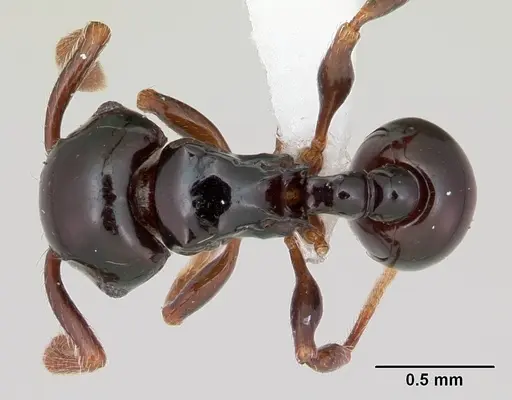
CASENT0417739
View on AntWeb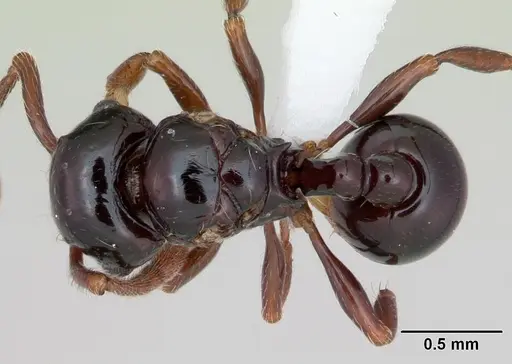
CASENT0900315
View on AntWeb
CASENT0913031
View on AntWeb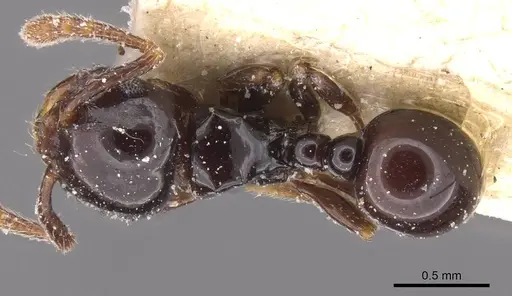
CASENT0922989
View on AntWeb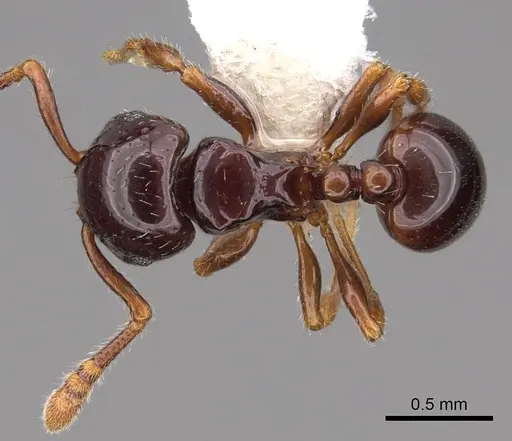
CASENT0922993
View on AntWeb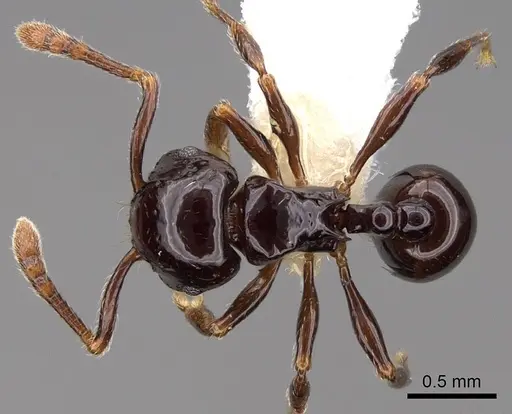
Literature
Loading distribution map...Loading products...