
Pristomyrmex levigatus
- Sci. Name
- Pristomyrmex levigatus
- Tribe
- Crematogastrini
- Subfamily
- Myrmicinae
- Author
- Emery, 1897
- Distribution
- Found in 2 countries
Introduction
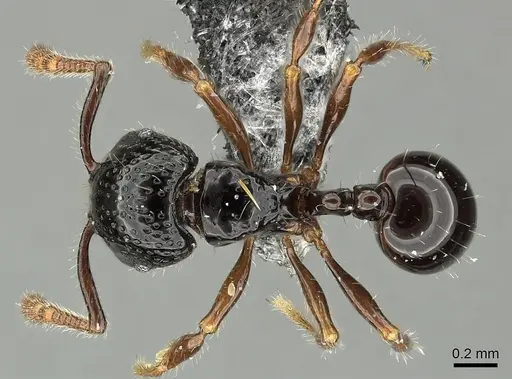
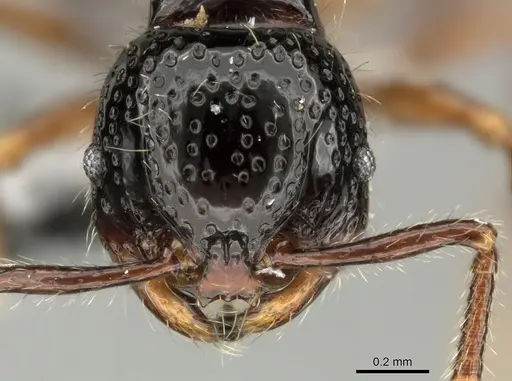
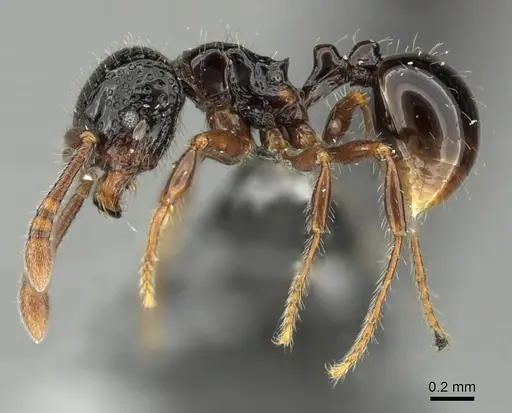
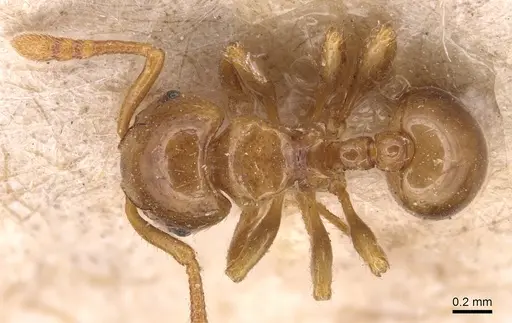
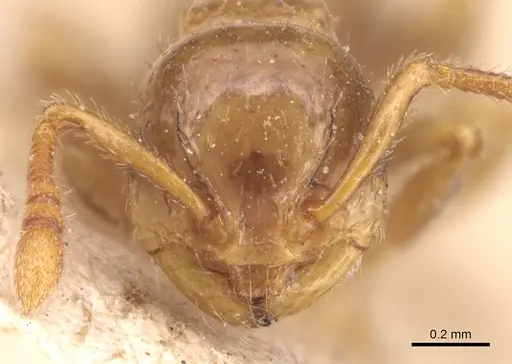
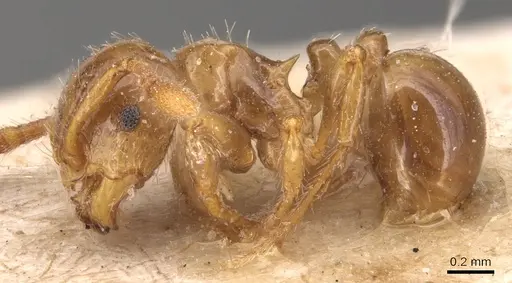
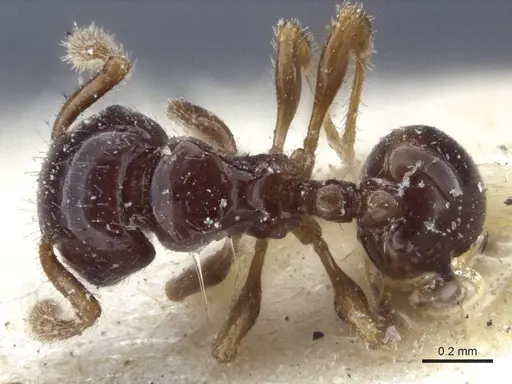
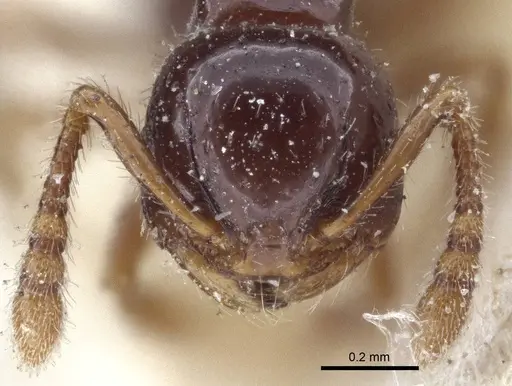
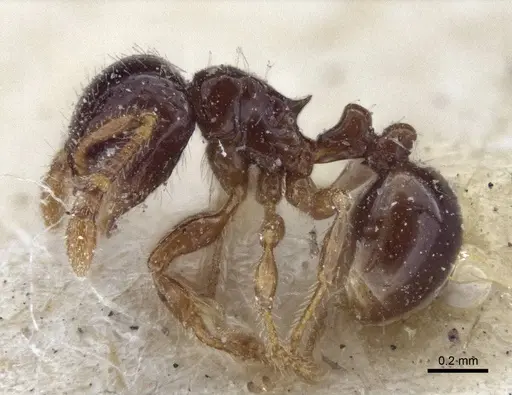
Pristomyrmex levigatus is a tiny, ground-dwelling ant species native to the Australasian and Indo-Malayan regions, including New Guinea, the Philippines, Solomon Islands, Micronesia, and Wallis and Futuna Islands . Workers measure 2.36 to 2.96 mm in total length, while queens reach 2.92 to 3.34 mm . They display a golden-brown to reddish-brown coloration and possess smooth, shining dorsal surfaces . This species belongs to the levigatus group within Pristomyrmex and appears to be a basal ancestor from which several other species in this group evolved . You will typically find them in rainforest habitats, collected from leaf litter samples . The workers feature four teeth on their mandibles, propodeal teeth or short spines, and relatively large eyes containing five to eight ommatidia in the longest row .
Quick Summary
- Difficulty: Medium
- Origin & Habitat: Native to the Australasian and Indo-Malayan regions, specifically New Guinea, the Philippines, Solomon Islands, Micronesia (Federated States of), and Wallis and Futuna Islands. They inhabit rainforest environments and are collected from leaf litter samples [1][2][3].
- Colony Type: Colony structure remains unconfirmed. Workers and queens have been documented together, but whether they form single-queen or multi-queen colonies is unknown.
- Size & Growth:
- Queen: ~2.92-3.34 mm [1]
- Worker: ~2.36-2.96 mm [1]
- Colony: Unknown, likely small colonies typical of litter-dwelling Myrmicinae
- Growth: Moderate
- Development: 6-10 weeks (estimated based on related Myrmicinae species) (No direct development data exists for this species. Estimates rely on typical genus patterns for small tropical Myrmicinae.)
- Antkeeping:
- Temperature: Keep warm and stable, roughly low-to-mid 20s°C. They come from tropical rainforest environments in the Pacific islands, so they need consistent warmth. A gentle gradient allows workers to self-regulate.
- Humidity: High humidity required. These ants live in rainforest leaf litter where conditions stay consistently moist. Keep the nest substrate damp but not waterlogged, with some drier areas for workers to retreat to if needed.
- Diapause: Unknown. They likely do not require true hibernation given their tropical distribution, but they may reduce activity during cooler periods. Observe your colony for seasonal changes in activity.
- Nesting: Use a naturalistic setup with moist substrate like a dirt-filled formicarium or Y-tong nest. They prefer tight, humid chambers scaled to their tiny size. Avoid dry, airy setups. A layer of leaf litter or decaying wood in the outworld mimics their natural litter-layer habitat.
- Behavior: These are small, relatively docile ants that forage in the leaf litter layer. They are not aggressive and unlikely to sting. Workers are active foragers searching for small prey and honeydew. Their tiny size means they can escape through very small gaps, so excellent escape prevention is essential. They are not known for climbing smooth surfaces, but their small size makes them adept at finding gaps in equipment. As members of the tribe Crematogastrini, they possess a modified, flattened spatulate stinger used to wipe or smear venom onto enemies rather than piercing flesh.
- Common Issues: escape prevention is critical due to their very small size, use fine mesh and tight-fitting lids., high humidity requirements can lead to mold problems if ventilation is poor., lack of documented care information means you may need to experiment with conditions., wild-caught colonies may contain parasites that can devastate captive colonies., small colony size makes them vulnerable to stress, avoid disturbing them frequently.
Housing and Nest Setup
Pristomyrmex levigatus requires a setup that recreates their natural leaf litter habitat. A naturalistic terrarium-style formicarium works best. Fill the nest area with moist soil or plaster that holds humidity, and provide a shallow water reservoir. The outworld should include pieces of leaf litter, small twigs, and perhaps a small piece of rotting wood to mimic their natural foraging environment. Because they are so tiny, all connections between the nest and outworld must be sealed with cotton or fine mesh. These ants can squeeze through gaps smaller than 1 mm. A test tube setup can work for founding colonies if kept humid, but a more naturalistic setup will likely yield better long-term results. Avoid setups with large open spaces as these small ants may become stressed in expansive areas [1].
Feeding and Diet
Based on their small size and litter-dwelling habits, Pristomyrmex levigatus likely feeds on small arthropods, honeydew, and nectar like other small Myrmicinae. Offer small live prey such as fruit flies, pinhead crickets, or tiny insects. They will likely accept sugar water or honey as an energy source. Feed small amounts every 2 to 3 days and remove any uneaten prey after 24 hours to prevent mold. Because of their tiny size, prey items should be appropriately scaled. Even small fruit flies may need to be broken up for them to manage. Observe your colony to determine their preferences and adjust feeding accordingly.
Temperature and Humidity Management
Maintain temperatures between 22 and 26°C, which is typical for tropical rainforest species. Room temperature in most homes should work, but you may need a small heating cable on one side of the nest during cooler months. Place the heating element on top of the nest, not underneath, to prevent drying out the substrate. Humidity is critical. Keep the nest substrate consistently moist but not saturated. Check daily and mist or add water droplets when the surface begins drying. A hygrometer near the nest helps monitor conditions. Good ventilation is essential to prevent mold, but avoid placing the colony in direct airflow from fans or air conditioning units that could dry them out.
Handling and Observation
These tiny ants are not suited for hands-on handling. When you need to move or observe them, use red lighting or work in dim conditions as they are less active and less likely to escape. Always work over a white surface so you can spot any escapees. Because of their small size and speed, transferring colonies requires patience and practice. Use soft brushes to guide workers when necessary, and always have a backup plan like a damp paper towel nearby to catch escaped ants. Regular observation is important to monitor colony health, but avoid opening the nest too frequently as disturbance can stress small colonies.
Colony Health and Problem Solving
Watch for signs of colony stress including workers dying in large numbers, brood disappearing, or the queen stopping egg production. Mold is the most common problem. Combat it by improving ventilation, removing uneaten food promptly, and replacing damp substrate if needed. If mold becomes severe, you may need to transfer the colony to a fresh setup. Escape is another major concern. Regularly inspect all connections and seals. A small paintbrush dipped in Fluon applied to the inner rim of the outworld provides an excellent barrier. If your colony seems sluggish, check temperature and humidity levels. Small colonies are more vulnerable to stress, so patience is key. These ants grow slowly and may take months to show significant growth.
Frequently Asked Questions
How long does it take for Pristomyrmex levigatus to produce first workers?
The exact timeline is unknown, but based on related small Myrmicinae species, expect 6 to 10 weeks from egg to first worker at optimal temperature around 24°C. Growth will be slow. Be patient and avoid disturbing the founding queen.
Can I keep Pristomyrmex levigatus in a test tube setup?
Yes, test tubes can work for founding colonies. Keep the water reservoir filled and wrap the tube in damp paper towels to maintain humidity. However, a naturalistic setup with moist substrate will likely support better long-term colony health.
Do Pristomyrmex levigatus ants sting?
They are not known for stinging and their small size means any sting would be negligible to humans. These ants are docile and focused on foraging in leaf litter rather than defending against large threats. As members of the tribe Crematogastrini, they possess a modified, flattened spatulate stinger used to wipe or smear venom onto enemies rather than piercing flesh.
What do Pristomyrmex levigatus eat?
Based on their size and habits, they likely accept small live prey, fruit flies, tiny insects, honey, and sugar water. Feed small amounts of appropriately-sized prey 2 to 3 times per week and provide constant access to sugar sources.
Are Pristomyrmex levigatus good for beginners?
This species is rated as Medium difficulty. While not the most challenging species, the lack of documented care information and their small size requiring excellent escape prevention make them better suited for keepers with some experience.
How big do Pristomyrmex levigatus colonies get?
Colony size is not documented in scientific literature. Based on their tiny worker size and litter-dwelling habits, colonies likely remain small.
Do Pristomyrmex levigatus need hibernation?
No. Being a tropical species from Pacific island rainforests, they do not require hibernation. They may reduce activity during cooler periods, but maintain warm temperatures year-round around 22 to 26°C.
Why are my Pristomyrmex levigatus escaping?
Their extremely small size means they can escape through tiny gaps. Use fine mesh on all ventilation holes, seal all connections with cotton or PTFE, and ensure lids fit tightly. Check seals daily.
When should I move my colony to a formicarium?
Move them when the test tube water reservoir becomes difficult to maintain or the colony has outgrown the tube. For Pristomyrmex, this is typically when you see 20 or more workers. Use a setup with small chambers and keep humidity high.
Can I keep multiple Pristomyrmex levigatus queens together?
We do not know their natural colony structure. Unless you observe them living peacefully together, keep only one queen per colony. Combining unrelated queens is not recommended without documented evidence they can coexist.
Report an Issue
The current care sheet is based fully on literature. See inconsistencies, or something that's incorrect? Please , it will be resolved after review from an admin. Contributing to the blogs tab also helps providing information, to make us be able to further improve the caresheets. Thank you for your support!
References

This caresheet is licensed under CC BY-SA 4.0 .
Community Blogs
Literature
Loading distribution map...Loading products...