
Pristomyrmex divisus
- Sci. Name
- Pristomyrmex divisus
- Tribe
- Crematogastrini
- Subfamily
- Myrmicinae
- Author
- Wang, 2003
- Distribution
- Found in 1 countries
Introduction
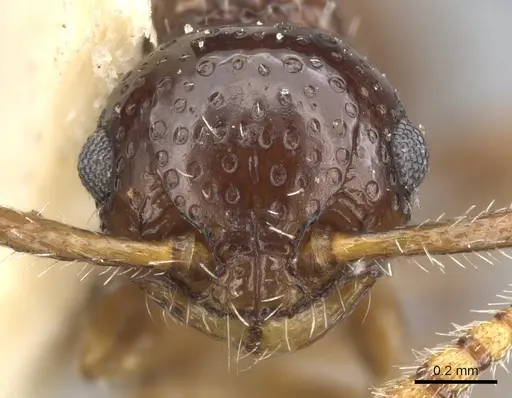
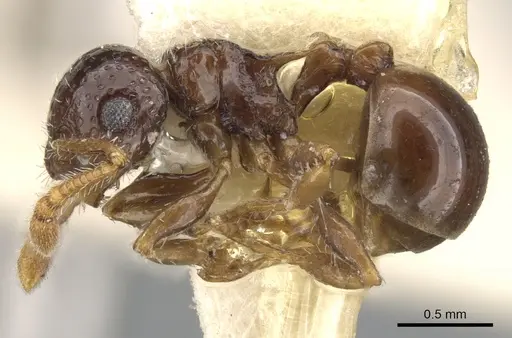
Pristomyrmex divisus is a small, reddish-brown ant endemic to the Philippines, recorded from Dumaguete in Negros Oriental . Workers are 3.0-3.4 mm in total length . Key features include a deep median furrow on the alitrunk, long propodeal spines, and foveolate head punctures . It is part of the Punctatus group and closely related to Pristomyrmex pulcher . The most unusual aspect is their defense mechanism: they use a modified stinger to smear venom onto enemies, typical for Myrmicinae ants.
Quick Summary
- Difficulty: Medium
- Origin & Habitat: Endemic to the Philippines, specifically Dumaguete in Negros Oriental, inhabiting warm, humid forest environments [1][2].
- Colony Type: Unknown, no documented colony structure for this species
- Size & Growth:
- Queen: Size data unavailable, no queen measurements documented
- Worker: 3.0-3.4 mm total length [1]
- Colony: Unknown, no colony size data available
- Growth: Unknown
- Development: Unknown, no data available. Based on typical Myrmicinae patterns, estimated 4-8 weeks at optimal temperature. (Development timeline is unstudied, estimate is inferred from genus patterns.)
- Antkeeping:
- Temperature: 24-28°C based on tropical origin [1]. Start in this range and observe colony activity.
- Humidity: Keep substrate consistently moist but not waterlogged, as typical for tropical species.
- Diapause: No, tropical species from the Philippines do not require diapause [1].
- Nesting: No specific natural nesting data. Based on genus patterns, likely nest in soil or rotting wood. Use a test tube setup for founding colonies, and for established colonies, use plaster or soil nests with moist substrate.
- Behavior: Pristomyrmex divisus has a primary defense mechanism of smearing venom using a modified stinger, typical for Myrmicinae ants. Based on genus patterns, they are likely predatory or scavenging with moderate aggression. Their small size (3.0-3.4 mm) means escape prevention is crucial due to high risk of escapes.
- Common Issues: no biological data means all care parameters are estimates, expect a learning curve., without documented diet preferences, finding accepted foods may require experimentation., small colony size makes them vulnerable to stress, handle minimally., tropical species may be sensitive to temperature drops, maintain warm conditions., lack of documented captive breeding success means founding may be challenging.
Species Identification and Range
Pristomyrmex divisus is a Philippine endemic first described by Wang in 2003. Workers are 3.0-3.4 mm in total length with uniform reddish-brown coloration [1]. Key identification features include well-developed lateral portions of the clypeus, a deep median longitudinal furrow on the alitrunk, and scattered foveolate punctures on the head [1]. The propodeal spines are long and acute, while the pronotum lacks spines [1]. This species is part of the Punctatus group and distinguished from P. pulcher by the median alitrunk furrow and scattered head punctures [1]. It is only recorded from Dumaguete, making it geographically restricted [1][2].
Housing and Nest Setup
Since no specific natural nesting data exists, use a test tube setup for founding colonies: fill a test tube one-third with water, plug with cotton, and place the queen in the humid chamber. For established colonies, use a plaster or soil nest with moist substrate. Given their Philippine origin, keep the nest substrate moist but not waterlogged. Because workers are only about 3 mm long, ensure no gaps that could allow escapes, even small openings can be exploited by these tiny ants.
Feeding and Diet
The diet of Pristomyrmex divisus has not been documented. Based on typical Pristomyrmex genus behavior, they are likely predatory or omnivorous, feeding on small insects, honeydew, and scavenged protein sources. For captive care, start with small live prey like fruit flies or pinhead crickets, and offer sugar water or honey. Experiment with different foods since data is lacking.
Temperature and Humidity Requirements
As a tropical ant from the Philippines, Pristomyrmex divisus requires warm, humid conditions [1]. Aim for temperatures of 24-28°C, using a heating cable if needed. For humidity, keep the substrate consistently moist but not waterlogged, monitoring for condensation or mold as indicators of balance.
Colony Development and Growth
No data exists on the development timeline of Pristomyrmex divisus. The egg-to-worker timeline is unstudied, based on typical Myrmicinae patterns for small tropical ants, estimate 4-8 weeks at optimal temperature (around 26°C). The first workers may be smaller than mature workers. Founding behavior is unconfirmed, so assume patience is needed with no species-specific data.
Frequently Asked Questions
How long does it take for Pristomyrmex divisus to produce first workers?
The development timeline is unconfirmed. Based on typical patterns for small Myrmicinae tropical ants, estimated 4-8 weeks from egg to worker at optimal temperature, but this is an inference with no specific data.
What do Pristomyrmex divisus ants eat?
Their diet has not been documented. Based on genus patterns, they likely accept small live prey and sugar sources, but experimentation is needed.
What temperature should I keep Pristomyrmex divisus at?
Aim for 24-28°C based on their tropical Philippine origin [1]. Use heating if room temperature falls below this range.
Do Pristomyrmex divisus ants need hibernation?
No, as a tropical species from the Philippines, they do not require diapause [1].
How big do Pristomyrmex divisus colonies get?
Colony size is unknown, no data exists on maximum size. Based on small worker size, colonies likely remain modest.
Is Pristomyrmex divisus a good species for beginners?
Not recommended for beginners due to lack of documented care information, making successful keeping more challenging.
Can I keep multiple Pristomyrmex divisus queens together?
Not documented. No information on colony structure, so combining unrelated queens is not recommended.
Do Pristomyrmex divisus ants sting?
They have a stinger typical for Myrmicinae, but given their tiny size, any sting would be negligible to humans.
What humidity level do Pristomyrmex divisus need?
Keep the nest substrate consistently moist but not waterlogged, as typical for tropical species.
When should I move Pristomyrmex divisus to a formicarium?
No species-specific guidance. Wait until the colony shows signs of crowding or waste buildup in the test tube, and ensure the formicarium has appropriately sized chambers for tiny workers.
Report an Issue
The current care sheet is based fully on literature. See inconsistencies, or something that's incorrect? Please , it will be resolved after review from an admin. Contributing to the blogs tab also helps providing information, to make us be able to further improve the caresheets. Thank you for your support!
References

This caresheet is licensed under CC BY-SA 4.0 .
Community Blogs
CASENT0901709
View on AntWeb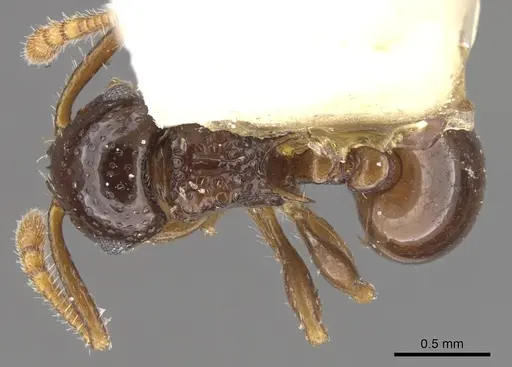
Literature
Loading distribution map...Loading products...