
Pristomyrmex brevispinosus
- Sci. Name
- Pristomyrmex brevispinosus
- Tribe
- Crematogastrini
- Subfamily
- Myrmicinae
- Author
- Emery, 1887
- Distribution
- Found in 5 countries
Introduction
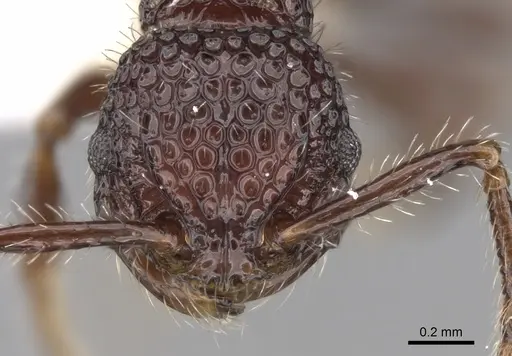
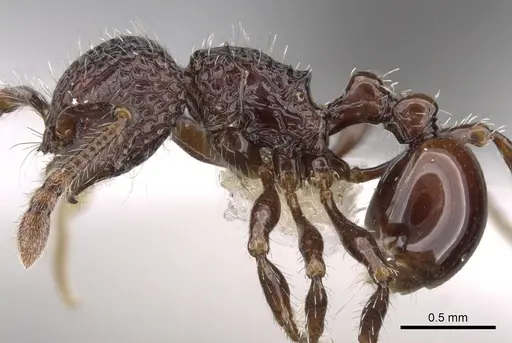
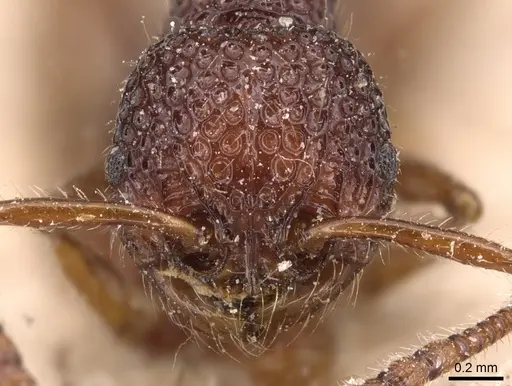
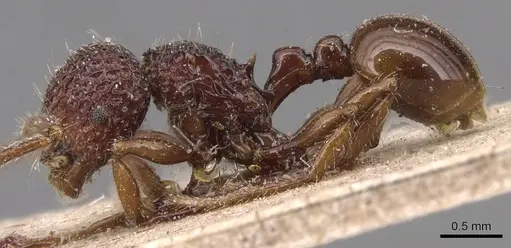
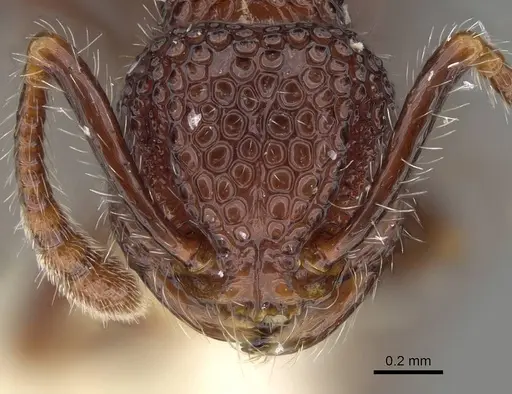
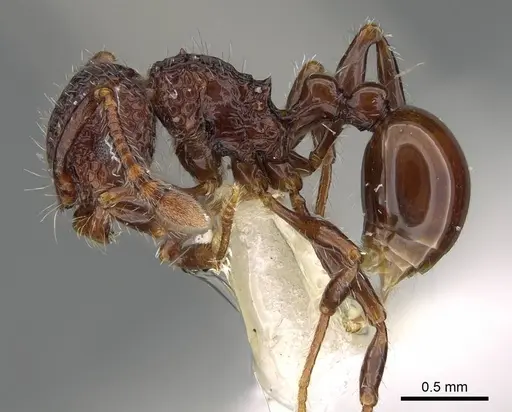
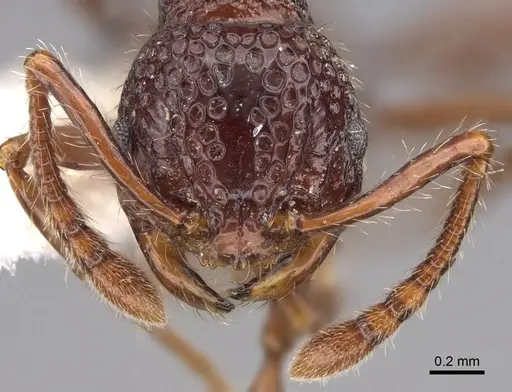
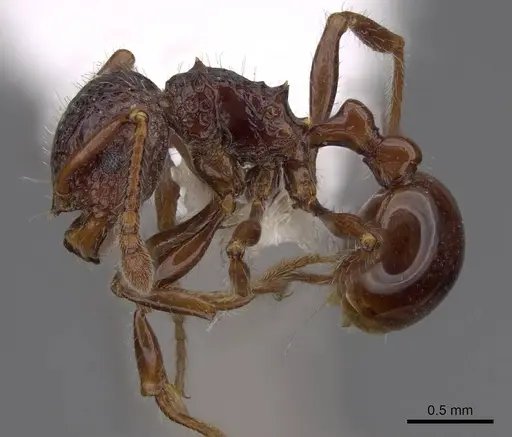
Pristomyrmex brevispinosus is a small myrmicine ant native to Southeast Asia and the Indo-Malayan region. Workers are reddish-brown to blackish-brown, measuring 3.0-4.3 mm in total length, with tooth-like spines on the pronotum and short triangular spines on the propodeum . The head and mesosoma have a foveolate-reticulate sculpture, giving a pitted appearance . These ants nest in rotting wood or under stones in forested habitats and are habitat specialists found almost exclusively in primary forest . Their distribution includes Japan (Iriomote Island), Taiwan, Thailand, Malaysia, Indonesia, the Philippines, and southern China .
Quick Summary
- Difficulty: Medium
- Origin & Habitat: Southeast Asia and Indo-Malayan region, including Japan (Iriomote Island), Taiwan, Thailand, Malaysia, Indonesia, the Philippines, and southern China. Nests in rotting wood or under stones in forested habitats [2][1].
- Colony Type: Monogyne (single-queen colonies) with ergatoid replacement reproductives. Colonies are very small, typically under 20 workers [2][6].
- Size & Growth:
- Antkeeping:
- Temperature: Keep warm, roughly 22-26°C, as this species is from tropical and subtropical regions.
- Humidity: Keep nest substrate consistently moist but not waterlogged, based on nesting in rotting wood and under stones [2].
- Diapause: No, as this is a tropical species.
- Nesting: Use small naturalistic setups with rotting wood or Y-tong/plaster nests with narrow chambers, scaled for small colonies [2].
- Behavior: These ants are docile and not aggressive. They are ground-nesting and prefer to stay within the nest. Due to their tiny size, escape prevention is critical. They are not known to sting and pose no danger to keepers.
- Common Issues: very small colony size means slow growth and potential queen loss, colonies may fail to establish or collapse easily., escape prevention is critical due to tiny worker size, use fine mesh and tight barriers., habitat specialist, they do poorly in disturbed habitats, so avoid bare artificial setups., small colonies are vulnerable to stress, avoid frequent nest disturbance., limited distribution in Japan means wild-caught colonies may be difficult to find.
Housing and Nest Setup
Use a small formicarium or naturalistic setup scaled for tiny ants. Chambers should be compact, not spacious. They naturally nest in rotting wood or under stones, so include small wood pieces, soil, or stones [2]. A Y-tong nest with narrow passages works well. Maintain moderate humidity within the nest, but allow some drier areas for foraging. Escape prevention is critical: use fine mesh (0.5mm or finer) on all openings and check for gaps regularly [2].
Feeding and Diet
Offer small live prey like fruit flies or pinhead crickets, and sugar sources like honey water. Feed protein a few times per week and keep sugar available. Remove uneaten food after 24-48 hours to prevent mold. Their small colony size means they need minimal food.
Temperature and Seasonal Care
Keep temperatures around 22-26°C, with a gentle gradient for self-regulation. Avoid below 18°C or above 30°C. As a tropical species, no hibernation is needed, but a slight winter reduction to 18-20°C may simulate seasonal slowing.
Colony Dynamics and Behavior
Colonies are monogyne with ergatoid females serving as replacement reproductives if the queen dies [2]. Colony size is very small, typically under 20 workers [2]. Workers are docile and ground-nesting. Avoid disturbing the nest frequently to prevent stress [6].
Common Challenges
Escape prevention is vital due to tiny size. Small colonies grow slowly and are vulnerable to queen loss. They are habitat specialists, so avoid artificial setups without proper humidity and substrate [3]. Wild-caught colonies may be hard to find, especially in Japan [2].
Frequently Asked Questions
How long does it take for Pristomyrmex brevispinosus to produce first workers?
The exact timeline is unknown. Based on typical Myrmicinae development, expect several months at optimal temperature, but this is an estimate.
Can I keep multiple queens together?
No, this species is monogyne with a single queen per colony [6]. Combining queens would likely result in fighting.
How big do colonies get?
Colonies are very small, typically up to 20 workers [2].
Do these ants sting?
No, they are not aggressive and pose no danger to keepers.
What is the best nest type?
Small naturalistic setups with rotting wood or Y-tong nests with narrow chambers work best [2].
Are they good for beginners?
Not ideal due to small colony size, slow growth, and escape risks. Better for patient keepers.
Do they need hibernation?
No, as a tropical species, hibernation is not required.
Why are they escaping?
Their tiny size allows them to squeeze through small gaps. Use fine mesh and barriers [2].
What do they eat?
They are omnivorous, eating small prey and sugar sources.
Where are they found in the wild?
Across Southeast Asia, including Japan, Taiwan, Thailand, and southern China, primarily in primary forest [3][1].
Report an Issue
The current care sheet is based fully on literature. See inconsistencies, or something that's incorrect? Please , it will be resolved after review from an admin. Contributing to the blogs tab also helps providing information, to make us be able to further improve the caresheets. Thank you for your support!
References

This caresheet is licensed under CC BY-SA 4.0 .
Community Blogs
CASENT0281797
View on AntWeb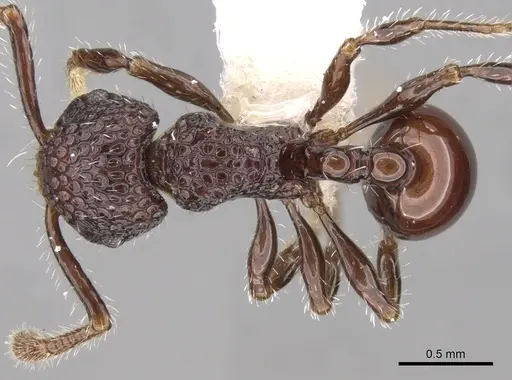
CASENT0904694
View on AntWeb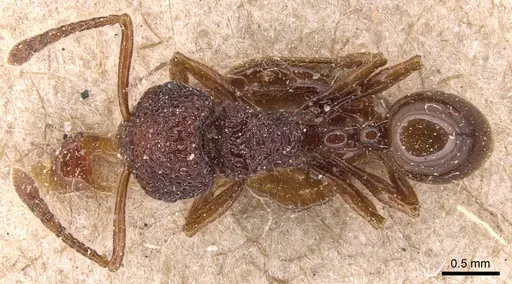
CASENT0919946
View on AntWeb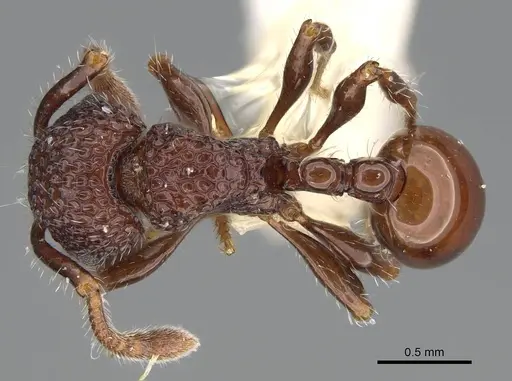
CASENT0922983
View on AntWeb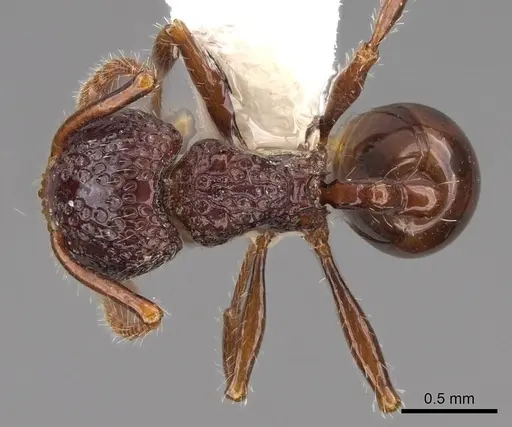
Literature
Loading distribution map...Loading products...